Kirjojen hintavertailu. Mukana 11 699 587 kirjaa ja 12 kauppaa.

Kirjahaku

Etsi kirjoja tekijän nimen, kirjan nimen tai ISBN:n perusteella.

1000 tulosta hakusanalla Asma Jan Muhammad

Mutazioni BRCA/PALB2 ereditarie nella sindrome seno-ovarica precoce
Le caratteristiche morfologiche dei carcinomi invasivi della mammella che si verificano nel contesto di una predisposizione ereditaria sono state descritte, ma sono poche. La frequenza di mutazioni BRCA1 ereditate di circa il 3-4% nella popolazione di pazienti con carcinoma mammario. Questi carcinomi sono di tipo aspecifico ed eccezionalmente di altro tipo istologico; sono di alto grado con stroma ricco di linfociti nell'85% dei casi e di fenotipo triplo-negativo senza amplificazione di HER2. In presenza di altre mutazioni ereditarie di BRCA2, CHECK2, ATM e PALB2, i carcinomi mammari sono di solito di grado 3, aspecifici e luminali B. Le mutazioni ereditarie di TP53 si verificano in donne giovani di et inferiore ai 50 anni e sono amplificate per HER2 in oltre il 70% dei casi. L'uso di trattamenti come gli inibitori PARP per le pazienti i cui tumori presentano un difetto di ricombinazione omologa implica la ricerca di una mutazione costituzionale in un gene di predisposizione (attualmente BRCA/PALB2). Le caratteristiche morfologiche non sono sufficienti per identificare le pazienti pi a rischio.

Mutações hereditárias BRCA/PALB2 na síndrome mamário-ovariana precoce
As caracter sticas morfol gicas dos carcinomas invasivos da mama que ocorrem no contexto de uma predisposi o heredit ria foram descritas, mas s o em n mero reduzido. A frequ ncia das muta es heredit rias BRCA1 de cerca de 3 a 4% na popula o de doentes com cancro da mama. Estes carcinomas s o de tipo inespec fico e, excecionalmente, de outro tipo histol gico, s o de alto grau com um estroma rico em linf citos em 85% dos casos e de fen tipo triplo-negativo sem amplifica o de HER2. Na presen a de outras muta es heredit rias BRCA2, CHECK2, ATM e PALB2, os carcinomas da mama s o frequentemente de grau 3, inespec ficos e luminal B. As muta es heredit rias TP53 ocorrem em mulheres jovens com menos de 50 anos e s o amplificadas para HER2 em mais de 70% dos casos. A utiliza o de tratamentos como os inibidores PARP em doentes cujos tumores apresentam um defeito de recombina o hom loga implica a procura de uma muta o constitucional num gene de predisposi o (atualmente BRCA/PALB2). As caracter sticas morfol gicas s o insuficientes para identificar os doentes de maior risco.
Behind Existing Places

Behind Existing Places

Hamad Alshaali Asma

Austin MacAuley
2024
nidottu
Architecture in the gulf portrays an important link in the examination of the former times and traditions of the region.Behind Existing Places attempts to transport viewers to the past while assisting them in observing locations outside of their normal field of vision.Each image will have a distinct story that will alter the viewer's perception of the scene.
Why We Need Religion

Why We Need Religion

Stephen T. Asma

Oxford University Press Inc
2018
sidottu
How we feel is as vital to our survival as how we think. This claim, based on the premise that emotions are largely adaptive, serves as the organizing theme of Why We Need Religion. This book is a novel pathway in a well-trodden field of religious studies and philosophy of religion. Stephen Asma argues that, like art, religion has direct access to our emotional lives in ways that science does not. Yes, science can give us emotional feelings of wonder and the sublime --we can feel the sacred depths of nature-- but there are many forms of human suffering and vulnerability that are beyond the reach of help from science. Different emotional stresses require different kinds of rescue. Unlike secular authors who that praise religion's ethical and civilizing function, Asma argues that its core value lies in its emotionally therapeutic power. No theorist of religion has failed to notice the importance of emotions in spiritual and ritual life, but truly systematic research has only recently delivered concrete data on the neurology, psychology, and anthropology of the emotional systems. This very recent "affective turn" has begun to map out a powerful territory of embodied cognition. Why We Need Religion incorporates new data from these affective sciences into the philosophy of religion. It goes on to describe the way in which religion manages those systems--rage, play, lust, care, grief, and so on. Finally, it argues that religion is still the best cultural apparatus for doing this adaptive work. In short, the book is a Darwinian defense of religious emotions and the cultural systems that manage them.
On Monsters

On Monsters

Stephen T. Asma

Oxford University Press Inc
2010
sidottu
Monsters. Real or imagined, literal or metaphorical, they have exerted a dread fascination on the human mind for many centuries. They attract and repel us, intrigue and terrify us, and in the process reveal something deeply important about the darker recesses of our collective psyche. Stephen Asma's On Monsters is a wide-ranging cultural and conceptual history of monsters--how they have evolved over time, what functions they have served for us, and what shapes they are likely to take in the future. Asma begins with a letter from Alexander the Great in 326 B.C. detailing an encounter in India with an "enormous beast--larger than an elephantthree ominous horns on its forehead." From there the monsters come fast and furious--Behemoth and Leviathan, Gog and Magog, the leopard-bear-lion beast of Revelation, Satan and his demons, Grendel and Frankenstein, circus freaks and headless children, right up to the serial killers and terrorists of today and the post-human cyborgs of tomorrow. Monsters embody our deepest anxieties and vulnerabilities, Asma argues, but they also symbolize the mysterious and incoherent territory just beyond the safe enclosures of rational thought. Exploring philosophical treatises, theological tracts, newspapers, pamphlets, films, scientific notebooks, and novels, Asma unpacks traditional monster stories for the clues they offer about the inner logic of an era's fears and fascinations. In doing so, he illuminates the many ways monsters have become repositories for those human qualities that must be repudiated, externalized, and defeated. Asma suggests that how we handle monsters reflects how we handle uncertainty, ambiguity, insecurity. And in a world that is daily becoming less secure and more ambiguous, he shows how we might learn to better live with monsters--and thereby avoid becoming one.
On Monsters

On Monsters

Stephen T. Asma

Oxford University Press Inc
2011
nidottu
Hailed as "a feast" (Washington Post) and "a modern-day bestiary" (The New Yorker), Stephen Asma's On Monsters is a wide-ranging cultural and conceptual history of monsters--how they have evolved over time, what functions they have served for us, and what shapes they are likely to take in the future. Beginning at the time of Alexander the Great, the monsters come fast and furious--Behemoth and Leviathan, Gog and Magog, Satan and his demons, Grendel and Frankenstein, circus freaks and headless children, right up to the serial killers and terrorists of today and the post-human cyborgs of tomorrow. Monsters embody our deepest anxieties and vulnerabilities, Asma argues, but they also symbolize the mysterious and incoherent territory beyond the safe enclosures of rational thought. Exploring sources as diverse as philosophical treatises, scientific notebooks, and novels, Asma unravels traditional monster stories for the clues they offer about the inner logic of an era's fears and fascinations. In doing so, he illuminates the many ways monsters have become repositories for those human qualities that must be repudiated, externalized, and defeated. Asma suggests that how we handle monsters reflects how we handle uncertainty, ambiguity, and insecurity. And in a world that is daily becoming less secure and more ambiguous, he shows how we might learn to better live with monsters--and thereby avoid becoming one.
Against Fairness

Against Fairness

Stephen T. Asma

University of Chicago Press
2012
sidottu
From the school yard to the workplace, there's no charge more damning than "You're being unfair!" Born out of democracy and raised in open markets, fairness has become our de facto modern creed. The very symbol of American ethics - Lady Justice - wears a blindfold as she weighs the law on her impartial scale. In our zealous pursuit of fairness, we have banished our urges to like one person more than another, one thing over another, hiding them away as dirty secrets of our humanity. In "Against Fairness", polymath philosopher Stephen T. Asma drags them triumphantly back into the light. Through playful, witty, but always serious arguments and examples, he vindicates our unspoken and undeniable instinct to favor, making the case that we would all be better off if we showed our unfair tendencies a little more kindness - indeed, if we favored favoritism. Asma makes his point by synthesizing a startling array of scientific findings, historical philosophies, cultural practices, analytic arguments, and a variety of personal and literary narratives to give a remarkably nuanced and thorough understanding of how fairness and favoritism fit within our moral architecture. Examining everything from the survival-enhancing biochemistry that makes our mothers love us to the motivating properties of our "affective community," he not only shows how we favor but the reasons we should. Drawing on thinkers from Confucius to Tocqueville to Nietzsche, he reveals how we have confused fairness with more noble traits, like compassion and open-mindedness. He dismantles a number of seemingly egalitarian pursuits, from classwide Valentine's Day cards to civil rights, to reveal the envy that lies at their hearts, going on to prove that we can still be kind to strangers, have no prejudice, and fight for equal opportunity at the same time we reserve the best of what we can offer for those dearest to us. "Against Fairness" resets our moral compass with favoritism as its lodestar, providing a strikingly new and remarkably positive way to think through all our actions, big and small.
The Evolution of Imagination

The Evolution of Imagination

Stephen T. Asma

University of Chicago Press
2017
sidottu
Consider Miles Davis, horn held high, sculpting a powerful musical statement full of tonal patterns, inside jokes, and thrilling climactic phrases all on the fly. Or think of a comedy troupe riffing on a couple of cues from the audience until the whole room is erupting with laughter. Or maybe it's a team of software engineers brainstorming their way to the next Google, or the Einsteins of the world code-cracking the mysteries of nature. Maybe it's simply a child playing with her toys. What do all of these activities share? With wisdom, humor, and joy, philosopher Stephen T. Asma answers that question in this book: imagination. And from there he takes us on an extraordinary tour of the human creative spirit. Guided by neuroscience, animal behavior, evolution, philosophy, and psychology, Asma burrows deep into the human psyche to look right at the enigmatic but powerful engine that is our improvisational creativity the source, he argues, of our remarkable imaginational capacity. How is it, he asks, that a story can evoke a whole world inside of us? How are we able to rehearse a skill, a speech, or even an entire scenario simply by thinking about it? How does creativity go beyond experience and help us make something completely new? And how does our moral imagination help us sculpt a better society? As he shows, we live in a world that is only partly happening in reality. Huge swaths of our cognitive experiences are made up by "what-ifs," "almosts," and "maybes," an imagined terrain that churns out one of the most overlooked but necessary resources for our flourishing: possibilities. Considering everything from how imagination works in our physical bodies to the ways we make images, from the mechanics of language and our ability to tell stories to the creative composition of self-consciousness, Asma expands our personal and day-to-day forms of imagination into a grand scale: as one of the decisive evolutionary forces that has guided human development from the Paleolithic era to today. The result is an inspiring look at the rich relationships among improvisation, imagination, and culture, and a privileged glimpse into the unique nature of our evolved minds.
Against Fairness

Against Fairness

Stephen T. Asma

University of Chicago Press
2020
nidottu
From the school yard to the workplace, there’s no charge more damning than “you’re being unfair!” Born out of democracy and raised in open markets, fairness has become our de facto modern creed. The very symbol of American ethics—Lady Justice—wears a blindfold as she weighs the law on her impartial scale. In our zealous pursuit of fairness, we have banished our urges to like one person more than another, one thing over another, hiding them away as dirty secrets of our humanity. In Against Fairness, polymath philosopher Stephen T. Asma drags them triumphantly back into the light. Through playful, witty, but always serious arguments and examples, he vindicates our unspoken and undeniable instinct to favor, making the case that we would all be better off if we showed our unfair tendencies a little more kindness—indeed, if we favored favoritism. Conscious of the egalitarian feathers his argument is sure to ruffle, Asma makes his point by synthesizing a startling array of scientific findings, historical philosophies, cultural practices, analytic arguments, and a variety of personal and literary narratives to give a remarkably nuanced and thorough understanding of how fairness and favoritism fit within our moral architecture. Examining everything from the survival-enhancing biochemistry that makes our mothers love us to the motivating properties of our “affective community,” he not only shows how we favor but the reasons we should. Drawing on thinkers from Confucius to Tocqueville to Nietzsche, he reveals how we have confused fairness with more noble traits, like compassion and open-mindedness. He dismantles a number of seemingly egalitarian pursuits, from classwide Valentine’s Day cards to civil rights, to reveal the envy that lies at their hearts, going on to prove that we can still be kind to strangers, have no prejudice, and fight for equal opportunity at the same time we reserve the best of what we can offer for those dearest to us. Fed up with the blue-ribbons-for-all absurdity of "fairness" today, and wary of the psychological paralysis it creates, Asma resets our moral compass with favoritism as its lodestar, providing a strikingly new and remarkably positive way to think through all our actions, big and small. Watch an animated book trailer here: http://www.youtube.com/watch?v=GjPhTQ9zi5Q
The Emotional Mind

The Emotional Mind

Stephen T. Asma; Rami Gabriel

Harvard University Press
2019
sidottu
Tracing the leading role of emotions in the evolution of the mind, a philosopher and a psychologist pair up to reveal how thought and culture owe less to our faculty for reason than to our capacity to feel.Many accounts of the human mind concentrate on the brain’s computational power. Yet, in evolutionary terms, rational cognition emerged only the day before yesterday. For nearly 200 million years before humans developed a capacity to reason, the emotional centers of the brain were hard at work. If we want to properly understand the evolution of the mind, we must explore this more primal capability that we share with other animals: the power to feel.Emotions saturate every thought and perception with the weight of feelings. The Emotional Mind reveals that many of the distinctive behaviors and social structures of our species are best discerned through the lens of emotions. Even the roots of so much that makes us uniquely human—art, mythology, religion—can be traced to feelings of caring, longing, fear, loneliness, awe, rage, lust, playfulness, and more.From prehistoric cave art to the songs of Hank Williams, Stephen T. Asma and Rami Gabriel explore how the evolution of the emotional mind stimulated our species’ cultural expression in all its rich variety. Bringing together insights and data from philosophy, biology, anthropology, neuroscience, and psychology, The Emotional Mind offers a new paradigm for understanding what it is that makes us so unique.
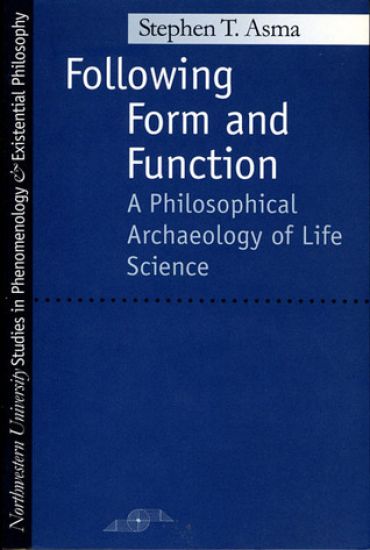
Following Form and Function

Following Form and Function

Stephen T. Asma

Northwestern University Press
1996
nidottu
The concepts of form and function have traditionally been defined in terms of biology and then extended to other disciplines. The author examines the various interpretations of form and function in science and philosophy, reflecting on the philosophical presuppositions underlying the work of Geoffroy, Cuvier and Darwin, among others. In the continental tradition of Canguilhem and Foucalt, the author's treatment of the historical form/function dispute analyzes the complex interactions among ideology, metaphysical commitment and causal mechanisms.
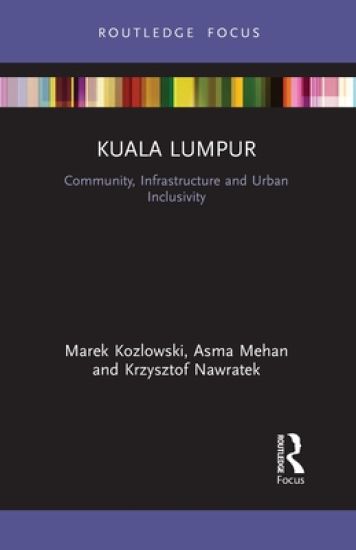
Kuala Lumpur

Kuala Lumpur

Marek Kozlowski; Asma Mehan; Krzysztof Nawratek

TAYLOR FRANCIS LTD
2023
nidottu
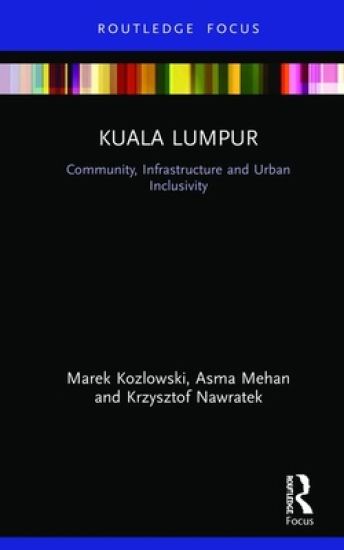
Kuala Lumpur is a diverse city representing many different religions and nationalities. Recent government policy has actively promoted unity and cohesion throughout the city; and the country of Malaysia, with the implementation of a programme called 1Malaysia. In this book, the authors investigate the aims of this programme—predominantly to unify the Malaysian society—and how these objectives resonate in the daily spatial practices of the city’s residents.This book argues that elements of urban infrastructure could work as an essential mediator ‘beyond community’, allowing inclusive social structures to be built, despite cultural and religious tensions existing within the city. It builds on the premise of an empirical study which explores the ways in which different communities use the same spaces, supported through the implementation of a theoretical framework which looks at both Western and Islamic conceptualisations of the notion of community. Through the analysis of Kuala Lumpur, this book contributes towards the creation of more inclusive places in multi-ethnic, multi-cultural and multi-religious communities across the world.
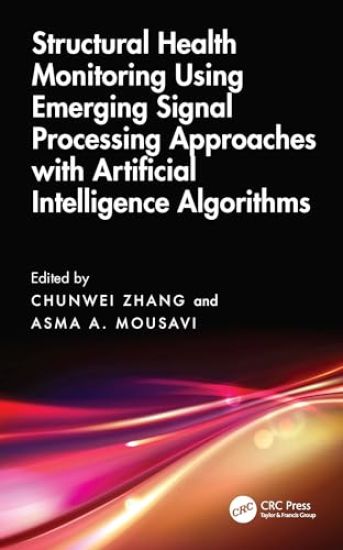
Structural Health Monitoring Using Emerging Signal Processing Approaches with Artificial Intelligence Algorithms
Structural health monitoring is a powerful tool across civil, mechanical, automotive, and aerospace engineering, allowing the assessment and measurement of physical parameters in real time. Processing changes in the vibration signals of a dynamic system can detect, locate, and quantify any damage existing in the system. This book presents a comprehensive state-of-the-art review of the applications in time, frequency, and time-frequency domains of signal-processing techniques for damage perception, localization, and quantification in various structural systems.Experimental investigations are illustrated, including the development of a set of damage indices based on the signal features extracted through various signal-processing techniques to evaluate sensitivity in damage identification. Chapters summarize the application of the Hilbert–Huang transform based on three decomposition methods such as empirical mode decomposition, ensemble empirical mode decomposition, and complete ensemble empirical mode decomposition with adaptive noise. Also, the chapters assess the performance and sensitivity of different approaches, including multiple signal classification and empirical wavelet transform techniques in damage detection and quantification. Artificial neural networks for automated damage identification are introduced.This book suits students, engineers, and researchers who are investigating structural health monitoring, signal processing, and damage identification of structures.
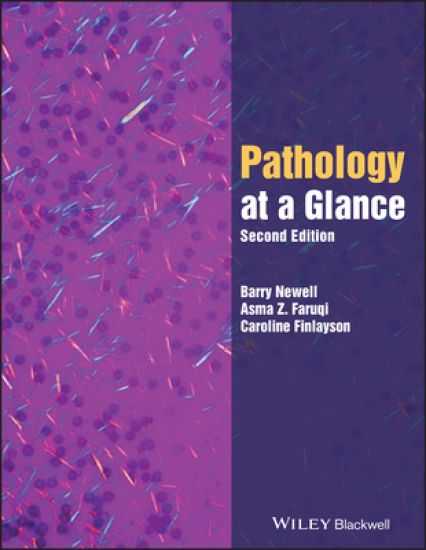
Pathology at a Glance

Pathology at a Glance

Barry Newell; Asma Z. Faruqi; Caroline Finlayson

Wiley-Blackwell
2022
nidottu
Following the familiar, easy-to-use at a Glance format and in full-colour, Pathology at a Glance is an accessible introduction and revision text for medical students. Reflecting changes to the curriculum content and assessment methods employed by medical schools, this new edition provides a user-friendly overview of pathology to encapsulate all that the student needs to know. Pathology at a Glance, Second Edition: Addresses the key principles of pathology that are central to medicineContains full-colour artwork throughout, making the subject easy to understandPresents schematic diagrams on the left page and concise explanations on the rightIs divided into three sections, covering general and systematic pathology and clinical case examplesContains self-assessment material, including 10 structured case study questionsCovers general pathology mechanisms and the clinical pathology of body systemsProvides key information on the epidemiology, pathogenesis and clinical features of the major diseasesRevision of many chapters, particularly gynaecological pathology, acute cardiac syndromes, paediatric tumours and haematopathology This book is an invaluable resource for all medical students, of equal benefit for those starting their study of pathology or approaching finals; for junior doctors approaching their membership exams and anybody who needs a handy reference.
Global Stock Market Integration

Global Stock Market Integration

Sabur Mollah; Asma Mobarek

Palgrave Macmillan
2015
sidottu
Stock market integration between developing and emerging markets has numerous benefits for creating a global - yet stable - world economy. It increases competition and the efficiency of local markets, in turn reducing price volatility and the cost of capital among integrated markets. It also generates capital flows, which enhance financial stability and spur economic growth. At its core, stock market integration has an important role to play in both developing and emerging markets still reeling from the global financial crisis.Global Stock Market Integration analyzes the financial makeup of developing and emerging markets around the world, providing empirical insights into market integration, co-movements in price, crises, and efficiency linkages. Mobarek and Mollah argue that the relationship between market integration and market efficiency within developing and emerging countries is not the only measure necessary for effecting real financial growth. This work brings the review of theories and empirical research on the topic up-to-date and expands the existing literature with new perspectives on developed and emerging markets.
Kuala Lumpur

Kuala Lumpur

Marek Kozlowski; Asma Mehan; Krzysztof Nawratek

Routledge
2020
sidottu
Kuala Lumpur is a diverse city representing many different religions and nationalities. Recent government policy has actively promoted unity and cohesion throughout the city; and the country of Malaysia, with the implementation of a programme called 1Malaysia. In this book, the authors investigate the aims of this programme—predominantly to unify the Malaysian society—and how these objectives resonate in the daily spatial practices of the city’s residents.This book argues that elements of urban infrastructure could work as an essential mediator ‘beyond community’, allowing inclusive social structures to be built, despite cultural and religious tensions existing within the city. It builds on the premise of an empirical study which explores the ways in which different communities use the same spaces, supported through the implementation of a theoretical framework which looks at both Western and Islamic conceptualisations of the notion of community. Through the analysis of Kuala Lumpur, this book contributes towards the creation of more inclusive places in multi-ethnic, multi-cultural and multi-religious communities across the world.