Kirjojen hintavertailu. Mukana 11 699 587 kirjaa ja 12 kauppaa.

Kirjahaku

Etsi kirjoja tekijän nimen, kirjan nimen tai ISBN:n perusteella.

1000 tulosta hakusanalla Bill Carson

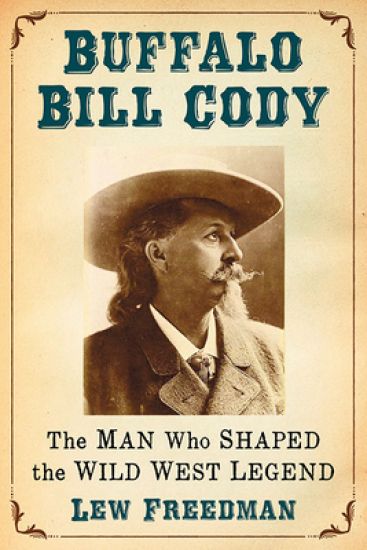
Buffalo Bill Cody

Buffalo Bill Cody

Lew Freedman

McFarland Co Inc
2020
pokkari
William F. "Buffalo Bill" Cody (1846-1917) rose from humble origins in Iowa to become one of the most famous and most photographed people in the world. He became a leading scout during the American Indian Wars, winner of the Congressional Medal of Honor, and a renowned show business fixture whose traveling Wild West exhibitions played to millions of spectators the world over for 30 years. He hobnobbed with presidents, kings, queens and European heads of state, befriending many legendary individuals of the West, from General George Armstrong Custer and Sitting Bull to Wild Bill Hickok and Annie Oakley. Aside from these achievements, Cody's most important legacy may be how he shaped the world's enduring views of the American West through his shows, which he considered to be educational events rather than entertainment. This biography is a fresh look at the life of Buffalo Bill.
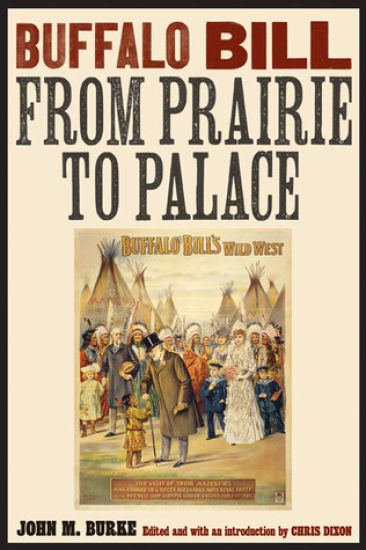
Buffalo Bill from Prairie to Palace

Buffalo Bill from Prairie to Palace

John M. Burke

Bison Books
2012
pokkari
Advance man, press agent, and publicist extraordinaire, John M. Burke (1842–1917) was instrumental in turning William F. Cody into the iconic persona of Buffalo Bill. And with this biography, published in 1893, Burke put the finishing touches on the legend that persists to this day. This new, definitive edition includes the full text and all the photographs and line drawings of Burke's original, while providing critical background on the literary sources, historical characters, and events that figure in the work.With "a few plain truths, unadorned," Burke purported to give a frank account of Buffalo Bill's life. Hostile Indians, gunfights, cattle stampedes: Cody's Wild West was fraught with peril at every turn. This "Chevalier Bayard of American Bordermen" exemplified courage and daring while often narrowly escaping certain death and earned the respect and admiration of not only his fellow frontiersman but also European royalty. Burke recounts Cody's duel with Chief Yellow Hand; his role as army scout, buffalo hunter, Pony Express rider, and international celebrity; and his associations with well-known figures like Kit Carson, Sitting Bull, General Phil Sheridan, and Queen Victoria. A brilliant instance of mythmaking by a true believer, Burke's portrait of Buffalo Bill Cody as frontiersman and hero is a tribute to the romance of the Wild West and a canonical volume in the American story.
Buffalo Bill from Prairie to Palace

Buffalo Bill from Prairie to Palace

John M. Burke

Bison Books
2012
sidottu
Advance man, press agent, and publicist extraordinaire, John M. Burke (1842–1917) was instrumental in turning William F. Cody into the iconic persona of Buffalo Bill. And with this biography, published in 1893, Burke put the finishing touches on the legend that persists to this day. This new, definitive edition includes the full text and all the photographs and line drawings of Burke's original, while providing critical background details on the literary sources, historical characters, and events that figure in the work.With "a few plain truths, unadorned," Burke purported to give a frank account of Buffalo Bill's life. Hostile Indians, gunfights, cattle stampedes: Cody's Wild West was fraught with peril at every turn. This "Chevalier Bayard of American Bordermen" exemplified courage and daring while often narrowly escaping certain death and he earned the respect and admiration of not only his fellow frontiersmen but also European royalty. Burke recounts Cody's duel with Chief Yellow Hand; his role as army scout, buffalo hunter, Pony Express rider, and international celebrity; and his associations with well-known figures like Kit Carson, Sitting Bull, General Phil Sheridan, and Queen Victoria. A brilliant instance of mythmaking by a true believer, Burke's portrait of Buffalo Bill Cody as frontiersman and hero is a tribute to the romance of the Wild West and a canonical volume in the American story.
Brother Bill's Bait Bites Back and Other Tales from the Raton
Much of the literature about northeastern New Mexico depicts range wars, bandits, labor union strife, and Indian depredations. This collection of twelve modern folktales describes events that never made headlines and people who never had a building named after them, evoking the rich tradition of storytelling that flowed through the coal camps and ranches of the Raton region during the early twentieth century. The tales in this collection are about everyday life with some fantastic elements. An African American mother and daughter confront a German prisoner of war in one story, while in another a coal miner's gift for braying leads to a war between coal camps. Here are chronicles of a Mexican barber who extracts a ghoulish revenge for being forced to shave the beard of a killer; of the terrible fate that awaits boys who are lured into a dancehall during the Lenten season by the Devil and his beautiful cowgirls; and of an old coal miner who attempts to control his young wife by pretending to be the voice of the Lord. In other stories a lion who is accidentally caught and caged teaches a coal miner a lesson; two crusty cowboys come to understand the purpose of gnats and tumbleweeds and why rattlesnakes have rattles; and the Angel of Death is told to collect Hispanic souls or else. The account of a rootin'-tootin' cowboy and his wife who use a pitch-baby to trap a pesky jack rabbit and a fish story round out this multiethnic collection of tales. Recounted in a lively, humorous style, the stories show how ordinary people managed to conduct dignified and happy lives—with occasional help from the spirit world—in a difficult social and physical environment.
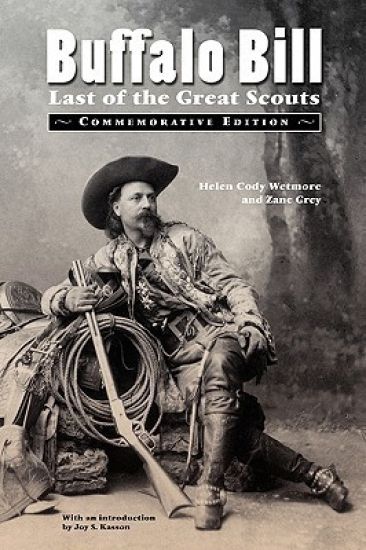
Buffalo Bill

Buffalo Bill

Helen Cody Wetmore; Zane Grey

Bison Books
2003
pokkari
Buffalo Bill: Last of the Great Scouts is the entertaining and fascinating story of William F. Cody, known to millions for over a century as the legendary Buffalo Bill. Born in a log cabin in Iowa, he was a buffalo hunter, stagecoach driver, Pony Express rider, Civil War soldier, and a scout for the U.S. army before beginning his career as the star of Buffalo Bill's Wild West, which electrified audiences around the world from 1883 to 1917. Bill's sister, Helen Cody Wetmore, has written an affectionate biography that recalls fully both the man and the legend, his colorful personality and ironic wit, as well as his celebrated international status. Some of her anecdotes read like the dime novels they were probably based on, but others provide fascinating glimpses of frontier life. Before becoming a showman, Cody tried his luck as a land speculator, a hotelkeeper, and a justice of the peace. These pages also show the author herself growing up on the wild frontier. Humorous and informative, Buffalo Bill introduces us to an unforgettable and controversial figure in American frontier history. This commemorative edition includes the full text of the original 1899 edition, a foreword and afterword by novelist Zane Grey, illustrations by Frederic Remington, E. W. Deming, and Rosa Bonheur from a rare 1903 edition, and an introduction by scholar Joy S. Kasson.
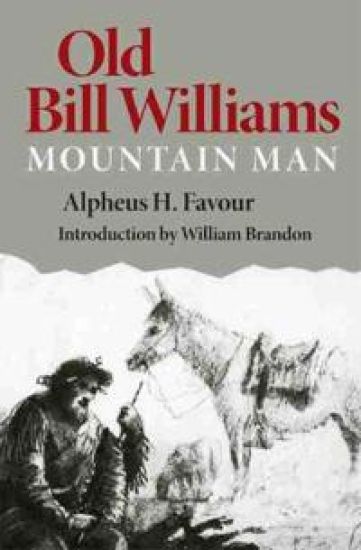
Old Bill Williams, Mountain Man

Old Bill Williams, Mountain Man

Alpheus H. Favour

University of Oklahoma Press
1981
nidottu
Born during the American Revolution, Williams was a child of the early frontier. In his young manhood he became an itinerant preacher and appointed himself a missionary to the Osages, who soon converted him to their lifeway. The Osage girl he married died after bearing his two daughters. From this point on, Old Bill forsook civilization and made the wilderness his home. He was a master trapper and so identified himself in signing his name. He was one of the guides of the Sibley survey of the Santa Fe Trail in 1825 and some twenty years later was a guide with two different Fremont expeditions.
Wild Bill Hickok, Gunfighter

Wild Bill Hickok, Gunfighter

Joseph G. Rosa

University of Oklahoma Press
2003
nidottu
"James Butler Hickok, generally called 'Wild Bill, ' epitomized the archetypal gunfighter, that half-man, half-myth that became the heir to the mystique of the duelist when that method of resolving differences waned. . . . Easy access to a gun and whiskey coupled with gambling was the cause of most gunfights--few of which bore any resemblance to the gentlemanly duel of earlier times. . . . Hickok's gunfights were unusual in that most of them were 'fair' fights, not just killings resulting from rage, jealousy over a woman, or drunkenness. And, the majority of his encounters were in his role as lawman or as an individual upholding the law."--from Wild Bill Hickok, GunfighterWild Bill Hickok (1837-1876) was a Civil War spy and scout, Indian fighter, gambler, and peace officer. He was also one of the greatest gunfighters in the West. His peers referred to his reflexes as "phenomenal" and to his skill with a pistol as "miraculous." In Wild Bill Hickok, Gunfighter, Joseph G. Rosa, the world's foremost authority on Hickok, provides an informative examination of Hickok's many gunfights.Rosa describes the types of guns used by Hickok and illustrates his use of the plains' style of "quick draw," as well as examining other elements of the Hickok legend. He even reconsiders the infamous "dead man's hand" allegedly held by Hickok when he was shot to death at age thirty-nine while playing poker. Numerous photographs and drawings accompany Rosa's down-to-earth text.
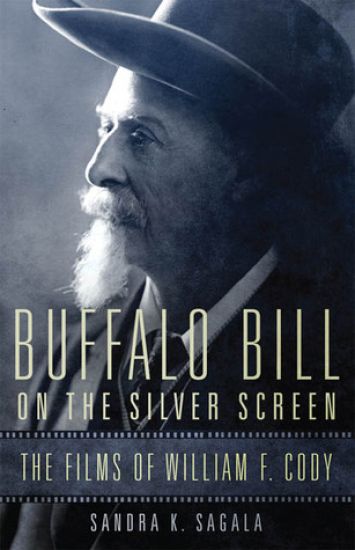
Buffalo Bill on the Silver Screen

Buffalo Bill on the Silver Screen

Sandra K. Sagala

University of Oklahoma Press
2013
sidottu
For more than thirty years, William F. ""Buffalo Bill"" Cody entertained audiences across the United States and Europe with his Wild West show. Scores of books have been written about Cody's fabled career as a showman, but his involvement in the film industry - following the dissolution of his traveling show - is less well known. In Buffalo Bill on the Silver Screen, Sandra K. Sagala chronicles the fascinating story of Cody's venture into filmmaking during the early cinema period.In 1894 Thomas Edison invited Cody to bring some of the Wild West performers to the inventor's kinetoscope studio. From then on, as Sagala reveals, Cody was frequently in the camera's eye, eager to participate in the newest and most popular phenomenon of the era: the motion picture. In 1910, promoter Pliny Craft produced The Life of Buffalo Bill, a film in which Cody played his own persona. After his Wild West show disbanded, Cody fully embraced the film business, seeing the technology as a way to recoup his financial losses and as a new vehicle for preserving America's history and his own legacy for future generations. Because he had participated as a scout in some of the battles and skirmishes between the U.S. Army and Plains Indians, Cody wanted to make a film that captured these historical events. Unfortunately for Cody, The Indian Wars (1913) was not a financial success, and only three minutes of footage have survived.Long after his death, Cody's legacy lives on through the many movies that have featured his character. Sagala provides a useful appendix listing all of these films, as well as those for which Cody himself took an active role as director, producer, or actor. Published on the eve of the centennial anniversary of The Indian Wars, this engaging book offers readers new insights into the legendary figure's life and career and explores his lasting image in film.
Alfalfa Bill Murray

Alfalfa Bill Murray

Keith L. Bryant Jr.

University of Oklahoma Press
2016
nidottu
William H. (Alfalfa Bill) Murray is the most important figure in the political history of Oklahoma. No other individual contributed so greatly to the formation of its political institutions - and there was never a more colorful or controversial character on the state's political scene. Flamboyant, unpredictable, and stubborn, Alfalfa Bill became a legend. President of the Oklahoma Constitutional Convention, speaker of the first House of Representatives, two-term congressman, and governor of Oklahoma, the Texas-born Murray made an indelible mark on his adopted state. But he also made enemies. During the struggle for statehood he waged a hard battle over the constitution, taking on President Theodore Roosevelt and Secretary of War William Howard Taft. As Oklahoma governor, Murray challenged the oil industry, newspaper interests, and the state of Texas. To enforce his programs, he relied on the National Guard. While governor, Murray called out the guard forty-seven times for duties ranging from policing ticket sales at University of Oklahoma football games, to patrolling oil fields, to guarding the Red River Bridge during the infamous Bridge War with Texas. In 1932 he ran for the Democratic nomination for president, and his fame spread across the nation. When candidate Franklin D. Roosevelt offered a program for national recovery, Murray countered with ""Bread, Butter, Bacon, and Beans."" In describing Murray's frustrated efforts to preserve the agricultural American of the nineteenth century, Bryant has written a perceptive biography presenting the first clearly defined portrait of this determined but inflexible man.
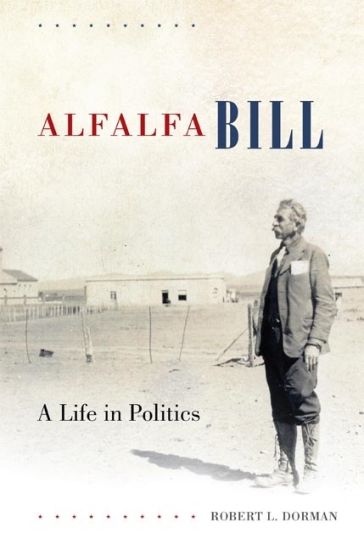
Alfalfa Bill

Alfalfa Bill

Robert L. Dorman

University of Oklahoma Press
2018
sidottu
In this masterful biography, Robert L. Dorman traces the career of William H. ""Alfalfa Bill"" Murray from his hardscrabble childhood in post-Civil War Texas to his remarkable ascendancy as a nationally known political figure in the mid-twentieth century. The first comprehensive portrait of Murray to be published in fifty years, Alfalfa Bill is both the exploration of a larger-than-life personality and an illuminating account of the birth of political conservatism in Oklahoma. As Dorman reveals, no political label readily fit Murray. The core conservatism of his Texas years was caught up in the ferment of three major periods of American reform - the Populist uprising, the Progressive Era, and the New Deal. Over his long career, Murray strongly advocated for states' rights, limited government, and strict constitutionalism, yet he was also a consistent foe of corporations and concentrated wealth. The society he sought was small-scale, decentralized, agrarian - and racially segregated. Although he claimed to represent high principles, Murray as a politician was an opportunist, loved a good fight, had a flair for the theatrical, and hungered for power. Dorman depicts Murray from his days as a political operative in the Chickasaw Nation to his leadership of the Oklahoma Constitutional Convention, and from the Speaker's chair of the Oklahoma legislature to the halls of Congress. The book follows Murray's quixotic attempt to found an agricultural colony in Bolivia, and chronicles his amazing Oklahoma comeback in the 1930 gubernatorial election. The final chapters detail Murray's legendary term as state governor, his failed candidacy for president, and his emergence as a fierce critic of New Deal liberalism and racial desegregation. Unlike earlier biographies of Murray, Alfalfa Bill brings issues of race, class, and gender to the forefront, often in surprising ways. On the surface, the Murray saga was an American success story, yet his rise came at a price for Murray himself, his family, and the people of the state he helped to create. An indelible portrait emerges of an ambitious, domineering, relentless, and unapologetically racist figure whose tarnished legacy seems painfully relevant in America's current political climate.
Alfalfa Bill

Alfalfa Bill

Robert L. Dorman

UNIVERSITY OF OKLAHOMA PRESS
2025
nidottu
In this masterful biography, Robert L. Dorman traces the career of William H. 'Alfalfa Bill' Murray from his hardscrabble childhood in post-Civil War Texas to his remarkable ascendancy as a nationally known political figure in the mid-twentieth century. The first comprehensive portrait of Murray to be published in fifty years, Alfalfa Bill is both the exploration of a larger-than-life personality and an illuminating account of the birth of political conservatism in Oklahoma. As Dorman reveals, no political label readily fit Murray. The core conservatism of his Texas years was caught up in the ferment of three major periods of American reform - the Populist uprising, the Progressive Era, and the New Deal. Over his long career, Murray strongly advocated for states' rights, limited government, and strict constitutionalism, yet he was also a consistent foe of corporations and concentrated wealth. The society he sought was small-scale, decentralized, agrarian - and racially segregated. Although he claimed to represent high principles, Murray as a politician was an opportunist, loved a good fight, had a flair for the theatrical, and hungered for power. Dorman depicts Murray from his days as a political operative in the Chickasaw Nation to his leadership of the Oklahoma Constitutional Convention, and from the Speaker's chair of the Oklahoma legislature to the halls of Congress. The book follows Murray's quixotic attempt to found an agricultural colony in Bolivia, and chronicles his amazing Oklahoma comeback in the 93 gubernatorial election. The final chapters detail Murray's legendary term as state governor, his failed candidacy for president, and his emergence as a fierce critic of New Deal liberalism and racial desegregation. Unlike earlier biographies of Murray, Alfalfa Bill brings issues of race, class, and gender to the forefront, often in surprising ways. On the surface, the Murray saga was an American success story, yet his rise came at a price for Murray himself, his family, and the people of the state he helped to create. An indelible portrait emerges of an ambitious, domineering, relentless, and unapologetically racist figure whose tarnished legacy seems painfully relevant in America's current political climate.
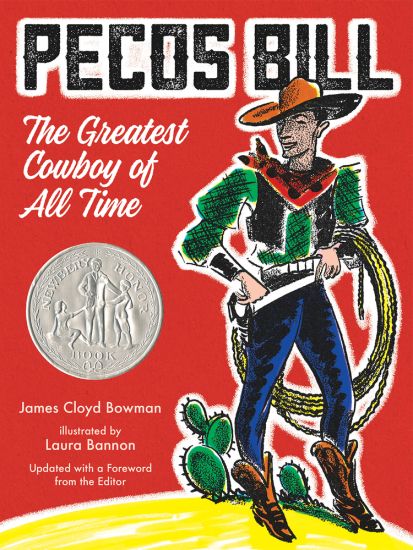
Pecos Bill

Pecos Bill

James Cloyd Bowman

Albert Whitman Company
2017
nidottu
Bill was just four years old when he fell from the family wagon near the Pecos River on the western frontier. Accidentally left behind by his family, he was raised by coyotes, and he didn't realize he was human until he was an adult. When he did, Pecos Bill returned to civilization and used the superhuman powers he'd developed during his peculiar upbringing to become the best cowboy in the West.
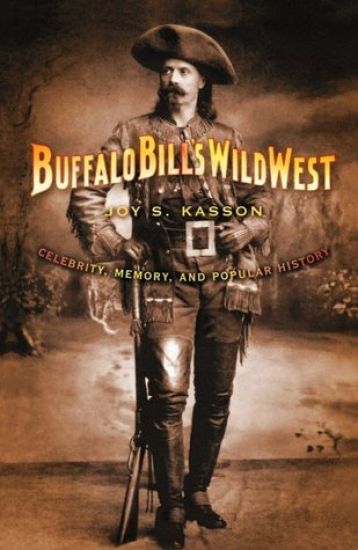
Buffalo Bill's Wild West

Buffalo Bill's Wild West

Farrar, Strauss Giroux-3pl
2001
pokkari
A fascinating analysis of the first famous American to erase the boundary between real history and entertainmentCanada, and Europe. Crowds cheered as cowboys and Indians--and Annie Oakley --galloped past on spirited horses, sharpshooters exploded glass balls tossed high in the air, and cavalry troops arrived just in time to save a stagecoach from Indian attack. Vivid posters on billboards everywhere made William Cody, the show's originator and star, a world-renowned figure.Joy S. Kasson's important new book traces Cody's rise from scout to international celebrity, and shows how his image was shaped. Publicity stressed his show's "authenticity" yet audiences thrilled to its melodrama; fact and fiction converged in a performance that instantly became part of the American tradition.But how, precisely, did that come about? How, for example, did Cody use his audience's memories of the Civil War and the Indian wars? He boasted that his show included participants in the recent conflicts it presented theatrically, yet he also claimed it evoked "memories" of America's bygone greatness. Kasson's shrewd, engaging study--richly illustrated--in exploring the disappearing boundary between entertainment and public events in American culture, shows us just how we came to imagine our memories.
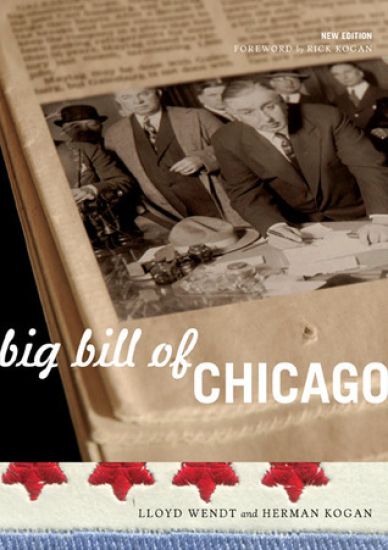
Big Bill of Chicago

Big Bill of Chicago

Lloyd Wendt; Herman Kogan

Northwestern University Press
2005
nidottu
To some he was a humanitarian and builder. Others scorned him as a fake and friend of gangsters with ""the carcass of a rhinoceros and the brain of a baboon."" This rollicking history traces the rise of William Hale ""Big Bill"" Thompson, Chicago's famous reform mayor, from his upper class roots to his years as a teenaged cowboy, from his fame as a star athlete to the years as a master politician in a world where the ward boss ruled and whiskey for the voters cost a quarter a shot. Big Bill of Chicago profiles the whole brawling arena of city politics from the turn of the century to the Prohibition Era. It is a primer in the way American politics worked-and works-and a map along the countless winding ways even the dirtiest deal can lead to something great.
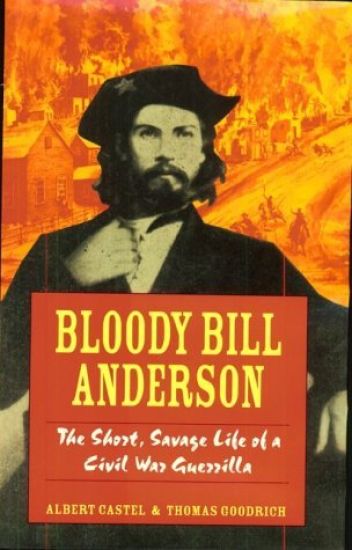
Bloody Bill Anderson

Bloody Bill Anderson

Castel Albert; Goodrich Thomas

Stackpole Books
2011
sidottu
This is the first-ever biography of the perpetrator of the Centralia and Baxter Springs Massacres, as well as innumerable atrocities during the Civil War in the West. The story is one in which the anger and bitterness of war contorts souls to a savage state. It is the unforgettable story of a man driven by personal demons and the circumstances of war to commit ever greater atrocities in an already bloodstained land.
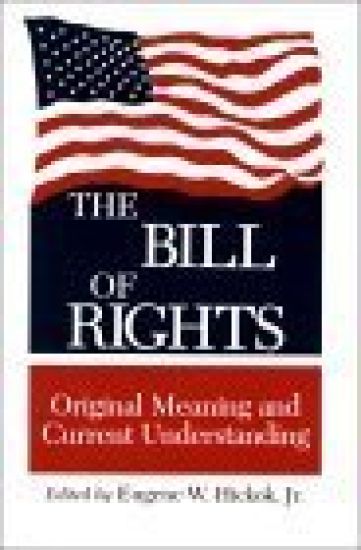
The Bill of Rights

The Bill of Rights

University of Virginia Press
1991
nidottu
This collection of essays offers a comprehensive amendment-by-amendment, clause-by-clause account of the Bill of Rights' recent transmutation. The essays are based on the assumption that to understand the Bill of Rights today, one must both understand the original meaning of the amendments and explore the history, theory and practice behind those amendments. The book suggests that the provisions of the Bill of Rights have been subjected to greater interpretative revision by the Supreme Court than other parts of the Constitution. It should be of interest not only to lawyers and law and political science students, but to anyone with an interest in the ongoing interpretation of the Bill of Rights.
The Bill of Rights

The Bill of Rights

Ronald Hoffman; Peter J. Albert

University of Virginia Press
1998
sidottu
The essays in this collection set the Bill of Rights in context by tracing its historical lineages and establishing the political context for its adoption by the states. They point out the differences between Federalist fears of anarchy and Antifederalist fears of tyranny, as eventually reconcilable, and examine how particular functional dimensions of the various rights were popularly conceived. The volume concludes with a comparative examination of the American and French experiences with the bill of rights that supports those scholars who argue for the critical role played by the Constitution's first amendments in matters of constitutional jurisprudence.
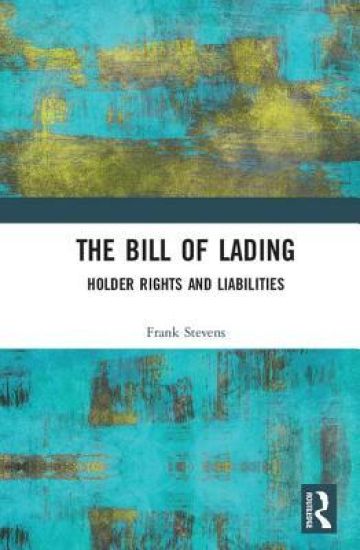
The Bill of Lading

The Bill of Lading

Frank Stevens

CRC Press Inc
2017
sidottu
The carriage of goods by sea starts off with a contract of carriage, an essentially simple and straightforward contract between two parties, the shipper and the carrier. Very often, however, a bill of lading is issued and a third party appears on the scene: the holder of the bill of lading. The holder was not involved in the making of the contract of carriage, but does have rights, and possibly obligations, against the carrier at destination. The question then is how the third-party holder of the bill acquires those rights and obligations.Analysing the different theories that have been proposed to explain the position of the third party holder, this book makes a distinction between contractual theories and non-contractual theories to explain the holder's position. Contractual theories build on the initial contract of carriage and apply contract law mechanisms while non-contractual theories construe the position of the third-party holder independently. Following the analysis and appraisal of the different theories, this book makes the case that the position of the third-party holder of the bill of lading is not obvious or self-evident; and submits that a statutory approach to the position of the holder of the bill of lading has advantages and would be preferable.
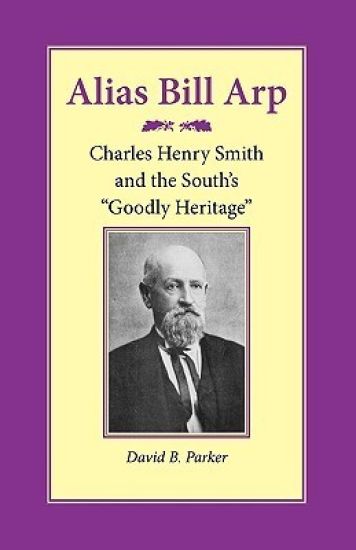
Alias Bill Arp

Alias Bill Arp

David B. Parker

University of Georgia Press
2009
pokkari
From 1861 to 1903 humorist Charles Henry Smith, writing as Bill Arp, a sly Georgia back-woodsman, was the South’s most widely read newspaper columnist. Knowing the immense popularity of Smith’s writings historian have suggested that southerners saw him as a voice for their concerns. While the idea that Bill Arp spoke for his region is sound, the intent of the writings has been misconstrued over time, argues David Parker. In Alias Bill Arp, Parker shows that Smith was not a contented observer of the post-Reconstruction New South as is widely inferred from his most widely read work—his syndicated weekly column in the Atlanta Constitution that he began writing in 1878. Considering the full range of Smith’s work, Parker says, shows him to be one of the South’s harshest critics. After a brief survey of Smith’s life, Parker surveys the Bull Arp writings, highlighting their major topics, and explaining what they meant to readers of that era.