
Kirjahaku
Etsi kirjoja tekijän nimen, kirjan nimen tai ISBN:n perusteella.
1000 tulosta hakusanalla Brett Mclaughlin


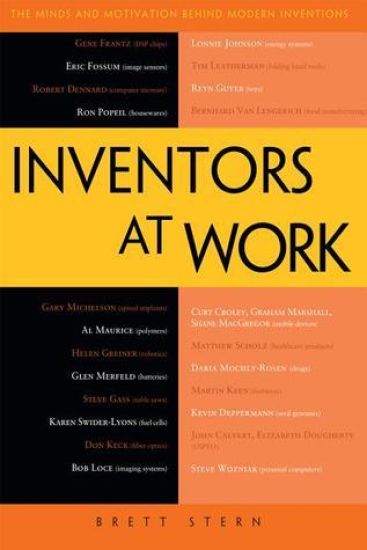
Inventors at Work: The Minds and Motivation Behind Modern Inventions is a collection of interviews with inventors of famous products, innovations, and technologies that have made life easier or even changed the way we live. All of these scientists, engineers, wild-eyed geniuses, and amateur technologists have dedicated their lives to the pursuit of that singular Eureka! moment in their laboratories or garages. Each has altered the modern world as we know it in some significant way. The conversations will show budding tinkerers, professional inventors, educators, and onlookers how the top minds in the field come up with ideas and manage the first steps of inspiration, how they experiment productively, how they “sell” ideas to others and secure funding, how they execute the final product, and how they commercialize and protect their work. All inventors will learn from these conversations, whether they are exploring new chemical compounds in million-dollar labs or perfecting a household gadget or toy in a basement workshop. Author Brett Stern, an inventor himself, explores with each inventor the nature of creativity and intuition, the skill set needed, and the force, motivation, or desire that must be summoned to spend endless hours searching for an answer to a question that no one else has asked or solving a problem most think has no solution. The book is required reading for all technical and creative individuals to better understand the innovation process and the logistics of following through on an idea that has the potential to change society. This book offers: Interviews with inventors of world-changing products and technologies An outline of the steps required in the creative/inventing process whether the goal is a civilization-changing process or a device meant to impress friends and family and perhaps earn license fees. An instructive overview of how to solve problems in innovation—and how to use failures as stepping stones to successful inventions



A Road Less Traveled: Critical Literacy and Language Learning in the Classroom, 1964–1996 takes us through what Robert W. Blake calls the "jaunty journey" of the English/English Language Arts classroom from its linguistic and literature foundations, to emphases on close reading techniques and structures to composing and responding to literature. A Road Less Traveled heads bumpily into the path of learning how to work with "non-native speakers" and other "basic" students toward a (re)-burst of a renewed interest in poetry and drama, reader response, a process approach to writing, and the diverse student, showing through the often winding and blurry road along the journey of our literacy travels over 30 years, that what we understood best about reading and writing has stood the test of time.

A Road Less Traveled: Critical Literacy and Language Learning in the Classroom, 1964–1996 takes us through what Robert W. Blake calls the "jaunty journey" of the English/English Language Arts classroom from its linguistic and literature foundations, to emphases on close reading techniques and structures to composing and responding to literature. A Road Less Traveled heads bumpily into the path of learning how to work with "non-native speakers" and other "basic" students toward a (re)-burst of a renewed interest in poetry and drama, reader response, a process approach to writing, and the diverse student, showing through the often winding and blurry road along the journey of our literacy travels over 30 years, that what we understood best about reading and writing has stood the test of time.

Edgar Allan Poe: Amateur Psychologist is the "first and foremost" major source of information dedicated to the theme of Poe and psychopathology. Its introduction, conclusion, chapters, and appendices highlight and employ the best insights from earlier and current scholars, but this text goes beyond them in its analysis of Poe’s relation to mainstream psychology and its rival system, phrenology. His knowledge of this subject matter is far broader and deeper than Poe specialists have hitherto supposed; his method—contrary to the "Poe myth" according to which an alcoholic, drug-addicted, tormented artist wrote to exorcise his own pathologies—was to research mental illnesses for the sake of scientific precision and verisimilitude. We also come to appreciate the interrelatedness of the psychopathologies he illustrates and other "knowledge frames," characteristic themes, featured in his tales, such as the occult, symbology, chromatography, the "cult of sensibility," Neoplatonism, and Transcendentalist epistemology. While locating Poe firmly within the science and pseudoscience of his time, Edgar Allan Poe: Amateur Psychologist simultaneously looks back from the 1830s and 40s (when Poe’s literary career was at its height) to theories and possible sources of information from the late eighteenth century, as well as forward to the twentieth and twenty-first centuries to demonstrate how Poe’s theories of mind, and his depiction of psychological illnesses, occasionally anticipate modern insights and therapies. The book will be of interest not only to Poe scholars but also to students, teachers, and any intelligent reader interested in psychology, psychotherapy, and the history of ideas.
Winner of the 2018 ECPA Book of the Year for Christian Living Does your church make you uncomfortable? It’s easy to dream about the “perfect” church—a church that sings just the right songs set to just the right music before the pastor preaches just the right sermon to a room filled with just the right mix of people who happen to agree with you on just about everything. Chances are your church doesn’t quite look like that. But what if instead of searching for a church that makes us comfortable, we learned to love our church, even when it’s challenging? What if some of the discomfort that we often experience is actually good for us? This book is a call to embrace the uncomfortable aspects of Christian community, whether that means believing difficult truths, pursuing difficult holiness, or loving difficult people—all for the sake of the gospel, God’s glory, and our joy.

We're facing an information overload. With the quick tap of a finger we can access an endless stream of addictive information—sports scores, breaking news, political opinions, streaming TV, the latest Instagram posts, and much more. Accessing information has never been easier—but acquiring wisdom is increasingly difficult. In an effort to help us consume a more balanced, healthy diet of information, Brett McCracken has created the “Wisdom Pyramid.” Inspired by the food pyramid model, the Wisdom Pyramid challenges us to increase our intake of enduring, trustworthy sources (like the Bible) while moderating our consumption of less reliable sources (like the Internet and social media). At a time when so much of our daily media diet is toxic and making us spiritually sick, The Wisdom Pyramid suggests that we become healthy and wise when we reorient our lives around God—the foundation of truth and the eternal source of wisdom.
Christian Wisdom for Our Tech-Saturated Age The rapid advance of digital technology is reshaping our world and warping our minds. The onslaught of social media and smartphones has brought an appetite for distraction, an epidemic of loneliness, and increased rates of mental unhealth. For Christians, the digital revolution has profound implications for spiritual formation and mission. How should believers respond to the theological and discipleship challenges of scrolling life? On the 40th anniversary of Neil Postman’s prophetic book Amusing Ourselves to Death (1985), Scrolling Ourselves to Death gathers today’s most incisive writers to think critically about the shaping power of contemporary technology. This book explores Postman’s insights, connects them to the challenges facing Christians today, and turns difficult challenges into life-giving opportunities for the church. Stepping back from their screens, readers will be equipped to live faithfully, and grow spiritually, in a “scrolling ourselves to death” world. Practical: Includes action steps readers can use to reclaim a healthy life in a tech-saturated world Wise: Helps readers become more discerning in the way they think about and utilize technology Perfect for Small Groups: Includes discussion questions at the end of every chapter Useful for Church Leaders or Ministry Staff: Perfect for those who want to help those they lead think more carefully about technology Expert Contributors: Features insights from a wide variety of leading Christian thinkers on technology, faith, and culture

Therapeutic Change with Difficult Clients
Brett D Wilkinson; Fred J. Hanna
AMERICAN PSYCHOLOGICAL ASSOCIATION
2025
pokkari
Now in its second edition, Therapeutic Change with Difficult Clients describes a common factors model for understanding and activating the process of change with challenging clients. For therapists, the most difficult clients to treat are often those who have little interest in change. Whether they believe that change is a waste of time, or a threat to their personal freedom or sense of being, the difficulty of treating such clients reveals the limits of typical approaches to psychotherapy. A thorough understanding of the true nature therapeutic change is often the most important step toward improving psychotherapy effectiveness. The CHANGES model, which has been significantly expanded and updated since the first edition of this book, is founded on the seven precursors of change, which are identified, assessed, and activated in the context of therapeutic encounters. The authors examine the capacities of individuals to generate therapeutic change, identify the barriers to change, and discuss the power of therapists to catalyze the change process using a variety of well established techniques. In addition to updated supporting literature, the authors discuss recent advances in neuroscience and the cognitive sciences, as well as new developments in the interpersonal aspects of therapeutic engagement.


Workbook for Handley/Coon/Marshall's Project Lead the Way/Principles of Engineering
Brett Handley; David Marshall; Craig Coon
Delmar Cengage Learning
2013
kierre
The student workbook is designed to help you understand key chapter concepts and practice the specific skills you need to complete PLTW's hand-on projects. Included within this resource are Skills Lists, Background Information, Tips, Exercises, and Problem Sets.