
Kirjahaku
Etsi kirjoja tekijän nimen, kirjan nimen tai ISBN:n perusteella.
1000 tulosta hakusanalla C. David Heymann
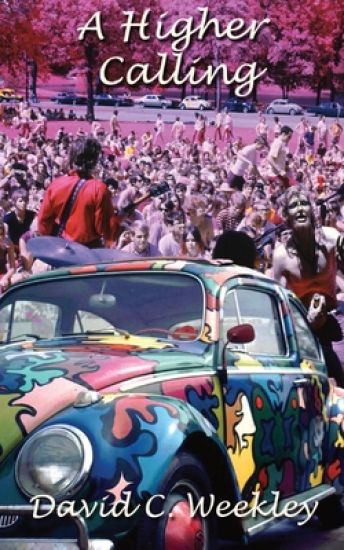
This is the story of his deliverance from manic depression (known today as bipolar). The story is set back in the early 1970s and chronicles what the hippie culture was like. David knows that he would not be alive today without an understanding of God's Word, the Bible. He could have easily taken his life without it. Psalm 107:20 He God] sent his word, and healed them, and delivered them from their destructions. Psalms 103:2-4 Bless the Lord, O my soul, and forget not all his benefits: Who forgiveth all thine inquities, who healeth all the diseases; Who redeemeth ahy life from destruction; who healeth all thy diseases;

In this study, noted Old Testament scholar and Christian educator David Hester focuses on the difficult questions raised in Job: where is God in the worst moments of our emptiness? What are we to do when experience casts doubt on what we have always believed? Where in the world is justice? The author brings to this writing his own experience of suffering. His touching honesty provides a moving connection between the ancient text and the world of today, inviting us to join in Job's search for hope and healing.Interpretation Bible Studies (IBS) offers solid biblical content in a creative study format. Forged in the tradition of the celebrated Interpretation commentary series, IBS makes the same depth of biblical insight available in a dynamic, flexible, and user-friendly resource. Designed for adults and older youth, IBS can be used in small groups, in church school classes, in large group presentations, or in personal study.
During the reigns of Saul and David as recorded in First and Second Samuel, the people of Israel experience fear, disappointment, heartache, and betrayal. The compelling theme that weaves its way through these two books and into our lives is the need to balance both the gift of life from God and the promise of God's steadfast love with the ever-present human temptation to take control and usurp God's authority.Interpretation Bible Studies (IBS) offers solid biblical content in a creative study format. Forged in the tradition of the celebrated Interpretation> commentary series, IBS makes the same depth of biblical insight available in a dynamic, flexible, and user-friendly resource. Designed for adults and older youth, Interpretation Bible Studies can be used in small groups, in church school classes, in large group presentations, or in personal study.
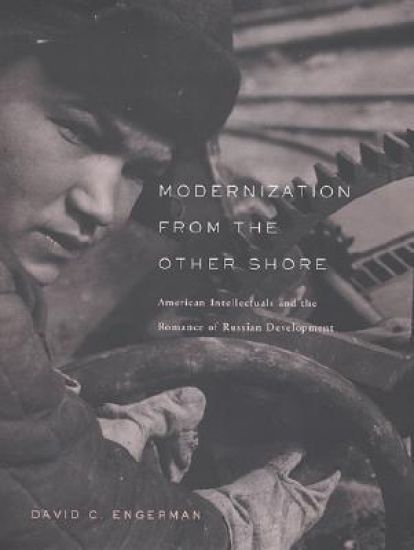
From the late nineteenth century to the eve of World War II, America's experts on Russia watched as Russia and the Soviet Union embarked on a course of rapid industrialization. Captivated by the idea of modernization, diplomats, journalists, and scholars across the political spectrum rationalized the enormous human cost of this path to progress. In a fascinating examination of this crucial era, David Engerman underscores the key role economic development played in America's understanding of Russia and explores its profound effects on U.S. policy.American intellectuals from George Kennan to Samuel Harper to Calvin Hoover understood Russian events in terms of national character. Many of them used stereotypes of Russian passivity, backwardness, and fatalism to explain the need for--and the costs of--Soviet economic development. These costs included devastating famines that left millions starving while the government still exported grain.This book is a stellar example of the new international history that seamlessly blends cultural and intellectual currents with policymaking and foreign relations. It offers valuable insights into the role of cultural differences and the shaping of economic policy for developing nations even today.
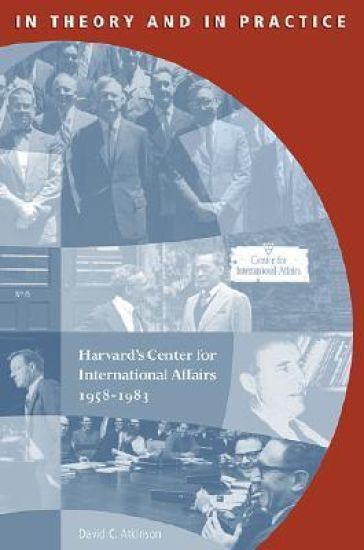
Harvard University inaugurated a new research center devoted to international relations in 1958. The Center for International Affairs (CFIA) was founded by State Department Director of Policy Planning Staff, Robert R. Bowie, at the invitation of McGeorge Bundy, Dean of the Faculty of Arts and Sciences. Joined by Henry A. Kissinger, Edward S. Mason, and Thomas C. Schelling, Bowie quickly established the CFIA as a hub for studying international affairs in the United States. CFIA affiliates produced seminal work on arms control theory, development and modernization theory, and transatlantic relations.Digging deep into unpublished material in the Harvard, MIT, and Kennedy Library archives, this book is punctuated with personal interviews with influential CFIA affiliates. David Atkinson describes the relationship between foreign policy and scholarship during the Cold War and documents the maturation of a remarkable academic institution. Atkinson’s history of the Center’s first twenty-five years traces the institutional and intellectual development of a research center that, fifty years later, continues to facilitate innovative scholarship. He explores the connection between knowledge and politics, beginning with the Center’s confident first decade and concluding with the second decade, which found the CFIA embroiled in Vietnam-era student protests.
“A superb, field-changing book…A true classic.”—Sunil Amrith“Makes a major contribution towards a necessary discussion of the politics of aid.”—Times Higher EducationDebates over foreign aid are often strangely ahistorical. Economists argue about effectiveness—how to make aid work—while critics bemoan money wasted on corruption, ignoring the fundamentally political character of aid. The Price of Aid exposes the geopolitical calculus underpinning development assistance, and its costs.India stood at the center of American and Soviet aid competition throughout the Cold War, as both superpowers saw developmental aid as a way of pursuing their geopolitical goals by economic means. Drawing on recently declassified files from seven countries, David Engerman shows how Indian leaders used Cold War competition to win battles at home, eroding the Indian state in the process. As China spends freely in Africa, the political stakes of foreign aid are rising once again.“A magnificent book. Anyone who seeks to understand contemporary India and its development struggles will have to start here. Engerman’s work is not only enlightening, it turns much of what we thought we knew about India, foreign aid, and the Cold War in South Asia upside down.”—O. A. Westad, author of The Cold War“An outstanding history…Drawing on an unprecedented array of official and private archives in India, Russia, the United States, and Britain, Engerman offers a superb account—one that integrates the ideologies and policies of the superpowers with a sharp analysis of the push-and-pull of policymaking in India. This is a landmark study of independent India as well as the Cold War.”—Srinath Raghavan, author of India’s War


Adaptation and Natural Selection in Caves
David C Culver; Thomas C Kane; Daniel W Fong
Harvard University Press
1995
sidottu


A Short History of Physics in the American Century
David C. Cassidy
Harvard University Press
2013
nidottu
As the twentieth century drew to a close, computers, the Internet, and nanotechnology were central to modern American life. Yet the advances in physics underlying these applications are poorly understood and widely underappreciated by U.S. citizens today. In this concise overview, David C. Cassidy sharpens our perspective on modern physics by viewing this foundational science through the lens of America's engagement with the political events of a tumultuous century.American physics first stirred in the 1890s-around the time x-rays and radioactivity were discovered in Germany-with the founding of graduate schools on the German model. Yet American research lagged behind the great European laboratories until highly effective domestic policies, together with the exodus of physicists from fascist countries, brought the nation into the first ranks of world research in the 1930s. The creation of the atomic bomb and radar during World War II ensured lavish government support for particle physics, along with computation, solid-state physics, and military communication. These advances facilitated space exploration and led to the global expansion of the Internet.Well into the 1960s, physicists bolstered the United States' international status, and the nation repaid the favor through massive outlays of federal, military, and philanthropic funding. But gradually America relinquished its postwar commitment to scientific leadership, and the nation found itself struggling to maintain a competitive edge in science education and research. Today, American physicists, relying primarily on industrial funding, must compete with smaller, scrappier nations intent on writing their own brief history of physics in the twenty-first century.

A scholar of law and religion uncovers a surprising origin story behind the idea of the separation of powers.The separation of powers is a bedrock of modern constitutionalism, but striking antecedents were developed centuries earlier, by Jewish scholars and rabbis of antiquity. Attending carefully to their seminal works and the historical milieu, David Flatto shows how a foundation of democratic rule was contemplated and justified long before liberal democracy was born.During the formative Second Temple and early rabbinic eras (the fourth century BCE to the third century CE), Jewish thinkers had to confront the nature of legal authority from the standpoint of the disempowered. Jews struggled against the idea that a legal authority stemming from God could reside in the hands of an imperious ruler (even a hypothetical Judaic monarch). Instead scholars and rabbis argued that such authority lay with independent courts and the law itself. Over time, they proposed various permutations of this ideal. Many of these envisioned distinct juridical and political powers, with a supreme law demarcating the respective jurisdictions of each sphere. Flatto explores key Second Temple and rabbinic writings—the Qumran scrolls; the philosophy and history of Philo and Josephus; the Mishnah, Tosefta, Midrash, and Talmud—to uncover these transformative notions of governance.The Crown and the Courts argues that by proclaiming the supremacy of law in the absence of power, postbiblical thinkers emphasized the centrality of law in the people’s covenant with God, helping to revitalize Jewish life and establish allegiance to legal order. These scholars proved not only creative but also prescient. Their profound ideas about the autonomy of law reverberate to this day.
The Politics of Cultural Differences
David C. Leege; Kenneth D. Wald; Brian S. Krueger; Paul D. Mueller
Princeton University Press
2002
pokkari
How did Republicans manage to hold the White House through much of the past half century even as the Democratic Party held the hearts of most American voters? The authors of this groundbreaking study argue that they did so by doing what Democrats have also excelled at: triggering psychological mechanisms that deepen cultural divisions in the other party's coalition, thereby leading many of its voters either to choose the opposing ticket or to stay home. The Politics of Cultural Differences is the first book to develop and carefully test a general theory of cultural politics in the United States, one that offers a compelling new perspective on America's changing political order and political conflict in the post-New Deal period (1960-1996). David Leege, Kenneth Wald, Brian Krueger, and Paul Mueller move beyond existing scholarship by formulating a theory of campaign strategies that emphasizes cultural conflict regarding patriotism, race, gender, and religion. Drawing on National Election Studies data, they find that Republican politicians deployed powerful symbols (e.g., "tax and spend liberals") to channel targeted voters toward the minority party. And as partisanship approached parity in the 1990s, Democratic leaders proved as adept at deploying their own symbols, such as "a woman's right to choose," to disassemble the Republican coalition. A blend of sophisticated theory and advanced empirical tools, this book lays bare the cultural dimensions of American political life.

Self-Determination and History in the Third World
David C. Gordon
Princeton University Press
2015
pokkari
In their struggle for self-determination the newly independent countries of the Third World are reestablishing links with their precolonial pasts and determining their present identities and future possibilities. To demonstrate this, David Gordon brings together, interprets, and synthesizes the thought of contemporary Arab historiographers. Originally published in 1971. The Princeton Legacy Library uses the latest print-on-demand technology to again make available previously out-of-print books from the distinguished backlist of Princeton University Press. These editions preserve the original texts of these important books while presenting them in durable paperback and hardcover editions. The goal of the Princeton Legacy Library is to vastly increase access to the rich scholarly heritage found in the thousands of books published by Princeton University Press since its founding in 1905.

Self-Determination and History in the Third World
David C. Gordon
Princeton University Press
2016
sidottu
In their struggle for self-determination the newly independent countries of the Third World are reestablishing links with their precolonial pasts and determining their present identities and future possibilities. To demonstrate this, David Gordon brings together, interprets, and synthesizes the thought of contemporary Arab historiographers. Originally published in 1971. The Princeton Legacy Library uses the latest print-on-demand technology to again make available previously out-of-print books from the distinguished backlist of Princeton University Press. These editions preserve the original texts of these important books while presenting them in durable paperback and hardcover editions. The goal of the Princeton Legacy Library is to vastly increase access to the rich scholarly heritage found in the thousands of books published by Princeton University Press since its founding in 1905.
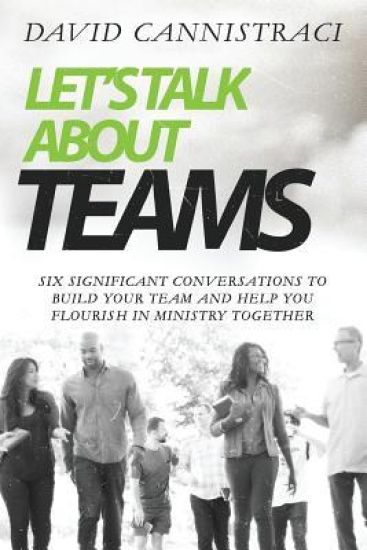
Let's Talk About Teams: Six Significant Conversations to Build Your Team and Help You Flourish in Ministry Together
David C. Cannistraci
David Cannistraci
2018
nidottu
What Entrepreneurs, Navy SEALs, Mountain Climbers, Symphony Conductors, Rescue Workers and Heroes of Faith Can Teach You About Building Healthy Teams WHY IS IT... Churches aren't reaching more people? Leaders are lonely and burning out? Volunteers are in short supply? More people aren't reaching their potential? WHAT IF... Your ministry culture could be a magnet for more volunteers? Your team relationships could grow stronger and healthier? The right conversations could release fresh ideas and new hope? LET'S TALK ABOUT TEAMS is an inspiring resource to help everyone on your team experience the joy of doing life and ministry together. Whether you are a volunteer, ministry coordinator, staff member, or pastor, here are six big ideas that can help your team make a difference in your world every week. In this book, you'll not only learn what you need to know, you'll become a part of the conversations that bring it all together: Why teams are vital for healthy ministries How to foster healthy team relationships How a culture of trust secures a team What Jesus emphasized about teaming up The secrets of motivating and leading a team How to build a ministry team that flourishes
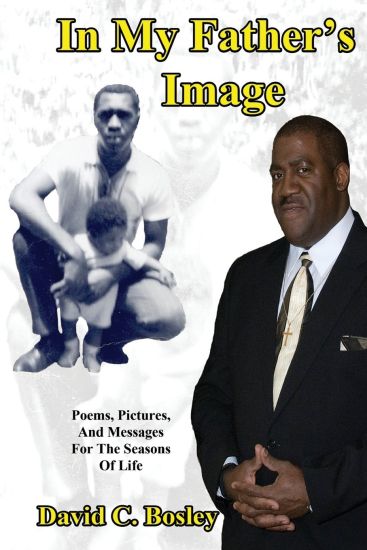
In My Father's Image: Poems, Pictures, and Messages for the Seasons of Life
David C. Bosley
Dayspring Touch Press
2014
nidottu