Kirjojen hintavertailu. Mukana 11 342 296 kirjaa ja 12 kauppaa.

Kirjahaku

Etsi kirjoja tekijän nimen, kirjan nimen tai ISBN:n perusteella.

1000 tulosta hakusanalla C. Stuart Chapman

C All-in-One Desk Reference For Dummies

C All-in-One Desk Reference For Dummies

Dan Gookin

Hungry Minds Inc,U.S.
2004
nidottu
Ready, set, code! A user-friendly guide introducing the C programming language to new and intermediate coders The C programming language and its direct descendants are widespread and among the most popular programming languages used in the world today. The enduring popularity of C continues because C programs are fast, concise, and run on many different systems. Flexible and efficient, C is designed for a wide variety of programming tasks: system-level code, text processing, graphics, telecommunications, and many other application areas. C All-in-One Desk Reference For Dummies is for beginning and intermediate C programmers and provides a solid overview of the C programming language, from the basics to advanced concepts, with several exercises that give you real-world practice. C All-in-One Desk Reference For Dummies covers everything users need to get up to speed on C programming, including advanced topics to take their programming skill to the next level. Inside you'll learn The entire development cycle of a C program: designing and developing the program, writing source code, compiling the code, linking the code to create the executable programs, debugging, and deploymentThe intricacies of writing the code -- the basic and not-so-basic building blocks that make up the source codeThorough coverage of keywords, program flow, conditional statements, constants and variables, numeric values, arrays, strings, functions, pointers, debugging, prototyping, and moreDozens of sample programs you can adapt and modify for your own use Written in plain English, this friendly guide also addresses some advanced programming topics, such as Programming for the Linux/Unix consoleWindows and Linux programmingGraphics programmingGames programmingInternet and network programmingHardware programming projects The book includes a handy appendix that shows you how to set up your computer for programming, how to select and use a text editor, and fix up the compiler, to ensure you're ready to work the author's examples. Written by Dan Gookin, the author of the first-ever For Dummies book (and several others) who's known for presenting complex material in an easy-to-understand way, this comprehensive guide makes learning the C programming language simple and fun. Grab your copy of C All-in-One Desk Reference For Dummies, so you can start coding your own programs.
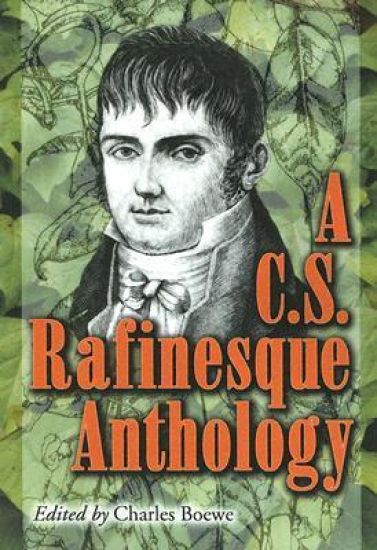
A C.S. Rafinesque Anthology

A C.S. Rafinesque Anthology

C.S. Rafinesque

McFarland Co Inc
2005
pokkari
Among American naturalists, C.S. Rafinesque (1783-1840) is second only to Audubon in the popular interest he sustains. This interest is due in part to his colorful life and provocative personality, but he is also remembered for devising Latin scientific names for more plants than any other naturalist who ever lived--and a great number in the animal kingdom, as well. This passion for nomenclature has kept his name memorable (some would say notorious) among naturalists. Yet his taxonomic writings made up only a part of his extensive oeuvre. Rafinesque's restless mind ranged over areas of inquiry from archaeology to zoology. His published writings in these fields have been difficult to lay hands on and have never been collected. Among such essays now gathered into this volume, two were unavailable until 1949, six were listed only in 1982 and four remained unknown until 2001. The recovery and reprinting of these 12 contributions help to broaden the understanding of his achievements over a lifetime. Arranged in nine sections, 25 topics are offered here (several of which are explored in more than one essay), including "the Origin of Native Americans," "Hebrew Studies," "Utopian Society," "Lightning," "The Milky Way," "Sea Serpents" and "Evolution." Editorial introductions are provided for each topic, and period illustrations--some included in the original Rafinesque publications--enhance the text.
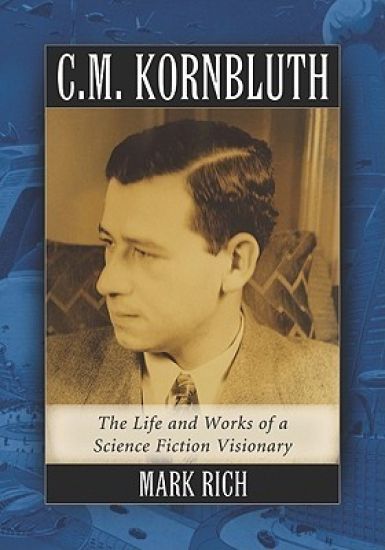
C.M. Kornbluth

C.M. Kornbluth

Mark Rich

McFarland Co Inc
2009
pokkari
Cyril Kornbluth is a legendary figure in science fiction. As a teenager in the years before World War II, he wrote prolifically and brilliantly under multiple pennames. After military service he developed a voice distinctive for its commanding intelligence, passion, and wit, displaying it in a string of novels and short stories including his award-winning "The Little Black Bag." His sudden death in 1958, at the early age of 35, marked the end of an era--it was a time when his chosen literary field was contemplating its potential demise. This comprehensive biography tells the story of this remarkable writer and his works for the first time.
C Programming Absolute Beginner's Guide

C Programming Absolute Beginner's Guide

Greg Perry; Dean Miller

Que Corporation,U.S.
2013
nidottu
Updated for C11 Write powerful C programs...without becoming a technical expert! This book is the fastest way to get comfortable with C, one incredibly clear and easy step at a time. You’ll learn all the basics: how to organize programs, store and display data, work with variables, operators, I/O, pointers, arrays, functions, and much more. C programming has neverbeen this simple! Who knew how simple C programming could be? This is today’s best beginner’s guide to writing C programs–and to learning skills you can use with practically any language. Its simple, practical instructions will help you start creating useful, reliable C code, from games to mobile apps. Plus, it’s fully updated for the new C11 standard and today’s free, open source tools! Here’s a small sample of what you’ll learn: • Discover free C programming tools for Windows, OS X, or Linux • Understand the parts of a C program and how they fit together • Generate output and display it on the screen • Interact with users and respond to their input • Make the most of variables by using assignments and expressions • Control programs by testing data and using logical operators • Save time and effort by using loops and other techniques • Build powerful data-entry routines with simple built-in functions • Manipulate text with strings • Store information, so it’s easy to access and use • Manage your data with arrays, pointers, and data structures • Use functions to make programs easier to write and maintain • Let C handle all your program’s math for you • Handle your computer’s memory as efficiently as possible • Make programs more powerful with preprocessing directives
C Programming in One Hour a Day, Sams Teach Yourself

C Programming in One Hour a Day, Sams Teach Yourself

Bradley Jones; Peter Aitken; Dean Miller

Sams Publishing
2013
nidottu
Sams Teach Yourself C Programming in One Hour a Day, Seventh Edition is the newest version of the worldwide best-seller Sams Teach Yourself C in 21 Days. Fully revised for the new C11 standard and libraries, it now emphasizes platform-independent C programming using free, open-source C compilers. This edition strengthens its focus on C programming fundamentals, and adds new material on popular C-based object-oriented programming languages such as Objective-C.Filled with carefully explained code, clear syntax examples, and well-crafted exercises, this is the broadest and deepest introductory C tutorial available. It’s ideal for anyone who’s serious about truly mastering C – including thousands of developers who want to leverage its speed and performance in modern mobile and gaming apps. Friendly and accessible, it delivers step-by-step, hands-on experience that starts with simple tasks and gradually builds to professional-quality techniques. Each lesson is designed to be completed in hour or less, introducing and clearly explaining essential concepts, providing practical examples, and encouraging you to build simple programs on your own. Coverage includes: Understanding C program components and structureMastering essential C syntax and program controlUsing core language features, including numeric arrays, pointers, characters, strings, structures, and variable scopeInteracting with the screen, printer, and keyboardUsing functions and exploring the C Function LibraryWorking with memory and the compiler Contents at a Glance PART I: FUNDAMENTALS OF C 1 Getting Started with C 2 The Components of a C Program 3 Storing Information: Variables and Constants 4 The Pieces of a C Program: Statements, Expressions, and Operators 5 Packaging Code in Functions 6 Basic Program Control 7 Fundamentals of Reading and Writing Information PART II: PUTTING C TO WORK 8 Using Numeric Arrays 9 Understanding Pointers 10 Working with Characters and Strings 11 Implementing Structures, Unions, and TypeDefs 12 Understanding Variable Scope 13 Advanced Program Control 14 Working with the Screen, Printer, and Keyboard PART III: ADVANCED C 15 Pointers to Pointers and Arrays of Pointers 16 Pointers to Functions and Linked Lists 17 Using Disk Files 18 Manipulating Strings 19 Getting More from Functions 20 Exploring the C Function Library 21 Working with Memory 22 Advanced Compiler Use PART IV: APPENDIXES A ASCII Chart B C/C++ Reserved Words C Common C Functions D Answers
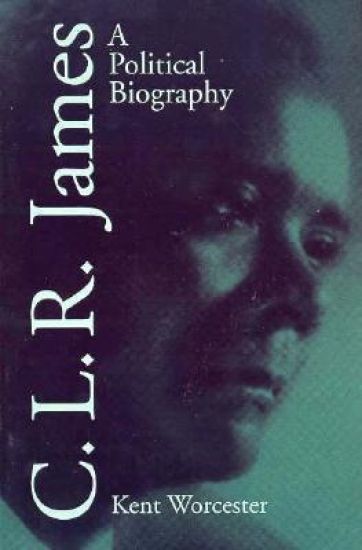
C.L.R. James

C.L.R. James

Kent Worcester

State University of New York Press
1995
pokkari
A fascinating, immensely readable biography of one of the most important radical intellectuals of the twentieth century.C. L. R. James: A Political Biography offers the first sustained account of the life and work of one of the twentieth-century's most important radical intellectuals.C. L. R. James (1901-1989) was born and raised in Trinidad and became one of the most prominent figures to emerge out of the West Indian diaspora. He authored numerous books and essays on Caribbean history, Marxist theory, literary criticism, Western civilization, African politics, Hegelian philosophy, and popular culture. His best known works, The Black Jacobins: Toussaint L'Ouverture and the San Domingo Revolution, and Beyond a Boundary are classics of twentieth-century thought. James played an active part in democratic movements in the West Indies and Africa as well as in left-wing and Pan-African campaigns in Britain, the United States, and Trinidad.
C. I. Lewis

C. I. Lewis

Murray G. Murphey

State University of New York Press
2019
pokkari
An intellectual biography of the American philosopher C. I. Lewis.2006 CHOICE Outstanding Academic Title Noted scholar-historian Murray G. Murphey explores the life and intellectual work of C. I. Lewis (1883–1964), the central figure in American philosophy between the "golden age" of James and Royce and the later scene of Quine and Goodman, Sellars and Rorty. As professor of philosophy at Harvard and the founder of modal symbolic logic, Lewis taught and deeply influenced a generation of philosophers. Murphey traces the development of Lewis's thought from his early Idealism through his Conceptual Pragmatism and his defense of that position against the onslaught of Logical Positivism in the 1930s and 1940s. He also examines how Lewis developed in a more precise and systematic way the Pragmatism of Peirce, James, and Dewey, while retaining their combination of empiricism and humanism and marshalling the weapons of analytic philosophy in their defense. Detailed attention is given to the important contributions of Lewis's work in logic, epistemology, value theory, meaning, and ethics.
C-Train and Thirteen Mexicans

C-Train and Thirteen Mexicans

Jimmy Santiago Baca

Grove Press / Atlantic Monthly Press
2002
pokkari
Jimmy Santiago Baca's brilliantly received memoir, A Place to Stand, earned him the prestigious International Prize and offered a keyhole view into the brutal personal history that shaped -- and continues to inform -- his raw, incisive voice. In C-Train and Thirteen Mexicans, he trains his hallmark lyrical intensity on the dark underbelly of addiction and takes us on an unforgettable guided tour of the darkest corners of a brutal, unjust world. C-Train is a heartstopping series of episodes from the life of Dream-boy, a young man who finds himself seduced, and later enslaved, by the siren song of cocaine. Part paean to the delicious power of intoxication, part lament for those helplessly under its power, C-Train is a ride its hero, and the reader, struggle to get off. In Thirteen Mexicans, Baca writes of the Chicano community and the gulf between the American dream and American reality. In searing, elegiac vignettes he portrays the raw beauty of life in the barrio and the surreal, stomach-turning moment when people of color must confront how they are reflected in the distorted mirror of white society. Giving voice to the dispossessed and the disenfranchised, Baca illuminates the most unforgiving landscapes; yet his is a vision tempered by a searching hopefulness that brings these collections inching toward redemption. Baca's latest achievement will confirm his place as one of the nation's leading poets, a poet whose words "heal, inspire, and elicit the earthly response of love" (Garrett Hongo). "[Baca] writes with ... an intense lyricism and that transformative vision which perceives the mythic and archetypal significance of life-events." -- Denise Levertov
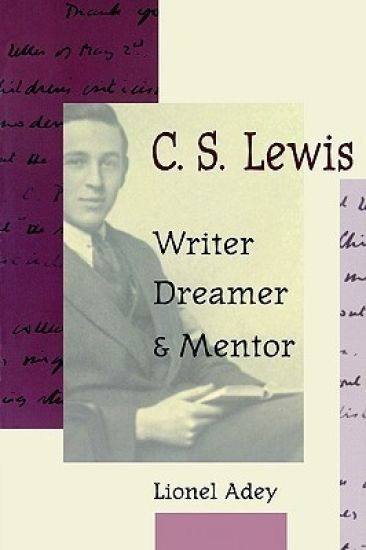
C.S.Lewis

C.S.Lewis

Lionel Adey

William B Eerdmans Publishing Co
1998
pokkari
From early childhood, C. S. Lewis engaged the world around him primarily through the medium of books. He read voraciously, and his own writing covers a broad range of genres. This new study by Lionel Adey is unique in its attempt to trace the development of C. S. Lewis as a maker and reader of books. Adey shows how the two sides of Lewis's personality, the "Dreamer" and the "Mentor," affected his writing in its various modes: literary history and criticism, fiction for adults and for children, poetry, essays and addresses, and letters. Adey also discusses the formative biographical events in Lewis's life and offers an estimate of Lewis's achievement and legacy as a writer.
The Complete Poems of C.Day Lewis

The Complete Poems of C.Day Lewis

C. Day Lewis; Jill Balcon

Stanford University Press
1996
pokkari
C. Day Lewis (1904-1972) was one of the leading young poets of the 1930's who - along with W. H. Auden, Louis MacNeice, and Stephen Spender - broke away from the staid poetic establishment to dominate British poetry in the middle third of the century. Here, for the first time, are all the poems Day Lewis wrote, including occasional verse which has never appeared in book form and a number of poems previously published only in limited editions. The Complete Poems has been edited, with an introduction and textual notes, by Jill Balcon, the poet's widow.
C is for Corpse

C is for Corpse

Sue Grafton

Henry Holt Company
1986
sidottu
You haven't read a thriller until you read #1 New York Times bestselling author Sue Grafton's novels with her unforgettable P.I. Kinsey Millhone... "C" is for CorpseHe was young-maybe twenty or so-and he must once have been a good-looking kid. Kinsey could see that. But now his body was covered in scars, his face half-collapsed. It saddened Kinsey and made her curious. She could see he was in a lot of pain. But for three weeks, as Kinsey'd watched him doggedly working out at the local gym, putting himself through a grueling exercise routine, he never spoke. Then one Monday morning when there was no one else in the gym, Bobby Callahan approached her. His story was hard to credit: a murderous assault by a tailgating car on a lonely rural road, a roadside smash into a canyon 400 feet below, his Porsche a bare ruin, his best friend dead. The doctors had managed to put his body back together again-sort of. His mother's money had seen to that. What they couldn't fix was his mind, couldn't restore the huge chunks of memory wiped out by the crash. Bobby knew someone had tried to kill him, but he didn't know why. He knew he had the key to something that made him dangerous to the killer, but he didn't know what it was. And he sensed that someone was still out there, ready to pounce at the first sign his memory was coming back. He'd been to the cops, but they'd shrugged off his story. His family thought he had a screw loose. But he was scared-scared to death. He wanted to hire Kinsey. His case didn't have a whole lot going for it, but he was hard to resist: young, brave, hurt. She took him on. And three days later, Bobby Callahan was dead. Kinsey Millhone never welshed a deal. She'd been hired to stop a killing. Now she'd find the killer. "A" Is for Alibi"B" Is for Burglar"C" Is for Corpse"D" Is for Deadbeat"E" Is for Evidence"F" Is for Fugitive"G" Is for Gumshoe"H" Is for Homicide"I" Is for Innocent"J" Is for Judgment"K" Is for Killer"L" is for Lawless"M" Is for Malice"N" Is for Noose"O" Is for Outlaw"P" Is for Peril "Q" Is for Quarry"R" Is for Ricochet "S" Is for Silence "T" Is for Trespass"U" Is for Undertow "V" Is for Vengeance "W" Is for Wasted "X"
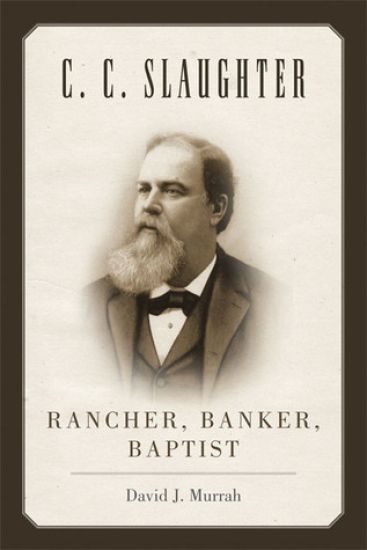
C.C. Slaughter

C.C. Slaughter

David J. Murrah

University of Oklahoma Press
2012
nidottu
Born during the infant years of the Texas Republic, C. C. Slaughter (1837-1919) participated in the development of the southwestern cattle industry from its pioneer stages to the modern era. Trail driver, Texas Ranger, banker, philanthropist, and cattleman, he was one of America's most famous ranchers. David J. Murrah's biography of Slaughter, now available in paperback, still stands as the definitive account of this well-known figure in Southwest history.A pioneer in West Texas ranching, Slaughter increased his holdings from 1877 to 1905 to include more than half a million acres of land and 40,000 head of cattle. At one time ""Slaughter country"" stretched from a few miles north of Big Spring, Texas, northwestward two hundred miles to the New Mexico border west of Lubbock. His father, brothers, and sons rode the crest of his popularity, and the Slaughter name became a household word in the Southwest. In 1873 - almost ten years before the ""beef bonanza"" on the open range made many Texas cattlemen rich - C. C. Slaughter was heralded by a Dallas newspaper as the ""Cattle King of Texas."" Among the first of the West Texas cattlemen to make extensive use of barbed wire and windmills, Slaughter introduced new and improved cattle breeds to West Texas.In his later years, greatly influenced by Baptist minister George W. Truett of Dallas, Slaughter became a major contributor to the work of the Baptist church in Texas. He substantially supported Baylor University and was a cofounder of the Baptist Education Commission and Dallas's Baylor Hospital.Slaughter also cofounded the Texas Cattle Raisers' Association (1877) and the American National Bank of Dallas (1884), which through subsequent mergers became the First National Bank. His banking career made him one of Dallas's leading citizens, and at times he owned vast holdings of downtown Dallas property.
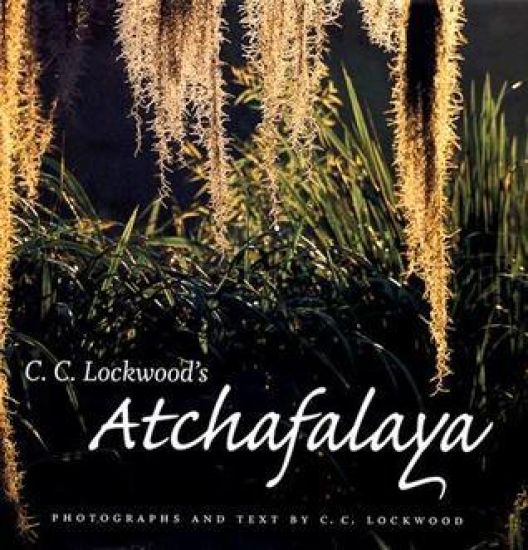
C. C. Lockwood's Atchafalaya

C. C. Lockwood's Atchafalaya

C. C. Lockwood

Louisiana State University Press
2007
sidottu
At nearly 1.4 million acres, the Atchafalaya Basin in south central Louisiana comprises America's largest swamp wilderness. Award-winning nature photographer C. C. Lockwood is the foremost chronicler of this natural treasure. What began as a curious side-trip in 1973 became a decades-long love affair, and for more than thirty years, Lockwood has explored the Atchafalaya's waters and captured its haunting beauty on film. Now, twenty-five years after the publication of his first book, he returns to his favorite subject in C. C. Lockwood's Atchafalaya. His passion for the Atchafalaya as expressed in his photographs can be compared to John James Audubon's exuberant appreciation for the state's abundant bird life as depicted in his prints more than 150 years ago. The art of both exalts Louisiana's wildlife -- and cautions against taking it for granted. Lockwood revisits and reflects on the places he has frequented most in the swamp, recalling his escapades both long past and recent among gators and skeeters. He shares the thoughts of basin residents about how the Atchafalaya has changed over time, for better and for worse. Increases and decreases in various bird and other animal populations, changes in water levels and consistency, flora mainstays and trees gone missing, burgeoning aquatic vegetation -- all are keenly observed by this explorer. Lockwood finds undiminished the seductive seasonal and diurnal moods of the swamp: autumn and spring, sunset and moonrise, as breathtaking now as in the past. In nearly one-hundred dazzling color photographs, Lockwood brilliantly documents the Atchafalaya's timeless beauty. He shows amazingly diverse and abundant wildlife, rookeries with thousands of egrets and herons, waters with billions of crawfish, and ridges with deer, squirrel, and woodcock. Waters run deep in Lockwood's soul, as evidenced in his intimate treatment of the meandering bayous fringed with bald cypress trees, the many glassy lakes reflecting vegetation into double images, and the mighty Atchafalaya River -- the lifeline of the swamp.""No place in the world gives me such a feeling of peace as America's largest river basin swamp,"" writes Lockwood. In these pages, he pays homage to the queen of U.S. wetlands.
C. M. Haile's ""Pardon Jones"" Letters

C. M. Haile's ""Pardon Jones"" Letters

Louisiana State University Press
2009
sidottu
From 1840 to 1848, journalist C. M. Haile published a series of mock letters-to-the-editor in the New Orleans Picayune under the pseudonym ""Pardon Jones."" With their rural dialect, outlandish and amusing characters, and farcical situations, the letters proved extremely popular with readers and became a regular feature in the newspaper. In C. M. Haile's ""Pardon Jones"" Letters, Ed Piacentino collects all of Haile's sixty-seven epistles, highlighting this trove of Old Southwest humor and the prolific writer's foremost literary achievement.The humor of the Old Southwest flourished in the sparsely settled frontier regions of Georgia, the Carolinas, Louisiana, and other southern states from the 1830s to the end of the Civil War, with amateur humorists anonymously or pseudonymously publishing pieces written in backwoods vernacular in their local and regional newspapers. Like others in the genre, Haile's ""Pardon Jones"" letters gently burlesque the eccentricities, scams, scrapes, and other misadventures of his plain folk characters. Unlike his contemporaries, however, Haile also used his mock epistles to discuss key political matters of the day, imbuing his characters with a liberal voice and an engaging dramatic presence. Set in three different venues - Louisiana, Massachusetts, and Mexico - the letters allude to national issues such as the tariff debate, boundary disputes between the United States and Canada, the controversy over a national bank, the conflict between states' rights and nationalism, and the debate over the annexation of Texas. Uniquely among Old Southwest humorists, Haile wrote from Mexico of Americans' encounter with a culture that lay south of the United States. By choosing to emphasise the marginalized Mexican ""other,"" Haile expanded the contours of Old Southwest humor and imaginatively enriched the sociocultural milieu of his fictive letters. Piacentino's informative introduction provides a meticulously researched account of Haile's life and career. His annotations identify obscure allusions throughout the book, and a glossary provides help with words and phrases of the dialect and with other unfamiliar references. With his lively ""Pardon Jones"" letters, C. M. Haile gave common folk a voice, a privilege rarely afforded to them in earlier American literature.
C'Est La Guerre

C'Est La Guerre

Louis Calaferte; Austryn Wainhouse

Northwestern University Press
1999
sidottu
In C'est la guerre Louis Calaferte presents the World War II--from the moment its outbreak is announced to the public through the unprecedented disaster that ensues, and through France's liberation in 1945--as it registers itself in the ever more isolated consciousness of a young, nameless boy.