Kirjahaku
Etsi kirjoja tekijän nimen, kirjan nimen tai ISBN:n perusteella.
1000 tulosta hakusanalla C.J. Box
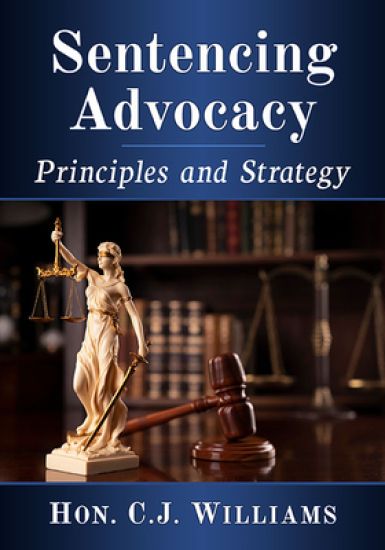
To ensure a fair criminal trial, effective sentencing advocacy is needed in every stage of prosecution, from investigation through plea, trial and sentencing hearings. With fewer criminal cases proceeding to trial, advocacy is increasingly critical for both prosecutors and defense attorneys and can determine whether or not a defendant receives an appropriate sentence. Here is a volume that comprehensively describes the steps to effective sentencing advocacy, addressing not only terms of imprisonment or probation, but fines, forfeiture, restitution and other collateral sentencing consequences. It emphasizes approaching sentencing advocacy holistically, treating it as a key component of attorney advocacy in every criminal case. Covering the fundamental sentencing procedures and concepts, it describes where and how attorneys can use advocacy to advance their clients' goals. It also explains aspects of sentencing that otherwise may appear too complex to a novice criminal practitioner. Importantly, this is not a book on sentencing law, although it addresses legal sentencing issues as they pertain to sentencing advocacy. Rather, the focus is on teaching attorneys how to use advocacy to achieve the best sentence for their clients.

During his 20-year career as a federal prosecutor, the author worked hundreds of criminal cases, from a botched attempted bank robbery to high profile death penalty cases. In this collection of stories, the author recounts tales of trauma, drama and criminal minds. While many prosecutors might share their reflections on the details and operations of legal proceedings, the author instead focuses this collection on the human aspects of the criminals and their trials. The book ruminates on human nature, contemplating the motivations of the featured criminals and assessing the impact their crimes had on victims, family members and others. Some of the stories are light-hearted and humorous, while others are heartbreaking, but all provide unique and compelling insight into the all too human world of federal crime.








What was once a simple life has turned into a very long life for vampyre Pascal Theroux. The initial loneliness, along with the obsession of not being able to walk in the sun, begins to consume him. When he and his mate, Angel, finally resign themselves to the fact that they will forever be confined by the night, they figure out a way to create a clan of sun-resistant vampires to do their dirty work for them. But is Angel really on his side anymore?As Malina and Thomas prepare for their wedding, and Kathryn and Jonathan begin to explore the possibility of becoming serious again, a new agent from the BSI shows up and delivers some disturbing news about the Portland Vampire Clan. While the Immortals, including newbie Dr. Tyler James, learn to hone in new skills and perfect their old ones, they also prepare for the trial of Seth and Malachi, who are imprisoned on the Island. The news the shapeshifters deliver during their trial, though, has the power to alter the history books.

Kathryn Jones has had a rough start in life, and as things seemed to just continue on a downward spiral, she suddenly gets a new start in life and moves to a new city to make a fresh start. When tragedy strikes, she plummets herself into her work and gets the surprise of her life when she meets the man who will continually take her breath away for the next hundred years. Will her rocky relationship with him last?Meanwhile in Portland, as the shapeshifters open a new nightclub, the vampires struggle to keep theirs running with all the new changes in the house. Angel has finally had enough of the new vampires and takes matters into her own hands to realign leadership in the house. As Thomas and Malina prepare to become parents, Malina begins to fret over her upcoming mortality and disappears. Will Thomas and Jonathan find her in time? Find out in the jaw-dropping conclusion of the Enchanted Immortals Series.
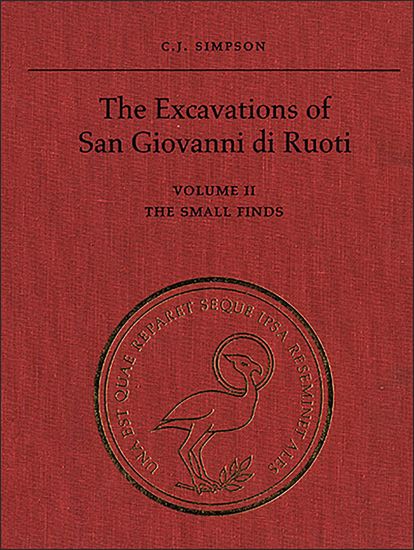
Between 1977 and 1984 the excavations of a Canadian archaeological team at San Giovanni di Ruoti in southern Italy uncovered a series of three Roman villas dating from the first to the sixth centuries AD. The multi-volume report on the excavation will provide the first comprehensive overview of the social and economic life of a Roman villa in southern Italy. Volume II constitutes a catalogue raisonTe of the small finds, covering all categories of non-ceramic personal, domestic, and industrial artifacts recovered from the site. C.J. Simpson has been a member of the Canadian excavation team since 1979. He provides detailed descriptions of the individual artifacts, their dates of manufacture, and their use, and discusses the evidence they yield for domestic and daily life. The artifacts range from hairpins and brooches to iron knives used for slicing and chopping. Coins and lamps found at the site are evaluated in separate contributions by R. Reece and J.J. Rossiter. The book includes several useful appendices, notably one by Vito Volterra on the analysis of millstones.The 400 items listed in the catalogue are illustrated by drawings or photographs. This volume presents one of very few accounts of the household artifacts found at an estate centre remote from urban Rome. It provides an important resource for specialists seeking to date similar objects, and adds much interesting detail to our picture of the rural economy of Italy in late antiquity.