

Kirjahaku
Etsi kirjoja tekijän nimen, kirjan nimen tai ISBN:n perusteella.
1000 tulosta hakusanalla Colin Channer
Sharing a commitment to the theory of communication to Habermas' Theory of Communicative Action , Grant here issues a range of challenges to it. He critiques theories of dialogism and intersubjectivity, proposes a rethinking of the communicating subject in society and explores the new contingencies of culture and media in today's world.

• Consolidates and recycles the language presented in the Student’s Book• Learning Diary in every module, allows students to track their progress• Extra Practice activities• The included story focuses on the language being learnt in a fun and engaging way• Word List – for further study and vocabulary revision

A major new text on terrorism in the contemporary world. Terrorism, Colin Wight argues, is not only a form of political violence but also a form of political communication and can only be understood - and countered effectively - in the context of its relationship to the state.
• Traditional and transparent grammar syllabus with gradual progression• A good balance of all four skills• Integrated skills lesson with cross-cultural focus• Songs and games to help stimulate learning• Accompanying CD-ROM• ‘Check your English’ and ‘Remember!’ sections
• Traditional and transparent grammar syllabus with gradual progression• A good balance of all four skills• Integrated skills lesson with cross-cultural focus• Songs and games to help stimulate learning• Accompanying CD-ROM• ‘Check your English’ and ‘Remember!’ sections

Hot Spot 3 Student's Book & CD-ROM Pack
Colin Granger; Katherine Stannett
Macmillan Education
2009
muu
• Traditional and transparent grammar syllabus with gradual progression• A good balance of all four skills• Integrated skills lesson with cross-cultural focus• Songs and games to help stimulate learning• Accompanying CD-ROM• ‘Check your English’ and ‘Remember!’ sections

• Traditional and transparent grammar syllabus with gradual progression• A good balance of all four skills• Integrated skills lesson with cross-cultural focus• Songs and games to help stimulate learning• Accompanying CD-ROM• ‘Check your English’ and ‘Remember!’ sections
- PET exam features make Hot Spot 5 the ideal course for students planning to take this exam or for those taking other state exams including Exam practice sections and a Writing bank. - Topics specifically aimed at the 15-year-old as well as cross-curricular topics. - Strong focus on skills and vocabulary development. - Extra Grammar lessons in the Teacher's Book extend the grammar syllabus introducing structures such as third conditional and present perfect continuous. - Exam practice MPO also available.
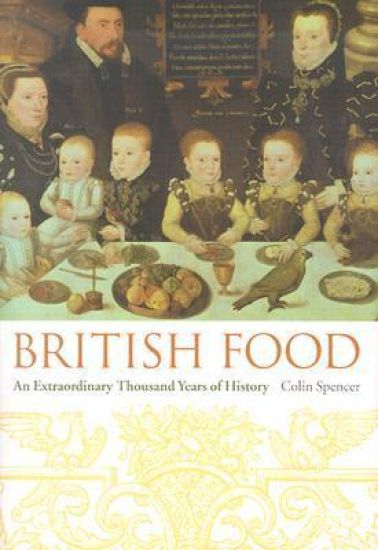
Until the middle of the nineteenth century, English cuisine was known throughout Europe as extraordinarily stylish, tasteful, and contemporary, designed to satisfy sophisticated palates. So, as Colin Spencer asks, why did British food "decline so direly that it became a world-wide joke, and how is it now climbing back into eminence?" This delectable volume traces the rich variety of foods that are inescapably British-and the thousand years of history behind them. Colin Spencer's masterful and witty account of Britain's culinary heritage explores what has influenced and changed eating in Britain-from the Black Death, the Enclosures, the Reformation, the Age of Exploration, the Industrial Revolution, and the rise of capitalism to present-day threats posed by globalization, including factory farming, corporate control of food supplies, and the pervasiveness of prepackaged and fast foods. He situates the beginning of the decline in British cuisine in the Victorian age, when various social, historical, and economic factors-an emphasis on appearances, a worship of French cuisine, the rise of Nonconformism, which saw any pleasure as a sin, the alienation from rural life found in burgeoning towns, the rise and affluence of the new bourgeoisie, and much else-created a fear that simple cooking was vulgar. The Victorians also harbored suspicions that raw foods were harmful, encouraged by the publication of a key cookbook of the period, Mrs. Beeton's Book of Household Management. However, twenty-first century British cooking is experiencing a glorious resurgence, fueled by television gurus and innovative restaurants with firm roots in the British tradition. This new interest in and respect for good food is showing the whole world, as Spencer puts it, "that the old horror stories about British food are no longer true."
Pragmatism is America's best-known native philosophy. It espouses a practical set of beliefs and principles that focus on the improvement of our lives. Yet the split between classical and contemporary pragmatists has divided the tradition against itself. Classical pragmatists, such as John Dewey and William James, believed we should heed the lessons of experience. Neopragmatists, including Richard Rorty, Hilary Putnam, and Jurgen Habermas, argue instead from the perspective of a linguistic turn, which makes little use of the idea of experience. Can these two camps be reconciled in a way that revitalizes a critical tradition? Colin Koopman proposes a recovery of pragmatism by way of "transitionalist" themes of temporality and historicity which flourish in the work of the early pragmatists and continue in contemporary neopragmatist thought. "Life is in the transitions," James once wrote, and, in following this assertion, Koopman reveals the continuities uniting both phases of pragmatism. Koopman's framework also draws from other contemporary theorists, including Michel Foucault, Pierre Bourdieu, Bernard Williams, and Stanley Cavell. By reflecting these voices through the prism of transitionalism, a new understanding of knowledge, ethics, politics, and critique takes root. Koopman concludes with a call for integrating Dewey and Foucault into a model of inquiry he calls genealogical pragmatism, a mutually informative critique that further joins the analytic and continental schools.
Pragmatism is America's best-known native philosophy. It espouses a practical set of beliefs and principles that focus on the improvement of our lives. Yet the split between classical and contemporary pragmatists has divided the tradition against itself. Classical pragmatists, such as John Dewey and William James, believed we should heed the lessons of experience. Neopragmatists, including Richard Rorty, Hilary Putnam, and Jurgen Habermas, argue instead from the perspective of a linguistic turn, which makes little use of the idea of experience. Can these two camps be reconciled in a way that revitalizes a critical tradition? Colin Koopman proposes a recovery of pragmatism by way of "transitionalist" themes of temporality and historicity which flourish in the work of the early pragmatists and continue in contemporary neopragmatist thought. "Life is in the transitions," James once wrote, and, in following this assertion, Koopman reveals the continuities uniting both phases of pragmatism. Koopman's framework also draws from other contemporary theorists, including Michel Foucault, Pierre Bourdieu, Bernard Williams, and Stanley Cavell. By reflecting these voices through the prism of transitionalism, a new understanding of knowledge, ethics, politics, and critique takes root. Koopman concludes with a call for integrating Dewey and Foucault into a model of inquiry he calls genealogical pragmatism, a mutually informative critique that further joins the analytic and continental schools.
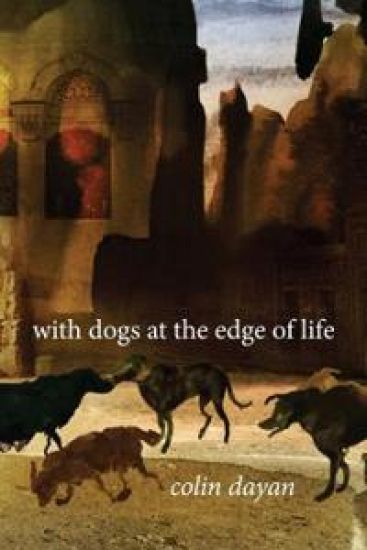
In this original and provocative book, Colin Dayan tackles head-on the inexhaustible world, at once tender and fierce, of dogs and humans. We follow the tracks of dogs in the bayous of Louisiana, the streets of Istanbul, and the humane societies of the United States, and in the memories and myths of the humans who love them. Dayan reorients our ethical and political assumptions through a trans-species engagement that risks as much as it promises. She makes a powerful case for questioning what we think of as our deepest-held beliefs and, with dogs in the lead, unsettles the dubious promises of liberal humanism. Moving seamlessly between memoir, case law, and film, Dayan takes politics and animal studies in a new direction-one that gives us glimpses of how we can think beyond ourselves and with other beings. Her unconventional perspective raises hard questions and renews what it means for any animal or human to live in the twenty-first century. Nothing less than a challenge for us to confront violence and suffering even in the privileged precincts of modernity, this searing and lyrical book calls for another way to think the world. Theoretically sophisticated yet aimed at a broad readership, With Dogs at the Edge of Life illuminates how dogs-and their struggles-take us beyond sentimentality and into a form of thought that can make a difference to our lives.
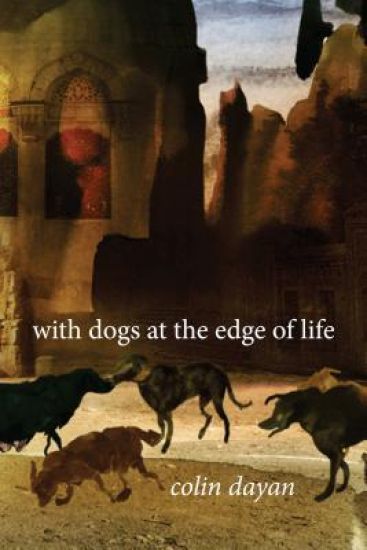
In this original and provocative book, Colin Dayan tackles head-on the inexhaustible world, at once tender and fierce, of dogs and humans. We follow the tracks of dogs in the bayous of Louisiana, the streets of Istanbul, and the humane societies of the United States, and in the memories and myths of the humans who love them. Dayan reorients our ethical and political assumptions through a trans-species engagement that risks as much as it promises. She makes a powerful case for questioning what we think of as our deepest-held beliefs and, with dogs in the lead, unsettles the dubious promises of liberal humanism.Moving seamlessly between memoir, case law, and film, Dayan takes politics and animal studies in a new direction—one that gives us glimpses of how we can think beyond ourselves and with other beings. Her unconventional perspective raises hard questions and renews what it means for any animal or human to live in the twenty-first century. Nothing less than a challenge for us to confront violence and suffering even in the privileged precincts of modernity, this searing and lyrical book calls for another way to think the world. Theoretically sophisticated yet aimed at a broad readership, With Dogs at the Edge of Life illuminates how dogs—and their struggles—take us beyond sentimentality and into a form of thought that can make a difference to our lives.
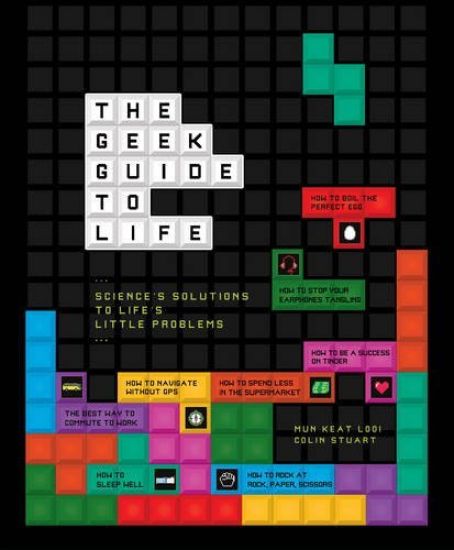
How to win at life by harnessing the power of science.
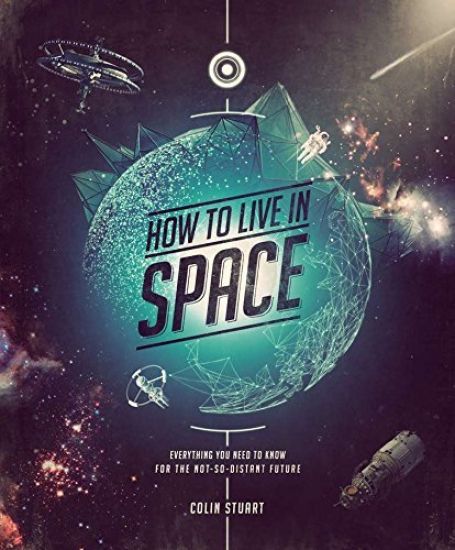
How to Live in Space is the ultimate guide to your future life in space. Presented with infographics and photographs, How to Live in Space is a scientific yet entertaining guide to living in orbit, the viability of terraforming and the long-term effects of space on the human body.
While geeks' obsessive desire for data makes them constant curators of useless information, it also drives them to great lengths to find the solutions to everyday problems. How do you make the perfect cup of tea? What are the moves that will impress a hot date on the dance floor? Is there an optimum angle for skimming a stone? Science the Sh*t Out of Life reveals the nerdy secrets to living smarter, offering scientifically sourced advice for dealing with everything life throws at you. Presented with top tips, infographics and a sense of humour, Science the Sh*t Out of Life appeals not just to Star Trek junkies and computer nerds but to anyone seeking answers to some of life's eternal questions.
This book is for anyone starting out or hoping to work in the ever-expanding world of television and video. Everyone involved in a TV or video production is contributing to the program making process. They all need to know and understand how it happens. Whatever you want to end up doing, whether you are part way through a course or starting from scratch, this book gives you all the essential information you will need. It takes a practical, step-by-step approach, based on the author's own 25-year experience of producing, writing and directing for broadcast television and the corporate sector on both video and film. It describes the roles people perform, the equipment they use and what it does. In simple, easy-to-read language it explains the grammar of shooting and editing and offers first-hand advice on treatments, scripts and budgets. As well as covering the technical aspects of both single and multi-camera production, it also looks at the editorial elements that create a successful program. With practical examples it demonstrates how best to turn ideas into reality, how to obtain successful interviews and how to put together programs that work. Colin Hart has his own production company making programs for corporate clients. He trained as a single and multi-camera director in local televison news and for ten years worked in BBC Current Affairs producing and directing for Nationwide and The Money Programme.
Get ready for adventure by learning tips and skills to survive the outdoors. Learn the basics - from picking the best campground to knowing how to build a shelter - with clear step-by-step illustrations. Find out why not to camp under a tree, how to make a bed of leaves, and learn useful knots to secure your camp. Once you're safely in your shelter, discover how to net a fish, purify water, light a fire with flint and steel, and cook your catch.Find out what to take on your expedition, how to plan your route, and what to include in your survival kit. Then have fun learning camp craft and bushcraft skills. To help you find your way, this book shows you how to use a map and compass, or the Sun and stars as a guide. Discover the best way to hike over terrains, including forests, swamps, sand, snow, and ice. Learn, too, how to predict the weather by observing clouds and wind direction. So start packing your rucksack for an outdoor adventure and don't forget your copy of Survival for Beginners.