Kirjojen hintavertailu. Mukana 11 699 587 kirjaa ja 12 kauppaa.

Kirjahaku

Etsi kirjoja tekijän nimen, kirjan nimen tai ISBN:n perusteella.

1000 tulosta hakusanalla Colin Pitt

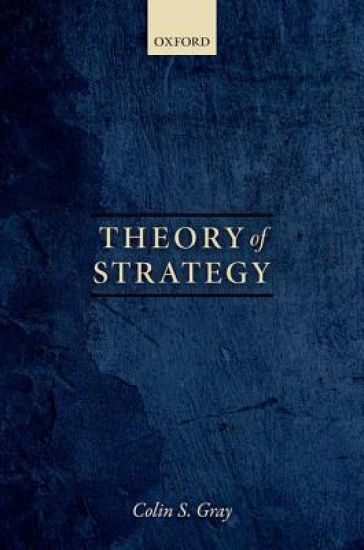
Theory of Strategy

Theory of Strategy

Colin S. Gray

Oxford University Press
2018
nidottu
This book provides a short and accessible introduction to the theory of strategy, examines the general theory of strategy in accordance with 23 key Principles and explains its nature, functions, and intended consequences. Theory of Strategy makes the radical argument that the familiar structure of strategy's general theory (political ends, strategic ways, military means - and assumptions) holds as sound for security at all times and in all places, of human necessity. Strategy is ever-varying in its character, but not in its nature, which is unchanging.
Compassionate Moral Realism

Compassionate Moral Realism

Colin Marshall

Oxford University Press
2018
sidottu
Colin Marshall offers a ground-up defense of objective morality, drawing inspiration from a wide range of philosophers, including John Locke, Arthur Schopenhauer, Iris Murdoch, Nel Noddings, and David Lewis. Marshall's core claim is compassion is our capacity to perceive other creatures' pains, pleasures, and desires. Non-compassionate people are therefore perceptually lacking, regardless of how much factual knowledge they might have. Marshall argues that people who do have this form of compassion thereby fit a familiar paradigm of moral goodness. His argument involves the identification of an epistemic good which Marshall dubs "being in touch". To be in touch with some property of a thing requires experiencing it in a way that reveals that property - that is, experiencing it as it is in itself. Only compassion, Marshall argues, lets us be in touch with others' motivational mental properties. This conclusion about compassion has two important metaethical consequences. First, it generates an answer to the question "Why be moral?", which has been a central philosophical concern since Plato. Second, it provides the keystone for a novel form of moral realism. This form of moral realism has a distinctive set of virtues: it is anti-relativist, naturalist, and able to identify a necessary connection between moral representation and motivation. The view also implies that there is an epistemic asymmetry between virtuous and vicious agents, according to which only morally good people can fully face reality.
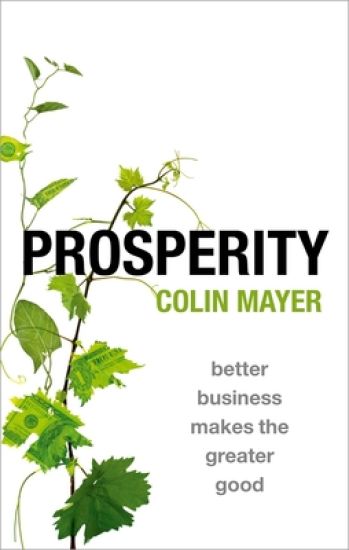
Prosperity

Prosperity

Colin Mayer

Oxford University Press
2018
sidottu
What is business for? Day one of a business course will tell you: it is to maximise shareholder profit. This single idea pervades all our thinking and teaching about business around the world but it is fundamentally wrong, Colin Mayer argues. It has had disastrous and damaging consequences for our economies, environment, politics, and societies. In this urgent call for reform, Prosperity challenges the fundamentals of business thinking. It sets out a comprehensive new agenda for establishing the corporation as a unique and powerful force for promoting economic and social wellbeing in its fullest sense - for customers and communities, today and in the future. First Professor and former Dean of the Säid Business School in Oxford, Mayer is a leading figure in the global discussion about the purpose and role of the corporation. In Prosperity, he presents a radical and carefully considered prescription for corporations, their ownership, governance, finance, and regulation. Drawing together insights from business, law, economics, science, philosophy, and history, he shows how the corporation can realize its full potential to contribute to economic and social wellbeing of the many, not just the few. Prosperity tells us not only how to create and run successful businesses but also how policy can get us there and fix our broken system.
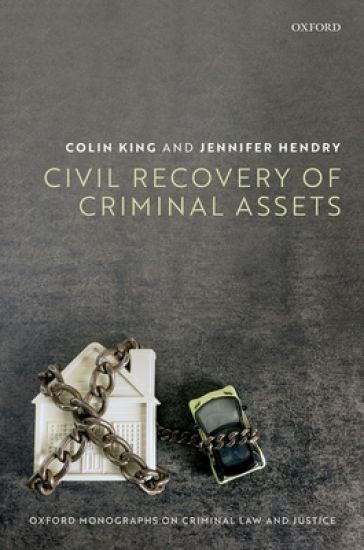
Civil Recovery of Criminal Property

Civil Recovery of Criminal Property

Colin King; Jennifer Hendry

Oxford University Press
2023
sidottu
Follow-the-money' approaches are increasingly being adopted to tackle organized crime, corruption, and terrorist activities. The rationale behind such an approach is oft stated: to show that crime does not pay, to reinforce confidence in a fair and effective criminal justice system, and to deter criminal activity. Civil Recovery of Criminal Property is an in-depth analysis of the confiscation of the proceeds of crime in the absence of criminal conviction in Ireland and England & Wales, more than two decades since the introduction of this civil/criminal hybrid procedure. This book considers the development of civil recovery in both jurisdictions, providing a comprehensive comparative account and critical examination of its legislative context and framework, judicial reception, and case law development. It leads the argument that civil recovery—like other civil/criminal hybrids—straddles civil and criminal procedure in a manner that takes advantage of the resultant legal ambiguity, to the detriment of due process, civil liberties, and human rights. Through interviews with practitioners professionally engaged with civil recovery proceedings, both in defence and in enforcement, King and Hendry remedy what has until now been a lack of empirical engagement with the operation of civil recovery in practice. The authors provide a comprehensive analysis of civil recovery in terms of its procedural hybridity, its 'follow-the-money' approach, its questionable compliance with the requirements of due process, its property-specific character, and its supposed pragmatism in tackling the problem of serious and organized crime. Blending doctrinal, socio-legal, and theoretical perspectives, Civil Recovery of Criminal Property will appeal both to academics and practitioners engaged with civil recovery.
Principles of International Financial Law

Principles of International Financial Law

Colin Bamford

Oxford University Press
2019
nidottu
This book explains the legal principles, rules, concepts, and developments that underpin the practice of financial law in common law countries, and by extension across the world. One of the aims of the book is to explain clearly the basis of the concepts applied by the common law to financial transactions. As part of this aim the third edition analyses in detail the interface between common-law and civil law approaches in areas such as the distinction between property and personal rights. The section on the ability of States to control the use of their money has also been substantially rewritten to address increasing demands in the US that sanctioned persons and states should be denied access to the US monetary system, recording both the increased incidence of activity by the US authorities, and also explaining in more detail the rationale of these actions. Since the last edition was written there have been a number of developments in the technology used in the financial markets that question the legal principles on which they operate. In particular, the impact of Distributed Ledger Technology (e.g. Blockchain) on the transfer of intangible assets and the effect on the rights of parties involved is considered from both a legal and practical position. Additionally, the legal implications of the use of cryptocurrencies, including their use as Initial Coin Offerings, are also considered. This is an essential work for both experienced lawyers and those who are relatively new to international financial law. It provides the more experienced lawyer with an aide memoire on the existing law and a reference source for new ideas when tackling innovative structures or products. For those new to practice or postgraduate students this book delivers a firm foundation upon which to build knowledge of the law and practice of financial law.
Principles of International Financial Law

Principles of International Financial Law

Colin Bamford

Oxford University Press
2019
sidottu
This book explains the legal principles, rules, concepts, and developments that underpin the practice of financial law in common law countries, and by extension across the world. One of the aims of the book is to explain clearly the basis of the concepts applied by the common law to financial transactions. As part of this aim the third edition analyses in detail the interface between common-law and civil law approaches in areas such as the distinction between property and personal rights. The section on the ability of States to control the use of their money has also been substantially rewritten to address increasing demands in the US that sanctioned persons and states should be denied access to the US monetary system, recording both the increased incidence of activity by the US authorities, and also explaining in more detail the rationale of these actions. Since the last edition was written there have been a number of developments in the technology used in the financial markets that question the legal principles on which they operate. In particular, the impact of Distributed Ledger Technology (e.g. Blockchain) on the transfer of intangible assets and the effect on the rights of parties involved is considered from both a legal and practical position. Additionally, the legal implications of the use of cryptocurrencies, including their use as Initial Coin Offerings, are also considered. This is an essential work for both experienced lawyers and those who are relatively new to international financial law. It provides the more experienced lawyer with an aide memoire on the existing law and a reference source for new ideas when tackling innovative structures or products. For those new to practice or postgraduate students this book delivers a firm foundation upon which to build knowledge of the law and practice of financial law.
Imitating Authors

Imitating Authors

Colin Burrow

Oxford University Press
2019
sidottu
Imitating Authors is a major study of the theory and practice of imitatio (the imitation of one author by another) from antiquity to the present day. It extends from early Greek texts right up to recent fictions about clones and artificial humans, and illuminates both the theory and practice of imitation. At its centre lie the imitating authors of the English Renaissance, including Ben Jonson and the most imitated imitator of them all, John Milton. Imitating Authors argues that imitation was not simply a matter of borrowing words, or of alluding to an earlier author. Imitators learnt practices from earlier writers. They imitated the structures and forms of earlier writing in ways that enabled them to create a new style which itself could be imitated. That made imitation an engine of literary change. Imitating Authors also shows how the metaphors used by theorists to explain this complex practice fed into works which were themselves imitations, and how those metaphors have come to influence present-day anxieties about imitation human beings and artificial forms of intelligence. It explores relationships between imitation and authorial style, its fraught connections with plagiarism, and how emerging ideas of genius and intellectual property changed how imitation was practised. In refreshing and jargon-free prose Burrow explains not just what imitation was in the past, but how it influences the present, and what it could be in the future. Imitating Authors includes detailed discussion of Plato, Roman rhetorical theory, Virgil, Lucretius, Petrarch, Cervantes, Ben Jonson, Milton, Pope, Wordsworth, Mary Shelley, and Kazuo Ishiguro.
Prosperity

Prosperity

Colin Mayer

Oxford University Press
2021
nidottu
What is business for? Day one of a business course will tell you: it is to maximise shareholder profit. This single idea pervades all our thinking and teaching about business around the world but it is fundamentally wrong, Colin Mayer argues. It has had disastrous and damaging consequences for our economies, environment, politics, and societies. In this urgent call for reform, Prosperity challenges the fundamentals of business thinking. It sets out a comprehensive new agenda for establishing the corporation as a unique and powerful force for promoting economic and social wellbeing in its fullest sense - for customers and communities, today and in the future. First Professor and former Dean of the Säid Business School in Oxford, Mayer is a leading figure in the global discussion about the purpose and role of the corporation. In Prosperity, he presents a radical and carefully considered prescription for corporations, their ownership, governance, finance, and regulation. Drawing together insights from business, law, economics, science, philosophy, and history, he shows how the corporation can realize its full potential to contribute to economic and social wellbeing of the many, not just the few. Prosperity tells us not only how to create and run successful businesses but also how policy can get us there and fix our broken system.
Imitating Authors

Imitating Authors

Colin Burrow

Oxford University Press
2023
nidottu
Imitating Authors is a major study of the theory and practice of imitatio (the imitation of one author by another) from antiquity to the present day. It extends from early Greek texts right up to recent fictions about clones and artificial humans, and illuminates both the theory and practice of imitation. At its centre lie the imitating authors of the English Renaissance, including Ben Jonson and the most imitated imitator of them all, John Milton. Imitating Authors argues that imitation was not simply a matter of borrowing words, or of alluding to an earlier author. Imitators learnt practices from earlier writers. They imitated the structures and forms of earlier writing in ways that enabled them to create a new style which itself could be imitated. That made imitation an engine of literary change. Imitating Authors also shows how the metaphors used by theorists to explain this complex practice fed into works which were themselves imitations, and how those metaphors have come to influence present-day anxieties about imitation human beings and artificial forms of intelligence. It explores relationships between imitation and authorial style, its fraught connections with plagiarism, and how emerging ideas of genius and intellectual property changed how imitation was practised. In refreshing and jargon-free prose Burrow explains not just what imitation was in the past, but how it influences the present, and what it could be in the future. Imitating Authors includes detailed discussion of Plato, Roman rhetorical theory, Virgil, Lucretius, Petrarch, Cervantes, Ben Jonson, Milton, Pope, Wordsworth, Mary Shelley, and Kazuo Ishiguro.
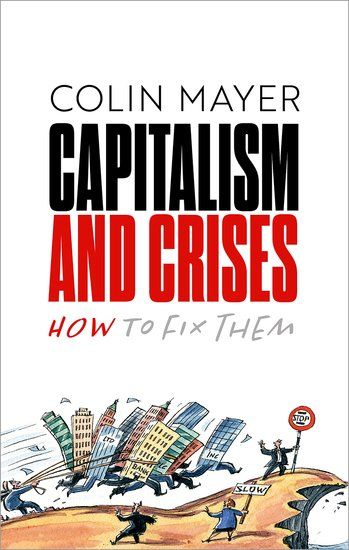
Capitalism and Crises

Capitalism and Crises

Colin Mayer

Oxford University Press
2024
sidottu
The world is encountering multiple crises - climate, droughts, floods, energy, food, and pandemics, to name a few. We have a problem, this is the solution. Capitalism and Crises is about how capitalism can fix them - how it can solve not cause them. The reason why it has caused them is that we have misconceived the nature of our capitalist system. We have failed to understand the key institution at the heart of it - business - and as a result we have allowed it to cause as well as solve problems. This book describes why this has happened and what needs to change to address it: it will take you through how the capitalist system operates, where it fails and why, and it will demonstrate that at the core of the problem is the key driver of capitalism and that is profit - the way in which we resource and reward those who run the system. Currently, profit comes from causing as well as solving problems. It must not, if we are to prevent the problems. Drawing on history, philosophy, psychology, and biology as well economics, law, and finance, Mayer describes what has gone wrong, what needs to change, and how to fix it. He sets out the big challenges that capitalism must address and how it should set about doing that, and discusses how financial institutions should be at the heart of this, and how the public sector can work with the private on a common purpose of solving problems and creating shared prosperity. Capitalism and Crises provides an inspiring and motivational roadmap of how we as practitioners, policymakers, consumers, employees, communities, students, and citizens of the world can together tackle the challenges of the 21st century - to flourish and survive.
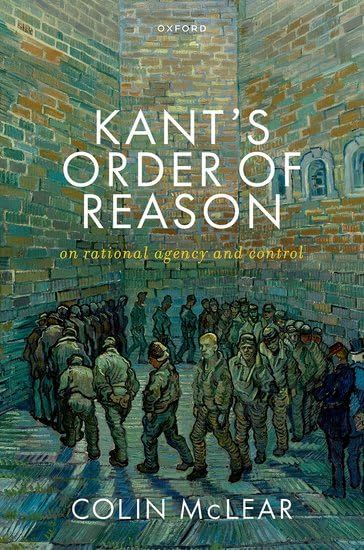
Kant’s Order of Reason

Kant’s Order of Reason

Colin McLear

Oxford University Press
2025
sidottu
The aim of Kant's Order of Reason is to give an account of Kant's conception of rational agency that clarifies and explains both the scope and nature of such activity, and elucidates the centrality of Kant's account of rational determination for his mature critical philosophy. In this book, Colin McLear highlights that the core Kantian insight concerning rational determination is that the capacity for rationality is based in and derived from the capacity for exercising a very specific kind of causality in the world—namely, free, or controlled, causality. The book consists of three parts. In the first McLear provides a historically contextualized but nevertheless rigorous metaphysical framework for understanding Kant's conception of mental activity, his theory of freedom, and its importance for understanding his conception of the difference between rational and non-rational forms of activity. He then argues that Kant has a control-centered or "enkratic" account of rational activity and agency. According to this view, control is the central and essential aspect of all rational activity, and a rational being is one that can exercise her diverse powers, or use her diverse intellectual faculties, in a manner that is under her own control. Building on this structure, in part two McLear shows how Kant applies his conception of controlled activity to the various forms of activity of which the rational mind is capable, in increasing order of complexity (i.e. attention, conception, judgment, inference, and comprehension). And in the final section of the book, McLear applies this account to longstanding disputes regarding self-consciousness, reason, evil, and alienation.
Public Law Concentrate

Public Law Concentrate

Colin Faragher

Oxford University Press
2024
nidottu
Public Law Concentrate is written and designed to help you succeed. Written by experts and covering all key topics, Concentrate guides go above and beyond, not only consolidating your learning but focusing your revision and maximising your exam performance. Each guide includes revision tips, advice on how to achieve extra marks, and a thorough and focused breakdown of the key topics and cases. Revision guides you can rely on: trusted by lecturers, loved by students... “The Concentrate books are my favourite revision guides as the quality of the information is always more comprehensive than others.” Carly Hatchard, law student, University of Bolton “The Concentrate structure is extremely good, it makes it so much easier to revise ... no key information is left out, it's a great series.” Emma Wainwright, law student, Oxford Brookes University "The detail in this revision textbook is phenomenal and is just what is needed to push your exam preparation to the next level" - Stephanie Lomas, law student, University of Central Lancashire "It is a little more in-depth than other revision guides, and also has clear diagrams and teaches ways to obtain extra marks. These features make it unique" - Godwin Tan, law student, University College London "The exam style questions are brilliant and the series is very detailed, prepares you well" - Frances Easton, law student, University of Birmingham Digital formats and resources The eighth edition is available for students and institutions to purchase in a variety of formats, and is supported by extensive online resources to take your learning further (www.oup.com/lawrevision/). The e-book offers a mobile experience and convenient access along with functionality tools, navigation features, and links that offer extra learning support: www.oxfordtextbooks.co.uk/ebooks The online resources include: - advice on revision and exam technique from experienced examiner Nigel Foster; - a diagnostic test to help you pinpoint areas to focus your revision on; - interactive glossary and key cases to help you revise key terminology, facts, and principles; - multiple choice questions to test your knowledge; and - outline answers to questions in the book.
Corruption and Misuse of Public Office

Corruption and Misuse of Public Office

Colin Nicholls; Alan Bacarese; James Maton; Rachel Scott; John Hatchard

Oxford University Press
2024
nidottu
Combating corruption and the misuse of public office appears to be a never-ending fight. The fourth edition of this authoritative work aims to equip legal practitioners and anti-corruption activists with the latest guidance and tools to keep the forces of corruption and the misuse of public office in the UK and across the globe at bay. Fully revised and updated to cover relevant case law and fast-moving developments in both domestic and international spheres, the book's wide-ranging coverage of topics includes: examination of sector specific initiatives; expanded coverage of the FCPA; civil and criminal mechanisms for recovering the proceeds of corruption; and new material on setting standards in the public and private sector. Apart from thorough UK coverage, this new edition also covers the laws and regulations of overseas jurisdictions including China, Canada, the UAE, and developing countries such as Kenya and Nigeria. The book considers the broadening scope of corruption and its intersection with questions of integrity in public life and examines lobbying and the move towards open government. Written by leading practitioners with extensive experience of handling corruption cases, the book provides a clear exposition of the current law. It examines the legal and practical issues relating to the investigation and prosecution of corruption cases and includes coverage of specialist areas such as recovering the proceeds of corruption. Corruption cases often span jurisdictions. This book enables practitioners to handle any aspect of a corruption case by providing them with detailed analysis of the international efforts to combat corruption, and the legal developments taking place in key jurisdictions and regions covered by UN, EU, OECD, the Commonwealth, and other regional anti-corruption initiatives.
Cultural Rights and Wrongs in Transitional Justice

Cultural Rights and Wrongs in Transitional Justice

Colin Luoma

Oxford University Press
2025
sidottu
Cultural Rights and Wrongs in Transitional Justice provides the first in-depth analysis of culture and cultural rights in the field of transitional justice. It takes stock of the role of cultural rights with respect to the field's historical marginalization of culture. Cultural rights remain a significant blind spot in the relevant research, one that has yet to be consistently incorporated into transitional justice practice or considered in academic theory. This book traces the marginalization of cultural rights to how the transitional justice field originated and evolved. Certain biases, assumptions, and preoccupations were cemented in a dominant model of justice in times of transition, especially as it relates to the concepts of transition, justice, and violence. Conventional notions have greatly restricted transitional justice from respecting cultural rights and addressing their violations. Cultural Rights and Wrongs in Transitional Justice challenges the dogmatic approaches inherent in the dominant model and retheorizes these core concepts in ways that enable and encourage a more robust engagement with cultural rights, without sacrificing the raison d'être of the transitional justice project. It argues that transitional justice, unmoored from its initial conceptual boundaries, has the flexibility to respect and address large-scale cultural rights violations and accommodate local and Indigenous cultures. This flexibility allows the field to account for underlying cultural violence and empower cultural interventions in the wake of mass harm. This has the potential to strengthen the normative value of cultural rights, address root causes of violent conflict, respond to survivor priorities, and shape more meaningful long-term reforms.
Land Transport in Roman Egypt

Land Transport in Roman Egypt

Colin Adams

Oxford University Press
2007
sidottu
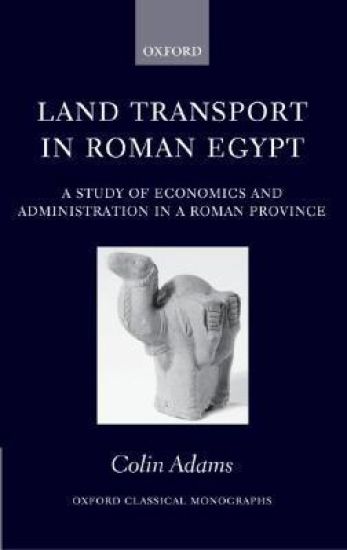
The papyri of Egypt offer a rich and complex picture of this important Roman province and provide an unparalleled insight into how a Roman province actually worked. They also afford a valuable window into ancient economic behaviour and everyday life. This study is the first systematic treatment of the role of land transport within the economic life of Roman Egypt, an everyday economic activity at the centre of the economy not only of Egypt but of the Roman world. Colin Adams studies the economics of animal ownership, the role of transport in the commercial and agricultural economies of Egypt, and how the Roman state used provincial resources to meet its own transport demands. He reveals a complex relationship between private individual and state in their use of transport resources, a dynamic and rational economy, and the economic and administrative behaviour imposed when an imperial power made demands upon a province.
The Sepulchre of Christ and the Medieval West

The Sepulchre of Christ and the Medieval West

Colin Morris

Oxford University Press
2007
nidottu
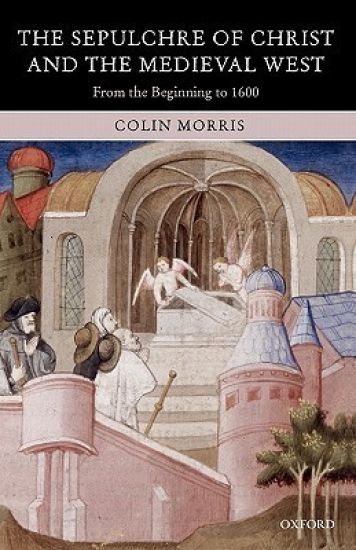
The tomb of Christ at Jerusalem was a vital influence in the making of Western Europe. Pilgrimage there influenced the development of society and its structures. The desire to 'bring the Sepulchre to the West' in copies or memorials shaped art and religion, while the ambition to control Christ's tomb was a central objective of the crusades. Western Europe responded to the loss of Jerusalem by creating a new pilgrimage to the East, by making kingdoms 'holy lands' for their subjects, and by creating new pilgrim centres at home. This book brings together social, political, and religious themes often considered in isolation.
Are Skills the Answer?

Are Skills the Answer?

Colin Crouch; David Finegold; Mari Sako

Oxford University Press
2001
nidottu
An analysis of the policies and provision of vocational education in advanced industrial countries against a backdrop of changing labour markets. The text challenges assumptions about skills and employment growth, and explores the roles that government and the private sector could play in developing advanced skills policies and initiatives.
Logical Properties

Logical Properties

Colin McGinn

Clarendon Press
2000
sidottu
The concepts of identity, existence, predication, necessity, and truth are at the centre of philosophy and have rightly received sustained attention. Yet Colin McGinn believes that orthodox views of these topics are misguided in important ways. Philosophers and logicians have often distorted the nature of these concepts in an attempt to define them according to preconceived ideas. Logical Properties aims to respect the ordinary ways we talk and think when we employ these concepts, while at the same time showing that they are far more interesting and peculiar than some have supposed. There are real properties corresponding to these concepts - logical properties - that challenge naturalistic metaphysical views. These are not pseudo-properties or mere pieces of syntax. Logical Properties is written with the minimum of formal apparatus and deals with logico-linguistic issues as well as ontological ones. The focus is on trying to get to the essence of what the concept concerned stands for, and not merely finding some established notation for providing formal paraphrases.
Local Production Systems in Europe: Rise or Demise?

Local Production Systems in Europe: Rise or Demise?

Colin Crouch; Patrick Le Galés; Carlo Trigilia; Helmut Voelzkow

Oxford University Press
2001
sidottu
A systematic analysis of specialized clusters of small manufacturing enterprises in the main European economies. Combining case-study literature with analyses of statistical data enables the authors to show the role of these "clusters" and the considerable diversity of forms they take.
Knowledge and Reality

Knowledge and Reality

Colin McGinn

Clarendon Press
2002
nidottu
Knowledge and Reality brings together a selection of Colin McGinn's philosophical essays from the 1970s to the 1990s, whose unifying theme is the relation between the mind and the world. The essays range over a set of prominent topics in contemporary philosophy, including the analysis of knowledge, the a priori, necessity, possible worlds, realism, mental representation, appearance and reality, and colour. McGinn has written a new postscript to each essay, placing it in its philosophical context by sketching the background against which it was written, explaining its relations to other notable work, and offering his current reflections on the topic. The volume thus traces the development of McGinn's ideas and their role in some central philosophical debates. Seen together the essays offer a many-sided defence of realism, while emphasizing the epistemological price that realism exacts.