Kirjojen hintavertailu. Mukana 12 390 323 kirjaa ja 12 kauppaa.

Kirjahaku

Etsi kirjoja tekijän nimen, kirjan nimen tai ISBN:n perusteella.

1000 tulosta hakusanalla Contrubting Authors

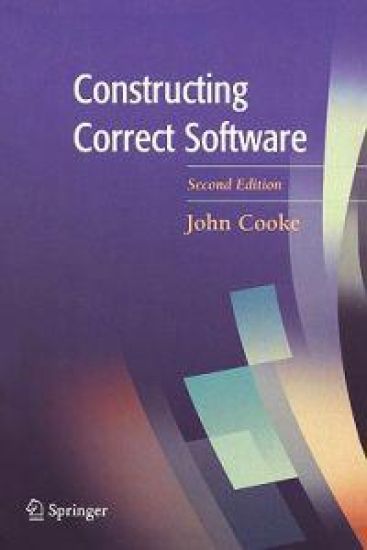
Constructing Correct Software

Constructing Correct Software

D. John Cooke

Springer London Ltd
2004
nidottu
Central to Formal Methods is the so-called Correctness Theorem which relates a specification to its correct Implementations. This theorem is the goal of traditional program testing and, more recently, of program verification (in which the theorem must be proved). Proofs are difficult, though even with the use of powerful theorem provers. This volume explains and illustrates an alternative method, which allows the construction of (necessarily correct) algorithms from a specification using algebraic transformations and refinement techniques which prevent the introduction of errors. Based on teaching material used extensively at Loughborough University, John Cooke introduces the basics, using simple examples and lots of detailed working (which can often be re-used). Constructing Correct Software will provide invaluable reading for students and practitioners of Computer Science and Software Engineering to whom correctness of software is of prime importance.
Constructing Musical Healing

Constructing Musical Healing

June Boyce-Tillman

Jessica Kingsley Publishers
2000
pokkari
June Boyce-Tillman's new book identifies and discusses the very issues that could render the education that we offer through music more engaging and relevent to those whom we teach. The book presents a wide-ranging and rich mix of psychological, ethnomusicological, philosophical, educational, mythological and theological material. Into this rich tapestry is woven a concern to consider seriously New Age phenomena and to empathize with people's experiences and life stories. Very occasionally, a book is published that has the potential of seriously challenging current orthodoxy and practice. This is such a book.'- British Journal of Music Education.'June Boyce-Tillman has published this beautifully researched essay at what I think may prove to be a vital re-balancing point in our history, when there is a developing realisation that post-Enlightenment culture with its emphasis on scientific reason and logic needs to incorporate again the "subjugated ways of knowing" as June Boyce-Tillman terms Gooch's value "system B" which favours being, subjectivity, personal feeling, emotion, magic, involvement, associative ways of knowing, belief and non-causal knowledge... The bibliography and referencing are excellent, massively extending the hub of resource which this book itself presents for further study, investigation and good practice by people from many walks of life. Many thanks to June Boyce-Tillman for her work.'- The Christian Parapsychologist'In Constructing Musical Healing, June Boyce-Tillman attempts to blend ancient and modern ideas and practices with her own perspective as a New Age practitioner. In an interdisciplinary effort, Boyce-Tillman describer particular philosophical aspects concerning Western music, practices of shamans and healers, and explorations of the new consciousness reflected in the New Age movement and music therapy. Her goal is to establish a new model of healing as balance including physical, psychological, and spiritual elements in a process approach, which she parallels with music therapy practice...Boyce-Tillman has some promising ideas. And certainly she adds her words, her thoughts, and beliefs to the continuing questions about the compatibility between "healing" and "therapy"...The strength of the book is that it has the potential to encourage our own discourse by giving us an opportunity to compare and contrast our own ideas about music therapy with at least one New Age practitioner.'- The Arts in PsychotherapyDrawing on literature from philosophy, anthropology, psychology and musicology, Boyce-Tillman looks at musical traditions and notions of healing in different societies. Her work includes a number of case studies in various cultures - spirit possession cults in Africa and shamans in various traditions. It explores contemporary musical practice in the New Age including neo-shamanism and notions of musical healing in Western musical aesthetics. The use of music in Western medicine is also studied, as Boyce-Tillman draws together a theory of what actually occurs when music is associated with therapeutic intention and examines the role of music within healthcare, education and the community.
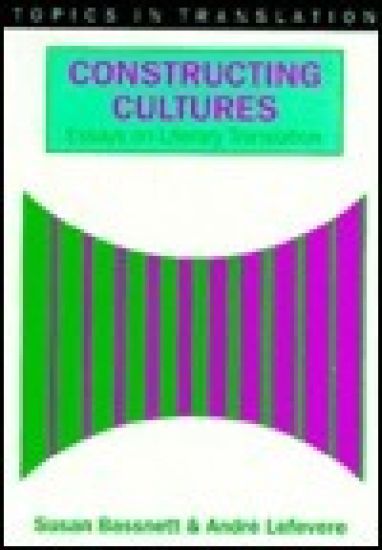
Constructing Cultures

Constructing Cultures

Susan Bassnett; Andre Lefevere

Multilingual Matters
1998
nidottu
Translation Studies is currently one of the fastest growing interdisciplinary subjects in the world. Constructing Cultures brings together for the first time the work of the two translator/scholars who are regarded as founders of this major field of study. This collection of essays continues to develop some of the principal research lines that both have been pursuing in recent years, most specifically the cultural turn in Translation Studies. Among topics discussed are Chinese and Western theories of translation, the limits of translatability, when is a translation not a translation, why cultures develop certain genres at certain times, what is the relationship between Translation Studies and Cultural Studies. Some essays are genre specific, focusing on theatre translation or the translating of poetry, others are devoted to specific case studies, and consider the fortunes of such major writers as Virgil or Brecht in English. Written in the accessible, jargon-free style that characterises the work of Bassnett and Lefevere, this collection of essays will be invaluable to anyone interested in translation and comparative cultural studies.
Constructing Cultures

Constructing Cultures

Susan Bassnett; Andre Lefevere

Multilingual Matters
1998
sidottu
Translation Studies is currently one of the fastest growing interdisciplinary subjects in the world. Constructing Cultures brings together for the first time the work of the two translator/scholars who are regarded as founders of this major field of study. This collection of essays continues to develop some of the principal research lines that both have been pursuing in recent years, most specifically the cultural turn in Translation Studies. Among topics discussed are Chinese and Western theories of translation, the limits of translatability, when is a translation not a translation, why cultures develop certain genres at certain times, what is the relationship between Translation Studies and Cultural Studies. Some essays are genre specific, focusing on theatre translation or the translating of poetry, others are devoted to specific case studies, and consider the fortunes of such major writers as Virgil or Brecht in English. Written in the accessible, jargon-free style that characterises the work of Bassnett and Lefevere, this collection of essays will be invaluable to anyone interested in translation and comparative cultural studies.
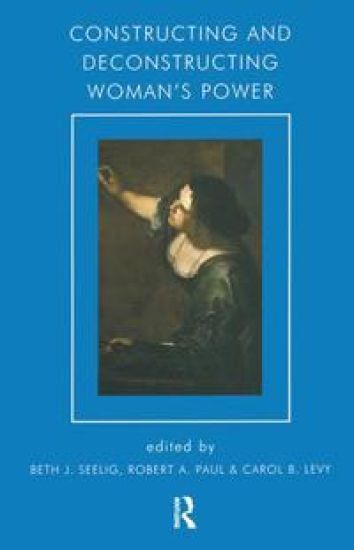
Constructing and Deconstructing Woman's Power
Constructing and Deconstructing Woman's Power explores power and gender issues from a variety of psychoanalytic, as well as social, cultural and philosophical perspectives. The first three papers examine the complex notion of external and internal glass ceiling brought to life by clear and illustrative clinical vignettes. The creation of life, a uniquely female power, is subsequently considered in two fascinating papers exploring motherhood and the conflicts it brings. The development and expression of feminine creativity more generally is further examined in two unique studies. The final three essays address men's relation to women and their power.
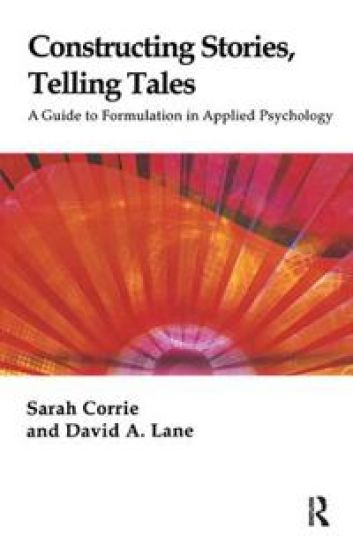
Constructing Stories, Telling Tales

Constructing Stories, Telling Tales

Corrie Sarah; Lane David A.

Karnac Books
2010
nidottu
Formulation remains one of the most important activities that those using psychological approaches undertake as part of their work. Arguably, however, formulation is an activity that remains poorly understood. In a current climate demanding quick fix solutions there is a tendency, which the authors refuse, towards over-simplification. Instead this book sets out to explore the challenging complexity of psychological formulation. By drawing on a wide range of sources from psychology and the arts the authors find ways to honour the stories clients tell yet offer key psychological insights to facilitate change. They provide a clear guide to enable the reader to think about the purpose of their work with clients, the perspectives which inform it and the process used to ensure effective outcomes. The chapters, supported by exercises on key issues, examine key debates on the role of formulation in professional practice, a framework for developing a systematic approach to formulation and a detailed account of the purpose, perspective and process of formulation.
Constructing Civil Society in Japan

Constructing Civil Society in Japan

Koichi Hasegawa

Trans Pacific Press
2004
sidottu
Japan s post-World War II economic miracle is well-known and much discussed, as is the collapse of the bubble economy and the almost decade long economic stagnation of the 1990s. In this collection of essays and articles spanning two decades of intellectual work, Koichi Hasegawa one of Japan s foremost environmental sociologists reveals another dimension to the Japanese experience of the late 20th century, a developing civil society. Hasegawa s aim in this collection is manifold, beginning with an outline of the aims, objectives and distinguishing characteristics of environmental sociology. Combining a historical analysis of the rise of this new discipline with an overview of the theoretical frames that define it, Hasegawa argues that environmental sociology challenges the sociological conventions of disengaged observation as well as the anthropocentrism inherent to the sociological perspective. At the same time, environmental sociology challenges a powerful environmentalists perspective, stressing that environmental are not simply scientific or technical problems but are always and especially social problems. Environmentalism therefore needs a sociological perspective and sociology needs an environmental perspective if they are to address the most pressing problems facing human societies environmental destruction. In the process, Hasegawa indirectly provides a compelling answer to that seemingly interminable question, What do sociologists actually do about social problems Beginning with the foundations of environmental sociology and concluding with considerations of the experiences and future prospects of Japanese civil society, Constructing Civil Society in Japan will appeal to numerous audiences. It is an introductory textbook in environmental sociology as well as a guide to environmental activism. It is a unique introduction to civil society, combining European theories and Japanese case studies to reveal the obstacles and opportunities facing the Japanese citizenry. It critically addresses a range of sociological and political theories regarding citizen s activism and a range of activists strategies in order to illuminate obstacles and openings on the path ahead.
Constructing Civil Society in Japan

Constructing Civil Society in Japan

Koichi Hasegawa

Trans Pacific Press
2004
nidottu
Japan s post-World War II economic miracle is well-known and much discussed, as is the collapse of the bubble economy and the almost decade long economic stagnation of the 1990s. In this collection of essays and articles spanning two decades of intellectual work, Koichi Hasegawa one of Japan s foremost environmental sociologists reveals another dimension to the Japanese experience of the late 20th century, a developing civil society. Hasegawa s aim in this collection is manifold, beginning with an outline of the aims, objectives and distinguishing characteristics of environmental sociology. Combining a historical analysis of the rise of this new discipline with an overview of the theoretical frames that define it, Hasegawa argues that environmental sociology challenges the sociological conventions of disengaged observation as well as the anthropocentrism inherent to the sociological perspective. At the same time, environmental sociology challenges a powerful environmentalists perspective, stressing that environmental are not simply scientific or technical problems but are always and especially social problems. Environmentalism therefore needs a sociological perspective and sociology needs an environmental perspective if they are to address the most pressing problems facing human societies environmental destruction. In the process, Hasegawa indirectly provides a compelling answer to that seemingly interminable question, What do sociologists actually do about social problems Beginning with the foundations of environmental sociology and concluding with considerations of the experiences and future prospects of Japanese civil society, Constructing Civil Society in Japan will appeal to numerous audiences. It is an introductory textbook in environmental sociology as well as a guide to environmental activism. It is a unique introduction to civil society, combining European theories and Japanese case studies to reveal the obstacles and opportunities facing the Japanese citizenry. It critically addresses a range of sociological and political theories regarding citizen s activism and a range of activists strategies in order to illuminate obstacles and openings on the path ahead.
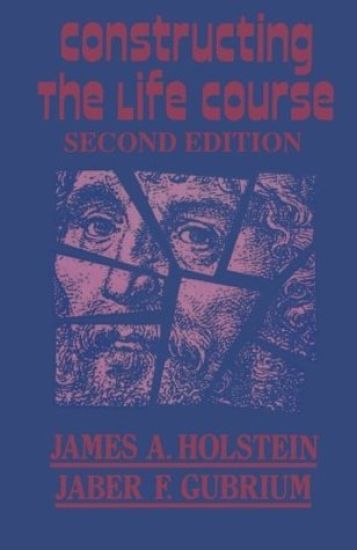
Constructing the Life Course

Constructing the Life Course

James A. Holstein; Jaber F. Gubrium

AltaMira Press,U.S.
2000
nidottu
Constructing the Life Course offers a social constructionist perspective on personal experience through time. The text shows the variety of ways people use life course imagery in their everyday lives and makes a useful addition to family studies or gerontology courses.
Constructing History across the Norman Conquest
An investigation into the hugely significant works produced by the Worcester foundation at a period of turmoil and change. From the mid-eleventh to the mid-twelfth century Worcester was a monastic community of unparalleled importance. Not only was it home to many of the most famous bishops and monks of the period, including Bishop Wulfstan II: it was also a centre of notable and ambitious scholarly production. Under Wulfstan's guidance, a number of Worcester brethren undertook historical research that resulted in the writing of such renowned texts as Hemming's Cartulary and the Worcester Chronica Chronicarum. Significantly, these historical endeavours spanned the political chasm of the Norman Conquest. The essays collected here aim to shed new light on different aspects of the Worcester "historical workshop", whose literary ouput was, in several respects, pioneering in contemporary European scholarship. Several chapters address the different ways in which the monks organised and updated their archives of documents, both via their sequence of cartularies, with a special focus on the narrative parts of Hemming's Cartulary, and via an interesting (and previously unedited) prose account of the foundation of the see. Others focus on the famous Worcester Chronica Chronicarum, attributed both to Florence and to John, investigating the major model for its composition and structure (the work of Marianus Scotus), the stages in which it was completed, and its connections with Welsh chronicles, as well as the related and fascinating abbreviated version, written mostly in the hand of John himself, and known as the Chronicula. The volume thus elucidates how the Worcester monks navigated the period across the Conquest through the composition of different genres of texts, and how these texts shaped their own institutional memory.
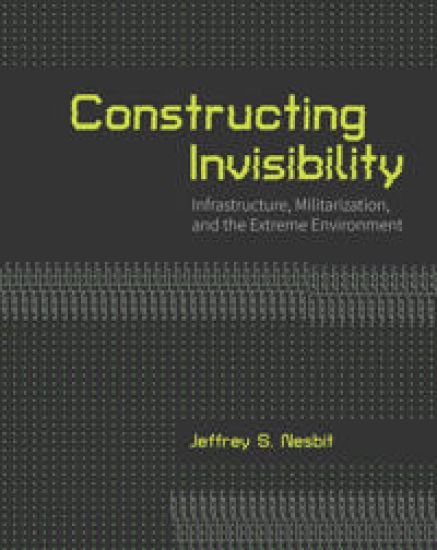
Constructing Invisibility

Constructing Invisibility

Jeffrey S. Nesbit

Oro Editions
2025
nidottu
Today, designers, researchers, and scholars must responsibly engage the entangled networks and delineated systems far beyond boundaries of typical design practice to engage in thoughtful critique of the past and consider counter-imaginations of the future. Our discussion of the unseen begins first with an understanding of the power of sight. A look back at the technologies of control implicated in documenting the world reveals the closely intertwined evolution of imperial occupation and technological progress. Constructing Invisibility continues the exchanges initiated during the first symposium and builds upon the diversity of knowledge shared. The late French philosopher Bruno Latour reminds us that “politics has always been oriented toward objects, stakes, situations, material entities, bodies, landscapes, places. This is in effect the decisive discovery of political ecology: it is an object-oriented politics. Change the territories and you will also change the attitudes.” This issue uses these economies, landscapes, and places, including the boundless corporations and destructive climate realities, to better see the world. Further, the collection of essays seeks to understand how the construction of such sight impacts civilian occupation in the remaining world. Illuminating stories and places has become the aim of this volume, and shedding light on distant territories has become confounded by extremity, complexity, disparity, and secrecy.
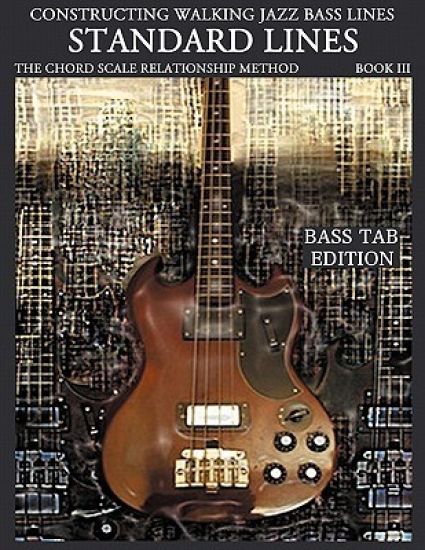
Constructing Walking Jazz Bass Lines

Constructing Walking Jazz Bass Lines

Steven Mooney

Waterfall Publishing House
2011
pokkari
Standard Lines, Book III in the Constructing Walking Jazz Bass Lines series for the Double Bassist and Electric Bassist is a comprehensive guide demonstrating the devices used to construct walking jazz bass lines in the jazz standard tradition.Book III covers 24 standard jazz chord progressions with 110 choruses of professional jazz bass lines as an example.Part I outlines the Modes and the chord scale relationships and the fundamental knowledge required to be able to build the diatonic triadsand 7th chords in any key. Examples are given in the " 2 " feel and " 4 "feel walking bass style enabling the bassist to develop a strongrhythmic and harmonic foundation.More advanced bass line construction examples including voice leading and mode substitutions and mode applications related to specific jazz chord progressions are also outlined. Part II outlines the Symmetric Scales as well as the Modes of the Melodic Minor Scale related to the Minor II V I progression.Provided are written examples of the Symmetric Scales and the chord scale relationships and how to apply the use of the Symmetric Scales over popular jazz chord progressions.The Minor II V I is outlined and compared to the Major II V I outlining the differences with the suggested scale uses applied to common jazz chord progressions. Part III outlines the use of the BeBop Scales and their use in the jazz walking bass tradition, providing suggested uses of the Be Bop scales related to popular jazz chord progressions.Part IV outlines the previous lesson devices and concepts with examples of professional level bass lines over standard jazz chord progressions.All information builds in a stepwise progression enabling the bassist to apply the techniques in all 12 keys.
Constructing Walking Jazz Bass Lines

Constructing Walking Jazz Bass Lines

Steven Mooney

Waterfall Publishing House
2011
pokkari
Standard Lines Book III in the Constructing Walking Jazz Bass Lines series for the Electric Bassist is a comprehensive guide demonstrating the devices used to construct walking jazz bass lines in the jazz standard tradition. Book III covers 24 standard jazz chord progressions with 110 choruses of professional jazz bass lines as an example. Part I outlines the Modes and the chord scale relationships and the fundamental knowledge required to be able to build the diatonic triads and 7th chords in any key. Examples are given in the " 2 " feel and " 4 " feel walking bass style enabling the bassist to develop a strong rhythmic and harmonic foundation. More advanced bass line construction examples including voice leading and mode substitutions and mode applications related to specific jazz chord progressions are also outlined. Part II outlines the Symmetric Scales as well as the Modes of the Melodic Minor Scale related to the Minor II V I progression. Provided are written examples of the Symmetric Scales and the chord scale relationships and how to apply the use of the Symmetric Scales over popular jazz chord progressions. The Minor II V I is outlined and compared to the Major II V I outlining the differences with the suggested scale uses applied to common jazz chord progressions. Part III outlines the use of the BeBop Scales and their use in the jazz walking bass tradition, providing suggested uses of the Be Bop scales related to popular jazz chord progressions. Part IV outlines the previous lesson devices and concepts with examples of professional level bass lines over standard jazz chord progressions. All information builds in a stepwise progression enabling the bassist to apply the techniques in all 12 keys.