
Kirjahaku
Etsi kirjoja tekijän nimen, kirjan nimen tai ISBN:n perusteella.
1000 tulosta hakusanalla Cyril Methodius Jansky

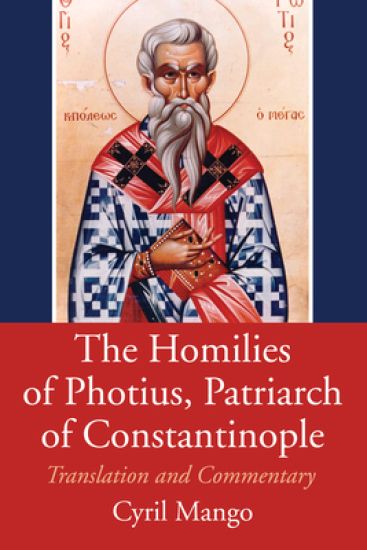
The historical role of Photius has, all too often, been viewed only as it concerned the rift between the Western and Eastern Churches. He has been regarded either as the ""Father of the Schism"" or as the staunch defender of Greek Orthodoxy against the encroachments of Rome. It is hoped that by presenting the Homilies of Photius in English translation these one-sided views may to some extent be corrected. For, surprising though it may appear, we shall not find in the Homilies a single reference to the Papacy. When they are not purely didactic, the Homilies are dominated by such topics as the suppression of the Iconoclast movement, the re-establishment of sacred painting, the propagation of the true faith among heretics, and the quelling of internal division in the Church of Constantinople. -From the Introduction Cyril Mango is a British scholar of the history, art, and architecture of the Byzantine Empire. He is a former King's College London and Oxford professor of Byzantine and Modern Greek Language and Literature.
An Introduction to Religious and Theological Studies, Second Edition
Cyril Orji
Cascade Books
2021
pokkari
An Introduction to Religious and Theological Studies walks students through topical issues to be encountered in the study of the Abrahamic religions: Judaism, Christianity, and Islam as these religions encounter other religions in the context of the wider ecumenism. The text is written from a Christian point of view and aims at helping students understand that to be Christian is to be ecumenical. African Traditional Religions (ATRs) has been included in this survey to provide background for the religious traditions and cultures of peoples of Africa as Christianity moves inexorably southward. The book has been written with undergraduate general education students in mind--including meeting the needs of those in seminaries and theological institutes.
An Introduction to Religious and Theological Studies, Second Edition
Cyril Orji
Cascade Books
2021
sidottu

"It may truly be said that the Command of the Sea is an Abridgement or a Quintessence of an Universal Monarchy." Sir Francis Bacon. It is a grey morning out on the North Sea, with but little wind. There is no swell, but considerable movement on the surface of the waters, with here and there an occasional tossing of the white manes of the sea-horses. Swimming majestically through the sea comes one of our monster slate-grey battle-cruisers. She is "stripped to a gantline", and in complete and instant readiness for action. The red cross of St. George flutters bravely at her fore-topmast head, for she is the flagship of the squadron of three or four towering grey ships that are following in her wake. Aft flies the well-known White Ensign, the "meteor flag of England" blazing in the corner. Far away on either bow, but dimly discernible on the wide horizon, are the shadows of other smaller ships, the light cruisers, which are moving ahead and on the flanks of the squadron like cavalry covering the advance of an army.
Danger lurks everywhere We all react in different ways to notices or statements like these. Depending on our moods or involvements or situations, we ourselves will react differently The optimist who lives a comfortable life would dismiss possible traumatic eventualities with: "Those sorts of things only happen to other people " But there are people who live with crime and deathly situations all day long With poverty and drug abuse on the increase, hijackings and violent crime are becoming commonplace. Such things can happen to anyone nowadays. We do not have to become paranoid but just more vigilant and alert. When we have faith for ourselves and others, we can still lead a normal and rewarding life. What matters most of all is that we CARE for one another
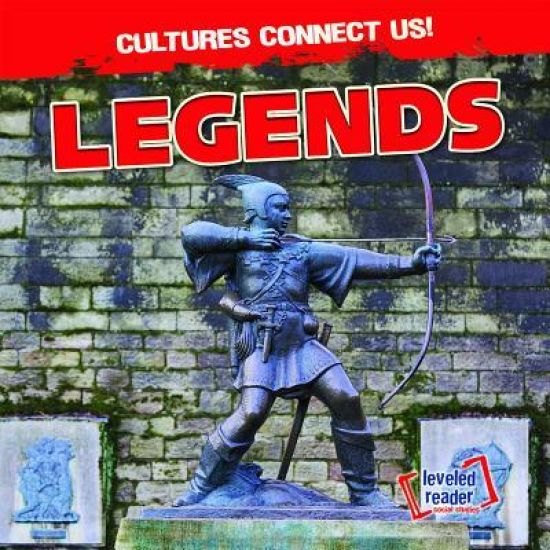
What makes a legend a legend? A bit of truth and a bit of entertaining fiction That's how legends have lasted through generations, and sometimes for thousands of years. Robin Hood, King Arthur, and young George Washington all make an appearance in this informative book, which offers details about legendary stories as well as information about why they're considered legends. Readers will also learn about urban legends and consider if they have legends-in-the-making in their families and communities.

Book of Love & Optical Illusions
Cyril Wayne Thornton Ret
Createspace Independent Publishing Platform
2019
nidottu
*** This is an expensive paperback - and well worth it. ***This is a "How To" guidebook - to keep your love alive - alive and vibrant longer than the 'experts' have said. **** Over 200 "love hints" will help you improve and maintain your love bliss, and over 30 "death hints" will protect you and your mate - warnings about single events that can do permanent damage to an otherwise great relationship. **** This instruction book was designed as an ideal wedding gift, but it would also make a good Valentine present. **** The author has spent over 300 hours collecting information on the internet - information that can safeguard you and your loved-one.
How do people come up with truly original ideas? The answer is to think outside the box--way outside. For the past decade, Cyril Bouquet, Jean-Louis Barsoux, and Michael Wade, professors of innovation and strategy at IMD Business School, have studied inventors, scientists, doctors, entrepreneurs, and artists. These people, or "aliens," as the authors call them, are able to make leaps of creativity, and use five patterns of thinking that distinguish them from the rest of us. These five patterns--Attention, Levitation, Imagination, Experimentation, and Navigation--lead to a fresh and flexible approach to problem-solving. Alien thinkers know how to free the imagination so it can detect hard-to-observe patterns. They practice deliberate ways to retreat from the world in order to see the big picture underlying a problem. And they approach ideas in systematic ways that reflect the constraints of reality. Through surprising and compelling stories, the authors show how readers can use this method to develop out-of-this-world ideas. ALIEN Thinking can help any of us find innovative solutions to the most difficult problems.
English Embroidered Bookbindings
Cyril James Humphries Davenport
Createspace Independent Publishing Platform
2017
nidottu
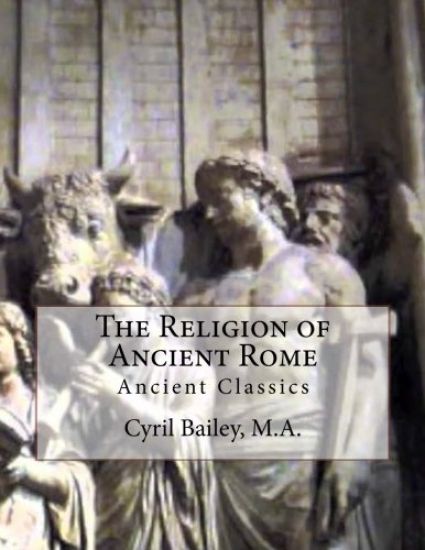
The Religion of Ancient Rome: Ancient Classics
Cyril Bailey M. a.
Createspace Independent Publishing Platform
2017
nidottu
Religion in ancient Rome encompasses the ancestral ethnic religion of the city of Rome that the Romans used to define themselves as a people, as well as the adopted religious practices of peoples brought under Roman rule. The Romans thought of themselves as highly religious, and attributed their success as a world power to their collective piety (pietas) in maintaining good relations with the gods. According to legends, most of Rome's religious institutions could be traced to its founders, particularly Numa Pompilius, the Sabine second king of Rome, who negotiated directly with the gods. This archaic religion was the foundation of the mos maiorum, "the way of the ancestors" or simply "tradition", viewed as central to Roman identity. As Rome came into contact with foreign cultures, and conquered them, foreign religions increasingly attracted devotees among Romans, who increasingly had ancestry from elsewhere in the Empire. The emperors promoted the Imperial cult around the empire, and this and imported mystery religions were generally practiced alongside the official religion. Ultimately, Roman polytheism was brought to an end with the adoption of Christianity as the official religion of the empire. The priesthoods of public religion were held by members of the elite classes. There was no principle analogous to separation of church and state in ancient Rome. During the Roman Republic (509-27 BC), the same men who were elected public officials might also serve as augurs and pontiffs. Priests married, raised families, and led politically active lives. Julius Caesar became pontifex maximus before he was elected consul. The augurs read the will of the gods and supervised the marking of boundaries as a reflection of universal order, thus sanctioning Roman expansionism as a matter of divine destiny. The Roman triumph was at its core a religious procession in which the victorious general displayed his piety and his willingness to serve the public good by dedicating a portion of his spoils to the gods, especially Jupiter, who embodied just rule. As a result of the Punic Wars (264-146 BC), when Rome struggled to establish itself as a dominant power, many new temples were built by magistrates in fulfillment of a vow to a deity for assuring their military success. Roman religion was thus practical and contractual, based on the principle of do ut des, "I give that you might give." Religion depended on knowledge and the correct practice of prayer, ritual, and sacrifice, not on faith or dogma, although Latin literature preserves learned speculation on the nature of the divine and its relation to human affairs. Even the most skeptical among Rome's intellectual elite such as Cicero, who was an augur, saw religion as a source of social order. For ordinary Romans, religion was a part of daily life. Each home had a household shrine at which prayers and libations to the family's domestic deities were offered. Neighborhood shrines and sacred places such as springs and groves dotted the city. The Roman calendar was structured around religious observances. Women, slaves, and children all participated in a range of religious activities. Some public rituals could be conducted only by women, and women formed what is perhaps Rome's most famous priesthood, the state-supported Vestals, who tended Rome's sacred hearth for centuries, until disbanded under Christian domination.
In this Book, are Believers Undiscovered Rights and Privileges It may shock you to know that an average Christian is living below Gods best for his life; occupying far less ground than God has allotted to him in Christ Jesus. The riches of the glory of inheritance of believers are little known and little possessed. Yet, God has given to believers ALL things pertaining to life and godliness, and EVERY spiritual blessing in the heavenly places. But only a few are living in these inheritances. In this book you will discover: Who a believer is? The glorious inheritance of believers The riches and the dimensions of these blessings, and The personal responsibilities of a believer.

The author has collected poems set in beautiful, lush natural environments to showcase love and sexuality in relationships. The author uses evocative language in descriptions of both nature and his partners body. Readers will be titillated and provoked to reflect upon their own intimate relationships. The book shares information and ideas of things every human should do before the end of their sojourn here on earth. It went as far as indirectly propagating and affirming the truth or desire that everyone should create a bucket list of things to experience once in a lifetime. Love, risk, and adventure are the universal theme in the book, and the sheer quality of it can never be equated with any other thing. The book is very witty; most of the poems are layered with humor and full of insightful adventures to undertake or visit with a loved one and where you could possibly bond with a lover.

A Floating Home
Cyril Ionides and J. B. Atkins
Createspace Independent Publishing Platform
2017
nidottu

Dixon Andrews had established a life that would be the envy of anyone. He had built himself up from a humble nobody, had obtained a job with one of the top companies in the nation, was living in an apartment with a dreamlike view in the heart of the city. But while he had been building up himself and a life of comfort and prosperity, the country around him was rapidly unraveling.One ruinous day, horrifying events crushed everything that he had built, rendering all that he had worked for pointless; leaving him broken and floundering upon the shores of rubble left in its wake. A unique and powerful woman would pull him up, restore his faith in humanity and together they would begin healing the world.Eventually their view of what freedom should be drove a rift between them. Taking what they had built, she would change the future of the world accelerating technological development far beyond anyone's imagination leaving Dixon with few choices. The dawn of AI would have unforeseen consequences that would redefine what it means to be human.
With the publication of this volume Cyril Barber brings to a close thirty years of study and research on the books of Joshua through Esther. His treatment of each of these canonical writings is devotional and was written during his busy pastoral and teaching ministry. The Book of Ezra. Jewish tradition has made Ezra one of the most celebrated personages in all the history of his people. Five great works are attributed to him: (1) The founding of the ""Great Synagogue,"" or synod of learned Jewish scholars; (2) the settlement of the sacred ""canon,"" or recognized list of authoritative Hebrew Scriptures; (3) the establishment of the Hebrew Scriptures in square Assyrian characters; (4) the compilation of the Chronicles, along with the book that now bears his own name, and possibly Psalm 119; and (5) the institution of local synagogues. The Book of Ezra has been looked upon as Israel's ""second exodus,"" for under the leadership of Zerubbabel a large number of Jewish expatriates journeyed from Babylon to Jerusalem, and in spite of many difficulties rebuilt the Temple. Years passed before Ezra led a second group of exiles to Jerusalem. He based all he did on the Word of God, and in his example we have encouragement for a life of godliness in the midst of the present moral and spiritual decline. The Book of Esther. The title of this book is based on its main character, Queen Esther. It fits into the gap between Ezra 6 and 7, and records the events in Babylon prior to and immediately following Xerxes' (Ahasuerus's) attack on Greece. Though there is no mention of God in the book, he is nonetheless active. According to Drs. M'Clintock and Strong, ""The character of Esther, as she appears in the Bible, is that of a woman of deep piety, faith, courage, patriotism, and caution, combined with resolution; a dutiful daughter to her adopted father . . . and anxious to share the king's favor with him for the good of her people. She was a virtuous woman, and as far as her situation made it possible, a good wife to the king."" Dr. Cyril J. Barber is pastor emeritus of Plymouth Church, Whittier, California. He lives with his wife of fifty years in Hacienda Heights. Their family consists of two sons, two daughters-in-law, and five grandchildren.

A study of the breakthrough of the Germanic vernacular dialects into the realm of written language between the eighth and tenth centuries. For the German-speaking peoples under the Carolingians (c. AD 750-950), the dominant literary tongue was Latin, the lingua franca of the Christian West. Before the eighth century only isolated words, legal terms, and proper namesfrom the vernacular dialects had found their way into manuscripts. Cyril Edwards's collection of essays examines the breakthrough into literacy of the dialects known collectively as Old High German in the south and Old Saxon in the north. In an introductory essay, Edwards surveys the recording and survival of the earliest continuous German texts. This leads into seven essays, each inspired by a fresh look at the manuscripts. Two are concerned with the Wessobrunn Prayer, the earliest religious poem in German. A third looks at the destructive application of acids to medieval manuscripts in an attempt to read barely legible letters; it concentrates upon the Hildebrandslied, theonly surviving Old High German heroic lay, and the ninth-century eschatalogical poem, the Muspilli. Two studies are devoted to the Merseburg Charms, pagan survivals in a Christian manuscript, invoking gods familiar from the Old Norse pantheon. A study of the earliest traces of the love-lyric follows, poems that slipped through the net of censorship imposed by the Christian church. A final essay is concerned with the Ossian of the period, an ingenious forgery that was a cause célèbre in the nineteenth century, the Old High German Lullaby. Cyril Edwards is a Lecturer in German at St. Peter's College, Oxford, and an Honorary Research Fellow of University College London. He has published numerous articles on medieval German literature and co-edited a book on the medieval German lyric. He is currecntly preparing a new translation of Wolfram von Eschenbach's Parzival and Titurel.

The best description ever of the process of making a best grade English gun.