Kirjojen hintavertailu. Mukana 12 564 252 kirjaa ja 12 kauppaa.

Kirjahaku

Etsi kirjoja tekijän nimen, kirjan nimen tai ISBN:n perusteella.

1000 tulosta hakusanalla Denise B. Dailey

Psalms, Books 2–3

Psalms, Books 2–3

Denise Dombkowski Hopkins

Liturgical Press
2016
sidottu
Many readers are convinced that the Psalms are hopelessly “masculine,” especially given that seventy-three of the 150 psalms begin with headings linking them to King David. In this volume, Denise Dombkowski Hopkins sets stories about women in the Hebrew Bible alongside Psalms 42–89 as “intertexts” for interpretation. The stories of women such as Hannah, Rahab, Tamar, Bathsheba, Susanna, Judith, Shiphrah, Puah, and the Levite’s concubine can generate a different set of associations for psalm metaphors than have traditionally been put forward. These different associations can give the reader different views of the dynamics of power, gender, politics, religion, family, and economics in ancient Israel and in our lives today that might help to name and transform the brokenness of our world. From the Wisdom Commentary series Feminist biblical interpretation has reached a level of maturity that now makes possible a commentary series on every book of the Bible. It is our hope that Wisdom Commentary, by making the best of current feminist biblical scholarship available in an accessible format to ministers, preachers, teachers, scholars, and students, will aid all readers in their advancement toward God’s vision of dignity, equality, and justice for all. The aim of this commentary is to provide feminist interpretation of Scripture in serious, scholarly engagement with the whole text, not only those texts that explicitly mention women. A central concern is the world in front of the text, that is, how the text is heard and appropriated by women. At the same time, this commentary aims to be faithful to the ancient text, to explicate the world behind the text, where appropriate, and not impose contemporary questions onto the ancient texts. The commentary addresses not only issues of gender (which are primary in this project) but also those of power, authority, ethnicity, racism, and classism, which all intersect. Each volume incorporates diverse voices and differing interpretations from different parts of the world, showing the importance of social location in the process of interpretation and that there is no single definitive feminist interpretation of a text.
Global TV

Global TV

Denise D. Bielby; C. Lee Harrington

New York University Press
2008
sidottu
A reporter for the Los Angeles Times once noted that "I Love Lucy is said to be on the air somewhere in the world 24 hours a day." That Lucy's madcap antics can be watched anywhere at any time is thanks to television syndication, a booming global marketplace that imports and exports TV shows. Programs from different countries are packaged, bought, and sold all over the world, under the watch of an industry that is extraordinarily lucrative for major studios and production companies. In Global TV, Denise D. Bielb and C. Lee Harrington seek to understand the machinery of this marketplace, its origins and history, its inner workings, and its product management. In so doing, they are led to explore the cultural significance of this global trade, and to ask how it is so remarkably successful despite the inherent cultural differences between shows and local audiences. How do culture-specific genres like American soap operas and Latin telenovelas so easily cross borders and adapt to new cultural surroundings? Why is The Nanny, whose gum-chewing star is from Queens, New York, a smash in Italy? Importantly, Bielby and Harrington also ask which kinds of shows fail. What is lost in translation? Considering such factors as censorship and other such state-specific policies, what are the inevitable constraints of crossing over? Highly experienced in the field, Bielby and Harrington provide a unique and richly textured look at global television through a cultural lens, one that has an undeniable and complex effect on what shows succeed and which do not on an international scale.
Global TV

Global TV

Denise D. Bielby; C. Lee Harrington

New York University Press
2008
pokkari
A reporter for the Los Angeles Times once noted that “I Love Lucy is said to be on the air somewhere in the world 24 hours a day.” That Lucy’s madcap antics can be watched anywhere at any time is thanks to television syndication, a booming global marketplace that imports and exports TV shows. Programs from different countries are packaged, bought, and sold all over the world, under the watch of an industry that is extraordinarily lucrative for major studios and production companies. In Global TV, Denise D. Bielb and C. Lee Harrington seek to understand the machinery of this marketplace, its origins and history, its inner workings, and its product management. In so doing, they are led to explore the cultural significance of this global trade, and to ask how it is so remarkably successful despite the inherent cultural differences between shows and local audiences. How do culture-specific genres like American soap operas and Latin telenovelas so easily cross borders and adapt to new cultural surroundings? Why is The Nanny, whose gum-chewing star is from Queens, New York, a smash in Italy? Importantly, Bielby and Harrington also ask which kinds of shows fail. What is lost in translation? Considering such factors as censorship and other such state-specific policies, what are the inevitable constraints of crossing over? Highly experienced in the field, Bielby and Harrington provide a unique and richly textured look at global television through a cultural lens, one that has an undeniable and complex effect on what shows succeed and which do not on an international scale.
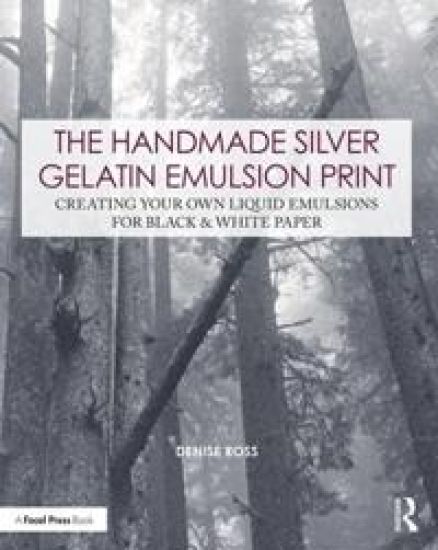
The Handmade Silver Gelatin Emulsion Print
The Handmade Silver Gelatin Emulsion Print is a cookbook of simple, basic recipes for making black and white printing paper and paper negatives, along with creative options for printing, toning, and coloring. Author Denise Ross draws from photographic literature from the last 135 years, adapting old recipes to fit modern tools, materials, and work spaces and modern twists have been applied to traditional techniques. The book is divided into three sections: Section One lays the groundwork for this unique alternative process; Section Two provides the recipes; Section Three highlights contemporary silver gelatin artists. The book features over 200 full-color images and covers key topics including:Vocabulary: a list of terms used by traditional photographers and emulsion makers Creating work spaces with the right tools and materials Basic emulsion chemistry and paper coating techniques Working with various negative options, analog and digital Gaslight chloride contact printing paper Kodabromide-type chlorobromide all-purpose paper Bromide enlarging paper Warm tone paper and developers Making and toning your own printing-out paper (POP) Matte surface and baryta coating surface paper Paper negatives and making hand-drawn and digital masks Toning handmade paper Gum printing over handmade paper Troubleshooting handmade paper Artists working with handmade paper The Handmade Silver Gelatin Emulsion Print is for photographers who love the look and creative potential of black and white traditional photography but who want more control over the process and the end product. It is written for the beginner to experienced photographer, with processes initially explained in such a way that anyone will feel comfortable getting started, as well as information in increasing levels of complexity so that experienced photographers who enjoy a challenge will also find one.
The Handmade Silver Gelatin Emulsion Print
The Handmade Silver Gelatin Emulsion Print is a cookbook of simple, basic recipes for making black and white printing paper and paper negatives, along with creative options for printing, toning, and coloring. Author Denise Ross draws from photographic literature from the last 135 years, adapting old recipes to fit modern tools, materials, and work spaces and modern twists have been applied to traditional techniques. The book is divided into three sections: Section One lays the groundwork for this unique alternative process; Section Two provides the recipes; Section Three highlights contemporary silver gelatin artists. The book features over 200 full-color images and covers key topics including:Vocabulary: a list of terms used by traditional photographers and emulsion makers Creating work spaces with the right tools and materials Basic emulsion chemistry and paper coating techniques Working with various negative options, analog and digital Gaslight chloride contact printing paper Kodabromide-type chlorobromide all-purpose paper Bromide enlarging paper Warm tone paper and developers Making and toning your own printing-out paper (POP) Matte surface and baryta coating surface paper Paper negatives and making hand-drawn and digital masks Toning handmade paper Gum printing over handmade paper Troubleshooting handmade paper Artists working with handmade paper The Handmade Silver Gelatin Emulsion Print is for photographers who love the look and creative potential of black and white traditional photography but who want more control over the process and the end product. It is written for the beginner to experienced photographer, with processes initially explained in such a way that anyone will feel comfortable getting started, as well as information in increasing levels of complexity so that experienced photographers who enjoy a challenge will also find one.
What English Language Teachers Need to Know Volume I

What English Language Teachers Need to Know Volume I

Denise E. Murray; MaryAnn Christison

CRC Press Inc
2019
sidottu
Designed for pre-service teachers and teachers new to the field of ELT, What English Teachers Need to Know Volumes I, II, and III are companion textbooks organized around the key question: What do teachers need to know and be able to do in order for their students to learn English? In the Second Edition of Volume I, Murray and Christison return to this essential question and call attention to emerging trends and challenges affecting the contemporary classroom. Addressing new skills and strategies that EFL teachers require to meet the needs of their shifting student populations who are impacted by changing demographics, digital environments, and globalization, this book, which is grounded in current research, offers a strong emphasis on practical applications for classroom teaching. This updated and expanded Second Edition features: a new chapter on technology in TESOL new and updated classroom examples throughout discussions of how teachers can prepare for contemporary challenges, such as population mobility and globalizationThe comprehensive texts work for teachers across different contexts—where English is the dominant language, an official language, or a foreign language; for different levels—elementary/primary, secondary, university, or adult education; and for different learning purposes—general English, workplace English, English for academic purposes, or English for specific purposes.
What English Language Teachers Need to Know Volume I

What English Language Teachers Need to Know Volume I

Denise E. Murray; MaryAnn Christison

CRC Press Inc
2019
nidottu
Designed for pre-service teachers and teachers new to the field of ELT, What English Teachers Need to Know Volumes I, II, and III are companion textbooks organized around the key question: What do teachers need to know and be able to do in order for their students to learn English? In the Second Edition of Volume I, Murray and Christison return to this essential question and call attention to emerging trends and challenges affecting the contemporary classroom. Addressing new skills and strategies that EFL teachers require to meet the needs of their shifting student populations who are impacted by changing demographics, digital environments, and globalization, this book, which is grounded in current research, offers a strong emphasis on practical applications for classroom teaching. This updated and expanded Second Edition features: a new chapter on technology in TESOL new and updated classroom examples throughout discussions of how teachers can prepare for contemporary challenges, such as population mobility and globalizationThe comprehensive texts work for teachers across different contexts—where English is the dominant language, an official language, or a foreign language; for different levels—elementary/primary, secondary, university, or adult education; and for different learning purposes—general English, workplace English, English for academic purposes, or English for specific purposes.
Interpersonal Communication

Interpersonal Communication

Denise Solomon; Jennifer Theiss

TAYLOR FRANCIS INC
2022
sidottu
This fully revised text demystifies interpersonal communication skills by bringing the latest research together with practical guidance that prepares students to discern key communication dynamics and communicate more effectively in all areas of their lives.The new edition draws on current theory and research to guide students through the foundations of the discipline, recent developments in scientific research, and tips for improving their own interpersonal communication skills. In addition, readers will find:Expanded coverage of technology and computer-mediated communication, including explicit examples of what interpersonal communication looks like online. Invitations to engage with elaborated descriptions of theories and related resources on the companion website whenever prominent theories of interpersonal communication are mentioned in the text. A commitment to gender inclusive language and topics, as well as a new feature, "IDEA: Inclusion, Diversity, Equity, and Access," that invites students to consider ways to address exclusion and inequity in interpersonal communication. The fully revamped companion website includes updates across all resources, additional videos, self-quizzes for students, and all-new instructor resources, which can be accessed at www.routledge.com/cw/solomon. Also new to the companion website for this edition are links to essays and videos featuring the work that students in the Communication Studies program at the California State Prison, Los Angeles County, produced in response to self-reflection prompts in the first edition. These materials provide insight into facets of interpersonal communication in these students’ lives, and they offer a broad range of rich life experiences. Interpersonal Communication: Putting Theory into Practice, Second Edition is ideal for undergraduate students in courses on interpersonal communication and communication skills.
Interpersonal Communication

Interpersonal Communication

Denise Solomon; Jennifer Theiss

TAYLOR FRANCIS INC
2022
nidottu
This fully revised text demystifies interpersonal communication skills by bringing the latest research together with practical guidance that prepares students to discern key communication dynamics and communicate more effectively in all areas of their lives.The new edition draws on current theory and research to guide students through the foundations of the discipline, recent developments in scientific research, and tips for improving their own interpersonal communication skills. In addition, readers will find:Expanded coverage of technology and computer-mediated communication, including explicit examples of what interpersonal communication looks like online. Invitations to engage with elaborated descriptions of theories and related resources on the companion website whenever prominent theories of interpersonal communication are mentioned in the text. A commitment to gender inclusive language and topics, as well as a new feature, "IDEA: Inclusion, Diversity, Equity, and Access," that invites students to consider ways to address exclusion and inequity in interpersonal communication. The fully revamped companion website includes updates across all resources, additional videos, self-quizzes for students, and all-new instructor resources, which can be accessed at www.routledge.com/cw/solomon. Also new to the companion website for this edition are links to essays and videos featuring the work that students in the Communication Studies program at the California State Prison, Los Angeles County, produced in response to self-reflection prompts in the first edition. These materials provide insight into facets of interpersonal communication in these students’ lives, and they offer a broad range of rich life experiences. Interpersonal Communication: Putting Theory into Practice, Second Edition is ideal for undergraduate students in courses on interpersonal communication and communication skills.
The Kurds and the State

The Kurds and the State

Denise Natali

Syracuse University Press
2005
sidottu
This is a timely book that analyzes the formation of Kurdish national identity from the late Imperial period to the present. In tracing the evolution of Kurdish nationalism, Denise Natali shows that, contrary to popular theories, there is nothing natural or fixed about Kurdish identity or the configuration that Kurdish nationalism assumes. Rather, Kurdish nationalism has been shaped by the development of nation-states in the region. Although Kurdish communities have maintained some shared sense of Kurdishness, Kurdayeti (the mobilization of Kurdish identity) is interwoven with a much larger series of identities within the ""political space"" of each Kurdish group. Different notions of inclusion and exclusion have modified the political and cultural opportunities of Kurds to express their ethnic identities, and opening the possibility of assuming alternative identities over time. With this book, Natali makes a significant contribution to theoretical, empirical, and policy-based scholarship on the Middle East, the plight of the Kurds, ethnonationalism, and ethnopolitical conflict. Hers is the first comparative work to examine Kurdish nationalism as a function of diverse political spaces. As a vital addition to the literature in the field, this book will supplant a number of standard texts on the Kurds.
The Kurdish Quasi-State

The Kurdish Quasi-State

Denise Natali

Syracuse University Press
2010
sidottu
Explains the nature of the Kurdish north transformation, once an isolated outpost for the Iraqi army and local militia, now an internationally recognized autonomous region, and how it has influenced the relationship between the Kurdistan region and Iraq's central government. The book shows how foreign aid has helped to create and sustain the Kurdish quasi-state, and argues that the generous nature of external assistance to the Kurdistan region over time has given it new forms of legitimacy and leverage in the country.
House of Grace, House of Blood Volume 96

House of Grace, House of Blood Volume 96

Denise Low

University of Arizona Press
2024
nidottu
Intertwining a lyrical voice with historical texts, poet Denise Low brings fresh urgency to the Gnadenhutten Massacre. In 1782, a renegade Pennsylvania militia killed ninety-six pacificist Christian Delawares (Lenapes) in Ohio. Those who escaped, including Indigenous eyewitnesses, relayed their accounts of the atrocity. Like Layli Longsoldier’s Whereas and Simon Ortiz’s from Sand Creek, Low delves into a critical incident of Indigenous peoples’ experiences. Readers will explore with the poet how trauma persists through hundreds of years, and how these peoples have survived and flourished in the subsequent generations. In a personal poetic treatment of documents, oral tradition, and images, the author, who has “blood ties to both killers and those killed,” embodies the contradictions she unravels. From a haunting first-person perspective, Low’s formally inventive archival poetry combines prose and lyric, interweaving verse with historical voices in a dialogue with the source material. Each poem builds into a larger narrative on American genocide, the ways in which human loss corresponds to ecological destruction, and how intimate knowledge of the past can enact healing. Ultimately, these poems not only reconstruct an important historical event, but they also put pressure on the gaps, silences, and violence of the archive. Low asks readers to question not only what is remembered, but how history is remembered—and who is forgotten from it. Reflecting on the injustice of the massacre, the Shawnee leader Tecumseh lamented that though “the Americans murdered all the men, women, and children, even as they prayed to Jesus . . . no American ever was punished, not one.” These poems challenge this attempted erasure.
Hollywood Independents

Hollywood Independents

Denise Mann

University of Minnesota Press
2008
nidottu
Hollywood Independents explores the crucial period from 1948 to 1962 when independent film producers first became key components of the modern corporate entertainment industry. Denise Mann examines the impact of the radically changed filmmaking climate-the decline of the studios, the rise of television, and the rise of potent talent agencies like MCA-on a group of prominent talent-turned-producers including Burt Lancaster, Joseph Mankiewicz, Elia Kazan, and Billy Wilder. In order to show how these newly independent filmmakers negotiated through an increasingly fraught, reactionary creative atmosphere, Mann analyzes the reflexive portraits of their altered working conditions in such films as A Face in the Crowd, Sweet Smell of Success, and Will Success Spoil Rock Hunter? These artists, she shows, took on the corporate middle-managers at television networks and talent agencies as a way of challenging the status quo without risking censorship or blacklisting. This period saw the evolution of film production from the studio-governed system to one of entrepreneurs. Out of this new arrangement, which encouraged greater creative freedom, emerged a nascent form of independent art cinema that sowed the seeds of the Hollywood Renaissance that followed. Denise Mann is associate professor of film, TV and digital media at UCLA. She is coeditor of Private Screenings: Television and the Female Consumer (Minnesota, 1992).
The First Panoramas

The First Panoramas

Denise Blake Oleksijczuk

University of Minnesota Press
2011
nidottu
The First Panoramas is a cultural history of the first three decades of the panorama, a three-hundred-sixty-degree visual medium patented by the artist Robert Barker in Britain in 1787. A towering two-story architectural construction inside which spectators gazed on a 10,000-square-foot painting, Barker’s new technology was designed to create an impression of total verisimilitude for the observer. In the beautifully illustrated The First Panoramas, Denise Blake Oleksijczuk demonstrates the complexity of the panoramas’ history and cultural impact, exploring specific exhibits: View of Edinburgh and the Adjacent Country from the Calton Hill (1788), View of London from the Roof of the Albion Mill (1791), View of the Grand Fleet Moored at Spithead (1793), and the two different versions of View of Constantinople (1801). In addition to the art itself, she examines the panoramas’ intriguing descriptive keys-single-sheet diagrams that directed spectators to important sites in the representation, which evolved over time to give the observer greater perceptual control over the view.Using the surviving evidence, much of it never published before, on the early exhibitions of these massive installations, Oleksijczuk reconstructs the relationships between specific paintings, their accompanying printed guides, and the collective experiences of different audiences. She argues that by transporting its spectators to increasingly distant locations, first in the city and country and then in the world beyond Britain’s borders, the panorama created a spatial and temporal disjunction between “here” and “there” that helped to forge new national and social identities.
Metonymy in Contemporary Art

Metonymy in Contemporary Art

Denise Green

University of Minnesota Press
2005
sidottu
In Metonymy in Contemporary Art, Denise Green develops an original approach to art criticism and modes of creativity inspired by aspects of Australian Aboriginal and Indian thought. Interweaving her own evolution as an artist with critiques of Clement Greenberg and Walter Benjamin as well as commentary on artists such as Joseph Beuys, Mark Rothko, Frank Stella, and others, Green explores the concept of metonymic thinking as developed by the poet and linguist A. K. Ramanujan and its relevance to contemporary painting and aesthetics.In Ramanujan's formulation of metonymic thinking, the human and natural worlds are intrinsically related to one another as are the transcendent and mundane. When applied to contemporary art, metonymic thinking implies that one must understand that the creativity of the artist flows from a fusion of an inner state of mind and the outer material world. Pointing out how this alternative aesthetic and cognitive mode is left wanting in art criticism, Green argues for a critical discourse and interpretive mode in contemporary art that is at once global and pluralist in perspective.Denise Green is an Australian American artist and writer in New York City. Since 1972 her work has been the subject of over eighty-five solo exhibitions. She has collaborated as an editor for Semiotext(e) and is a member of the Graduate Faculty at the Pennsylvania Academy of Fine Arts in Philadelphia. Her writings have appeared in Arts Magazine, Art Press, Art Monthly Australia, and Art and Australia. Retrospectives of her work have appeared in major museums from the P.S. 1 Contemporary Art Center/Museum of Modern Art in New York to the Art Gallery of New South Wales in Sydney, the Ludwig Museum in Budapest, and the Saarland Museum in Saarbrücken, Germany. Examples of her work can be found at www.denisegreen.net.
Toward a Global Idea of Race

Toward a Global Idea of Race

Denise Ferreira da Silva

University of Minnesota Press
2007
nidottu
In this far-ranging and penetrating work, Denise Ferreira da Silva asks why, after more than five hundred years of violence perpetrated by Europeans against people of color, is there no ethical outrage? Rejecting the prevailing view that social categories of difference such as race and culture operate solely as principles of exclusion, Silva presents a critique of modern thought that shows how racial knowledge and power produce global space. Looking at the United States and Brazil, she argues that modern subjects are formed in philosophical accounts that presume two ontological moments-historicity and globality-which are refigured in the concepts of the nation and the racial, respectively. By displacing historicity’s ontological prerogative, Silva proposes that the notion of racial difference governs the present global power configuration because it institutes moral regions not covered by the leading post-Enlightenment ethical ideals-namely, universality and self-determination. By introducing a view of the racial as the signifier of globalit y,Toward a Global Idea of Race provides a new basis for the investigation of past and present modern social processes and contexts of subjection. Denise Ferreira da Silva is associate professor of ethnic studies at University of California, San Diego.
The Other Movement

The Other Movement

Denise Bates

The University of Alabama Press
2012
sidottu
The Other Movement: Indian Rights and Civil Rights in the Deep South examines the most visible outcome of the Southern Indian Rights Movement: state Indian affairs commissions. In recalling political activism in the post-World War II South, rarely does one consider the political activities of American Indians as they responded to desegregation, the passing of the Civil Rights Acts, and the restructuring of the American political party system. Native leaders and activists across the South created a social and political movement all their own, which drew public attention to the problems of discrimination, poverty, unemployment, low educational attainment, and poor living conditions in tribal communities. While tribal-state relationships have historically been characterized as tense, most southern tribes - particularly non-federally recognized ones - found that Indian affairs commissions offered them a unique position in which to negotiate power. Although individual tribal leaders experienced isolated victories and generated some support through the 1950s and 1960s, the creation of the intertribal state commissions in the 1970s and 1980s elevated the movement to a more prominent political level. Through the formalization of tribal-state relationships, Indian communities forged strong networks with local, state, and national agencies while advocating for cultural preservation and revitalization, economic development, and the implementation of community services. This book looks specifically at Alabama and Louisiana, places of intensive political activity during the civil rights era and increasing Indian visibility and tribal reorganization in the decades that followed. Between 1960 and 1990, U.S. census records show that Alabama's Indian population swelled by a factor of twelve and Louisiana's by a factor of five. Thus, in addition to serving as excellent examples of the national trend of a rising Indian population, the two states make interesting case studies because their Indian commissions brought formerly disconnected groups, each with different goals and needs, together for the first time, creating an assortment of alliances and divisions.
The Other Movement

The Other Movement

Denise E. Bates

THE UNIVERSITY OF ALABAMA PRESS
2022
nidottu
Examines the most visible outcome of the Southern Indian Rights Movement: state Indian affairs commissions In recalling political activism in the post-World War II South, rarely does one consider the political activities of American Indians as they responded to desegregation, the passing of the Civil Rights Acts, and the restructuring of the American political party system. Native leaders and activists across the South created a social and political movement all their own, which drew public attention to the problems of discrimination, poverty, unemployment, low educational attainment, and poor living conditions in tribal communities. While tribal-state relationships have historically been characterized as tense, most southern tribes—particularly non-federally recognized ones—found that Indian affairs commissions offered them a unique position in which to negotiate power. Although individual tribal leaders experienced isolated victories and generated some support through the 1950s and 1960s, the creation of the inter-tribal state commissions in the 1970s and 1980s elevated the movement to a more prominent political level. Through the formalization of tribal-state relationships, Indian communities forged strong networks with local, state, and national agencies while advocating for cultural preservation and revitalization, economic development, and the implementation of community services. This book looks specifically at Alabama and Louisiana, places of intensive political activity during the civil rights era and increasing Indian visibility and tribal reorganization in the decades that followed. Between 1960 and 1990, U.S. census records show that Alabama’s Indian population swelled by a factor of twelve and Louisiana’s by a factor of five. Thus, in addition to serving as excellent examples of the national trend of a rising Indian population, the two states make interesting case studies because their Indian commissions brought formerly disconnected groups, each with different goals and needs, together for the first time, creating an assortment of alliances and divisions.
Peter Neagoe, L'homme et L'oeuvre

Peter Neagoe, L'homme et L'oeuvre

Denise-Claude Le Goff

Peter Lang Publishing Inc
1988
sidottu
Ce livre est une etude de la biographie et de l'oeuvre de Neagoe, ecrivain americain d'origine roumaine, decede en 1960. Neagoe a fait partie de la Lost generation a Paris en 1926. Peintre de talent, il s'est ensuite consacre a la litterature et a ecrit toute son oeuvre en anglais. Il a publie deux recueils de nouvelles Storm et Winning a Wife, quatre romans Easter Sun, There is my Heart, No Time for Tears et The Saint of Montparnasse , biographie romancee de son ami Brancusi, et un livre de souvenirs A Time to Keep ainsi qu'une anthologie Americans Abroad.
New Science, New World

New Science, New World

Denise Albanese

Duke University Press
1996
sidottu
In New Science, New World Denise Albanese examines the discursive interconnections between two practices that emerged in the seventeenth century-modern science and colonialism. Drawing on the discourse analysis of Foucault, the ideology-critique of Marxist cultural studies, and de Certeau’s assertion that the modern world produces itself through alterity, she argues that the beginnings of colonialism are intertwined in complex fashion with the ways in which the literary became the exotic “other” and undervalued opposite of the scientific.Albanese reads the inaugurators of the scientific revolution against the canonical authors of early modern literature, discussing Galileo’s Dialogue on the Two Chief World Systems and Bacon’s New Atlantis as well as Milton’s Paradise Lost and Shakespeare’s The Tempest. She examines how the newness or “novelty” of investigating nature is expressed through representations of the New World, including the native, the feminine, the body, and the heavens. “New” is therefore shown to be a double sign, referring both to the excitement associated with a knowledge oriented away from past practices, and to the oppression and domination typical of the colonialist enterprise. Exploring the connections between the New World and the New Science, and the simultaneously emerging patterns of thought and forms of writing characteristic of modernity, Albanese insists that science is at its inception a form of power-knowledge, and that the modern and postmodern division of “Two Cultures,” the literary and the scientific, has its antecedents in the early modern world. New Science, New World makes an important contribution to feminist, new historicist, and cultural materialist debates about the extent to which the culture of seventeenth-century England is proto-modern. It will offer scholars and students from a wide range of fields a new critical model for historical practice.