Kirjojen hintavertailu. Mukana 11 717 486 kirjaa ja 12 kauppaa.

Kirjahaku

Etsi kirjoja tekijän nimen, kirjan nimen tai ISBN:n perusteella.

1000 tulosta hakusanalla Dmitri Mereschkowski

Localization in Periodic Potentials

Localization in Periodic Potentials

Dmitry E. Pelinovsky

Cambridge University Press
2011
pokkari
This book provides a comprehensive treatment of the Gross–Pitaevskii equation with a periodic potential; in particular, the localized modes supported by the periodic potential. It takes the mean-field model of the Bose–Einstein condensation as the starting point of analysis and addresses the existence and stability of localized modes. The mean-field model is simplified further to the coupled nonlinear Schrödinger equations, the nonlinear Dirac equations, and the discrete nonlinear Schrödinger equations. One of the important features of such systems is the existence of band gaps in the wave transmission spectra, which support stationary localized modes known as the gap solitons. These localized modes realise a balance between periodicity, dispersion and nonlinearity of the physical system. Written for researchers in applied mathematics, this book mainly focuses on the mathematical properties of the Gross–Pitaevskii equation. It also serves as a reference for theoretical physicists interested in localization in periodic potentials.
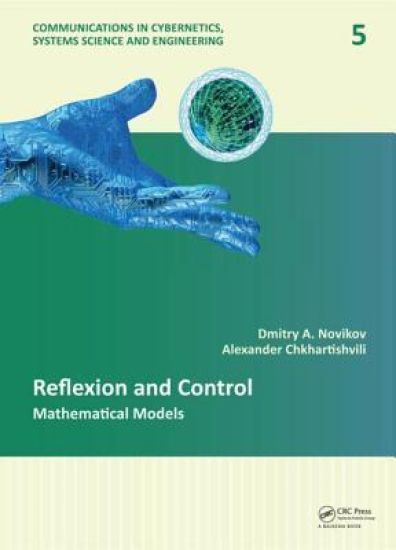
Reflexion and Control

Reflexion and Control

Dmitry A. Novikov; Alexander G. Chkhartishvili

CRC Press
2014
sidottu
This book is dedicated to modern approaches to mathematical modeling of reflexive processes in control. The authors consider reflexive games that describe the gametheoretical interaction of agents making decisions based on a hierarchy of beliefs regarding (1) essential parameters (informational reflexion), (2) decision principles used by opponents (strategic reflexion), (3) beliefs about beliefs, and so on. Informational and reflexive equilibria in reflexive games generalize a series of well-known equilibrium concepts in noncooperative games and models of collective behavior. These models allow posing and solving the problems of informational and reflexive control in organizational, economic, social and other systems, in military applications, etc. (the interested reader will find in the book over 30 examples of possible applications in these fields) and describing uniformly many psychological/sociological phenomena connected with reflexion, viz., implicit control, informational control via the mass media, reflexion in chess, art works, etc. The present book is intended for experts in decision making and control of systems of an interdisciplinary nature, as well as for undergraduates and postgraduates.
Toward a Hermeneutic Theory of Social Practices
Recent methodological debates have shown that practice theory can either be developed by combining and slightly extending established theoretical concepts of inter-subjectivity, social normativity, collective behavior, interaction between agents and environment, habits, learning, collective intentionality, and human agency; or by following a strategy that promotes the quest for completely autonomous concepts. In the latter case, one defends a thesis of irreducibility.Toward a Hermeneutic Theory of Social Practices advocates this thesis by approaching the interrelational dynamic of social practices in terms of existential analytic. Indeed, this insightful volume outlines a methodology of the double hermeneutics that allows the study of the entanglement of agential plans, beliefs, and intentions with configured practices; while also demonstrating how interrelated social practices with which agency is entangled articulate cultural forms of life.Suggesting a framework for studying the cultural forms of life within the scope of practice theory, this book will appeal to postgraduate students and postdoctoral researchers interested in fields such as Social Theory, Philosophy of Social Science, and Research Methods for Social and Behavioral Sciences.
Essays in the Hermeneutics of Science
Published in 1997, this volume is written from a hermenutico-phenomenological point of view. The essays cover a spectrum of relevant issues: the essential interpretation of science; the possibility of a "strong hermeneutics of science" that takes into consideration science's cognitive structure; the implications of existential-ontological interpretations of science for the post-metaphysical dialogue between hermeneutics and epistomology; the place of rhetorical tools in the human sciences; and the strategies of overcoming the legitimation crisis of the human sciences. Because of its commitment to the radical universalization of the hermeneutic problem, the strong programme of hermeneutics of science, suggested in this book, avoids both objectivism and relativism. In this regard, the essays must be read in relation to the search for a middle way between defending epistemic rationality as a basis for futher development of the "project of modernity" and the postmodern deconstruction of all cognitive identities of modernity.
Essays in the Hermeneutics of Science
Published in 1997, this volume is written from a hermenutico-phenomenological point of view. The essays cover a spectrum of relevant issues: the essential interpretation of science; the possibility of a "strong hermeneutics of science" that takes into consideration science's cognitive structure; the implications of existential-ontological interpretations of science for the post-metaphysical dialogue between hermeneutics and epistomology; the place of rhetorical tools in the human sciences; and the strategies of overcoming the legitimation crisis of the human sciences. Because of its commitment to the radical universalization of the hermeneutic problem, the strong programme of hermeneutics of science, suggested in this book, avoids both objectivism and relativism. In this regard, the essays must be read in relation to the search for a middle way between defending epistemic rationality as a basis for futher development of the "project of modernity" and the postmodern deconstruction of all cognitive identities of modernity.
Advanced Organic Synthesis

Advanced Organic Synthesis

Dmitry V. Liskin; Penny Chaloner

CRC Press
2017
sidottu
Laboratory experience equips students with techniques that are necessary for professional practice. Advanced Organic Synthesis: A Laboratory Manual focuses on a mechanistic background of key reactions in organic chemistry, gives insight into well-established trends, and introduces new developments in the field. The book features experiments performed by primary author Dmitry Liskin while he was a graduate student, providing a real-life quality to the experiments by using examples that have actually been conducted. It also includes recent experiments that have been published in peer-reviewed journals. The experiments are presented in a brief and simple manner, including bulleted lists of the required materials and equipment as well as step-by-step walkthroughs. Each experiment also carefully details safety issues and waste disposal methods. Emphasizing techniques and approaches used in more advanced labs, Advanced Organic Synthesis: A Laboratory Manual gives undergraduates the theoretical knowledge and practical experience they need to succeed at more advanced levels of research involving organic synthesis at the graduate or industrial level.
The Proto-totalitarian State

The Proto-totalitarian State

Dmitry Shlapentokh

Routledge
2017
nidottu
Totalitarian rule is commonly thought to derive from spe- cific ideologies that justify the complete control by the state of social, cultural, and political institutions. The major goal of this volume is to demonstrate that in some cases brutal forms of state control have been the only way to maintain basic social order.Dmitry Shlapentokh seeks to show that totalitarian or semi-totalitarian regimes have their roots in a fear of disorder that may overtake both rulers and the society at large. Although ideology has played an important role in many totalitarian regimes, it has not always been the chief reason for repression. In many cases, the desire to establish order led to internal terror and intrusiveness in all aspects of human life.Shlapentokh seeks the roots of this phenomenon in France in the fourteenth to sixteenth centuries, when asocial processes in the wake of the Hundred Years War led to the emergence of a brutal absolutist state whose features and policies bore a striking resemblance to totalitarian regimes in the Soviet Union and China. State punishment and control allowed for relentless drive to "normalize" society with the state actively engaged in the regulation of social life. There were attempts to regulate the economy and instances of social engineering, attempts to populate emerging colonial empires with exiles and produce "new men and women" through reeducation. This increased harshness in dealing with the populace, in fact, the emergence of a new sort of bondage, was combined with a twisted form of humanitarianism and the creation of a rudimentary safety net. Some of these elements can be found in the democratic societies of the modern West, although in their aggregation these attributes are essential features of totalitarian regimes of the modem era.
Juries in the Japanese Legal System

Juries in the Japanese Legal System

Dimitri Vanoverbeke

Routledge
2017
nidottu
Trial by jury is not a fundamental part of the Japanese legal system, but there has been a recent important move towards this with the introduction in 2009 of the lay assessor system whereby lay people sit with judges in criminal trials. This book considers the debates in Japan which surround this development. It examines the political and socio-legal contexts, contrasting the view that the participation of ordinary citizens in criminal trials is an important manifestation of democracy, with the view that Japan as a society where authority is highly venerated is not natural territory for a system where lay people are likely to express views at odds with expert judges. It discusses Japan’s earlier experiments with jury trials in the late 19th Century, the period 1923-43, and up to 1970 in US-controlled Okinawa, compares developing views in Japan on this issue with views in other countries, where dissatisfaction with the jury system is often evident, and concludes by assessing how the new system in Japan is working out and how it is likely to develop.
The Impact of European Integration on Political Parties
This book traces the positions of national partisan actors towards the development of the European polity in an in-depth comparative analysis covering all member states of the European Union over a period of 60 years. The author examines the approach of the social democratic, radical left, liberal, Christian democratic and radical right party families, eliciting a comprehensive analysis of partisan positions on European integration.Demonstrating that attitudes and programmatic changes towards European integration must be understood both as the product of long-term ideological traditions and domestic opposition or incumbency-seeking strategies, this book examines how far common ideological traditions lead to the emergence of convergent European policies. Based on an interdisciplinary approach that encompasses political science, history and area studies, this book provides background and analysis, and develops theory in an open and accessible style that expands the understanding of party behaviour. Using party programmes and quantitative data, the book reveals considerable cross-family variations regarding the extent to which parties’ genetic origins shape partisan responses to Europe.The Impact of European Integration on Political Parties will be of interest to students and scholars of European politics, European integration, comparative politics and political parties.