Kirjojen hintavertailu. Mukana 12 459 402 kirjaa ja 12 kauppaa.

Kirjahaku

Etsi kirjoja tekijän nimen, kirjan nimen tai ISBN:n perusteella.

932 tulosta hakusanalla Duff Hart-Davis

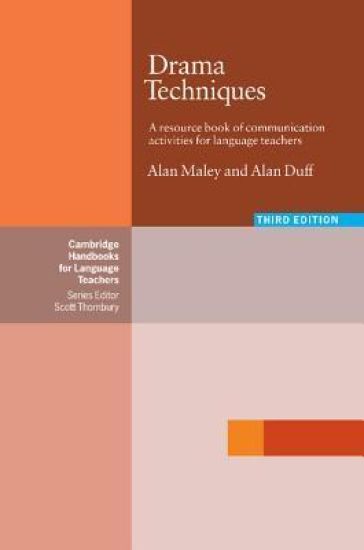
Drama Techniques

Drama Techniques

Alan Maley; Alan Duff

Cambridge University Press
2005
pokkari
Drama Techniques Third edition is a resource book of communicative activities for language teachers. This completely revised edition of the classic title Drama Techniques provides: *150 ideas for interesting and productive fluency practice *a large selection of drama-based techniques which focus learners' attention on communicative tasks or activities *techniques suitable for all levels *clear instructions for the teacher *advice on how to use the techniques in the classroom
Making Faithful Decisions at the End of Life

Making Faithful Decisions at the End of Life

Nancy J. Duff

Westminster/John Knox Press,U.S.
2018
nidottu
By exploring the ethics of resisting and accepting death from a Christian perspective, Nancy Duff encourages Christians to talk about death in the context of Christian faith. Making Faithful Decisions at the End of Life helps readers use biblical and theological perspectives regarding death to inform end-of-life decisions, consider where they stand on withdrawing life support and supporting death with dignity laws, and take steps in planning for their own future.
You Know I Love You Because You're Still Alive: Confessions of a Middle Aged Working Mom
Lori B. Duff, a recovering lawyer/writer/wife/mother/tired person follows up her hilarious best selling books, "Mismatched Shoes and Upside Down Pizza" and "The Armadillo, the Pickaxe, and the Laundry Basket" with her third collection of essays, the New Apple, eLit, and Readers Favorite award winning "You Know I Love You Because You're Still Alive: Confessions of a Middle Aged Working Mom." Lori's relatable and witty stories about every day life will have you snorting with laughter while nodding in recognition. Here's what other authors have to say about her: "Lori Duff fully admits to having a high tolerance for shenanigans and an inability to feel shame while making a fool of herself. Those traits combine to make a hilarious, and sometimes tender, book full of stories about a modern mother and her ever-challenging life....Lori's quick wit and charm will definitely win you over." - Keith Stewart, author of Bernadette Peters Hates Me "Take a peek inside Lori Duff's hectic but happy life and realize you're not alone in trying to balance work, family, marriage and home. With hilarious anecdotes and brutal honesty, she finishes her legal work while making chicken soup and leaves to chaperone a student trip to the Hotel of Doom. Laughing with Lori could become a welcome habit." - Elaine Ambrose, author of Midlife Cabernet and Midlife Happy Hour "About halfway through this book I realized that Lori Duff is saying a lot of smart and true and salient things WHILE she's making me laugh out loud until my stomach hurts." - Mary Patterson Thornburg, author of The Kura and A Glimmer of Guile "If Erma Bombeck and Andy Rooney had a secret love child and she grew up to be a writer, it would be Lori Duff. Enjoy this funny, sweet, ironic collection of essays." --Heather J. McAdams, author of Desolation Sound "Duff embraces her middle-aged, working-mom role with gusto and Erma Bombeck-esque humor in her latest sidesplitter, a page turner that'll have you shaking your head in agreement one minute; laughing your head off the next." - Allia Zobel Nolan, author of Women Who Still Love Cats Too Much "Lori Duff's essays get to the point quickly....She speaks for many other working middle-aged moms who "only want to be left alone" and are certainly "too old for overtime." Duff's book is heartfelt, laugh-out-loud funny and ends with this sage advice: "Forgiving is healthy. Forgetting is for fools." - Gianetta Palmer, author of Reflections on a Middle Aged Fat Woman "Whether she's inventing hysterical television game shows for couples, creating witty public service announcements, drafting the new Bill of Parents' Rights, or imparting her famous chicken soup recipe in amusing narrative form, Lori Duff's uproarious voice-of-reason will resonate long after you've read her cover-to-cover." - Stephanie D. Lewis, author of Lullabies & Alibis
A Century of Fashion: Dress Pattern Illustrations, 1898-1997
An essential fashion industry resource, this new book presents a century of fashion illustrations from dress pattern envelopes ranging from the 1890s to the 1990s. References the popular shapes, silhouettes, and fashions through nearly 350 patterns for evening wear, lingerie, sportswear, and more. This detailed presentation illustrates cultural, social, and economic changes influencing women's fashions and the stylized illustrations used to capture the mode and ideal body styles of the day. As more design processes go digital, this book offers hundreds of skillful renderings done by hand. This is an ideal collection for fashion industry professionals, design students, and costume historians.
Atlas of Chrysophycean Cysts

Atlas of Chrysophycean Cysts

K. Duff; Barbara A. Zeeb; John P. Smol

Springer
1994
sidottu
Chrysophycean algae are a diverse and often abundant group of primarily freshwater phytoplankton, characterized by the endogenous formation of siliceous cysts or stomatocysts (also called statospores or statocysts). Cyst morphology is highly variable, but believed to be species-specific. Recently, cysts have received considerable attention from phycologists and especially paleoecologists who wish to use these indicators for assessments of environmental change. Nonetheless, attempts at using cysts have often been hampered by taxonomic problems. This Atlas dispels some of the mystery surrounding stomatocysts, facilitating the accurate identification of individual cyst morphotypes, and encouraging other workers to begin using these important indicators. The terminology used to describe cysts is outlined in detail, followed by detailed descriptions of cyst morphotypes, following International Statospore Working Group (ISWG) guidelines, complemented by scanning electron and light micrographs, as well as line illustrations. Any available biogeographical and ecological information is also provided. These descriptions will further accelerate the continued effort to link cyst morphotypes to the algae that produce them. For paleoecologists who wish to include stomatocysts in their studies, researchers working with living chrysophycean algae, and those interested in the morphology and ultrastructure of cyst morphotypes.
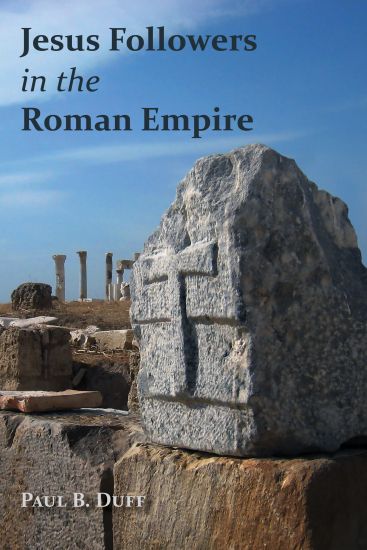
Jesus Followers in the Roman Empire

Jesus Followers in the Roman Empire

Paul B. Duff

William B Eerdmans Publishing Co
2017
nidottu
When Jesus of Nazareth began proclaiming the kingdom of God early in the first century, he likely had no intention of starting a new religion, especially one that included former pagans. Yet a new religion did eventually develop-one that not only included non-Jews but was soon dominated by them. How did this happen?Jesus Followers in the Roman Empire by Paul Duff offers an accessible and informed account of Christian origins, beginning with the teaching of Jesus and moving to the end of the first century. Duff's narrative shows how the rural Jewish movement led by Jesus developed into a largely non-Jewish phenomenon permeating urban centers of the Roman Empire. Paying special attention to social, cultural, and religious contexts-as well as to early Christian ideas about idolatry, marriage, family, slavery, and ethnicity-Jesus Followers in the Roman Empire will help readers cultivate a deeper understanding of the identity, beliefs, and practices of early Christ-believers.
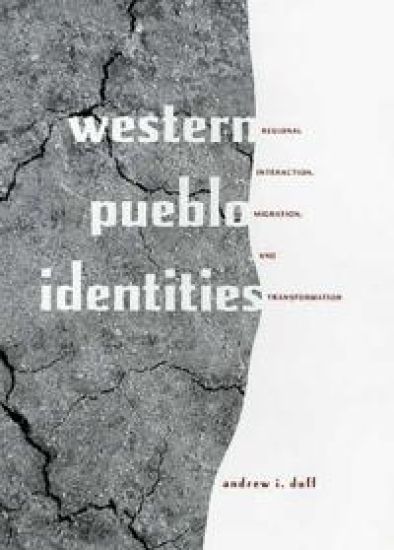
Western Pueblo Identities

Western Pueblo Identities

Andrew I. Duff

University of Arizona Press
2002
sidottu
Identifying distinct social groups of the past has always challenged archaeologists because understanding how people perceived their identity is critical to the reconstruction of social organization. Material culture has been the standard measure of distinction between groups, and the distribution of ceramics and other artifacts has often been used to define group boundaries. Western Pueblo Identities argues that such an approach is not always appropriate: demographic and historical factors may affect the extent to which material evidence can define such boundaries. Andrew Duff now examines a number of other factors relationships among settlement size, regional population densities, the homogeneity of material culture, and local and long-distance exchange in order to trace the history of interaction and the formation of group identity in east-central Arizona and west-central New Mexico from A.D. 1275 to 1400. Using comparative data from the Upper Little Colorado and Zuni regions, Duff demonstrates differences in patterns of interaction within and between regions with different population densities. He then links these differences to such factors as occupational history, immigrant populations, the negotiation of social identities, and the emergence of new ritual systems. Following abandonments in the Four Corners area in the late 1200s, immigrants with different historical backgrounds occupied many Western Pueblo regions in contrast to the Hopi and Zuni regions, which had more stable populations and deeper historical roots. Duff uses chemical analyses of ceramics to document exchange among several communities within these regions, showing that people in less densely settled regions were actively recruited by residents of the Hopi and Zuni regions to join their settlements. By the time of the arrival of the Spaniards, two distinct social and territorial groups the Hopi and Zuni peoples had emerged from this scattering of communities. Duff's new interpretations, along with new data on ceramic exchange patterns, suggest that interaction is a better way to measure identity than more commonly used criteria. His work offers new perspectives on the role of ritual in social organization and on identity formation in Pueblo IV society and is rich in implications for the study of other sedentary, middle-range societies.
Univers Intimes

Univers Intimes

Christine K. Duff

Peter Lang Publishing Inc
2008
sidottu
La vie interieure se situe au premier plan dans de nombreux romans de femmes caribeennes. Sa portee litteraire et ideologique est profonde : raconter la subjectivite d'un peuple raye de la carte de l'humanite pendant trois siecles sous le regime esclavagiste est hautement subversif. Univers intimes : Pour une poetique de l'interiorite au feminin dans la litterature caribeenne pose les premiers jalons d'une etude discursive et thematique de la representation de la vie interieure. Tout en tenant compte de considerations d'ordre historique, theorique et philosophique, cette enquete cerne les principaux sites de negociation dans le discours de l'interiorite : spatiotemporalite, memoire, imaginaire, creativite, onirisme, spiritualite, enjeu ecriture-interiorite. Un trait marque mais neglige de certains romans, a savoir leur qualite autoreferentielle, recoit ici un premier traitement critique. Le corpus est panamericain, etant compose de romans - souvent moins connus - par des ecrivaines originaires des Caraibes francophones et anglophones aussi bien que de l'Amerique du Nord, ainsi soulignant un fil conducteur dans la production litteraire des femmes a travers les Ameriques.
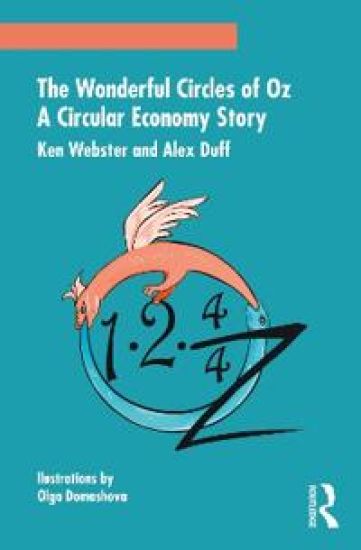
The Wonderful Circles of Oz

The Wonderful Circles of Oz

Ken Webster; Alex Duff

TAYLOR FRANCIS LTD
2022
sidottu
With the world’s economies impacted by coronavirus, billions are feeling social, environmental, and economic injustices. The call for a new, more just, more distributive economic story and system is louder and more urgent than ever. The Wonderful Circles of Oz provides both the framework and solutions for navigating towards an effective circular economy – the gateway to an abundant, autonomous, and democratic future.Widely regarded as one of the world’s most engaging circular economy thought leaders, Ken Webster, together with creative writer, Alex Duff, use a storytelling approach based on The Wonderful Wizard of Oz to offer a new, accessible, and compelling narrative about the future direction of our economy.‘The harder you work, the more you’ll improve your lot.’ That’s the simple story we’ve been sold over the last 40 years to justify how today’s economy works. Yet extreme inequality, the devastation of our natural world, and the erosion of our communities tell us this economic story resembles a work of fiction and the way our extractive economy operates is not fit for purpose. Still a restoration narrative, a satisfying story about our future and how we’ll get there, is slow to emerge. Using allegory, commentary, and reflection, this book helps speed the shift from an extractive economy of materials, energy, and finance to one based on an effective circular economy, which builds wealth as a stock of solutions accessible to all.The Wonderful Circles of Oz goes beyond tired debates (capital vs labour and market vs state) and blends fiction and non to effectively communicate the need for macro-economic system redesign. Exploring complex change and containing echoes of modern monetary theory, this book is a must for business professionals, students, and anyone with an interest in the circular economy.
The Wonderful Circles of Oz

The Wonderful Circles of Oz

Ken Webster; Alex Duff

TAYLOR FRANCIS LTD
2022
nidottu
With the world’s economies impacted by coronavirus, billions are feeling social, environmental, and economic injustices. The call for a new, more just, more distributive economic story and system is louder and more urgent than ever. The Wonderful Circles of Oz provides both the framework and solutions for navigating towards an effective circular economy – the gateway to an abundant, autonomous, and democratic future.Widely regarded as one of the world’s most engaging circular economy thought leaders, Ken Webster, together with creative writer, Alex Duff, use a storytelling approach based on The Wonderful Wizard of Oz to offer a new, accessible, and compelling narrative about the future direction of our economy.‘The harder you work, the more you’ll improve your lot.’ That’s the simple story we’ve been sold over the last 40 years to justify how today’s economy works. Yet extreme inequality, the devastation of our natural world, and the erosion of our communities tell us this economic story resembles a work of fiction and the way our extractive economy operates is not fit for purpose. Still a restoration narrative, a satisfying story about our future and how we’ll get there, is slow to emerge. Using allegory, commentary, and reflection, this book helps speed the shift from an extractive economy of materials, energy, and finance to one based on an effective circular economy, which builds wealth as a stock of solutions accessible to all.The Wonderful Circles of Oz goes beyond tired debates (capital vs labour and market vs state) and blends fiction and non to effectively communicate the need for macro-economic system redesign. Exploring complex change and containing echoes of modern monetary theory, this book is a must for business professionals, students, and anyone with an interest in the circular economy.