Kirjojen hintavertailu. Mukana 12 390 323 kirjaa ja 12 kauppaa.

Kirjahaku

Etsi kirjoja tekijän nimen, kirjan nimen tai ISBN:n perusteella.

1000 tulosta hakusanalla E. N. Setala

O vremena, o nravy! Rechi 80-63 gg. do n. e.
Vydajuschijsja politik-idealist, dobrosovestnyj gosudarstvennyj dejatel, neprimirimyj borets s tiraniej i korruptsiej, glubokij teoretik ritoriki i velikolepnyj orator, gibkij myslitel, erudit, blizkij k stoikam filosof i vdumchivyj pisatel, na mnogie stoletija stavshij zakonodatelem slova i stilja, - Mark Tullij Tsitseron (106 g. do n. e. - 43 g. do n. e.) byl figuroj neizmenno blistatelnoj, vremenami tragicheskoj, no vdokhnovljajuschej dazhe v samye chernye periody svoej politicheskoj i lichnoj biografii. Nasledie Tsitserona vekami sluzhilo evropejtsam sovershennym obraztsom vyrazitelnoj tochnosti i bogatejshim istochnikom znanij ob istorii Drevnego Rima. Dazhe spustja dva tysjacheletija Tsitseron ostaetsja aktualnym, i ne tolko kak istoricheskij istochnik. Na materiale ego rechej my po sej den uchimsja printsipam vedenija diskussii i gramotnoj argumentatsii: navyki, osobenno poleznye sejchas, kogda vse diskutirujut so vsemi, poroj ne slysha ni opponentov, ni dazhe sebja. V sbornik voshli izbrannye rechi Tsitserona 80-63 gg. do n. e., v tom chisle ego samaja pervaja rech v ugolovnom sude v zaschitu Ceksta Rostsija, sozdavshaja molodomu Tsitseronu slavu genialnogo oratora, i rechi protiv namestnika Sitsilii, korruptsionera, vzjatochnika i tirana Gaja Verresa.
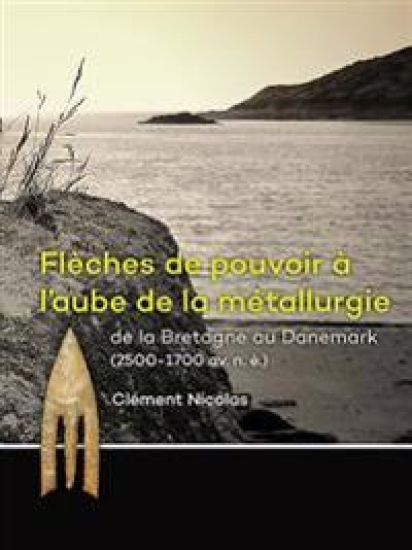
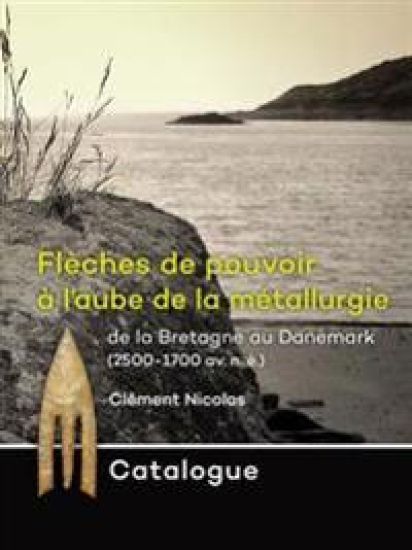
Flèches de pouvoir à l’aube de la métallurgie de la Bretagne au Danemark (2500-1700 av. n. è.)
This thesis focusses on the arrowheads found in graves of Late Neolithic and Early Bronze Age date (2500-1700 BC) in the Armorican massif, the southern British Isles and Denmark. These artefacts are examined from the angle of typology, raw materials, technology, experimentation and use-wear. The aim of these different approaches is to characterize the modes of production and the functions of stone arrowheads during a period which successively sees the introduction of copper then bronze metallurgy.Several interpretations are proposed, from warriors renewing their quivers to craftsmen manufacturing prestige goods for the elite. In Brittany, the arrows are set in their cultural and social context, marked by an individualization of funerary practices and then by the emergence of chiefs at the head of strongly hierarchical communities with geographically coherent territories. Power seems founded on reorganization of land-use and exploitation of agricultural resources, rather than on control of incipient metallurgy. Lastly, arrows are placed in the broader perspective of major trends affecting Atlantic Europe. The origin of the squared-off barbed and tanged arrowheads of the Bell Beaker culture seems anchored in the Final Neolithic of west-central France, while in the Early Bronze Age the arrowheads with oblique barbs seem to indicate an attachment to the Atlantic cultural complex.
Catalogue: Flèches de pouvoir à l’aube de la métallurgie de la Bretagne au Danemark (2500-1700 av. n. è.)
Ce catalogue accompagne la publication de l’ouvrage « Flèches de pouvoir à l’aube de la métallurgie de la Bretagne au Danemark (2500-1700 av. n. è.) ». Il rassemble pour la première fois un corpus d’armatures de flèches déposées dans les tombes de la fin du Néolithique et du Bronze ancien dans le Massif armoricain, dans le sud des îles Britanniques et au Danemark. Il contient la description (architecture, anthropologie, mobilier funéraire) de 231 sépultures, ayant livré un total de 1375 pointes de flèches. La plupart de ces armatures sont illustrées par 718 dessins (dont 200 originaux) et 454 photographies (dont 415 originales). À cela s’ajoutent la figuration des plans des tombes et du mobilier associé aux armatures. Ce corpus est enrichi d’un inventaire complémentaire pour le Danemark de 274 pointes de flèches issues de 92 sépultures de datation plus incertaine. Enfin, l’ensemble des armatures étudiées sont décrites selon leurs dimensions, leurs matières premières et leurs lieux de conservation.This volume contains the catalogue belonging to the book « Flèches de pouvoir à l’aube de la métallurgie de la Bretagne au Danemark (2500-1700 av. n. è.) ». It contains data on arrowheads deposited in Late Neolithic and Early Bronze Ages graves in the Armorican Massif, in southern British Isles and in Denmark. Included are the description (architecture, anthropology, grave goods) of 231 burials, which have yielded a total of 1375 arrowheads, illustrated with a total of 718 drawings and 454 photographs. Find contexts are illustrated with plans of the burials and associated grave goods. This corpus is enriched with a complementary inventory of 274 arrowheads from 92 graves with more unsecure dating from Denmark. Finally, all arrowheads are described according to their metric dimensions, their raw materials and their location in museums.
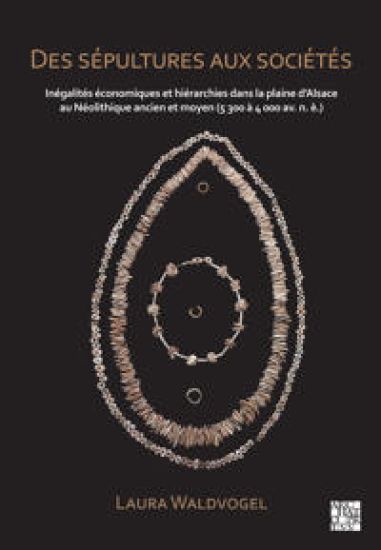
Des sépultures aux sociétés : Inégalités économiques et hiérarchies dans la plaine d’Alsace au Néolithique ancien et moyen (5 300 à 4 000 av. n. è.)
Des sépultures aux sociétés offers a renewed approach of the funerary practices of the Neolithic cultures that settled in the Alsace plain between 5,300 and 4,000 BC. Drawing upon a corpus of burials expanded by preventive archaeology operations carried out during the last decades, this work employs a comparative method based on recent advances in social anthropology. The exhaustive analysis of the various parameters of the funerary sphere is coupled with the application of a method that places the quality of funerary goods at its heart. This approach has made it possible to question the traditional interpretation of “egalitarianism” in early agricultural societies. On the other hand, it has demonstrated the deposition of standardized “precious” objects in a limited number of burials until the beginning of the Middle Neolithic period in the region. This intra-necropolis variability is matched by an inter-necropolis variability, expressed by the presence of two to three levels of wealth, depending on site and period. The use of the ethnological frame of reference allows us to consider the existence of “segmented” groups characterized by social competition of varying intensity between equal units (e.g. clans, lineages), and within which economic power is in the hands of men.