

Kirjahaku
Etsi kirjoja tekijän nimen, kirjan nimen tai ISBN:n perusteella.
1000 tulosta hakusanalla Edwin Colbert

How do you respond to your longing for a deeper life that touches all aspects of your being?In our challenging times, many are searching for ways to connect to inner resources of quiet and spiritual renewal. Some people turn to prayer, expressing the deep longing of their heart to connect to the divine. Other people draw their attention within, seeking the stillness of meditation.Prayer and meditation enliven the heart and enlighten the mind, opening the doors within us to greater peace and freedom. The Speaking Silence draws on the teachings of the some of the world's great spiritual traditions of prayer, meditation, and contemplation to present a contemporary guidebook to accompany your journey. Whether you are a religious person looking to tap the spiritual resources of your tradition or have a general interest in spirituality, or a seasoned explorer of consciousness and inner states, The Speaking Silence will provide a rich feast for your heart, mind, body and soul. Both practical and inspiring, this book will teach you some of the important concepts and ideas that can undergird the practices of prayer, meditation, and contemplation, along with a diversity of spiritual exercises to unfold them daily in your life.
How do you respond to your longing for a deeper life that touches all aspects of your being?In our challenging times, many are searching for ways to connect to inner resources of quiet and spiritual renewal. Some people turn to prayer, expressing the deep longing of their heart to connect to the divine. Other people draw their attention within, seeking the stillness of meditation.Prayer and meditation enliven the heart and enlighten the mind, opening the doors within us to greater peace and freedom. The Speaking Silence draws on the teachings of the some of the world's great spiritual traditions of prayer, meditation, and contemplation to present a contemporary guidebook to accompany your journey. Whether you are a religious person looking to tap the spiritual resources of your tradition or have a general interest in spirituality, or a seasoned explorer of consciousness and inner states, The Speaking Silence will provide a rich feast for your heart, mind, body and soul. Both practical and inspiring, this book will teach you some of the important concepts and ideas that can undergird the practices of prayer, meditation, and contemplation, along with a diversity of spiritual exercises to unfold them daily in your life.
The colonial era is especially appealing in regard to economic history because it represents a study in contrasts. The economy was exceptionally dynamic in terms of population growth and geographical expansion. No major famines, epidemics, or extended wars intervened to reverse, or even slow down appreciably, the tide of vigorous economic growth. Despite this broad expansion, however, the fundamental patterns of economic behavior remained fairly constant. The members of the main occupational groups - farmers, planters, merchants, artisans, indentured servants, and slaves - performed similar functions throughout the period. In comparison with the vast number of institutional innovations in the nineteenth and twentieth centuries, structural change in the colonial economy evolved gradually. With the exception of the adoption of the pernicious system of black slavery, few new economic institutions and no revolutionary new technologies emerged to disrupt the stability of this remarkably affluent commercial-agricultural society. Living standards rose slowly but fairly steadily at a rate of 3 to 5 percent a decade after 1650. (Monetary sums are converted into 1980 dollars so that the figures will be relevant to modern readers.) For the most part, this book describes the economic life styles of free white society. The term "colonists" is virtually synonymous here with inhabitants of European origin. Thus, statements about very high living standards and the benefits of land ownership pertain only to whites. One chapter does focus exclusively, however, on indentured servants and slaves. This book represents the author's best judgment about the most important features of the colonial economy and their relationship to the general society and to the movement for independence. It should be a good starting point for all - undergraduate to scholar - interested in learning more about the seventeenth and eighteenth centuries. This popular study, lauded by professors and scholars alike, has been diligently revised to reflect the tremendous amount of new research conducted during the last decade, and now includes a totally new chapter on women in the economy. Presenting a great deal of up-to-date information in a concise and lively style, the book surveys the main aspects of the colonial economy: population and economic expansion; the six main occupational groups (family farmers, indentured servants, slaves, artisans, great planters, and merchants); women in the economy; domestic and imperial taxes; the colonial monetary system; living standards for the typical family


Industry in the Pacific Northwest and the Location Theory
Edwin J. Cohn
Columbia University Press
2020
sidottu

Land Values in New York in Relation to Transit Facilities
Edwin H. Spengler
Columbia University Press
2022
sidottu




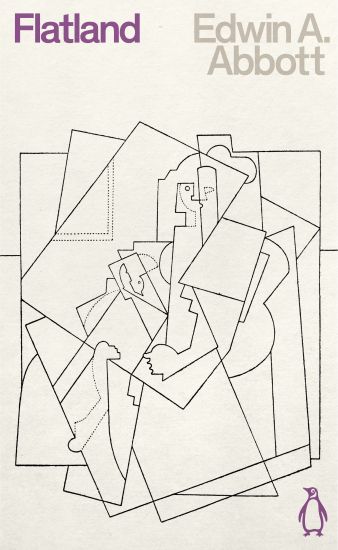
The book that influenced writers from Carl Sagan to Stephen Hawking, Flatland is set in a two-dimensional world where life exists only in lines and shapes - until one of its inhabitants, 'A. Square', has his perspective transformed forever. This brilliantly eccentric classic is an invitation to see beyond our own reality.'At once a playful brainteaser about geometry, a pointed satire of Victorian manners - and a strangely compelling argument about the greatest mysteries of the Universe' Wall Street Journal'Flatland could lead to very profound thought about our Universe and ourselves' Isaac Asimov
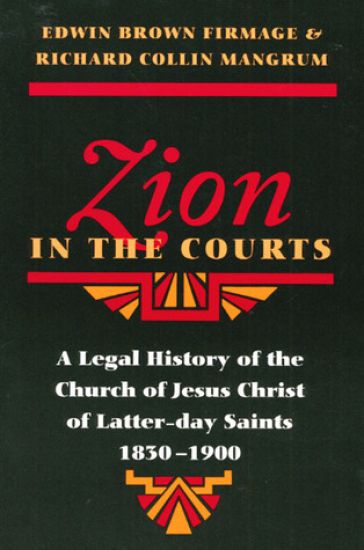
The inability of American society to tolerate the peculiar institutions embraced by Mormons was one of the major events in the religious history of nineteenth-century America. Zion in the Courts explores one aspect of this collision between the Mormons and the mainstream: the Mormons' efforts to establish their own court system--one appropriate to the distinctive political, social, and economic practices they envisioned as Zion--and the pressures applied by the federal legal system to bring them to heel. This first paperback edition includes two new introductory pieces in which the authors discuss the Mormon emphasis on settling disputes outside the court, a practice that foreshadows current trends toward arbitration and mediation.

Where do classical liberals stand on international relations? Does this differ from their views on domestic policy? And how does this stance vary from other liberal schools of thought? Here, author Edwin van de Haar draws on the writings of major classical liberal thinkers such as David Hume, Adam Smith, Ludwig von Mises and Friedrich Hayek to create an insightful and comprehensive overview of the classical liberal approach to foreign affairs. He delineates how classical liberals embrace a realistic view of human nature, recognising the basic social nature of individuals, yet acknowledging their propensity to quarrel, fight and use violence - and how this has consequently become an inevitable feature of international relations. He compares and contrasts this thinking with other forms of liberal thought, such as libertarianism, social liberalism and conservatism. And he also examines the much bigger difference between classical liberalism and non-liberal thinking on international relations. He argues that classical liberalism has a distinct, timeless and universalist approach to international relations - and that the unique ideas developed by classical liberal writers can, and should, be applied to contemporary world affairs.