Kirjojen hintavertailu. Mukana 11 518 949 kirjaa ja 12 kauppaa.

Kirjahaku

Etsi kirjoja tekijän nimen, kirjan nimen tai ISBN:n perusteella.

1000 tulosta hakusanalla Fernanda Pimenta

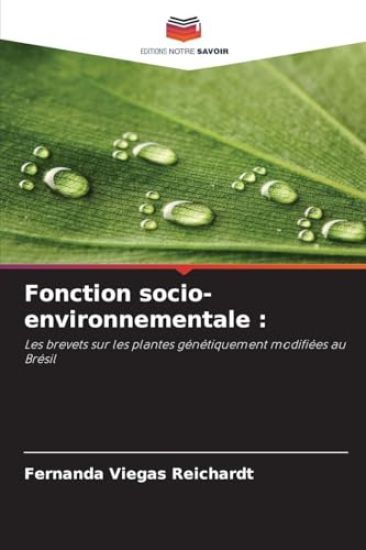
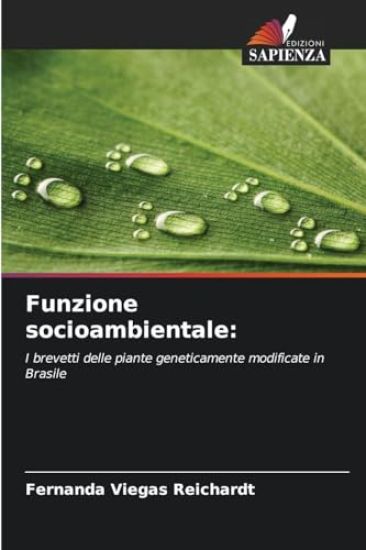
Fonction socio-environnementale

Fonction socio-environnementale

Fernanda Viegas Reichardt

Editions Notre Savoir
2025
pokkari
Cet ouvrage est une tude interdisciplinaire qui aborde les aspects socio-environnementaux des probl mes li s l'utilisation des terres et la conservation de la biodiversit sociale, dans une perspective d' cologie politique et de sociologie environnementale. Il est plus particuli rement consacr la biotechnologie moderne et au droit. Plus pr cis ment, il s'agit d'analyser la protection des plantes g n tiquement modifi es par le biais des droits de brevet par opposition l'obligation de remplir une fonction socio-environnementale. partir de la th orie des lignes abyssales propos e par Boaventura de Sousa Santos, nous avons cherch approfondir les questions socio-environnementales li es la biotechnologie moderne. Il a t v rifi si les aspects socio-environnementaux sont pris en compte dans leur ensemble par la l gislation, et quelles sont les implications de cette relation.
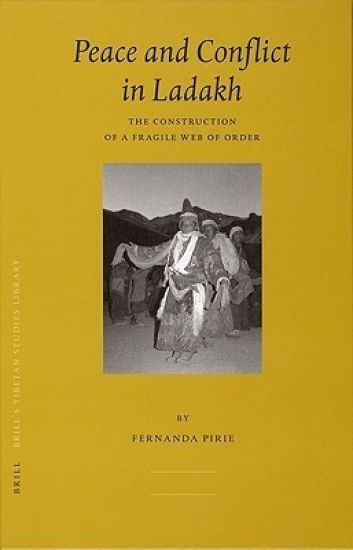
Peace and Conflict in Ladakh

Peace and Conflict in Ladakh

Fernanda Pirie

BRILL
2006
sidottu
Long caught between powerful neighbours, Ladakh is now a border region in the vast Indian nation state. In this detailed, anthropological study Fernanda Pirie traces the ways order has been created by, but also despite and in defiance of, the powerful external forces of religion, war, politics and wealth. Gradually a clear analysis unfolds of the subtle dynamics that have long characterised relations between local communities and centres of power and which can successfully be applied to the wider region. This exemplary study of conflict resolution brings to light the means by which small communities, both rural and urban, negotiate peace amidst the heterogeneous forces of modernity, while at the same time critically re-examining theories that over-emphasize the explanatory power of Buddhism. This rich ethnographic account of local practices fills a conspicuous gap in secondary literature on Tibetan law.
Misuses of Comparative Law in International Development

Misuses of Comparative Law in International Development

Fernanda G. Nicola

Cambridge University Press
2026
sidottu
Misuses of Comparative Law in International Development examines how comparative law has been deployed by international organizations, governments, and NGOs to legitimize legal reforms that entrench inequality and reinforce power hierarchies. These reforms often align development agendas with neoliberal and authoritarian logics. The book exposes the flawed assumptions—such as convergence, efficiency, and legalism-that underpin transnational reform projects like the World Bank's indicators and the harmonization initiatives of the EU and OECD. It shows how these frameworks misrepresent local contexts and silence alternative legal traditions. Introducing a new typology of misuse-from cannibalization to epistemic impoverishment—it reveals how comparative law frequently operates as a tool of domination rather than emancipation. Bridging critique and utopia, the book re-characterizes these misuses as social constructions and reimagines comparative law as a vehicle for equitable, context-sensitive, and redistributive legal reform.
Misuses of Comparative Law in International Development

Misuses of Comparative Law in International Development

Fernanda G. Nicola

Cambridge University Press
2026
pokkari
Misuses of Comparative Law in International Development examines how comparative law has been deployed by international organizations, governments, and NGOs to legitimize legal reforms that entrench inequality and reinforce power hierarchies. These reforms often align development agendas with neoliberal and authoritarian logics. The book exposes the flawed assumptions—such as convergence, efficiency, and legalism-that underpin transnational reform projects like the World Bank's indicators and the harmonization initiatives of the EU and OECD. It shows how these frameworks misrepresent local contexts and silence alternative legal traditions. Introducing a new typology of misuse-from cannibalization to epistemic impoverishment—it reveals how comparative law frequently operates as a tool of domination rather than emancipation. Bridging critique and utopia, the book re-characterizes these misuses as social constructions and reimagines comparative law as a vehicle for equitable, context-sensitive, and redistributive legal reform.
Art Therapy for Every Day

Art Therapy for Every Day

Nadia Fernanda Paredes Guapo

DORLING KINDERSLEY LTD
2026
nidottu
Find your creative flow, soothe nerves and reconnect with yourself through art therapy.Art is the best medicine – and by tapping into our creativity regularly, we can develop tools to help us feel better, calmer, and more resilient.Art Therapy for Every Day features 365 accessible and engaging exercises, each designed to help you develop self-awareness, explore their emotions, and find relief from stress and trauma. Each exercise focuses on a specific intention, can be completed with everyday art supplies, and is designed to fit easily into your day.Whether you want to better regulate your emotions, find joy in the creative process, or simply seek a meaningful and hopeful alternative to idle online scrolling, Art Therapy for Every Day unlocks the simple yet transformative power of self-expression, day after day.
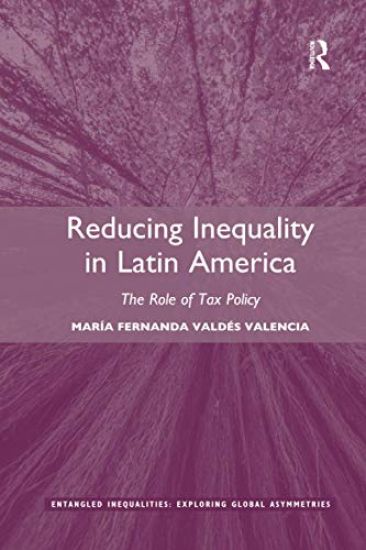
Reducing Inequality in Latin America

Reducing Inequality in Latin America

María Fernanda Valdés Valencia

Routledge
2020
nidottu
This book examines the role of tax policy in the incidence of socio-economic inequality. With a focus on Latin American, the author demonstrates that while inequality has decreased remarkably in the last decade – during the very period in which inequality was increasing almost everywhere else in the world – this reduction cannot be attributed to a better use of tax policy. Offering both quantitative and qualitative reviews of tax policies pursued by Argentina, Chile, Colombia, Mexico and Peru over the last two decades, Reducing Inequality in Latin America contends that these countries continue to make insufficient use taxation measures in combating startlingly high levels of inequality. Drawing on legal texts, interviews with researchers and experts in the field, and official monetary statistics to obtain a complete picture of how discretionary tax policy has been pursued in the region, this volume engages with a range of recent economic theories to argue for the importance of using the tax system to reduce inequalities, whilst also offering new methods for measuring tax policy in subsequent research. As such, it will appeal both to scholars of social science and policy makers with interests in economics, social inequality, public policy and international political economy.
Enforced Disappearances in International Human Rights

Enforced Disappearances in International Human Rights

María Fernanda Pérez Solla

McFarland Co Inc
2006
pokkari
"It was from Argentina, in the years 1976 to1983, that the world first heard the cries of the families of los desaparecidos, the disappeared.The scope and range of governmentally sanctioned kidnappings has spread, making enforced disappearances a truly global problem. This volume provides an in-depth legal investigation of involuntary disappearances as defined by national and international law"--Provided by publisher.
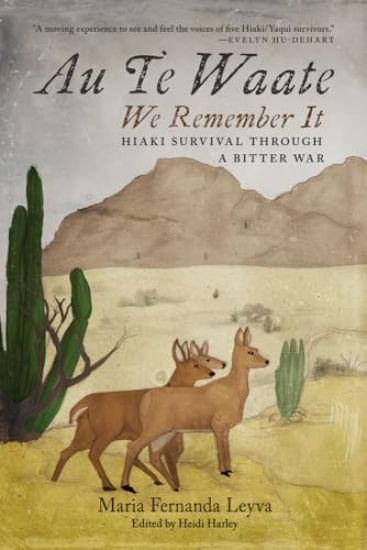
Au Te Waate / We Remember It

Au Te Waate / We Remember It

Maria Fernanda Leyva

University of Arizona Press
2025
nidottu
This compelling work delves into the personal narratives of Hiaki (Yaqui) individuals who endured the tumultuous period from 1900 to 1930, when they faced systematic attacks, conscription, deportation, and enslavement under Mexican government policies. Presented in both the original Hiaki language and English translation, these accounts offer an unparalleled glimpse into the lives of those who resisted and survived the era’s harsh realities. The narratives describe military engagements, the struggles of refugee life, forced labor, and the resilience of families under extreme duress. This work provides a unique and unvarnished account of the impacts of Mexican colonialism and aggression on individuals and families, completely from the Hiaki perspective. Au Te Waate / We Remember It is not just a historical account but a linguistic treasure, preserving the naturally produced speech of five Hiaki speakers from a previous era. Transcriptions of interviews recorded by author Maria Fernanda Leyva with family members and friends provide invaluable insights into the Hiaki language. The interviews document and preserve the narrative styles, vocabulary, and grammatical constructions of the time. This work also serves as a crucial resource for scholars of linguistics and history alike, capturing dialect variation and illustrating the linguistic evolution of the Hiaki community. Additionally, for Hiaki people studying their own language, this book stands as a rich repository of cultural and linguistic heritage, meticulously maintained through side-by-side translations and contextual historical introductions. The narratives in this book are anchored by the experiences of five Hiaki speakers, whose stories of displacement, survival, and resistance provide a deeply personal perspective on the broader historical events of the Porfirio DÍaz dictatorship and the early years of the Mexican Revolution. Au Te Waate / We Remember It stands as an important record, preserving these critical voices for future generations and offering profound insights into the resilience of the Hiaki people.
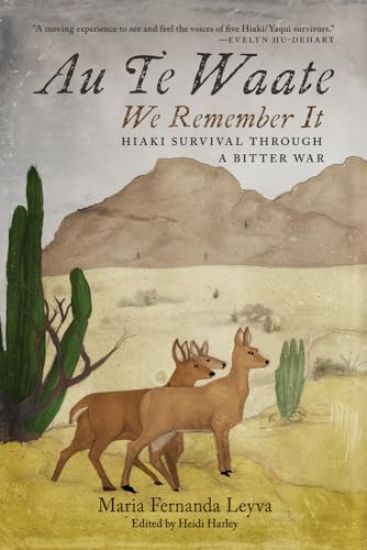
Au Te Waate / We Remember It

Au Te Waate / We Remember It

Maria Fernanda Leyva

University of Arizona Press
2025
sidottu
This compelling work delves into the personal narratives of Hiaki (Yaqui) individuals who endured the tumultuous period from 1900 to 1930, when they faced systematic attacks, conscription, deportation, and enslavement under Mexican government policies. Presented in both the original Hiaki language and English translation, these accounts offer an unparalleled glimpse into the lives of those who resisted and survived the era’s harsh realities. The narratives describe military engagements, the struggles of refugee life, forced labor, and the resilience of families under extreme duress. This work provides a unique and unvarnished account of the impacts of Mexican colonialism and aggression on individuals and families, completely from the Hiaki perspective. Au Te Waate / We Remember It is not just a historical account but a linguistic treasure, preserving the naturally produced speech of five Hiaki speakers from a previous era. Transcriptions of interviews recorded by author Maria Fernanda Leyva with family members and friends provide invaluable insights into the Hiaki language. The interviews document and preserve the narrative styles, vocabulary, and grammatical constructions of the time. This work also serves as a crucial resource for scholars of linguistics and history alike, capturing dialect variation and illustrating the linguistic evolution of the Hiaki community. Additionally, for Hiaki people studying their own language, this book stands as a rich repository of cultural and linguistic heritage, meticulously maintained through side-by-side translations and contextual historical introductions. The narratives in this book are anchored by the experiences of five Hiaki speakers, whose stories of displacement, survival, and resistance provide a deeply personal perspective on the broader historical events of the Porfirio DÍaz dictatorship and the early years of the Mexican Revolution. Au Te Waate / We Remember It stands as an important record, preserving these critical voices for future generations and offering profound insights into the resilience of the Hiaki people.