
Kirjahaku
Etsi kirjoja tekijän nimen, kirjan nimen tai ISBN:n perusteella.
1000 tulosta hakusanalla Harold Schechter
Childe Harold's Pilgrimage
Bibliotech Press
2020
pokkari
George Gordon Byron, the 6th Baron Byron FRS (22 January 1788 - 19 April 1824), known simply as Lord Byron, was an English poet, peer, and politician who became a revolutionary in the Greek War of Independence, and is considered one of the leading figures of the Romantic movement. He is regarded as one of the greatest English poets and remains widely read and influential. Among his best-known works are the lengthy narrative poems Don Juan and Childe Harold's Pilgrimage; many of his shorter lyrics in Hebrew Melodies also became popular.He travelled extensively across Europe, especially in Italy, where he lived for seven years in the cities of Venice, Ravenna and Pisa. During his stay in Italy he frequently visited his friend and fellow poet Percy Bysshe Shelley. Later in life Byron joined the Greek War of Independence fighting the Ottoman Empire and died of disease leading a campaign during that war, for which Greeks revere him as a national hero. He died in 1824 at the age of 36 from a fever contracted after the First and Second Siege of Missolonghi.His only legitimate child, Ada Lovelace, is regarded as a foundational figure in the field of computer programming based on her notes for Charles Babbage's Analytical Engine. Byron's illegitimate children include Allegra Byron, who died in childhood, and possibly Elizabeth Medora Leigh. (wikipedia.org)
Childe Harold's Pilgrimage
Bibliotech Press
2020
sidottu
George Gordon Byron, the 6th Baron Byron FRS (22 January 1788 - 19 April 1824), known simply as Lord Byron, was an English poet, peer, and politician who became a revolutionary in the Greek War of Independence, and is considered one of the leading figures of the Romantic movement. He is regarded as one of the greatest English poets and remains widely read and influential. Among his best-known works are the lengthy narrative poems Don Juan and Childe Harold's Pilgrimage; many of his shorter lyrics in Hebrew Melodies also became popular.He travelled extensively across Europe, especially in Italy, where he lived for seven years in the cities of Venice, Ravenna and Pisa. During his stay in Italy he frequently visited his friend and fellow poet Percy Bysshe Shelley. Later in life Byron joined the Greek War of Independence fighting the Ottoman Empire and died of disease leading a campaign during that war, for which Greeks revere him as a national hero. He died in 1824 at the age of 36 from a fever contracted after the First and Second Siege of Missolonghi.His only legitimate child, Ada Lovelace, is regarded as a foundational figure in the field of computer programming based on her notes for Charles Babbage's Analytical Engine. Byron's illegitimate children include Allegra Byron, who died in childhood, and possibly Elizabeth Medora Leigh. (wikipedia.org)
The Rev. Harold Melville Heath, Jr. taught that you could ask God for anything-anything at all. He might not give you everything you ask for. But He loves us, and that love gives us confidence to approach the Throne of Grace. And we in turn are called to spread God's love to others. Briefly enlisted in the army before the end of WWII, Hal suffered a military training accident which eventually cost him hearing in one ear. He moved to the West Coast to escape from sinus issues, where he completed the degree requirements for two Ph.D. programs, but chose to respond to a call to the ministry. For over 30 years, Hal pastored churches in Arizona and San Diego, California. He lived out his calling not just in the pulpit, but served for many years with a variety of ministries, including PUM (Presbyterian Urban Ministries), ministering to the poor and homeless in southeast San Diego, and also taught ESL (English as a Second Language) full-time for 10 years and for many years afterwards as a substitute teacher. These are his collected writings. They remind us to be faithful to the God of Love, and speak to us of His unending faithfulness in our lives. They share stories of resilience, of faith in the face of adversity, and of hope.
Childe Harold's Pilgrimage
Baron George Gordon Byron Byron
Createspace Independent Publishing Platform
2018
nidottu
Childe Harold's Pilgrimage was the poem which brought Lord Byron public recognition. He himself disliked the poem, because he felt it revealed too much of himself. In it a young man (called childe after the medieval term for a candidate for knighthood) travels to distant lands to relieve the boredom and weariness brought on by a life of dissipation. It is thought to be a comment on the post-Revolutionary and -Napoleonic generation, who were weary of war.
Childe Harold's Pilgrimage
George Gordon Byron
Createspace Independent Publishing Platform
2018
nidottu
Childe Harold's Pilgrimage by Lord Byron. Childe Harold's Pilgrimage is a lengthy narrative poem in four parts written by Lord Byron. It was published between 1812 and 1818 and is dedicated to "Ianthe". The poem describes the travels and reflections of a world-weary young man who, disillusioned with a life of pleasure and revelry, looks for distraction in foreign lands. In a wider sense, it is an expression of the melancholy and disillusionment felt by a generation weary of the wars of the post-Revolutionary and Napoleonic eras. The title comes from the term childe, a medieval title for a young man who was a candidate for knighthood.
Childe Harold's Pilgrimage
George Gordon Byron
Createspace Independent Publishing Platform
2018
nidottu
Rare edition with unique illustrations and elegant classic cream paper. Classics by Byron. Childe Harold's Pilgrimage is a lengthy narrative poem in four parts written by Lord Byron. The poem describes the travels and reflections of a world-weary young man who, disillusioned with a life of pleasure and revelry, looks for distraction in foreign lands. Includes illustrations.
Childe Harold's Pilgrimage
George Gordon Byron
Createspace Independent Publishing Platform
2018
nidottu
Rare edition with unique illustrations and elegant classic cream paper. Classics by Byron. Childe Harold's Pilgrimage is a lengthy narrative poem in four parts written by Lord Byron. The poem describes the travels and reflections of a world-weary young man who, disillusioned with a life of pleasure and revelry, looks for distraction in foreign lands. Includes illustrations.
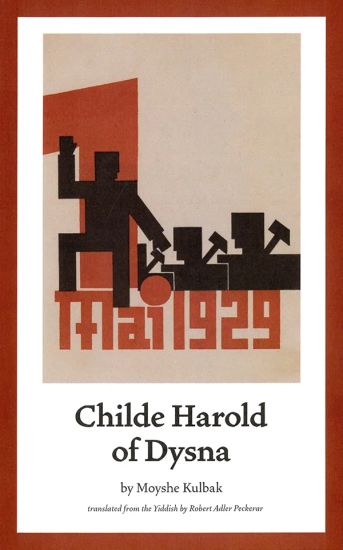
A masterpiece from one of Yiddish literature's true virtuosi, Moyshe Kulbak's satiric poem from 1933, Childe Harold of Dysna, appears here for the first time in a complete English translation. At once an exuberant celebration of Yiddish language and a searing indictment of capitalist excess, Kulbak's long poem follows the journey of its protagonist from small town Eastern Europe to the metropolis of Weimar Berlin. Drawing on his own experiences in Berlin in the early 1920s, Kulbak offers us a fresh perspective on life in interwar Berlin, and does so in one of the truly great pyrotechnic displays in Yiddish poetry. Robert Adler Peckerar's stunning translation conveys simultaneously Kulbak's verbal brilliance and his searing critique. This beautiful volume includes an introduction by Boris Dralyuk, the executive editor of the Los Angeles Review of Books, and stunning illustrations by Beynish.
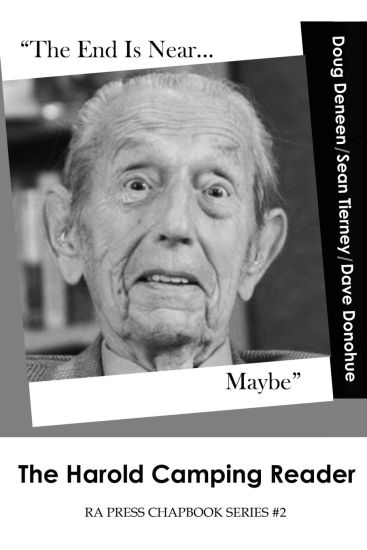
THE HAROLD CAMPING READER is a chapbook describing three writers' reactions to the preacher who predicted the end-times in 2011. Through essay, fiction and poetry - with humor as well as a touch of darkness - this chapbook takes us on a tour of religious supposition.
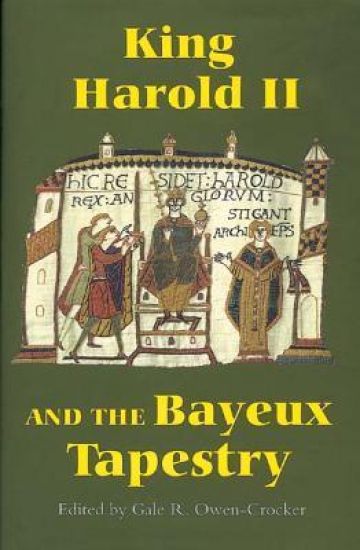
King Harold II and the Bayeux Tapestry
The Boydell Press
2005
sidottu
Essays on the brief but tumultuous reign of Harold II, and one of our most important sources of knowledge of the time - the Bayeux Tapestry. Harold II is chiefly remembered today, perhaps unfairly, for the brevity of his reign and his death at the Battle of Hastings. The papers collected here seek to shed new light on the man and his milieu before and after that climax. They explore the long career and the dynastic network behind Harold Godwinesson's accession on the death of King Edward the Confessor in January 1066, looking in particular at the important questions as to whether Harold's kingship was opportunist or long-planned; a usurpation or a legitimate succession in terms of his Anglo-Scandinavian kinships? They also examine the posthumous legends that Harold survived Hastings and lived on as a religious recluse.The essays in the second part of the volume focus on the Bayeux Tapestry, bringing out the small details which would have resonated significantly for contemporary audiences, both Norman and English, to suggest how they judged Harold and the other players in the succession drama of 1066. Other aspects of the Tapestry are also covered: the possible patron and locations the Tapestry was produced for; where and how it was designed; and the various sources - artistic and real - employed by the artist. Contributors: H.E.J. Cowdrey, Nicholas J. Higham, Ian Howard, Gillian Fellows-Jensen, Stephen Matthews, S.L. Keefer, Gale R. Owen-Crocker, Chris Henige, Catherine Karkov, Shirley Ann Brown, C.R. Hart, Michael Lewis. GALE OWEN-CROCKER is Professor of Anglo-Saxon Culture at the University of Manchester.
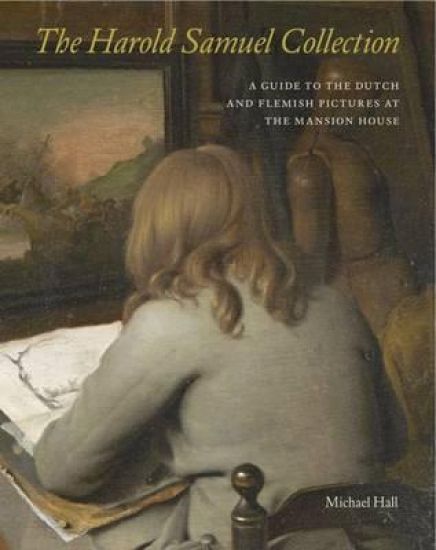
The Harold Samuel Collection: A Guide to the Dutch and Flemish Pictures at the Mansion House
Clare Gifford; Michael Hall
Paul Holberton Publishing
2013
pokkari
The Harold Samuel Collection Art Collection of Dutch and Flemish seventeenth-century pictures is one of the finest groups of Old Master paintings assembled in Britain over the past hundred years, but one of the least known. Sir Harold Samuel, 1st and last Lord Samuel of Wych Cross (1912–1987) bequeathed the collection to the City of London to hang at Mansion House. Now in the care of the Guildhall Museum and Art Gallery, the collection of 84 paintings can be viewed at Mansion House on organized tours or by appointment. Built between 1732 and 1754, the House is the home, office and center of entertaining for the Lord Mayor of the City of London and the Corporation. This guide will enable visitors to take a tour through Mansion House and discover the artists and their subjects – landscapes, still lifes and genre scenes – the development of styles, forms, materials and techniques, and the history of the collection. Highlights include works by Frans Hals, Aelbert Cuyp, Jan van Goyen, Jacob van Ruisdael and Pieter de Hooch. Lively and insightful entries accompany beautiful reproductions of every painting and are introduced by an essay about the creation of the collection and the history of artistic taste in relation to Dutch art. Michael Hall gained his PhD, on collecting Old Master paintings in the nineteenth century, from the Courtauld Institute of Art in 2005. For the past twenty-five years he has been curator of the Rothschild family collections at Exbury in Hampshire. He has been a Visiting Scholar at the Getty Research Institute in Los Angekes and was J. Clawson Mills Fellow at the Metropolitan Museum of Art, New York. He has catalogued the collection of gold boxes at the Huntington Art Gallery in San Marino, California, and writes on French decorative arts and on collecting Old Master paintings. Clare Gifford is a doctor of science and medicine. She has over recent years become greatly interested in the history and culture of 'the City that made the world'. Her husband Roger was elected Lord Mayor of London for 2012–13.

Major Harold Ferguson: Citizen-Soldier Meets Roaring 20s Los Angeles
Edmond J. Clinton
Folioavenue Publishing Service
2019
sidottu
This is a true story from Maj. Harold Ferguson's personal diary and letters describing his experiences during World War I and his life as a citizen of Los Angeles during the formative years of the 1920s. Maj. Harold Ferguson was a Stanford graduate lawyer and member of the United States National Guard returning from service in World War I to his home in Los Angeles, a city growing into a thriving metropolis. But Los Angeles was a different city from Chicago, New York, or Detroit. It was isolated from the rest of the country by its location on the West Coast, surrounded by mountain ranges and oceans. Natural resources were rare, and water would be crucial to supporting a new population that hailed mostly from the Midwest. All these challenges were part of Ferguson's story. His entry into the LA real estate business came at a time when Los Angeles was overwhelmed with housing demands to accommodate all the new immigrants who saw Los Angeles as a Mediterranean paradise--sunshine, Hollywood, job opportunities, get-rich-quick schemes, and a new beginning. But delayed effects of World War I, subterranean and invisible to most, rose from the depths and created the Great Depression.

Major Harold Ferguson: Citizen-Soldier Meets Roaring 20s Los Angeles
Edmond J. Clinton III
Folioavenue Publishing Service
2019
nidottu
This is a true story from Major Harold Ferguson's personal diary and letters describing his experiences during World War I and his life as a citizen of Los Angeles during the formative years of the 1920s. Major Harold Ferguson was a Stanford graduate lawyer and member of the United States National Guard returning from service in World War I to his home in Los Angeles, a city growing into a thriving metropolis. But Los Angeles was a different city from Chicago, New York, or Detroit. It was isolated from the rest of the country by its location on the West Coast surrounded by mountain ranges and ocean. Natural resources were rare and water would be crucial to supporting a new population that hailed mostly from the Midwest. All these challenges were part of Ferguson's story. His entry into the LA real estate business came at a time when Los Angeles was overwhelmed with housing demands to accommodate all the new immigrants who saw Los Angeles as a Mediterranean paradise; sunshine, Hollywood, job opportunities, get-rich-quick schemes, a new beginning. But delayed effects of World War I, subterranean and invisible to most, rose from the depths and created the Great Depression.


Frank Harold Watson, Diary of World War I, March 1918 - July 1919
Park Place Publications
2020
sidottu
PREFACEWhen I took a typing class in the 9th grade, my grandfather asked me if I wanted to practice by transcribing his diary from World War I. I said, "Yes." By the time I was halfway through, I became busy with other things and never finished it.After moving to Monterey, I asked Mom and Dad what happened to the diary. They did not even remember its existence. I guessed that it must be lost. Then years later, while cleaning out the garage, I found a box with things I'd saved from high school. In the box was the section I typed and the rest of the hand-written diary. The part I had done was in a faded black binder with yellowed sheets of paper. The original diary was in loose pages, 5 1/2 by 8 inches, in blue ink, still well-preserved.I have re-transcribed it for the family, so they can learn a little more about my cherished grandfather, Frank Herald Watson.As you remember from my father's book about his family, Grandpa Watson had to drop out of school after the 8th grade. He was smart, but not educated. His diary had a lot of run-on sentences, lack of punctuation, and spelling errors, most of which I corrected. Otherwise it is in his words.In some places, it appears that he went back later and wrote about what happened on a particular day.Grandpa Watson was 39 when he enlisted in the army. I have always wondered why he decided to do so. According to my father, the English were running out of men to fight the war and were rounding up Englishmen in the United States for the English army. To avoid this, my grandfather volunteered for the Americans.I researched the San Francisco Chronicle and the San Jose Mercury News for the first three months of 1918 and could find no stories about that. Perhaps it was a rumor.I also questioned why he would leave Grandma at this time since she had lost two children during the previous year. My dad had no memory of his older sister, Gertrude, or his younger brother, Philip. Gertrude was born in Medford, but the state of Oregon had no record of her birth. Santa Clara County had no record of her death. From the diary, it appears that she died April 23, 1917, less than a year before Grandpa left. She was about five or six years old, according to Dad's memoir.Records from the County of Santa Clara show that Philip was born in San Jose on January 17, 1917 and died on August 11, 1917. The death certificate states that he died of a "inanition" with complications relating to a "tubercular condition of the glands." I was curious about the cause of death. Inanition was a term that was used to explain the death of many babies in the early 1900s. It is a condition in which a baby dies because the mother is unable to adequately nurse her child. I am guessing that Grandma in her grief over the death of Gertrude may not have been able to provide sufficient milk. The term, inanition, was not used after 1920.While working on this project, I found a number of letters Grandpa Watson had written to Grandma while he was away in the army. They reveal a romantic side of my grandfather that I never saw. I have included a few of them in this book.- - -A final word: The diary is not politically correct, but reflects the white male attitudes of the times. It is difficult for me to square some of his racially prejudiced words in the diary with the man I loved, but the world was different then. When I knew him, I never heard him utter any prejudicial language. I am grateful that his diary and letters survived.- Carol Kaplan 2020
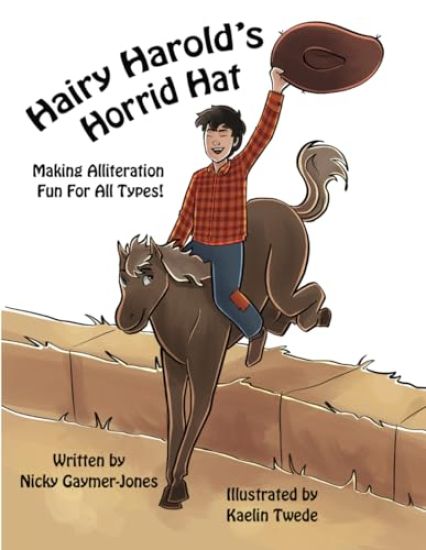
Dive into the world of alliteration, and turn your beginner reader's experience into a playful and challenging exercise that optimizes the use of the letter "H". Perfect for children learning to read, "Hairy Harold's Horrid Hat" is a clever tool designed for early readers, blending the elements of alphabet books, children's rhyming stories, and dyslexia-friendly content. Join hairy Harold as he hosts a herd of happy animals, handing out healthy hummus. A silly story with an easy-to-follow storyline, fun illustrations, and likable characters. Filled with charming, vibrant illustrations and playful text. - A fun read-aloud for families and elementary storytime- Books for kids ages 4-8- Books for early and emergent readers As part of the "Alliteration Fun for All Types" series, you'll want to collect every letter of the alphabet for your young readers' library. To learn more visit Nickysbooks.com Scroll to the top of the page and click Buy Now to start (or grow) your collection
The Harold Gatewood Mysteries: An Encyclopedia Volume 2: An Encyclopedia Volume 2
Hal Graff
Createspace Independent Publishing Platform
2017
nidottu
Childe Harold's Pilgrimage
George Gordon Byron
Createspace Independent Publishing Platform
2017
nidottu
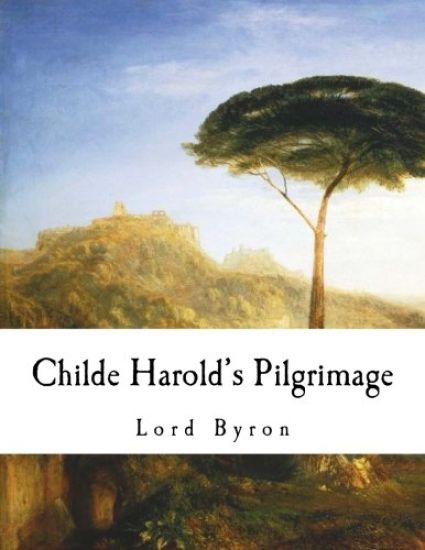
THE CLASSIC: Childe Harold's Pilgrimage by Lord Byron. Childe Harold's Pilgrimage is a lengthy narrative poem in four parts written by Lord Byron. It was published between 1812 and 1818 and is dedicated to "Ianthe." The poem describes the travels and reflections of a world-weary young man who, disillusioned with a life of pleasure and revelry, looks for distraction in foreign lands. In a wider sense, it is an expression of the melancholy and disillusionment felt by a generation weary of the wars of the post-Revolutionary and Napoleonic eras. The title comes from the term childe, a medieval title for a young man who was a candidate for knighthood. Childe Harold became a vehicle for Byron's own beliefs and ideas, but in the preface to canto four Byron complains that his readers conflate him and Child Harold too much, so he will not speak of Harold as much in the final canto. According to Jerome McGann, by masking himself behind a literary artifice, Byron was able to express his view that "man's greatest tragedy is that he can conceive of a perfection which he cannot attain."