Kirjojen hintavertailu. Mukana 11 627 220 kirjaa ja 12 kauppaa.

Kirjahaku

Etsi kirjoja tekijän nimen, kirjan nimen tai ISBN:n perusteella.

1000 tulosta hakusanalla Heidi Nummi

Ethical Excellence

Ethical Excellence

Heidi M. Giebel

The Catholic University of America Press
2021
nidottu
Why do some people achieve ethical excellence while others fail? For example, how did Gloria Lewis overcome a lifetime of difficulty and go on to found a non-profit focused on feeding the homeless while Danny Starrett, despite a seemingly ideal childhood, became a rapist and murderer? Why did some Germans rescue their Jewish neighbors while others stood by?One recent study found that four personal variables, taken together, differentiated Nazi-era bystanders from rescuers with startling 96.1% accuracy: social responsibility, altruistic moral reasoning, empathic concern, and risk-taking—traits related to ethical excellences (virtues) like justice, benevolence, and courage. Drawing from the combined wisdom of classical Socratic and Confucian philosophy, recent work in psychology, and the lived experience of recognized moral heroes, the book focuses on how each of us can work toward ethical excellence, becoming more like Lewis and neighbor-rescuers than like Starrett and Nazi-era bystanders.The ancient Socratic and Confucian philosophical traditions offer surprisingly sophisticated advice regarding moral education. Because research in psychology helps us assess the feasibility of cultivating virtue in ourselves and those we influence, Ethical Excellence focuses on combining sound philosophical analysis of ethical virtue and related concepts with relevant empirical research on how these concepts are manifested and developed in everyday practice. Willpower, for example, contributes to development of temperance or moderation, grit relates to perseverance, and empathy is connected to benevolence.Finally, the study of ethically exceptional people—moral heroes or exemplars—serves as living proof that ethical excellence is possible, and exemplars can provide inspiration to attempt it ourselves and guidance regarding how to do so successfully. Relevant stories and excerpts from the author’s own interviews with award-winning ethical exemplars complement the use of philosophical virtue theory and psychological research on virtue-relevant practice. Together, these three approaches—philosophy, psychology, and biography—help to triangulate” ethical excellence and its achievement, presenting a much clearer and more complete picture than we can get from any one of these methods alone.
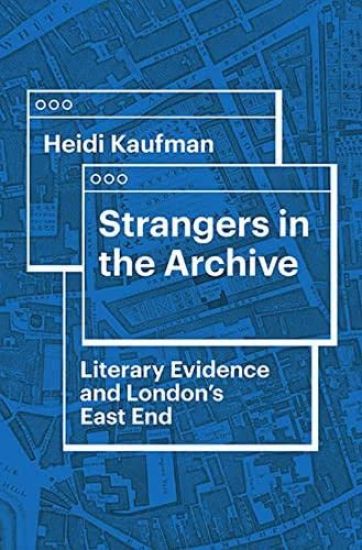
Strangers in the Archive

Strangers in the Archive

Heidi Kaufman

UNIVERSITY OF VIRGINIA PRESS
2022
sidottu
Traditionally the scene of some of London’s poorest, most crime-ridden neighborhoods, the East End of London has long been misunderstood as abject and deviant. As a landing place for migrants and newcomers, however, it has also been memorably and colorfully represented in the literature of Victorian authors such as Charles Dickens and Oscar Wilde. In Strangers in the Archive, Heidi Kaufman applies the resources of archives both material and digital to move beyond icon and stereotype to reveal a deeper understanding of East End literature and culture in the Victorian age.Kaufman uncovers this engaging new perspective on the East End through Maria Polack’s Fiction without Romance (1830), the first novel to be published by an English Jew, and through records of Polack’s vibrant community. Although scholars of nineteenth-century London and readers of East End fictions persist in privileging sensational narratives of Jack the Ripper and the infamous "Fagin the Jew" as signs of universal depravity among East End minority ethnic and racial groups, Strangers in the Archive considers how archival materials are uniquely capable of redressing cultural silences and marginalized perspectives as well as reshaping conceptions of the global significance of literary and print culture in nineteenth-century London.Many of this book’s subjects—including digital editions of rare books and manuscript diaries, multimedia maps, and other related East End print records—can be viewed online at the Lyon Archive and the Polack Archive.
Vaccine Rhetorics

Vaccine Rhetorics

Heidi Yoston Lawrence

Ohio State University Press
2020
sidottu
Debates over vaccination run rampant in the US-from the pages of medical journals, to news coverage about the latest outbreak, to vehement messages passed back and forth online. From the professional level to the personal one, almost everyone has an opinion on vaccinations-and often conversations around this issue pit supporters of vaccinations against "anti-vaxxers." In Vaccine Rhetorics, Heidi Yoston Lawrence turns a critical eye toward such conversations-proposing a new approach that moves us beyond divisive rhetoric and seeks to better understand the material conditions underlying the debate. Starting with a key question-If vaccines work, why are they controversial?-and using an approach she calls "material exigence," Lawrence seeks to understand the material conditions of disease and injury associated with vaccination. Examining four primary motivations-the exigency of disease at the heart of physician views, the desire for eradication from policymakers, concern over injury expressed by parents and patients in online confessionals, and questions about the unknown surrounding potential recipients of the flu vaccine, Lawrence demonstrates the complexity of vaccination skepticism and the need for more nuanced public discourse. In bringing together the voices of those who oppose, question, and support vaccines, Vaccine Rhetorics unearths the material circumstances that lead to differing viewpoints and brings important attention not just to what is said but how and why it is said-providing a useful framework for studying other controversial issues.
Vaccine Rhetorics

Vaccine Rhetorics

Heidi Yoston Lawrence

Ohio State University Press
2020
pokkari
Debates over vaccination run rampant in the US-from the pages of medical journals, to news coverage about the latest outbreak, to vehement messages passed back and forth online. From the professional level to the personal one, almost everyone has an opinion on vaccinations-and often conversations around this issue pit supporters of vaccinations against "anti-vaxxers." In Vaccine Rhetorics, Heidi Yoston Lawrence turns a critical eye toward such conversations-proposing a new approach that moves us beyond divisive rhetoric and seeks to better understand the material conditions underlying the debate. Starting with a key question-If vaccines work, why are they controversial?-and using an approach she calls "material exigence," Lawrence seeks to understand the material conditions of disease and injury associated with vaccination. Examining four primary motivations-the exigency of disease at the heart of physician views, the desire for eradication from policymakers, concern over injury expressed by parents and patients in online confessionals, and questions about the unknown surrounding potential recipients of the flu vaccine, Lawrence demonstrates the complexity of vaccination skepticism and the need for more nuanced public discourse. In bringing together the voices of those who oppose, question, and support vaccines, Vaccine Rhetorics unearths the material circumstances that lead to differing viewpoints and brings important attention not just to what is said but how and why it is said-providing a useful framework for studying other controversial issues.
Angels in the Architecture

Angels in the Architecture

Heidi Johnson

Wayne State University Press
2004
nidottu
In the nineteenth century, perhaps no approach to mental illness was more compassionate than that of hospital administrator Thomas Story Kirkbride, whose asylum designs integrated beauty and nature as a method to treat patients. The Northern Michigan Asylum in Traverse City, Michigan, was one of the last of nearly tow hundred such architecturally intriguing asylums. Founded in 1885 under the principle ""beauty is therapy,"" the Northern Michigan Asylum closed in 1989 and today stands as a haunting reminder of this lost era. Angels in the Architecture is a photographic study of this institution's one-hundred-year history. Heidi Johnson's photographs of the building today are juxtaposed with rare images from private collections and state archives. Johnson has captured Kirkbride's spirit of compassion - of angels in the architecture - in a book that conveys the human element of mental illness with beauty and integrity.
Elizabeth Johnson

Elizabeth Johnson

Heidi Schlumpf

Liturgical Press
2016
pokkari
Who is God? That is the question Elizabeth A. Johnson has spent her life exploring. As a Catholic theologian, writer, teacher, and religious woman, Johnson has searched for “the Living God” and ways to understand God that make sense for our time, perhaps most famously in her groundbreaking book She Who Is. Her work is firmly grounded in the Catholic tradition while it explores the edges of that tradition, pushing it to be more inclusive—a project that has caught the attention of other scholars, everyday Catholics, and sometimes critics. Johnson’s own relationship with God as Holy Mystery has helped her to navigate her life’s challenges, including finding herself thrust into the spotlight as a headline-making symbol of religious women facing challenges from the church leadership. With this first biography of one of the preeminent Catholic theologians of our time, those who have been enriched by Johnson’s work will now find themselves inspired by her remarkable life story.
Quantum Shift

Quantum Shift

Heidi Ann Russell; George V. Coyne

Liturgical Press
2015
pokkari
While the field of science has made incredible advances in the past century, and more and more scientists have gone to great lengths to make these developments accessible to the public, we still rarely hear ministers and communities of faith discussing the implications of these developments for the life of faith. Quantum Shift explores recent developments in science from relativity to quantum mechanics to cosmology and then suggests ways in which people of faith might engage these scientific developments to foster their understanding of God and what it means to be part of the world we believe God created. Heidi Ann Russell demonstrates how these scientific developments offer us new and exciting images that spark our theological imaginations and reinvigorate our spiritual lives. Includes Illustrations
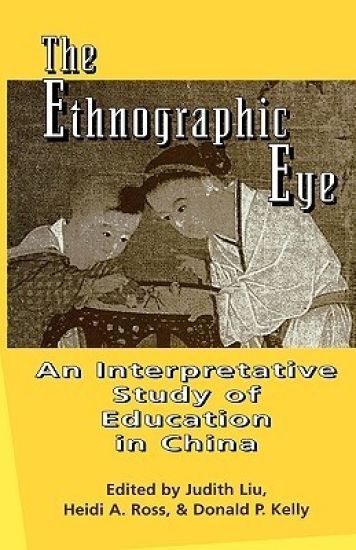
The Ethnographic Eye

The Ethnographic Eye

Heidi Ross; Judith Liu

CRC Press Inc
1999
sidottu
First Published in 2000. This book, a collection of ethnographic studies of Chinese schooling, aims to take the reader into Chinese schools and provide a picture of students and teachers as actors who practice culture. The case studies also provide a means by which ethnography is explored as a central methodological focus and concern. This book explores the meaning of ethnography, both in describing Chinese schools and in the broader context of the defined purposes and practices of research. This self-reflexive approach to school ethnography in China includes issues of cultural translation and the connections between the process of ethnographic work, the emergence of a text, and the construction of a theory.
Reconceptualizing Curriculum, Literacy, and Learning for School-Age Mothers
Reconceptualizing Curriculum, Literacy, and Learning for School-Age Mothers offers a portrait of classroom literacy practices and learning opportunities that are provided for school-age mothers in two different schools. Through a series of case studies of school sites, teachers, and students, this book presents evidence of how these at-risk students use literacy in complex ways in the classroom and in their everyday lives. Attuned to the struggle for school-age mothers’ access to meaningful and challenging curriculum in public schools, as well as to the relative dearth of scholarly research on the topic, this volume demonstrates how educators can rethink the issue of schooling for this population of students.
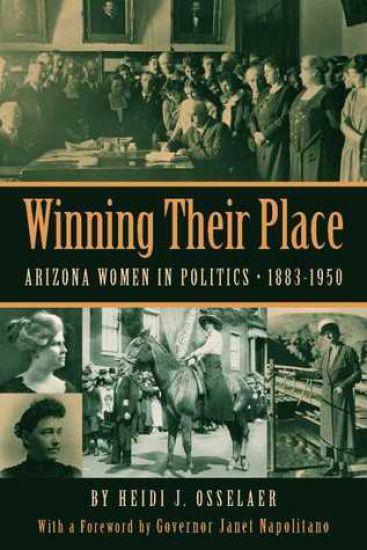
Winning Their Place

Winning Their Place

Heidi J. Osselaer

University of Arizona Press
2011
nidottu
Chronicles for the first time the participation of Arizona women in the state's early politics. Incorporating impressive original research, Winning Their Place traces the roots of the political participation of women from the territorial period to after World War II.
Concubines and Power

Concubines and Power

Heidi J. Nast

University of Minnesota Press
2005
nidottu
African Studies Association Women’s Caucus’s Aidoo-Snyder Book Prize winnerA Choice Outstanding Academic TitleThe monumental palace of Kano, Nigeria, was built circa 1500 and is today inhabited by more than one thousand persons. Historically, its secluded interior housed hundreds of concubines whose role in the politics, economics, and culture of Kano city-state has been largely overlooked. In this pioneering work, Heidi J. Nast demonstrates how human-geographical methods can tell us much about a site like the palace, a place bereft of archaeological work or relevant primary sources.Drawing on extensive ethnographic work and mapping data, Concubines and Power presents new evidence that palace concubines controlled the production of indigo-dyed cloth centuries before men did. The women were also key players in the assessment and collection of the state's earliest grain taxes, forming a complex and powerful administrative hierarchy that used the taxes for palace community needs. In addition, royal concubines served as representatives of their places of origin, their freeborn children providing the king with additional human capital to cement territorial alliances through marriage.Social forces undoubtedly shaped and changed concubinage for hundreds of years, but Nast shows how the women’s reach extended far beyond the palace walls to the formation of the state itself.
Organizing Urban America

Organizing Urban America

Heidi J. Swarts

University of Minnesota Press
2008
nidottu
Collective action through organized social movements has long expanded American citizens’ rights and liberties. Recently, the Association of Community Organizations for Reform Now (ACORN) has helped win living wage initiatives in more than 130 cities across the country. Likewise, congregation-based groups have established countless health, education, and other social programs at city and state levels. Despite modest budgets, these organizations-different in their approach, but at the same time working for social change-have won billions of dollars in redistributive programs. Looking closely at this phenomenon, Heidi J. Swarts explores activist groups’ cultural, organizational, and political strategies. Focusing on ACORN chapters and church federations in St. Louis, Missouri, and San Jose, California, Swarts demonstrates that congregation-based organizing has developed an innovative cultural strategy, combining democratic deliberation and leadership development to produce a “culture of commitment” among its cross-class, multiracial membership. By contrast, ACORN’s more homogeneous low-income class base has a national structure that allows it to coordinate campaigns quickly, and its seasoned staff excels in tactical innovations. By making these often-invisible grassroots organizers evident, Swarts sheds light on factors that constrain or enable other social movements in the United States. Heidi J. Swarts is assistant professor of political science at Rutgers University.
Eastern Cherokee Fishing

Eastern Cherokee Fishing

Heidi M. Altman

The University of Alabama Press
2006
nidottu
In ""Eastern Cherokee Fishing"", life histories, folktales, and reminiscences about fish gathered from interviews with Cherokee and non-Cherokee people provide a clear and personal picture of the changes in the Qualla Boundary (Eastern Band of the) Cherokee in the last 75 years. Coupled with documentary research, these ethnographic histories illuminate changes in the language, culture, and environment (particularly, aquatic resources) since contact with Europeans and examine the role these changes have played in the traditions and lives of the contemporary Cherokees. Interviewees include a great range of informants, from native speakers of Cherokee with extensive knowledge of traditional fishing methods to Euro-American English speakers whose families have lived in North Carolina for many generations and know about contemporary fishing practices in the area. The topic of fishing thus offers perspective on the Cherokee language, the vigor of the Cherokee system of native knowledge, and the history of the relationship between Cherokee people and the local environment. Heidi Altman also examines the role of fishing as a tourist enterprise and how fishing practices affect tribal waters.
The Fashioning of Middle-Class America

The Fashioning of Middle-Class America

Heidi L. Nichols

Peter Lang Publishing Inc
2003
sidottu
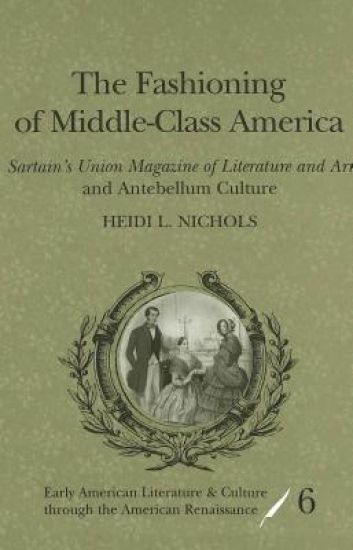
Sartain’s Union Magazine of Literature and Art, a Philadelphia periodical published monthly from 1849 to 1852, appealed to a quickly growing American middle-class readership through its rich variety of contents. In addition to providing a general history of this relatively unexplored antebellum periodical, this book argues that Sartain’s sought to shape a distinctly American and middle-class culture through its literary offerings, engravings, and columns on art, music, flowers, architecture, and fashion. It explores the periodical’s religious and moral messages and their relationship to the development of American middle-class culture. It also highlights the role of women in its publication, as particularly evident in its co-editorship by Caroline Kirkland and its contributions by numerous women writers.
Exploring Religious Community Online

Exploring Religious Community Online

Heidi Campbell

Peter Lang Publishing Inc
2005
nidottu
Exploring Religious Community Online is the first comprehensive study of the development and implications of online communities for religious groups. This book investigates religious community online by examining how Christian communities have adopted internet technologies, and looks at how these online practices pose new challenges to offline religious community and culture.
Partners in Conflict

Partners in Conflict

Heidi Tinsman

Duke University Press
2002
sidottu
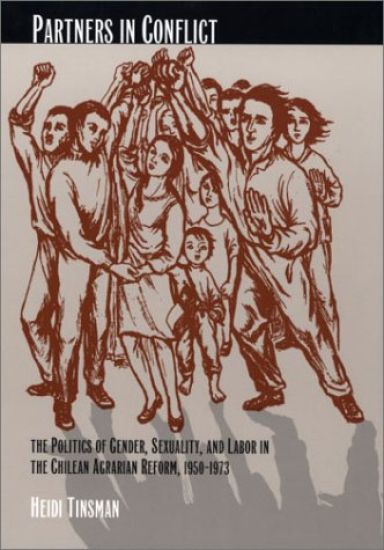
Partners in Conflict examines the importance of sexuality and gender to rural labor and agrarian politics during the last days of Chile’s latifundia system of traditional landed estates and throughout the governments of Eduardo Frei and Salvador Allende. Heidi Tinsman analyzes differences between men’s and women’s participation in Chile’s Agrarian Reform movement and considers how conflicts over gender and sexuality shape the contours of working-class struggles and national politics. Tinsman restores women to a scholarly narrative that has been almost exclusively about men, recounting the centrality of women’s labor to the pre-Agrarian Reform world of the hacienda during the 1950s and recovering women’s critical roles in union struggles and land occupations during the Agrarian Reform itself. Providing a theoretical framework for understanding why the Agrarian Reform ultimately empowered men more than women, Tinsman argues that women were marginalized not because the Agrarian Reform ignored women but because, under both the Frei and Allende governments, it promoted the male-headed household as the cornerstone of a new society. Although this emphasis on gender cooperation stressed that men should have more respect for their wives and funneled unprecedented amounts of resources into women’s hands, the reform defined men as its protagonists and affirmed their authority over women. This is the first monographic social history of Chile’s Agrarian Reform in either English or Spanish, and the first historical work to make sexuality and gender central to the analysis of the reforms.
Partners in Conflict

Partners in Conflict

Heidi Tinsman

Duke University Press
2002
pokkari
Partners in Conflict examines the importance of sexuality and gender to rural labor and agrarian politics during the last days of Chile’s latifundia system of traditional landed estates and throughout the governments of Eduardo Frei and Salvador Allende. Heidi Tinsman analyzes differences between men’s and women’s participation in Chile’s Agrarian Reform movement and considers how conflicts over gender and sexuality shape the contours of working-class struggles and national politics. Tinsman restores women to a scholarly narrative that has been almost exclusively about men, recounting the centrality of women’s labor to the pre-Agrarian Reform world of the hacienda during the 1950s and recovering women’s critical roles in union struggles and land occupations during the Agrarian Reform itself. Providing a theoretical framework for understanding why the Agrarian Reform ultimately empowered men more than women, Tinsman argues that women were marginalized not because the Agrarian Reform ignored women but because, under both the Frei and Allende governments, it promoted the male-headed household as the cornerstone of a new society. Although this emphasis on gender cooperation stressed that men should have more respect for their wives and funneled unprecedented amounts of resources into women’s hands, the reform defined men as its protagonists and affirmed their authority over women. This is the first monographic social history of Chile’s Agrarian Reform in either English or Spanish, and the first historical work to make sexuality and gender central to the analysis of the reforms.
Buying Into the Regime

Buying Into the Regime

Heidi Tinsman

Duke University Press
2014
sidottu
Buying into the Regime is a transnational history of how Chilean grapes created new forms of consumption and labor politics in both the United States and Chile. After seizing power in 1973, Augusto Pinochet embraced neoliberalism, transforming Chile’s economy. The country became the world's leading grape exporter. Heidi Tinsman traces the rise of Chile's fruit industry, examining how income from grape production enabled fruit workers, many of whom were women, to buy the commodities-appliances, clothing, cosmetics-flowing into Chile, and how this new consumerism influenced gender relations, as well as pro-democracy movements. Back in the United States, Chilean and U.S. businessmen aggressively marketed grapes as a wholesome snack. At the same time, the United Farm Workers and Chilean solidarity activists led parallel boycotts highlighting the use of pesticides and exploitation of labor in grape production. By the early-twenty-first century, Americans may have been better informed, but they were eating more grapes than ever.
Buying Into the Regime

Buying Into the Regime

Heidi Tinsman

Duke University Press
2014
pokkari
Buying into the Regime is a transnational history of how Chilean grapes created new forms of consumption and labor politics in both the United States and Chile. After seizing power in 1973, Augusto Pinochet embraced neoliberalism, transforming Chile’s economy. The country became the world's leading grape exporter. Heidi Tinsman traces the rise of Chile's fruit industry, examining how income from grape production enabled fruit workers, many of whom were women, to buy the commodities-appliances, clothing, cosmetics-flowing into Chile, and how this new consumerism influenced gender relations, as well as pro-democracy movements. Back in the United States, Chilean and U.S. businessmen aggressively marketed grapes as a wholesome snack. At the same time, the United Farm Workers and Chilean solidarity activists led parallel boycotts highlighting the use of pesticides and exploitation of labor in grape production. By the early-twenty-first century, Americans may have been better informed, but they were eating more grapes than ever.