Kirjojen hintavertailu. Mukana 11 699 587 kirjaa ja 12 kauppaa.

Kirjahaku

Etsi kirjoja tekijän nimen, kirjan nimen tai ISBN:n perusteella.

1000 tulosta hakusanalla Heidi Wikström

I Have Nothing to Hide

I Have Nothing to Hide

Heidi Boghosian

Beacon Press
2021
nidottu
An accessible guide that breaks down the complex issues around mass surveillance and data privacy and explores the negative consequences it can have on individual citizens and their communities. No one is exempt from data mining: by owning a smartphone, or using social media or a credit card, we hand over private data to corporations and the government. We need to understand how surveillance and data collection operates in order to regain control over our digital freedoms--and our lives. Attorney and data privacy expert Heidi Boghosian unpacks widespread myths around the seemingly innocuous nature of surveillance, sets the record straight about what government agencies and corporations do with our personal data, and offers solutions to take back our information. "I Have Nothing to Hide" is both a necessary mass surveillance overview and a reference book. It addresses the misconceptions around tradeoffs between privacy and security, citizen spying, and the ability to design products with privacy protections. Boghosian breaks down misinformation surrounding 21 core myths about data privacy, including: ● "Surveillance makes the nation safer."● "No one wants to spy on kids."● "Police don't monitor social media."● "Metadata doesn't reveal much about me."● "Congress and the courts protect us from surveillance."● "There's nothing I can do to stop surveillance." By dispelling myths related to surveillance, this book helps readers better understand what data is being collected, who is gathering it, how they're doing it, and why it matters.
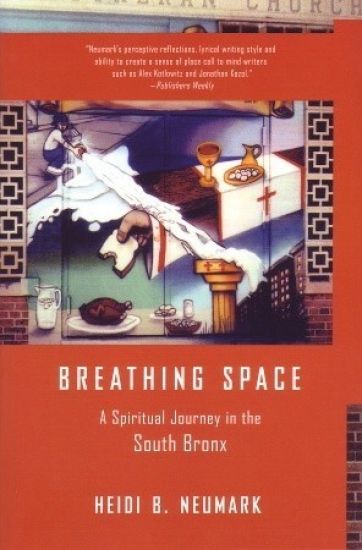
Breathing Space

Breathing Space

Heidi Neumark

Beacon Press
2004
pokkari
"Breathing Space" is the story of Heidi Neumark and the Hispanic and African-American Lutheran church-Transfiguration-that took a chance calling on a pastor from a starkly different background. Despite living and working in a milieu of overwhelming poverty and violence, Neumark and the congregation encounter even more powerful forces of hope and renewal. This story of a community creating space for new life and breath is also the story of a young woman-working, raising her children, and struggling for spiritual breathing space. Through poignant, intimate stories, Neumark charts her journey alongside her parishioners as pastor, church, and community grow in wisdom and together experience transformation.
Fluid States

Fluid States

Heidi Czerwiec

Louisiana State University Press
2019
nidottu
A collection of lyric essays that considers the way subjects, stories, facts, and memories are as interconnected as streams in a watershed, Heidi Czerwiec's Fluid States explores the interlocking issues created by the oilfields of North Dakota; the ephemerality of perfume, canning tomatoes, a fungus that infects and transforms mushrooms; and being the focus of internet hate. Short essays that present delightfully surprising facts with elegant and lyric language, her pieces all share underlying currents that question assumptions about gender, violence, reason, and intuition.
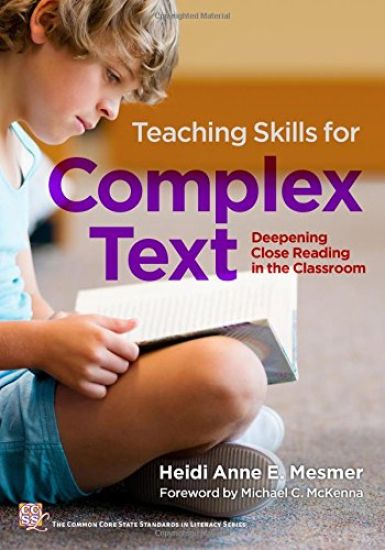
Teaching Skills for Complex Text

Teaching Skills for Complex Text

Heidi Anne E. Mesmer

Teachers' College Press
2016
nidottu
Tired of hearing about “complex text”? Bothered by the pushy messages about “challenge”? This book is for you! Unlike the many other materials on text complexity, this one focuses on specific, comprehension skills that students need in order to really engage with text. This book will help elementary school teachers equip their students with practical tools and understandings of the structures and conventions that allow them to excel, including concrete tools, passages, games, lessons, and examples to teach anaphora, connectives, paragraph structure, gathering evidence (fiction and nonfiction), and text challenge. A final chapter specifies how to stretch students in texts while attending to their stamina, executive skills, and interests.
Hard Times  For These Times - A Play

Hard Times For These Times - A Play

Heidi Stillman; Charles Dickens

Northwestern University Press
2007
nidottu
The citizens of Charles Dickens' Coketown have entertained readers since the 19th century. In this adaptation of ""Hard Times"", Heidi Stillman brings these iconic characters to the stage, revealing the universality of their hopes and suffering in their times and in ours. Originally produced in the spring of 2001, ""Hard Times"" received a Joseph Jefferson Award for best production of a play.
Grand Concourse

Grand Concourse

Heidi Schreck

Northwestern University Press
2015
nidottu
Shelley spends her days running a soup kitchen in the Bronx, her sense of purpose inseparable from her religious faith, though both have begun to waver. Emma, a college dropout looking for direction, arrives at the kitchen hoping to find it there. She brings a needed jolt to the place, helping a long-time client toward a new job, but her energy also proves unsettling. Even as Emma’s behavior grows steadily more erratic, Shelley still wants to believe in her, despite the mounting evidence that she shouldn’t. Shelley must finally ask herself how well she really knows the people she sees every day, how much she can trust them, and what she can and cannot forgive.
The Music of Ben Johnston

The Music of Ben Johnston

Heidi Von Gunden; John Cage

Scarecrow Press
1995
sidottu
Ben Johnston is an American composer internationally known for his work with extended just intonation. This is a critical-analytical study of his early compositions, his studies with Harry Partch and John Cage, and his experiments with just intonation, serialism, indeterminacy, jazz, and finally, extended just intonation. Pieces are analyzed and biographical material is included. The main emphasis of the text, however, is on examining Johnston's research about tuning and scalar theory as it relates to just intonation. For a long time Johnston worked in isolation; few people understood why someone would want to change the standard pitch system. But gradually, as his music began to be heard, especially his string quartets, performers and audiences experienced for themselves the kind of clarity and beauty that is possible with just intonation. This book is written for readers of varying musical backgrounds. Thos interested in studying and performing Johnston's music will find the book helpful in understanding his notational system and learning how to listen for just intervals. Many examples and figures document the musical analyses, which explain his compositional techniques. With a foreword by John Cage, a catalog and discography of Johnston's music, and a bibliography of the composer's writings.
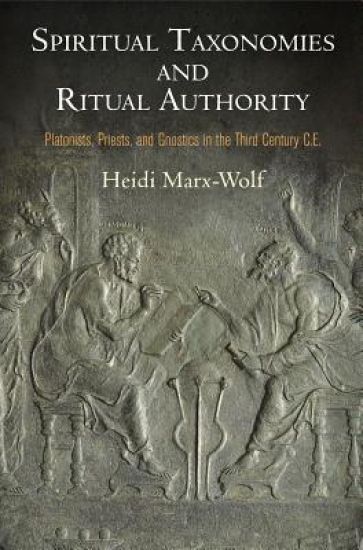
Spiritual Taxonomies and Ritual Authority

Spiritual Taxonomies and Ritual Authority

Heidi Marx-Wolf

University of Pennsylvania Press
2016
sidottu
The people of the late ancient Mediterranean world thought about and encountered gods, angels, demons, heroes, and other spirits on a regular basis. These figures were diverse, ambiguous, and unclassified and were not ascribed any clear or stable moral valence. Whether or not they were helpful or harmful under specific circumstances determined if and what virtues were attributed to them. That all changed in the third century C.E., when a handful of Platonist philosophers-Plotinus, Origen, Porphyry, and Iamblichus-began to produce competing systematic discourses that ordered the realm of spirits in moral and ontological terms. In Spiritual Taxonomies and Ritual Authority, Heidi Marx-Wolf recounts how these Platonist philosophers organized the spirit world into hierarchies, or "spiritual taxonomies," positioning themselves as the high priests of the highest gods in the process. By establishing themselves as experts on sacred, ritual, and doctrinal matters, they were able to fortify their authority, prestige, and reputation. The Platonists were not alone in this enterprise, and it brought them into competition with rivals to their new authority: priests of traditional polytheistic religions and gnostics. Members of these rival groups were also involved in identifying and ordering the realm of spirits and in providing the ritual means for dealing with that realm. Using her lens of spiritual taxonomy to look at these various groups in tandem, Marx-Wolf demonstrates that Platonist philosophers, Christian and non-Christian priests, and gnostics were more interconnected socially, educationally, and intellectually than previously recognized.
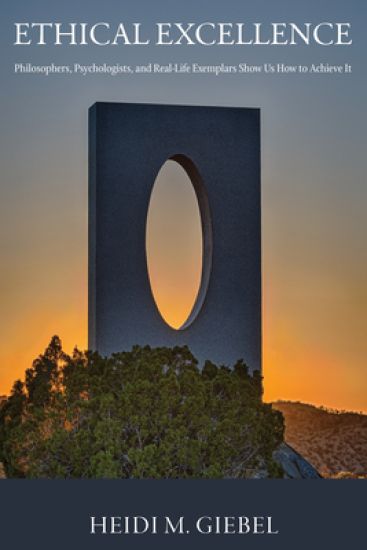
Ethical Excellence

Ethical Excellence

Heidi M. Giebel

The Catholic University of America Press
2021
nidottu
Why do some people achieve ethical excellence while others fail? For example, how did Gloria Lewis overcome a lifetime of difficulty and go on to found a non-profit focused on feeding the homeless while Danny Starrett, despite a seemingly ideal childhood, became a rapist and murderer? Why did some Germans rescue their Jewish neighbors while others stood by?One recent study found that four personal variables, taken together, differentiated Nazi-era bystanders from rescuers with startling 96.1% accuracy: social responsibility, altruistic moral reasoning, empathic concern, and risk-taking—traits related to ethical excellences (virtues) like justice, benevolence, and courage. Drawing from the combined wisdom of classical Socratic and Confucian philosophy, recent work in psychology, and the lived experience of recognized moral heroes, the book focuses on how each of us can work toward ethical excellence, becoming more like Lewis and neighbor-rescuers than like Starrett and Nazi-era bystanders.The ancient Socratic and Confucian philosophical traditions offer surprisingly sophisticated advice regarding moral education. Because research in psychology helps us assess the feasibility of cultivating virtue in ourselves and those we influence, Ethical Excellence focuses on combining sound philosophical analysis of ethical virtue and related concepts with relevant empirical research on how these concepts are manifested and developed in everyday practice. Willpower, for example, contributes to development of temperance or moderation, grit relates to perseverance, and empathy is connected to benevolence.Finally, the study of ethically exceptional people—moral heroes or exemplars—serves as living proof that ethical excellence is possible, and exemplars can provide inspiration to attempt it ourselves and guidance regarding how to do so successfully. Relevant stories and excerpts from the author’s own interviews with award-winning ethical exemplars complement the use of philosophical virtue theory and psychological research on virtue-relevant practice. Together, these three approaches—philosophy, psychology, and biography—help to triangulate” ethical excellence and its achievement, presenting a much clearer and more complete picture than we can get from any one of these methods alone.
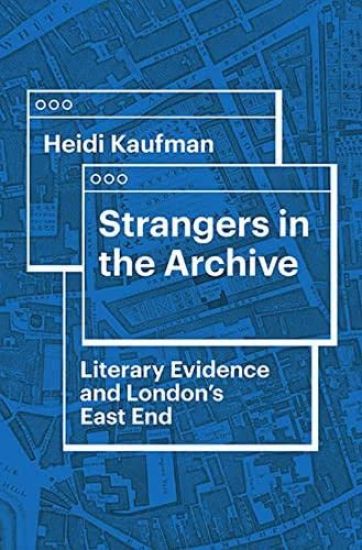
Strangers in the Archive

Strangers in the Archive

Heidi Kaufman

UNIVERSITY OF VIRGINIA PRESS
2022
sidottu
Traditionally the scene of some of London’s poorest, most crime-ridden neighborhoods, the East End of London has long been misunderstood as abject and deviant. As a landing place for migrants and newcomers, however, it has also been memorably and colorfully represented in the literature of Victorian authors such as Charles Dickens and Oscar Wilde. In Strangers in the Archive, Heidi Kaufman applies the resources of archives both material and digital to move beyond icon and stereotype to reveal a deeper understanding of East End literature and culture in the Victorian age.Kaufman uncovers this engaging new perspective on the East End through Maria Polack’s Fiction without Romance (1830), the first novel to be published by an English Jew, and through records of Polack’s vibrant community. Although scholars of nineteenth-century London and readers of East End fictions persist in privileging sensational narratives of Jack the Ripper and the infamous "Fagin the Jew" as signs of universal depravity among East End minority ethnic and racial groups, Strangers in the Archive considers how archival materials are uniquely capable of redressing cultural silences and marginalized perspectives as well as reshaping conceptions of the global significance of literary and print culture in nineteenth-century London.Many of this book’s subjects—including digital editions of rare books and manuscript diaries, multimedia maps, and other related East End print records—can be viewed online at the Lyon Archive and the Polack Archive.
Vaccine Rhetorics

Vaccine Rhetorics

Heidi Yoston Lawrence

Ohio State University Press
2020
sidottu
Debates over vaccination run rampant in the US-from the pages of medical journals, to news coverage about the latest outbreak, to vehement messages passed back and forth online. From the professional level to the personal one, almost everyone has an opinion on vaccinations-and often conversations around this issue pit supporters of vaccinations against "anti-vaxxers." In Vaccine Rhetorics, Heidi Yoston Lawrence turns a critical eye toward such conversations-proposing a new approach that moves us beyond divisive rhetoric and seeks to better understand the material conditions underlying the debate. Starting with a key question-If vaccines work, why are they controversial?-and using an approach she calls "material exigence," Lawrence seeks to understand the material conditions of disease and injury associated with vaccination. Examining four primary motivations-the exigency of disease at the heart of physician views, the desire for eradication from policymakers, concern over injury expressed by parents and patients in online confessionals, and questions about the unknown surrounding potential recipients of the flu vaccine, Lawrence demonstrates the complexity of vaccination skepticism and the need for more nuanced public discourse. In bringing together the voices of those who oppose, question, and support vaccines, Vaccine Rhetorics unearths the material circumstances that lead to differing viewpoints and brings important attention not just to what is said but how and why it is said-providing a useful framework for studying other controversial issues.
Vaccine Rhetorics

Vaccine Rhetorics

Heidi Yoston Lawrence

Ohio State University Press
2020
pokkari
Debates over vaccination run rampant in the US-from the pages of medical journals, to news coverage about the latest outbreak, to vehement messages passed back and forth online. From the professional level to the personal one, almost everyone has an opinion on vaccinations-and often conversations around this issue pit supporters of vaccinations against "anti-vaxxers." In Vaccine Rhetorics, Heidi Yoston Lawrence turns a critical eye toward such conversations-proposing a new approach that moves us beyond divisive rhetoric and seeks to better understand the material conditions underlying the debate. Starting with a key question-If vaccines work, why are they controversial?-and using an approach she calls "material exigence," Lawrence seeks to understand the material conditions of disease and injury associated with vaccination. Examining four primary motivations-the exigency of disease at the heart of physician views, the desire for eradication from policymakers, concern over injury expressed by parents and patients in online confessionals, and questions about the unknown surrounding potential recipients of the flu vaccine, Lawrence demonstrates the complexity of vaccination skepticism and the need for more nuanced public discourse. In bringing together the voices of those who oppose, question, and support vaccines, Vaccine Rhetorics unearths the material circumstances that lead to differing viewpoints and brings important attention not just to what is said but how and why it is said-providing a useful framework for studying other controversial issues.
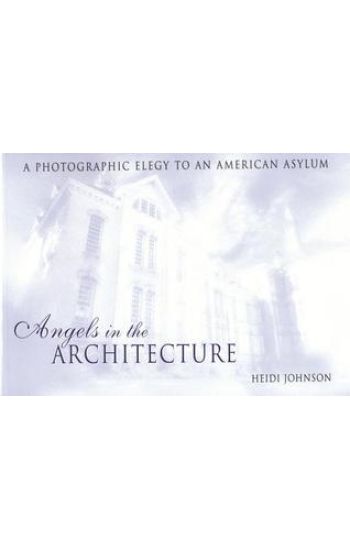
Angels in the Architecture

Angels in the Architecture

Heidi Johnson

Wayne State University Press
2004
nidottu
In the nineteenth century, perhaps no approach to mental illness was more compassionate than that of hospital administrator Thomas Story Kirkbride, whose asylum designs integrated beauty and nature as a method to treat patients. The Northern Michigan Asylum in Traverse City, Michigan, was one of the last of nearly tow hundred such architecturally intriguing asylums. Founded in 1885 under the principle ""beauty is therapy,"" the Northern Michigan Asylum closed in 1989 and today stands as a haunting reminder of this lost era. Angels in the Architecture is a photographic study of this institution's one-hundred-year history. Heidi Johnson's photographs of the building today are juxtaposed with rare images from private collections and state archives. Johnson has captured Kirkbride's spirit of compassion - of angels in the architecture - in a book that conveys the human element of mental illness with beauty and integrity.
Elizabeth Johnson

Elizabeth Johnson

Heidi Schlumpf

Liturgical Press
2016
pokkari
Who is God? That is the question Elizabeth A. Johnson has spent her life exploring. As a Catholic theologian, writer, teacher, and religious woman, Johnson has searched for “the Living God” and ways to understand God that make sense for our time, perhaps most famously in her groundbreaking book She Who Is. Her work is firmly grounded in the Catholic tradition while it explores the edges of that tradition, pushing it to be more inclusive—a project that has caught the attention of other scholars, everyday Catholics, and sometimes critics. Johnson’s own relationship with God as Holy Mystery has helped her to navigate her life’s challenges, including finding herself thrust into the spotlight as a headline-making symbol of religious women facing challenges from the church leadership. With this first biography of one of the preeminent Catholic theologians of our time, those who have been enriched by Johnson’s work will now find themselves inspired by her remarkable life story.
Quantum Shift

Quantum Shift

Heidi Ann Russell; George V. Coyne

Liturgical Press
2015
pokkari
While the field of science has made incredible advances in the past century, and more and more scientists have gone to great lengths to make these developments accessible to the public, we still rarely hear ministers and communities of faith discussing the implications of these developments for the life of faith. Quantum Shift explores recent developments in science from relativity to quantum mechanics to cosmology and then suggests ways in which people of faith might engage these scientific developments to foster their understanding of God and what it means to be part of the world we believe God created. Heidi Ann Russell demonstrates how these scientific developments offer us new and exciting images that spark our theological imaginations and reinvigorate our spiritual lives. Includes Illustrations
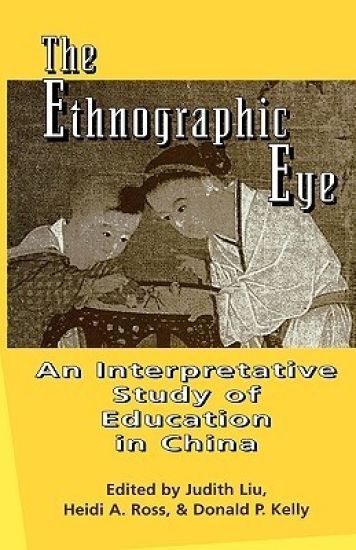
The Ethnographic Eye

The Ethnographic Eye

Heidi Ross; Judith Liu

CRC Press Inc
1999
sidottu
First Published in 2000. This book, a collection of ethnographic studies of Chinese schooling, aims to take the reader into Chinese schools and provide a picture of students and teachers as actors who practice culture. The case studies also provide a means by which ethnography is explored as a central methodological focus and concern. This book explores the meaning of ethnography, both in describing Chinese schools and in the broader context of the defined purposes and practices of research. This self-reflexive approach to school ethnography in China includes issues of cultural translation and the connections between the process of ethnographic work, the emergence of a text, and the construction of a theory.
Reconceptualizing Curriculum, Literacy, and Learning for School-Age Mothers
Reconceptualizing Curriculum, Literacy, and Learning for School-Age Mothers offers a portrait of classroom literacy practices and learning opportunities that are provided for school-age mothers in two different schools. Through a series of case studies of school sites, teachers, and students, this book presents evidence of how these at-risk students use literacy in complex ways in the classroom and in their everyday lives. Attuned to the struggle for school-age mothers’ access to meaningful and challenging curriculum in public schools, as well as to the relative dearth of scholarly research on the topic, this volume demonstrates how educators can rethink the issue of schooling for this population of students.
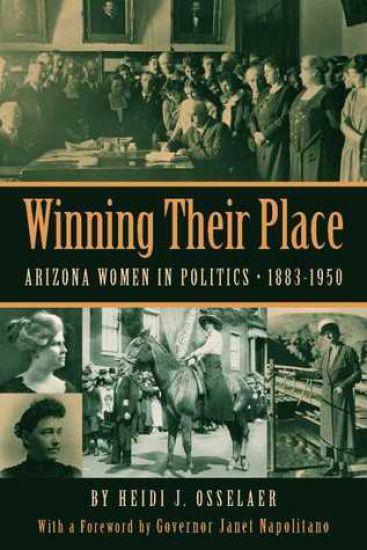
Winning Their Place

Winning Their Place

Heidi J. Osselaer

University of Arizona Press
2011
nidottu
Chronicles for the first time the participation of Arizona women in the state's early politics. Incorporating impressive original research, Winning Their Place traces the roots of the political participation of women from the territorial period to after World War II.
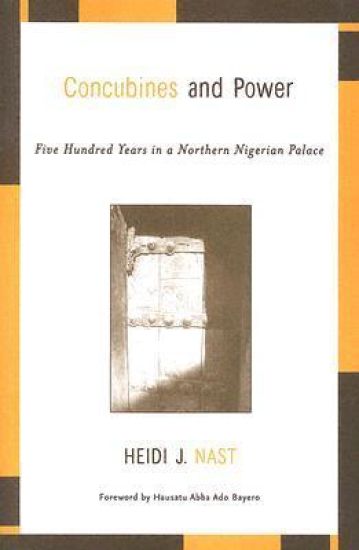
Concubines and Power

Concubines and Power

Heidi J. Nast

University of Minnesota Press
2005
nidottu
African Studies Association Women’s Caucus’s Aidoo-Snyder Book Prize winnerA Choice Outstanding Academic TitleThe monumental palace of Kano, Nigeria, was built circa 1500 and is today inhabited by more than one thousand persons. Historically, its secluded interior housed hundreds of concubines whose role in the politics, economics, and culture of Kano city-state has been largely overlooked. In this pioneering work, Heidi J. Nast demonstrates how human-geographical methods can tell us much about a site like the palace, a place bereft of archaeological work or relevant primary sources.Drawing on extensive ethnographic work and mapping data, Concubines and Power presents new evidence that palace concubines controlled the production of indigo-dyed cloth centuries before men did. The women were also key players in the assessment and collection of the state's earliest grain taxes, forming a complex and powerful administrative hierarchy that used the taxes for palace community needs. In addition, royal concubines served as representatives of their places of origin, their freeborn children providing the king with additional human capital to cement territorial alliances through marriage.Social forces undoubtedly shaped and changed concubinage for hundreds of years, but Nast shows how the women’s reach extended far beyond the palace walls to the formation of the state itself.
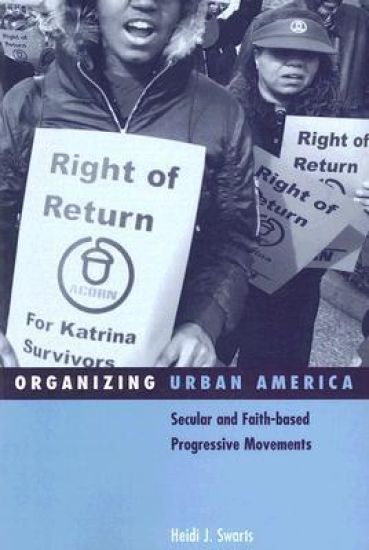
Organizing Urban America

Organizing Urban America

Heidi J. Swarts

University of Minnesota Press
2008
nidottu
Collective action through organized social movements has long expanded American citizens’ rights and liberties. Recently, the Association of Community Organizations for Reform Now (ACORN) has helped win living wage initiatives in more than 130 cities across the country. Likewise, congregation-based groups have established countless health, education, and other social programs at city and state levels. Despite modest budgets, these organizations-different in their approach, but at the same time working for social change-have won billions of dollars in redistributive programs. Looking closely at this phenomenon, Heidi J. Swarts explores activist groups’ cultural, organizational, and political strategies. Focusing on ACORN chapters and church federations in St. Louis, Missouri, and San Jose, California, Swarts demonstrates that congregation-based organizing has developed an innovative cultural strategy, combining democratic deliberation and leadership development to produce a “culture of commitment” among its cross-class, multiracial membership. By contrast, ACORN’s more homogeneous low-income class base has a national structure that allows it to coordinate campaigns quickly, and its seasoned staff excels in tactical innovations. By making these often-invisible grassroots organizers evident, Swarts sheds light on factors that constrain or enable other social movements in the United States. Heidi J. Swarts is assistant professor of political science at Rutgers University.