Kirjojen hintavertailu. Mukana 12 016 292 kirjaa ja 12 kauppaa.

Kirjahaku

Etsi kirjoja tekijän nimen, kirjan nimen tai ISBN:n perusteella.

1000 tulosta hakusanalla Herbert Strang

Reconstruction of the Poet: Uncollected Works of Zbigniew Herbert
From one of Poland's most acclaimed poets comes a new collection of poems and plays spanning almost five decades and translated for the first time.Encapsulating the prolific work of the poet and playwright Zbigniew Herbert, Reconstruction of the Poet is both a celebration of a profound life of letters and a wide-ranging collection of never-before-published work that casts new light on a much-loved poet. Spanning from 1950 to 1998, this volume of work contains three plays--The Philosophers' Cave, The Other Room, and Reconstruction of the Poet--and over fifty poems. This collection takes readers through the mind of a man attempting to look at the ruins of a postwar world while seeking living sources of European culture, with poems commemorating contemporaries fallen in wartime, elevating erotic experience and friendship, and exploring political and metaphysical passions.A rich expansion of previously published works by Herbert, Reconstruction of the Poet is both an introduction for readers who might still be unfamiliar with this important poet's work and a fresh invitation for reflection for his longtime readers.
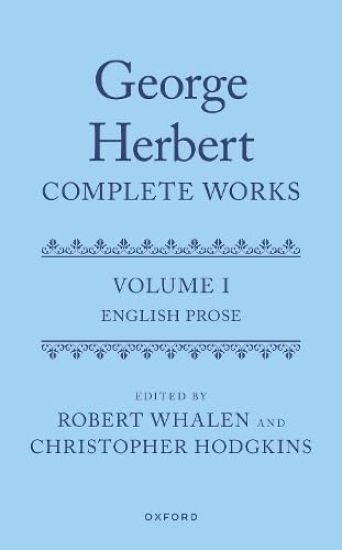
George Herbert: Complete Works

George Herbert: Complete Works

Oxford University Press
2025
sidottu
Famed for his heart-searching devotional lyric poetry, George Herbert (1593-1633) also authored some of the finest and most influential English prose of his era: The Countrey Parson, his oft-cited pastoral manual, still valued for its spiritual insight, shrewd advice, and a style at once lively and refined, engaging and serious; A Treatise of Temperance and Sobrietie, his translation of Luigi Cornaro's jovial Italian tract on dietary health; Notes on Valdesso, his judicious and appreciative commentary (and sole theological work) on the Considerations of controversial Spanish humanist Juan de Valdés; his collections of Outlandish Proverbs and Jacula Prudentum, pervasively popular for centuries and shot through with familiar wisdom and wit; his Letters, providing the most intimate records of and reflections on his brief life; and his Will, dictated and witnessed as he lay dying of tuberculosis in his Bemerton rectory at the age of 39. Each of these works, frequently cited as contexts for his renowned English poetry, appears here for close study in its own right. Volume I: English Prose offers textual and critical introductions and annotations, a concise title essay and overview of prominent criticism for each chapter or section in subdivided works, and, above all, rigorous scholarly texts based on the earliest and best manuscript and print sources--some newly discovered or confirmed. Serious literary art by any measure, Herbert's English prose has emerged in recent years from the shadow of his rightly famous poetry. Such attention stands here fully justified: an edition whose accessible texts, combined with extensive and meticulous critical apparatus, will equip scholars for new discoveries and accelerate the already global interest in Herbert's work.
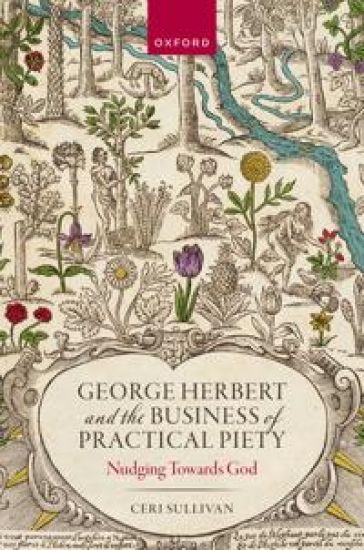
George Herbert and the Business of Practical Piety

George Herbert and the Business of Practical Piety

Ceri Sullivan

Oxford University Press
2024
sidottu
Contemporary nudge theory points out that people make good choices over issues where they have had past experience of similar circumstances, where there is reliable, substantial, and relevant information about the situation, and where they will get prompt feedback about the effect of their decision. Yet none of these conditions apply to the most vital choice of action facing early modern Protestants: how can they be saved? In George Herbert and the Business of Practical Piety, Ceri Sullivan uses nudge theory to show how practical divinity disregards the doleful conclusions of predestination--that salvation cannot be earned--to supply readers with suggestions on how to prepare to act, regardless of their final destiny. Such texts create cognitive niches to support cheerful, godly thought and action, in a way which is far from being despairing or compulsive. Their nudges were repeatedly put into practice by Herbert's friends, the Ferrars, who tried to form an ideal religious community at Little Gidding. These prescriptions and examples illustrate how George Herbert's The Temple (1633) is a compendium of the techniques of choice architecture. Herbert's poems are full of the humour emerging from a life of faith which is willing to guard high ideals by low cunning, stooping to use the least little things to change a self. George Herbert and the Business of Practical Piety initially calls on theories of the extended mind to ask what sort of minor physical and social structures scaffold decisions, then examines a selection of nudges used by Herbert: contracts with the self, building a mind, cleaning a heart, conversing with God, making to-do lists, and working on working well.
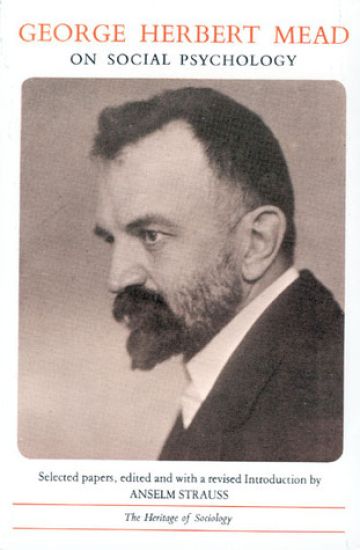
George Herbert Mead on Social Psychology

George Herbert Mead on Social Psychology

George Herbert Mead

University of Chicago Press
1964
nidottu
One of the most brilliantly original of American pragmatists, George Herbert Mead published surprisingly few major papers and not a single book during his lifetime. Yet his influence on American sociology and social psychology since World War II has been exceedingly strong. This volume is a revised and enlarged edition of the book formerly published under the title The Social Psychology of George Herbert Mead. It contains selections from Mead's posthumous books: Mind, Self, and Society; Movements of Thought in the Nineteenth Century; The Philosophy of the Act; and The Philosophy of the Present, together with an incisive, newly revised, introductory essay by Anselm Strauss on the importance of Mead for contemporary social psychology. "Required reading for the social scientist."—Milton L. Barron, Nation
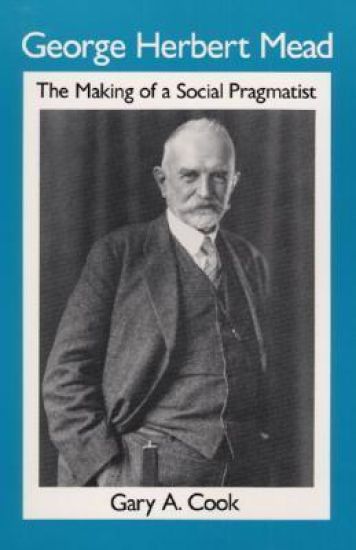
George Herbert Mead

George Herbert Mead

Gary A. Cook

University of Illinois Press
1993
nidottu
This groundbreaking study details the intellectual development of George Herbert Mead as a thinker of great originality and as a practitioner of social reform. Gary Cook traces the genesis of Mead's social psychological and philosophical ideas by analyzing his journal articles and posthumously published writings.
George Herbert's Christian Narrative

George Herbert's Christian Narrative

Harold Toliver

Pennsylvania State University Press
1993
pokkari
No seventeenth-century poet was more popularly read or imitated than George Herbert, and none represents the lyric implications of the Christian narrative more fully, with the possible exception of Milton. There is therefore a growing perception that George Herbert deserves to be placed more in the mainstream of literary history and that romanticism and modernism are not exclusively post-Milton phenomena. As one of the centers of new historicist interest, The Temple has of late been seated in the context of church controversies, Reformation thought, and the politics of the 1620s. Yet previous studies have been reluctant to widen their focus to locate Herbert within the intellectual movements of the earlier seventeenth century, apart from doctrinal issues and the social idiom that he often uses.Harold Toliver explores the implications for Herbert's lyrics of the Christian narrative—the secular labyrinth and the parables' guiding rope, the conflicts between heart and mind, the agonies of postponement, intervals and abstract totality, the visible church and its calendar, the concept of an ending, and Herbert's adaptation of the sonnet form. To establish Herbert's place among other seventeenth-century writers who make use of the Christian narrative, Toliver provides close readings of several poems and new configurations that reveal the pressure of the narrative whole on lyric moments as well as the bearing of the times on them. Herbert had difficulty salvaging any interest in a university or a secular career once he turned to sacred poetry. He also subordinated all phases of the Bible as a cultural history to the single pattern imposed by the Pauline reduction of the Bible to a single story. As part of Toliver's assessment of Herbert's intellectual landscape and active engagement in alternatives, the treatment polarizes that Pauline method and the Hebrew Bible's anecdotal, political, and social detail.
George Herbert

George Herbert

SPCK Publishing
2002
nidottu
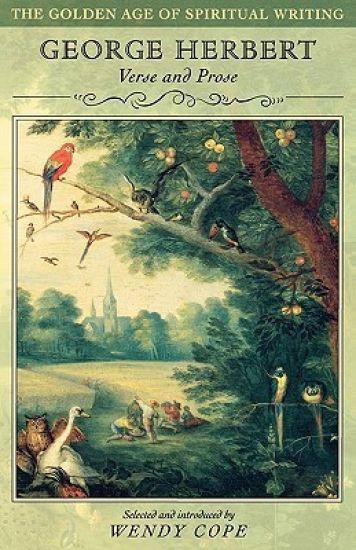
George Herbert was a 17th century spiritual writer. This is a selection of his poetry and prose chosen by the poet, Wendy Cope. The volume also contains some biographical detail and historical context.
George Herbert

George Herbert

C. Malcolmson

Palgrave Macmillan
2003
sidottu
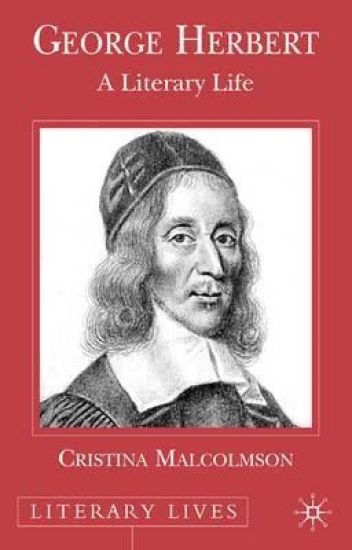
This volume replaces the traditional image of George Herbert as meditative recluse with a portrait of the poet as engaged throughout his life with the religion, politics and society of his time. Instead of an isolated genius living in retreat from the world, Herbert appears as a man writing public verse, active within an important social circle, and committed to nationalistic Protestantism. The book attends to the poetic brilliance of his verse as well as the institutions and contexts that influenced him: the upper class coterie, Cambridge University, and the Church of England.
George Herbert

George Herbert

C. Malcolmson

Palgrave Macmillan
2003
nidottu
This volume replaces the traditional image of George Herbert as meditative recluse with a portrait of the poet as engaged throughout his life with the religion, politics and society of his time. Instead of an isolated genius living in retreat from the world, Herbert appears as a man writing public verse, active within an important social circle, and committed to nationalistic Protestantism. The book attends to the poetic brilliance of his verse as well as the institutions and contexts that influenced him: the upper class coterie, Cambridge University, and the Church of England.
George Herbert Mead
George Herbert Mead (1863-1931) is widely seen as the father of symbolic interactionism. He is celebrated as probably the most original and important American sociologist of the twentieth century. This collection of critical assessments shows why Mead is important for symbolic interactionism. But it also traces Mead's influence in social behaviourism and theories of the mind. The articles are gathered together in four sections: section one considers the Biography and Intellectual context of Mead's work, special attention is paid to Mead's links with Pragmatism, Social Reform, the `Chicago School', social behavioursm and symbolic interactionism. Section two, is devoted to Mead and symbolic interactionism. Section three, focuses on the links between Mead and behaviourism. The final section contains articles exploring Mead's theory of the mind, which many now see as the most important area of his work.
George Herbert
First Published in 1995. The Critical Heritage gathers together a large body of critical sources on major figures in literature. Each volume presents contemporary responses to a writer's work, enabling students and researchers to read for themselves, for example, comments on early performances of Shakespeare's plays, or reactions to the first publication of Jane Austen's novels. The carefully selected sources range from landmark essays in the history of criticism to journalism and contemporary opinion, and little published documentary material such as letters and diaries. Significant pieces of criticism from later periods are also included, in order to demonstrate the fluctuations in an author's reputation. Each volume contains an introduction to the writer's published works, a selected bibliography, and an index of works, authors and subjects. The Collected Critical Heritage set will be available as a set of 68 volumes and the series will also be available in mini sets selected by period (in slipcase boxes) and as individual volumes.
George Herbert
First Published in 1995. The Critical Heritage gathers together a large body of critical sources on major figures in literature. Each volume presents contemporary responses to a writer's work, enabling students and researchers to read for themselves, for example, comments on early performances of Shakespeare's plays, or reactions to the first publication of Jane Austen's novels. The carefully selected sources range from landmark essays in the history of criticism to journalism and contemporary opinion, and little published documentary material such as letters and diaries. Significant pieces of criticism from later periods are also included, in order to demonstrate the fluctuations in an author's reputation. Each volume contains an introduction to the writer's published works, a selected bibliography, and an index of works, authors and subjects. The Collected Critical Heritage set will be available as a set of 68 volumes and the series will also be available in mini sets selected by period (in slipcase boxes) and as individual volumes.