

Kirjahaku
Etsi kirjoja tekijän nimen, kirjan nimen tai ISBN:n perusteella.
1000 tulosta hakusanalla Herman M Moos

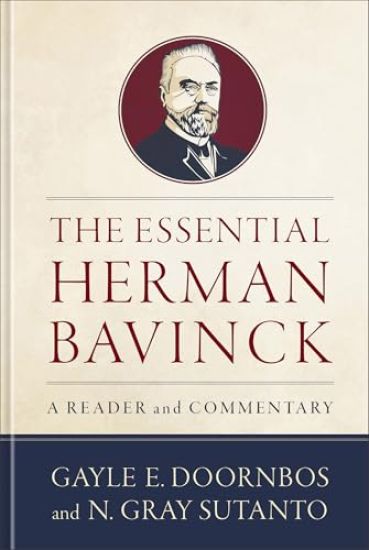
This book brings together Herman Bavinck's essential theological writings in one volume. Gayle E. Doornbos and N. Gray Sutanto, both respected scholars of Bavinck and neo-Calvinism, introduce the texts and provide commentary to help readers understand Bavinck in his historical context and grasp his theological vision. In addition to covering one of the most important theological works of the twentieth century, Reformed Dogmatics, this book includes other important texts written by Bavinck that mark his theological development and the shape of his thought. The texts are arranged chronologically from Bavinck's earliest writings to selections from Reformed Dogmatics to his Amsterdam writings, which focus on applying theology to other areas of life. The authors include selections from Reformed Dogmatics that go beyond historical narration to display Bavinck's own contributions and judgments. As the authors introduce Bavinck's classic texts, they abridge and explain the primary source material in understandable terms. This book will be of use to students of Bavinck, neo-Calvinism, or modern theology as well as readers looking for a one-volume resource that introduces them to Bavinck and his theology.
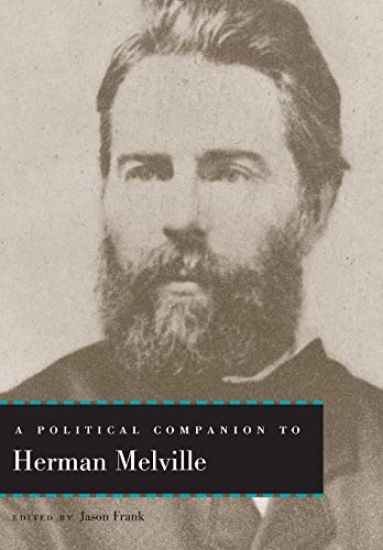
A Political Companion to Herman Melville
The University Press of Kentucky
2014
sidottu
Herman Melville is widely considered to be one of America's greatest authors, and countless literary theorists and critics have studied his life and work. However, political theorists have tended to avoid Melville, turning rather to such contemporaries as Ralph Waldo Emerson and Henry David Thoreau to understand the political thought of the American Renaissance. While Melville was not an activist in the traditional sense and his philosophy is notoriously difficult to categorize, his work is nevertheless deeply political in its own right. As editor Jason Frank notes in his introduction to A Political Companion to Herman Melville, Melville's writing "strikes a note of dissonance in the pre-established harmonies of the American political tradition." This unique volume explores Melville's politics by surveying the full range of his work -- from Typee (1846) to the posthumously published Billy Budd (1924). The contributors give historical context to Melville's writings and place him in conversation with political and theoretical debates, examining his relationship to transcendentalism and contemporary continental philosophy and addressing his work's relevance to topics such as nineteenth-century imperialism, twentieth-century legal theory, the anti-rent wars of the 1840s, and the civil rights movement. From these analyses emerges a new and challenging portrait of Melville as a political thinker of the first order, one that will establish his importance not only for nineteenth-century American political thought but also for political theory more broadly.

The Intellectual Legacy of Herman Dooyeweerd (1894-1977)
Maarten Verkerk; Gerrit Glas; Suzan Sierksma-Agteres
AMSTERDAM UNIVERSITY PRESS
2025
sidottu
Herman Dooyeweerd (1894-1977), a renowned philosopher and legal scholar, has been regarded as one of the most original philosophers the Netherlands has ever produced. In 1935, he published his seminal work, A New Critique of Theoretical Thought, which offers an in-depth analysis of the foundations of culture and science. Dooyeweerd develops a sophisticated and impressive conceptual framework to analyse reality. He demonstrates that every philosophy, all science, and every political ideology is driven by underlying religious or worldview perspectives. The work of Herman Dooyeweerd is currently attracting global interest. From the United States to Korea, from New Zealand to Brazil, and from the United Kingdom to South Africa, professionals across various disciplines—philosophers, engineers, politicians, economists, and others—are expanding upon his ideas within their respective fields. At the same time, his work is becoming increasingly relevant as contemporary society displays characteristics reminiscent of those observed in European culture a century ago. The Intellectual Legacy of Herman Dooyeweerd (1894-1977): A Hopeful Philosophy for our Time introduces his most significant concepts and numerous examples of their contemporary applications.

Robert Dixon Herman
OmniScriptum
2026
pokkari

On Theology: Herman Bavinck's Academic Orations
BRILL
2020
sidottu
On Theology: Herman Bavinck's Academic Orations presents four previously untranslated works by Herman Bavinck, which offer important insights into his conceptualisation
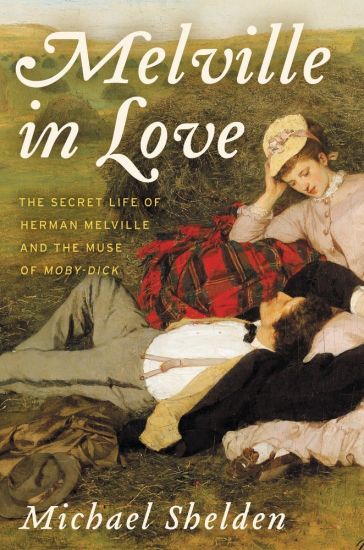
Melville in Love: The Secret Life of Herman Melville and the Muse of Moby-Dick
Michael Shelden
Ecco Press
2016
sidottu
A new account of Herman Melville and the writing of Moby-Dick, written by a Pulitzer Prize finalist in Biography and based on fresh archival research, which reveals that the anarchic spirit animating Melville's canonical work was inspired by his great love affair with a shockingly unconventional married woman.Herman Melville's epic novel, Moby-Dick, was a spectacular failure when it was published in 1851, effectively ending its author's rise to literary fame. Because he was neglected by academics for so long, and because he made little effort to preserve his legacy, we know very little about Melville, and even less about what he called his "wicked book." Scholars still puzzle over what drove Melville to invent Captain Ahab's mad pursuit of the great white whale.In Melville in Love Pulitzer Prize-finalist Michael Shelden sheds light on this literary mystery to tell a story of Melville's passionate, obsessive, and clandestine affair with a married woman named Sarah Morewood, whose libertine impulses encouraged and sustained Melville's own. In his research, Shelden discovered unexplored documents suggesting that, in their shared resistance to the "iron rule" of social conformity, Sarah and Melville had forged an illicit and enduring romantic and intellectual bond. Emboldened by the thrill of courting Sarah in secret, the pleasure of falling in love, and the excitement of spending time with literary luminaries--like Dr. Oliver Wendell Holmes and Nathaniel Hawthorne--Melville found the courage to take the leap from light works of adventure to the hugely brilliant, utterly subversive Moby-Dick.Filled with the rich detail and immense drama of Melville's secret life, Melville in Love tells the gripping story of how one of our greatest novelists found his muse.
Melville in Love: The Secret Life of Herman Melville and the Muse of Moby-Dick
Michael Shelden
Ecco Press
2017
nidottu
A new account of Herman Melville and the writing of Moby-Dick, written by a Pulitzer Prize finalist in Biography and based on fresh archival research, which reveals that the anarchic spirit animating Melville's canonical work was inspired by his great love affair with a shockingly unconventional married woman.Herman Melville's epic novel, Moby-Dick, was a spectacular failure when it was published in 1851, effectively ending its author's rise to literary fame. Because he was neglected by academics for so long, and because he made little effort to preserve his legacy, we know very little about Melville, and even less about what he called his "wicked book." Scholars still puzzle over what drove Melville to invent Captain Ahab's mad pursuit of the great white whale.In Melville in Love Pulitzer Prize-finalist Michael Shelden sheds light on this literary mystery to tell a story of Melville's passionate, obsessive, and clandestine affair with a married woman named Sarah Morewood, whose libertine impulses encouraged and sustained Melville's own. In his research, Shelden discovered unexplored documents suggesting that, in their shared resistance to the "iron rule" of social conformity, Sarah and Melville had forged an illicit and enduring romantic and intellectual bond. Emboldened by the thrill of courting Sarah in secret, the pleasure of falling in love, and the excitement of spending time with literary luminaries--like Dr. Oliver Wendell Holmes and Nathaniel Hawthorne--Melville found the courage to take the leap from light works of adventure to the hugely brilliant, utterly subversive Moby-Dick.Filled with the rich detail and immense drama of Melville's secret life, Melville in Love tells the gripping story of how one of our greatest novelists found his muse.
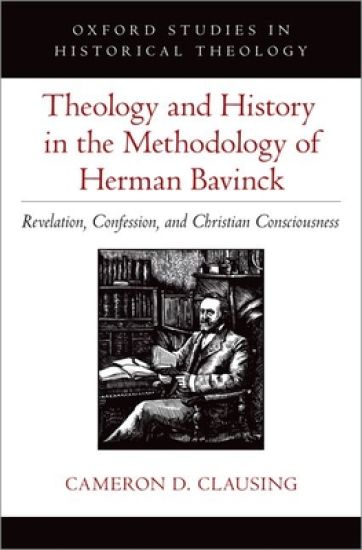
Theology and History in the Methodology of Herman Bavinck
Cameron D. Clausing
OXFORD UNIVERSITY PRESS INC
2023
sidottu
Dutch theologian Herman Bavinck (1854--1921) found himself between two eras. The end of the "long nineteenth century" and the experience of World War I marked how much the world around him had changed. This book examines Bavinck's theological methodology with a particular focus on its influence by the German historicist movement. Author Cameron D. Clausing uses Bavinck's doctrine of the Trinity to test the argument that while not embracing all of the relativizing implications of the movement, the role of history as a force that both shapes the present and allows for development into the future has a demonstrable influence on Bavinck's theological methodology. To make this argument Clausing considers Bavinck's larger nineteenth-century context. He traces the development of both history and theology being understood as sciences in the university and how this required a reimagining of both disciplines. It could be said that theology was thoroughly historicized in the nineteenth century. The book considers the three principia of Bavinck's theological methodology: Revelation; Confession; and Christian Consciousness. When considering revelation, Clausing focuses on Bavinck's argument that revelation takes its shape from the Triune God. He demonstrates how Bavinck understood the incarnation and Pentecost to be the pinnacles of divine self-revelation. When looking at confession, the author argues that Bavinck retrieved theological insights from early modern Reformed orthodoxy, particularly in the way Bavinck engaged with the Synopsis Purioris Theologiae. Finally, the book examines how Bavinck did not think that a particular time in the past was a "golden age" of theology, but that theology had to continue to develop. Therefore, as Clausing investigates Bavinck's understanding of the Christian consciousness, he demonstrates how Bavinck saw the need for theology to continue to develop and change. He demonstrates this in all parts by an examination of Trinitarian theology showing that Bavinck engaged with and developed his Trinitarian theology in light of nineteenth-century philosophical categories, particularly the language of "absolute divine personality".
Solitude and Society in the Works of Herman Melville and Edith Wharton
Linda C. Cahir
Praeger Publishers Inc
1999
sidottu
The interplay between solitude and society was a particularly persistent theme in nineteenth-century American literature, though writers approached this theme in different ways. Poe explored the metaphysical significance of isolation and held solitude in high esteem; Hawthorne viewed the theme in moral terms and examined the obligation of each individual to the larger community; and Emerson maintained that the contradictory states of self-reliance and solidarity are fundamental to human happiness. Herman Melville emerged with an ontological response to this issue. Questioning the nature of being, he argued that humans are essentially isolated creatures. While he grants that we are free to choose how we conduct our lives, whether in solitude or in society, we cannot escape the essential condition of our alienation. Thus in Moby-Dick, he coins the term Isolato to signify the inherent separateness of all individuals. Writing some fifty years later, Edith Wharton reached the same conclusion. This book argues that Wharton's views on solitude and society were strongly parallel to those of Melville.Scholars have generally held that Wharton was primarily influenced by the great English, French, and Russian writers of the nineteenth century; and that with the exception of Walt Whitman, Ralph Waldo Emerson, and Henry James, she neglected the influence of American literature almost entirely. This study demonstrates that Wharton read a significant portion of Melville's writings, that she reflected on the nature and achievement of his works, and that her consideration of his importance emerged during very significant moments in her life, when she was forced to grapple with her own place as an individual in relation to a larger community. Though Melville and Wharton initially seem disparate, this book shows that they had much in common. By studying the two authors side by side, this volume reveals that they shared a similar way of seeing the world, particularly with respect to their considerations of solitude and society. Through their solitary characters, Melville and Wharton question the relationship of self and society and thus engage a universal problem of special interest to the nineteenth century.
Correspondence Between Ralph Waldo Emerson And Herman Grimm
Frederick William (EDT) Holls
Kessinger Pub
2007
pokkari

Hidden in Plain Sight: The Herman Klein Phono-Vocal Method Based upon the Famous School of Manuel García
Daniel James Shigo
Daniel James Shigo
2015
nidottu
An Englishman and Londoner, Hermann Klein (1856-1934) was a prolific writer, voice teacher, and student of the legendary voice teacher Manuel Garc a (1805-1906). After arriving in New York City in 1901 to teach Garc a's method, Klein became the Chairman of the newly-formed National Association of Teachers of Singing. To further the organization's goal of bringing standards and certification to the singing teacher profession, Klein wrote an 84-page singing manual utilizing the new technology of the gramophone. In doing so, Klein documented the studio teaching of the father of voice science, revealing details of Garc a's method for the first time. However, Klein's manual was subsequently lost for more than a century after the quest for certification failed, Klein returned to England, and the recordings perished in a fire--twice. In a well-documented introduction, the author recounts how he discovered Klein's manual hidden in plain sight, discusses its history and significance for modern students and teachers of singing, and addresses Garc a's controversial teaching of voice placement. While this historic manual was originally published for four voice types, this publication is a facsimile of the tenor voice edition. Please note that it does not contain the tenor recordings, which, despite a decade of searching, have not been found. However, in a curious twist of fate, the contralto recordings were discovered during the book's publication and can be heard at YouTube and Soundcloud. We owe their existence to the foresight and generosity of John Wolfson, a record collector and patron of the arts in New York City.

In early to mid-19th century America, there were growing debates concerning the social acceptability of alcohol and its consumption. Temperance reformers publicly decried the evils of liquor, and America's greatest authors began to write works of temperance fiction, stories that urged Americans to refrain from imbibing. Herman Melville was born in an era when drunkenness was part of daily life for American men but came of age at a time when the temperance movement had gained social and literary momentum. This first full-length analysis of alcohol and intoxication in Melville's novels, short fiction and poetry shows how he entered the debate in the latter half of the 19th century. Throughout his work he cautions readers to avoid alcohol and consistently illustrates negative outcomes of drinking.

This guide contains a comprehensive study of Melville's fiction and poetry. James E. Miller, Jr. in addition to analyzing each of Melville's works, traces this author's principal themes and shows how his art and thought developed. A Reader's Guide to Herman Melville also includes a brief note on Melville's life, an evaluative bibliography, and an index.

Acid Alkaline Companion: An Accompaniment to Herman Aihara's Acid and Alkaline
Carl Ferre
George Ohsawa Macrobiotic Foundation
2009
nidottu

Genealogy and Family History of Johann Herman Steinmetz: Born in Etzel, Germany, 9 November 1848, Resided at Edwardsville, Illinois, 1870-1940 ... / C
Ferdinand Henry Steinmetz
Hassell Street Press
2021
nidottu
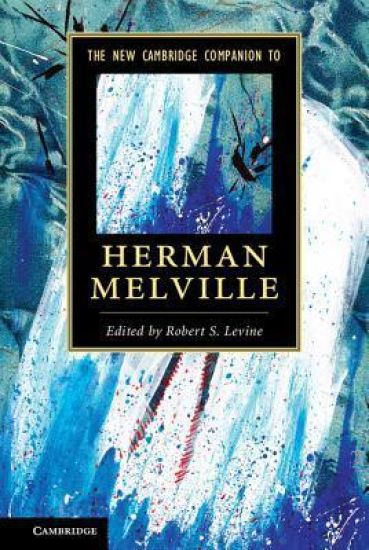
The New Cambridge Companion to Herman Melville
Cambridge University Press
2013
sidottu
The New Cambridge Companion to Herman Melville provides timely, critical essays on Melville's classic works. The essays have been specially commissioned for this volume and provide a complete overview of Melville's career. Melville's major novels are discussed, along with a range of his short fiction and poetry, including neglected works ripe for rediscovery. The volume includes essays on such new topics as Melville and oceanic studies, Melville and animal studies, and Melville and the planetary, along with a number of essays that focus on form and aesthetics. Written at a level both challenging and accessible, this New Companion brings together a team of leading international scholars to offer students of American literature the most comprehensive introduction available to Melville's art.
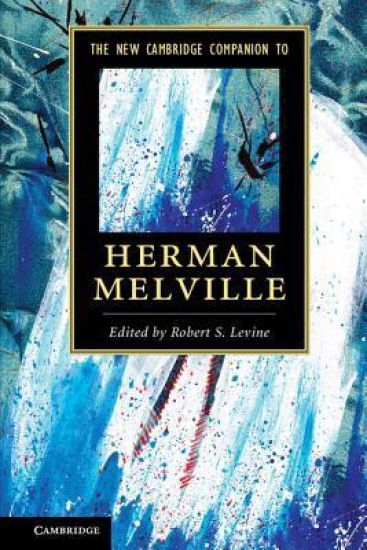
The New Cambridge Companion to Herman Melville
Cambridge University Press
2013
pokkari
The New Cambridge Companion to Herman Melville provides timely, critical essays on Melville's classic works. The essays have been specially commissioned for this volume and provide a complete overview of Melville's career. Melville's major novels are discussed, along with a range of his short fiction and poetry, including neglected works ripe for rediscovery. The volume includes essays on such new topics as Melville and oceanic studies, Melville and animal studies, and Melville and the planetary, along with a number of essays that focus on form and aesthetics. Written at a level both challenging and accessible, this New Companion brings together a team of leading international scholars to offer students of American literature the most comprehensive introduction available to Melville's art.

Erinnerungen Aus Dem Leben Des General-Feldmarschalls Herman
KESSINGER PUBLISHING, LLC
2010
nidottu