Kirjojen hintavertailu. Mukana 11 717 486 kirjaa ja 12 kauppaa.

Kirjahaku

Etsi kirjoja tekijän nimen, kirjan nimen tai ISBN:n perusteella.

1000 tulosta hakusanalla Herman Pontzer

Moby-Dick

Moby-Dick

Herman Melville

Oxford University Press
2022
nidottu
"It will be a strange sort of a book, tho', I fear; blubber is blubber you know; tho' you may get oil out of it, the poetry runs as hard as sap from a frozen maple tree;--& to cook the thing up, one must needs throw in a little fancy.... Yet I mean to give the truth of the thing, spite of this." Moby-Dick has a monumental reputation. Less well known are the novel's unexpectedly weird, funny, tantalizing, messy, and wondrous moments. Narrator Ishmael, along with the whaleship Pequod's other "meanest mariners, and renegades and castaways", is beguiled into joining Captain Ahab in his vengeful pursuit of the white whale that "dismasted" him. But along the way, Ishmael takes the reader along many a detour into variegated ways of knowing. In a tone "strangely compounded of fun and fury", Moby-Dick brings outlandish curiosity to bear on the multitudinous, oceanic scale of our diverse world. ABOUT THE SERIES: For over 100 years Oxford World's Classics has made available the widest range of literature from around the globe. Each affordable volume reflects Oxford's commitment to scholarship, providing the most accurate text plus a wealth of other valuable features, including expert introductions by leading authorities, helpful notes to clarify the text, up-to-date bibliographies for further study, and much more.
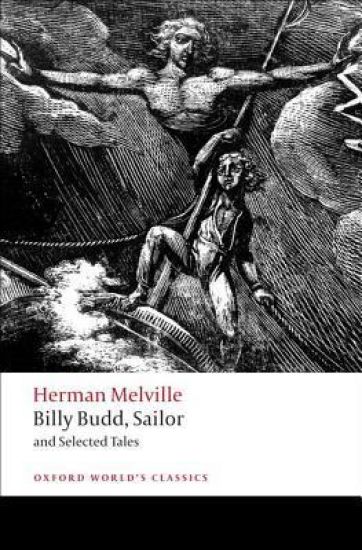
Billy Budd, Sailor, and Selected Tales

Billy Budd, Sailor, and Selected Tales

Herman Melville

Oxford University Press
2025
nidottu
'Struck dead by an angel of God! Yet the angel must hang!' Outwardly a compelling narrative of events aboard a British man-of-war during the turmoil of the Napoleonic Wars, Billy Budd is a nautical recasting of the Fall, a parable of good and evil, a meditation on justice and political governance, and a searching portrait of three extraordinary men. The passion it has aroused in its readers over the years is a measure of how deeply it addresses some of the fundamental questions of experience that every age must reexamine for itself. This edition draws on a new authoritative edition of Billy Budd, Sailor, which corrects the inaccuracies and excesses of former editions of Melville's notoriously incomplete final novella. Accompanied by extensive critical apparatus that draws on a wealth of recent Melville scholarship which highlights his contemporary relevance for questions of economics, ecology, identity, and sexuality and connects it to the key formal and interpretive issues at stake in understanding his art of fiction. It also includes a selection of Melville's short stories, as well as his review of Hawthorne's short fiction, 'Hawthorne and His Mosses'. ABOUT THE SERIES: For over 100 years Oxford World's Classics has made available the widest range of literature from around the globe. Each affordable volume reflects Oxford's commitment to scholarship, providing the most accurate text plus a wealth of other valuable features, including expert introductions by leading authorities, helpful notes to clarify the text, up-to-date bibliographies for further study, and much more.
The Concept of Democracy

The Concept of Democracy

Herman Cappelen

Oxford University Press
2023
sidottu
This is an open access title available under the terms of a CC BY-NC-ND 4.0 International licence. It is free to read on Oxford Academic and offered as a free PDF download from OUP and selected open access locations. If we don't know what the words 'democracy' and 'democratic' mean, then we don't know what democracy is. This book defends a radical view: these words mean nothing and should be abandoned. The argument for Abolitionism is simple: those terms are defective and we can easily do better, so let's get rid of them. According to the abolitionist, the switch to alternative devices would be a significant communicative, cognitive, and political advance. The first part of the book presents a general theory of abandonment: the conditions under which language should be abandoned. The rest of the book applies this general theory to the case of 'democracy' and 'democratic'. Cappelen shows that 'democracy' and 'democratic' are semantically, pragmatically, and communicatively defective. Abolitionism is not all gloom and doom. It also contains a message of good cheer: we have easy access to conceptual devices that are more effective than 'democracy'. We can do better. These alternative linguistic devices will enable us to ask better questions, provide genuinely fruitful answers, and have more rational discussions. Moreover, those questions and answers better articulate the communicative and cognitive aims of those who use empty terms like 'democracy' and 'democratic'.
Dean & Dyer's Digest of Intellectual Property Law

Dean & Dyer's Digest of Intellectual Property Law

Herman Blignaut; Marco van der Merwe; Megan Reimers; Eben van Wyk; John Foster; Mohamed Khader; Tyrone Grant; David Cochrane; Lodewyk Cilliers; Tshepo Shabangu; Tertia Beharie; Dina Biagio; Sadulla Karjiker; Cobus Jooste; Mikhalien Du Bois

Oxford University Press Southern Africa
2014
nidottu
Authored as a collaboration between Spoor & Fisher and the Anton Mostert Chair of Intellectual Property at Stellenbosch University, Dean and Dyer's Digest of Intellectual Property Law presents a substantial, engaging and applied first course in intellectual property law. The text provides a thorough and accessible introduction to the broad spectrum of intellectual property law in South Africa, including intellectual property in the digital environment. The text brings the value of practical expertise together with an enquiring, analytical and critical approach, resulting in a dynamic and indispensable reference. The text offers a clear pedagogical structure, which supports learning and develops independent, critical and reflective engagement with the subject matter. Ancillary materials are available to support teaching and learning. Dean and Dyer's Digest of Intellectual Property Law is suited as core course material for students who are studying intellectual property law as a module of the LLB degree, or at postgraduate level. It is also a useful resource for legal practitioners who may wish to clarify new or foundational principles of the field.
Language Turned on Itself

Language Turned on Itself

Herman Cappelen; Ernest Lepore

Oxford University Press
2007
sidottu
Language Turned on Itself examines what happens when language becomes self-reflexive; when language is used to talk about language. Those who think, talk, and write about language are habitual users of various metalinguistic devices, but reliance on these devices begins early: kids are told, 'That's called a "rabbit"'. It's not implausible that a primitive capacity for the meta-linguistic kicks in at the beginning stages of language acquisition. But no matter when or how frequently these devices are invoked, one thing is clear: they present theorists of language with a complex data pattern. Herman Cappelen and Ernest Lepore show that the study of these devices and patterns not only represents an interesting and neglected project in the philosophy of language, but also carries important consequences for other parts of philosophy. Part I is devoted to presenting data about various aspects of our metalinguistic practices. In Part II, the authors examine and reject the four leading metalinguistic theories, and offer a new account of our use of quotation in a variety of different contexts. But the primary goal of this book is not to promote one theory over another. Rather, it is to present a deeply puzzling set of problems and explain their significance
Billy Budd, Sailor and Selected Tales

Billy Budd, Sailor and Selected Tales

Herman Melville

Oxford University Press
2009
nidottu
`Truth uncompromisingly told will always have its ragged edges.' So wrote Melville of Billy Budd, Sailor, among the greatest of his works and, in its richness and ambiguity, among the most problematic. As the critic E. L. Grant Watson writes, `In this short history of the impressment and hanging of a handsome sailor-boy are to be discovered problems as profound as those which puzzle us in the pages of the Gospels.' Outwardly a compelling narrative of events aboard a British man-of-war during the turmoil of the Napoleonic Wars, Billy Budd, Sailor is a nautical recasting of the Fall, a parable of good and evil, a meditation on justice and political governance, and a searching portrait of three extraordinary men. The passion it has aroused in its readers over the years is a measure of how deeply it addresses some of the fundamental questions of experience that every age must reexamine for itself. The selection in this volume represents the best of Melville's shorter fiction, and uses the most authoritative texts. The eight shorter tales included here were composed during Melville's years as a magazine writer in the mid 1850's and establish him, along with Hawthorne and Poe, as the greatest American story writer of his age. Several of the tales - Bartleby the Scrivener, Benito Cereno, The Encantadas, The Paradise of Bachelors and the Tartarus of Maids - are acknowledged masterpieces of their genres. All show Melville a master of irony, point-of-view, and tone whose fables ripple out in nearly endless circles of meaning. ABOUT THE SERIES: For over 100 years Oxford World's Classics has made available the widest range of literature from around the globe. Each affordable volume reflects Oxford's commitment to scholarship, providing the most accurate text plus a wealth of other valuable features, including expert introductions by leading authorities, helpful notes to clarify the text, up-to-date bibliographies for further study, and much more.
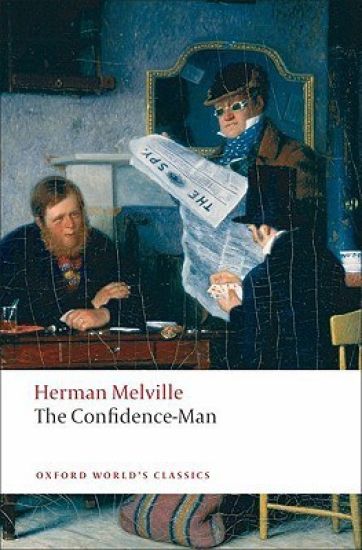
The Confidence-Man

The Confidence-Man

Herman Melville

Oxford University Press
2008
nidottu
Male, female, deft, fraudulent, constantly shifting: which of the `masquerade' of passengers on the Mississippi steamboat Fidèle is `the confidence man'? The central motif of Melville's last and most `modern' novel can be seen as a symbol of American cultural history. ABOUT THE SERIES: For over 100 years Oxford World's Classics has made available the widest range of literature from around the globe. Each affordable volume reflects Oxford's commitment to scholarship, providing the most accurate text plus a wealth of other valuable features, including expert introductions by leading authorities, helpful notes to clarify the text, up-to-date bibliographies for further study, and much more.
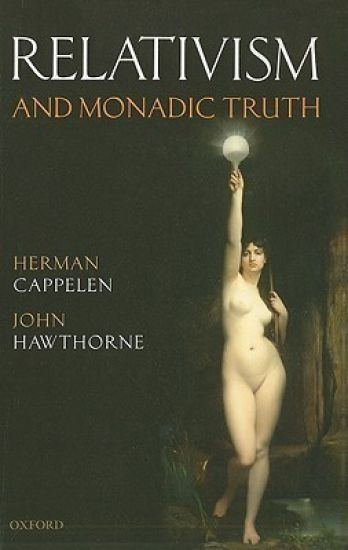
Relativism and Monadic Truth

Relativism and Monadic Truth

Herman Cappelen; John Hawthorne

Oxford University Press
2009
sidottu
Relativism has dominated many intellectual circles, past and present, but the twentieth century saw it banished to the fringes of mainstream analytic philosophy. Of late, however, it is making something of a comeback within that loosely configured tradition, a comeback that attempts to capitalize on some important ideas in foundational semantics. Relativism and Monadic Truth aims not merely to combat analytic relativism but also to combat the foundational ideas in semantics that led to its revival. Doing so requires a proper understanding of the significance of possible worlds semantics, an examination of the relation between truth and the flow of time, an account of putatively relevant data from attitude and speech act reporting, and a careful treatment of various operators. Throughout, Herman Cappelen and John Hawthorne contrast relativism with a view according to which the contents of thought and talk are propositions that instantiate the fundamental monadic properties of truth simpliciter and falsity simpliciter. Such propositions, they argue, are the semantic values of sentences (relative to context), the objects of illocutionary acts, and, unsurprisingly, the objects of propositional attitudes.
Language Turned on Itself

Language Turned on Itself

Herman Cappelen; Ernest Lepore

Oxford University Press
2009
nidottu
Language Turned on Itself examines what happens when language becomes self-reflexive; when language is used to talk about language. Those who think, talk, and write about language are habitual users of various metalinguistic devices, but reliance on these devices begins early: kids are told, 'That's called a "rabbit"'. It's not implausible that a primitive capacity for the meta-linguistic kicks in at the beginning stages of language acquisition. But no matter when or how frequently these devices are invoked, one thing is clear: they present theorists of language with a complex data pattern. Herman Cappelen and Ernest Lepore show that the study of these devices and patterns not only represents an interesting and neglected project in the philosophy of language, but also carries important consequences for other parts of philosophy. Part I is devoted to presenting data about various aspects of our metalinguistic practices. In Part II, the authors examine and reject the four leading metalinguistic theories, and offer a new account of our use of quotation in a variety of different contexts. But the primary goal of this book is not to promote one theory over another. Rather, it is to present a deeply puzzling set of problems and explain their significance
Relativism and Monadic Truth

Relativism and Monadic Truth

Herman Cappelen; John Hawthorne

Oxford University Press
2010
nidottu
Relativism has dominated many intellectual circles, past and present, but the twentieth century saw it banished to the fringes of mainstream analytic philosophy. Of late, however, it is making something of a comeback within that loosely configured tradition, a comeback that attempts to capitalize on some important ideas in foundational semantics. Relativism and Monadic Truth aims not merely to combat analytic relativism but also to combat the foundational ideas in semantics that led to its revival. Doing so requires a proper understanding of the significance of possible worlds semantics, an examination of the relation between truth and the flow of time, an account of putatively relevant data from attitude and speech act reporting, and a careful treatment of various operators. Throughout, Herman Cappelen and John Hawthorne contrast relativism with a view according to which the contents of thought and talk are propositions that instantiate the fundamental monadic properties of truth simpliciter and falsity simpliciter. Such propositions, they argue, are the semantic values of sentences (relative to context), the objects of illocutionary acts, and, unsurprisingly, the objects of propositional attitudes.
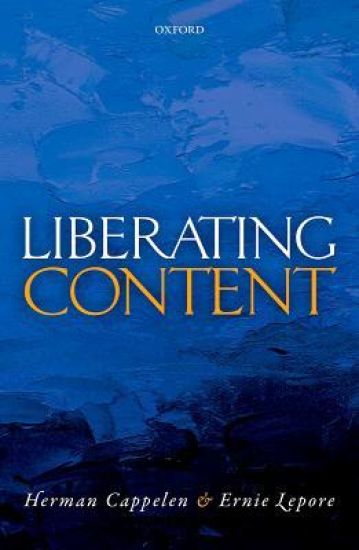
Liberating Content

Liberating Content

Herman Cappelen; Ernie Lepore

Oxford University Press
2015
sidottu
This volume brings together two series of papers: one began with Herman Cappelen and Ernie Lepore's 1997 paper 'On an Alleged Connection Between the Theory of Meaning and Indirect Speech'. The other series started with their 1997 paper 'Varieties of Quotation'. The central theme throughout is that only when communicative content is liberated from semantic content will we make progress in understanding language, communication, contexts, and their interconnection. These are the papers in which Cappelen and Lepore introduced speech act pluralism and semantic minimalism, and they provide the foundation for one of the most powerful attacks on contextualism in contemporary philosophy.
Philosophy without Intuitions

Philosophy without Intuitions

Herman Cappelen

Oxford University Press
2012
sidottu
The claim that contemporary analytic philosophers rely extensively on intuitions as evidence is almost universally accepted in current meta-philosophical debates and it figures prominently in our self-understanding as analytic philosophers. No matter what area you happen to work in and what views you happen to hold in those areas, you are likely to think that philosophizing requires constructing cases and making intuitive judgments about those cases. This assumption also underlines the entire experimental philosophy movement: only if philosophers rely on intuitions as evidence are data about non-philosophers' intuitions of any interest to us. Our alleged reliance on the intuitive makes many philosophers who don't work on meta-philosophy concerned about their own discipline: they are unsure what intuitions are and whether they can carry the evidential weight we allegedly assign to them. The goal of this book is to argue that this concern is unwarranted since the claim is false: it is not true that philosophers rely extensively (or even a little bit) on intuitions as evidence. At worst, analytic philosophers are guilty of engaging in somewhat irresponsible use of 'intuition'-vocabulary. While this irresponsibility has had little effect on first order philosophy, it has fundamentally misled meta-philosophers: it has encouraged meta-philosophical pseudo-problems and misleading pictures of what philosophy is.
The Inessential Indexical

The Inessential Indexical

Herman Cappelen; Josh Dever

Oxford University Press
2013
sidottu
When we represent the world in language, in thought, or in perception, we often represent it from a perspective. We say and think that the meeting is happening now, that it is hot here, that I am in danger and not you; that the tree looks larger from my perspective than from yours. The Inessential Indexical is an exploration and defense of the view that perspectivality is a philosophically shallow aspect of the world. Cappelen and Dever oppose one of the most entrenched and dominant trends in contemporary philosophy: that perspective (and the perspective of the first person in particular) is philosophically deep and that a proper understanding of it is important not just in the philosophies of language and mind, but throughout philosophy. They argue that there are no such things as essential indexicality, irreducibly de se attitudes, or self-locating attitudes. Their goal is not to show that we need to rethink these phenomena, to explain them in different ways. Their goal is to show that the entire topic is an illusion--there's nothing there. The Context and Content series is a forum for outstanding original research at the intersection of philosophy, linguistics, and cognitive science. The general editor is François Recanati (Institut Jean-Nicod, Paris).
God in the Age of Science?

God in the Age of Science?

Herman Philipse

Oxford University Press
2012
sidottu
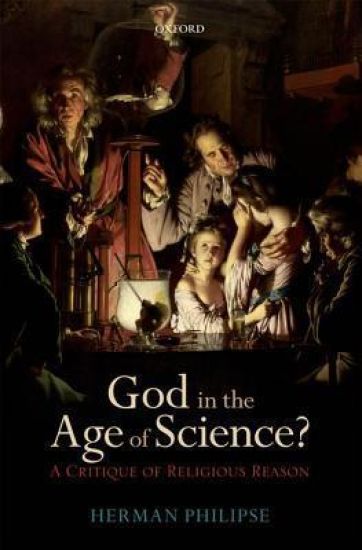
God in the Age of Science? is a critical examination of strategies for the philosophical defence of religious belief. The main options may be presented as the end nodes of a decision tree for religious believers. The faithful can interpret a creedal statement (e.g. 'God exists') either as a truth claim, or otherwise. If it is a truth claim, they can either be warranted to endorse it without evidence, or not. Finally, if evidence is needed, should its evidential support be assessed by the same logical criteria that we use in evaluating evidence in science, or not? Each of these options has been defended by prominent analytic philosophers of religion. In part I Herman Philipse assesses these options and argues that the most promising for believers who want to be justified in accepting their creed in our scientific age is the Bayesian cumulative case strategy developed by Richard Swinburne. Parts II and III are devoted to an in-depth analysis of this case for theism. Using a 'strategy of subsidiary arguments', Philipse concludes (1) that theism cannot be stated meaningfully; (2) that if theism were meaningful, it would have no predictive power concerning existing evidence, so that Bayesian arguments cannot get started; and (3) that if the Bayesian cumulative case strategy did work, one should conclude that atheism is more probable than theism. Philipse provides a careful, rigorous, and original critique of theism in the world today.
Billy Budd, Sailor

Billy Budd, Sailor

Herman Melville

University of Chicago Press
2001
nidottu
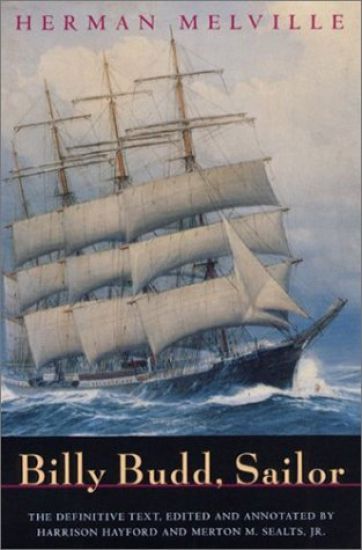
Hayford and Sealts's text was the first accurate version of Melville's final novel. Based on a close analysis of the manuscript, thoroughly annotated, and packaged with a history of the text and perspectives for its criticism, this edition will remain the definitive version of a profoundly suggestive story.
The Struggle for Constitutional Justice in Post-Communist Europe

The Struggle for Constitutional Justice in Post-Communist Europe

Herman Schwartz

University of Chicago Press
2000
sidottu
In the former Eastern Bloc countries, one of the most important, and most difficult, aspects of the transition to democracy has been the establishment of constitutional justice and the rule of law. Herman Schwartz's wide-ranging book is the first to chronicle and analyze the rise of constitutional courts in this changing region. Beginning with a brief history of the courts prior to 1989, Schwartz draws on his expertise as a constitutional scholar and long-time adviser to many of these countries to compare their jurisprudence with relevant American and West European law. He then focuses in detail on the relative success stories of Poland and Hungary, where the courts faced little opposition, and the more problematic situations in Russia, Slovakia and Bulgaria, where the courts' independence and very existence were threatened by both old-line communists and new-style authoritarians. With a wealth of historical and other information, backed up by a massive array of research, the book is a remarkably rich, yet accessible, source for anyone interested in the ongoing struggles of post-Communist Europe.
The Struggle for Constitutional Justice in Post-Communist Europe

The Struggle for Constitutional Justice in Post-Communist Europe

Herman Schwartz

University of Chicago Press
2002
nidottu
In the former Eastern Bloc countries, one of the most important, and most difficult, aspects of the transition to democracy has been the establishment of constitutional justice and the rule of law. Herman Schwartz's wide-ranging book is the first to chronicle and analyze the rise of constitutional courts in this changing region. Beginning with a brief history of the courts prior to 1989, Schwartz draws on his expertise as a constitutional scholar and long-time adviser to many of these countries to compare their jurisprudence with relevant American and West European law. He then focuses in detail on the relative success stories of Poland and Hungary, where the courts faced little opposition, and the more problematic situations in Russia, Slovakia and Bulgaria, where the courts' independence and very existence were threatened by both old-line communists and new-style authoritarians. With a wealth of historical and other information, backed up by a massive array of research, the book is a remarkably rich, yet accessible, source for anyone interested in the ongoing struggles of post-Communist Europe.
Billy Budd, Sailor (An Inside Narrative)

Billy Budd, Sailor (An Inside Narrative)

Herman Melville

THE UNIVERSITY OF CHICAGO PRESS
2025
sidottu
An illustrated edition of Billy Budd featuring woodcuts by celebrated artist Barry Moser. This edition of Billy Budd, Sailor presents Herman Melville’s iconic tale of the high seas alongside illustrations by renowned artist, publisher, and printmaker Barry Moser. Throughout his fifty-year career, Moser has illustrated more than three hundred books ranging from novels to children’s stories to the Bible. Through his Pennyroyal Press, Moser designs and prints fine-press, illustrated, and occasionally oversized books in very limited editions, which are beloved by collectors and bibliophiles. To coincide with the centenary of the novella’s posthumous publication, Moser created sixteen original woodcuts illustrating the scenes and characters of Billy Budd, Sailor, and this trade edition now makes these exquisite illustrations accessible to a wide audience.
Dreaming of Cockaigne

Dreaming of Cockaigne

Herman Pleij

Columbia University Press
2001
sidottu
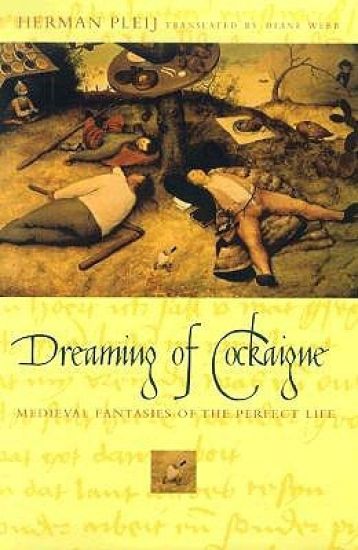
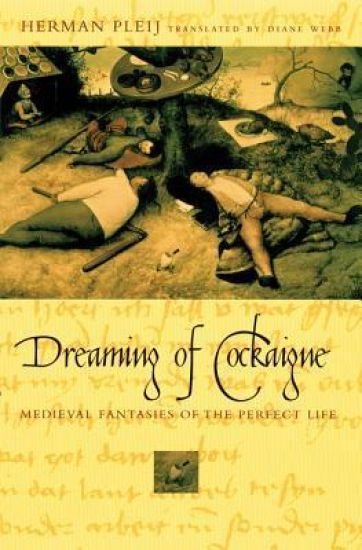
Imagine a dreamland where roasted pigs wander about with knives in their backs to make carving easy, where grilled geese fly directly into one's mouth, where cooked fish jump out of the water and land at one's feet. The weather is always mild, the wine flows freely, sex is readily available, and all people enjoy eternal youth. Such is Cockaigne. Portrayed in legend, oral history, and art, this imaginary land became the most pervasive collective dream of medieval times-an earthly paradise that served to counter the suffering and frustration of daily existence and to allay anxieties about an increasingly elusive heavenly paradise. Illustrated with extraordinary artwork from the Middle Ages, Herman Pleij's Dreaming of Cockaigne is a spirited account of this lost paradise and the world that brought it to life. Pleij takes three important texts as his starting points for an inspired of the panorama of ideas, dreams, popular religion, and literary and artistic creation present in the late Middle Ages. What emerges is a well-defined picture of the era, furnished with a wealth of detail from all of Europe, as well as Asia and America. Pleij draws upon his thorough knowledge of medieval European literature, art, history, and folklore to describe the fantasies that fed the tales of Cockaigne and their connections to the central obsessions of medieval life.
Dreaming of Cockaigne

Dreaming of Cockaigne

Herman Pleij

Columbia University Press
2003
pokkari
Imagine a dreamland where roasted pigs wander about with knives in their backs to make carving easy, where grilled geese fly directly into one's mouth, where cooked fish jump out of the water and land at one's feet. The weather is always mild, the wine flows freely, sex is readily available, and all people enjoy eternal youth. Such is Cockaigne. Portrayed in legend, oral history, and art, this imaginary land became the most pervasive collective dream of medieval times-an earthly paradise that served to counter the suffering and frustration of daily existence and to allay anxieties about an increasingly elusive heavenly paradise. Illustrated with extraordinary artwork from the Middle Ages, Herman Pleij's Dreaming of Cockaigne is a spirited account of this lost paradise and the world that brought it to life. Pleij takes three important texts as his starting points for an inspired of the panorama of ideas, dreams, popular religion, and literary and artistic creation present in the late Middle Ages. What emerges is a well-defined picture of the era, furnished with a wealth of detail from all of Europe, as well as Asia and America. Pleij draws upon his thorough knowledge of medieval European literature, art, history, and folklore to describe the fantasies that fed the tales of Cockaigne and their connections to the central obsessions of medieval life.