

Kirjahaku
Etsi kirjoja tekijän nimen, kirjan nimen tai ISBN:n perusteella.
1000 tulosta hakusanalla Hermann Turck

A Study Guide for Hermann Hesse's "Siddhartha"
Cengage Learning Gale
Gale, Study Guides
2017
pokkari

A Study Guide for Hermann Hesse's "Steppenwolf"
Cengage Learning Gale
Gale, Study Guides
2017
pokkari
Goethe's Hermann and Dorothea
Johann Wolfgang Von Goethe; Wilhelm (INT) Wagner
Kessinger Pub
2007
pokkari
Goethe's Hermann And Dorothea (1908)
Johann Wolfgang von Goethe
KESSINGER PUBLISHING, LLC
2008
nidottu
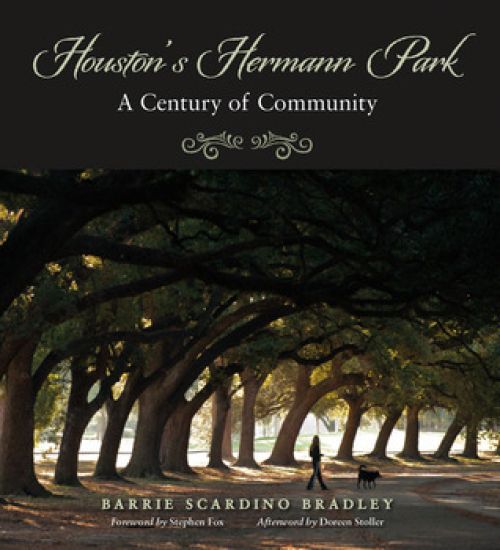
Houston's Hermann Park
Alice (Barrie) M. Scardino Bradley; Doreen Stoller; Stephen Fox
Texas A M University Press
2013
sidottu
Richly illustrated with rare period photographs, Houston’s Hermann Park: A Century of Community provides a vivid history of Houston’s oldest and most important urban park. Author and historian Barrie Scardino Bradley sets Hermann Park in both a local and a national context as this grand park celebrates its centennial at the culmination of a remarkable twenty-year rejuvenation.As Bradley shows, Houston’s development as a major American city may be traced in the outlines of the park’s history. During the early nineteenth century, Houston leaders were most interested in commercial development and connecting the city via water and rail to markets beyond its immediate area. They apparently felt no need to set aside public recreational space, nor was there any city-owned property that could be so developed.By 1910, however, Houston leaders were well aware that almost every major American city had an urban park patterned after New York’s Central Park. By the time the City Beautiful Movement and its overarching Progressive Movement reached the consciousness of Houstonians, Central Park’s designer, Frederick Law Olmsted, had died, but his ideals had not. Local advocates of the City Beautiful Movement, like their counterparts elsewhere, hoped to utilize political and economic power to create a beautiful, spacious, and orderly city. Subsequent planning by the renowned landscape architect and planner George Kessler envisioned a park that would anchor a system of open spaces in Houston. From that groundwork, in May 1914, George Hermann publicly announced his donation of 285 acres to the City of Houston for a municipal park.Bradley develops the events leading up to the establishment of Hermann Park, then charts how and why the park developed, including a discussion of institutions within the park such as the Houston Zoo, the Japanese Garden, and the Houston Museum of Natural Science. The book’s illustrations include plans, maps, and photographs both historic and recent that document the accomplishments of the Hermann Park Conservancy since its founding in 1992.
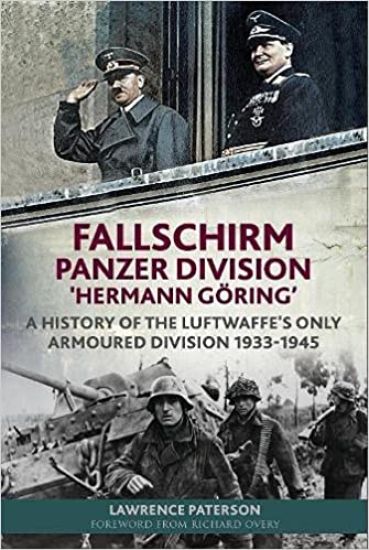
In the early years of the Third Reich, Hermann Goring, one of the most notorious leaders of the Third Reich, worked to establish his own personal army to rival Himmler's SS and Reichswehr. The result: a private Prussian police force which grew into one of the most powerful armoured units in Nazi Germany's Wehrmacht. This unit fought throughout the Second World War, meeting Anglo-American forces in vicious battles across the European theatres of Tunisia, Sicily and Italy before finally being defeated by the Red Army on the Eastern Front. The Hermann Goring Panzer Division incorporates technical details of these battles with the turbulent politics and Machiavellian manoeuvring of Hitler's inner circle, giving military-history enthusiasts fresh insights into the development and role of this unusual division through the war. Drawing on first-hand accounts and extensive archive material, World War II historian Lawrence Paterson presents a comprehensive and unbiased history of the establishment of the famous 1\. Fallschirm-Panzer Division.
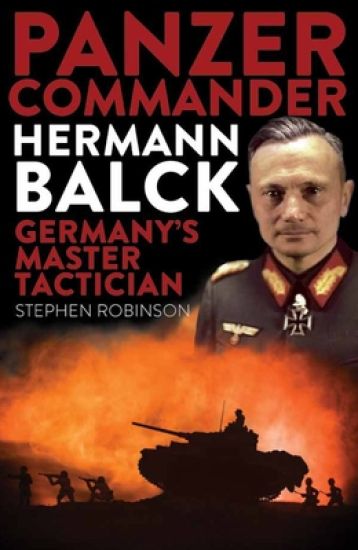
A compelling and in-depth history of one of the world’s greatest armoured warfare commanders, Hermann Balck (1897–1982).During World War II, Balck commanded panzer troops from the front line and led by example, putting himself in extreme danger when rallying his soldiers to surge forward. He fought battles that were masterpieces of tactical operations, utilizing speed, surprise and a remarkable ability to motivate his men to achieve what they considered to be impossible.We follow his journey through the fields of France, mountains of Greece and steppes of Russia. In Greece, through flair and innovative leadership, his soldiers overcame every obstacle to defeat determined Australian and New Zealand soldiers defending the narrow mountain passes. Balck personally led his men to victory in battles at Platamon Ridge on the Aegean coast and in the Vale of Tempe, before entering Athens.This is also the story of a cultured and complex man with a great love of antiquity and classical literature, who nevertheless willingly fought for Hitler’s Third Reich while remaining strangely detached from the horrors around him. The book is the result of extensive research of primary and secondary sources, including Balck’s battle reports and first-hand accounts written by Allied soldiers who opposed him, panzer division war diaries and campaign assessments, and declassified Pentagon documents.
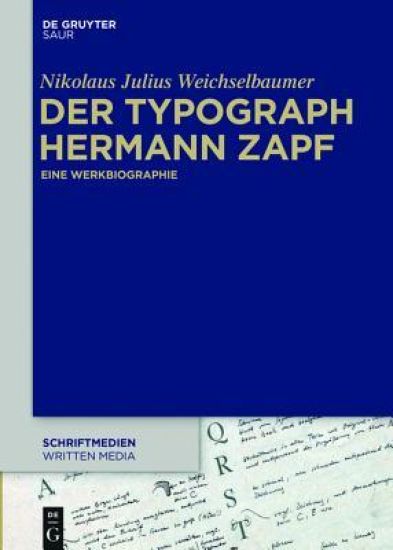
In recent years the field of book studies has been reconceptualized, moving away from a primarily historical and narrative focus. This change, triggered in part by new media, has involved an expansion in the range of research questions considered as well as their theoretical underpinnings. Analysis of the forms of communication used in written media form an essential aspect of this new approach. Conceptually, the series is based on an understanding of written media found in interdisciplinary perspectives as well as communication and media studies. Accordingly, the volumes published in the series will not focus solely on media such as books, newspapers, and journals, but also address the broader dimensions of communication in written media overall. This proven approach in research and teaching is integrative and thus has many points of intersection to neighboring disciplines. The series publishes works that explore the problem-solving potential of book studies when it avails itself of interdisciplinary perspectives to assess written communication in the past and present.

Die Studie befasst sich mit der Verhältnisbestimmung von Mythos und Rationalität im modernen philosophischen und literarischen Diskurs. Ausgehend von einer Analyse der philosophischen Auseinandersetzung mit dem Phänomen Mythos um den Beginn des 20. Jahrhunderts werden zunächst Hermann Hesses und Thomas Manns jeweiliger Mythosbegriff untersucht, um im Anschluss daran ihr literarisches Mythenerzählen anhand von ausgewählten Romanen und Erzählungen zu beleuchten.Obwohl Hesse und Mann beide in der Verbindung von Mythos und Psychologie einen humanistischen Zugang zum Mythos sehen, unterscheiden sich ihre Strategien zum Umgang mit mythischem Erzählen grundlegend. Während man Hermann Hesses Ansatz mit dem Schlagwort ‚Mythos als Psychologie‘ umschreiben könnte, hat Thomas Mann für sein eigenes Mythenerzählen selbst die Formel ‚Mythos plus Psychologie‘ geprägt. So sieht Mann in Mythen einen Ausdruck des Irrationalen, der durch psychologische Durchleuchtung und Ironisierung erst „ins Humane umfunktioniert“ werden muss, um sich der politischen Instrumentalisierung entziehen zu können. Hermann Hesse dagegen schließt sich an C. G. Jung an und interpretiert Mythen als Verbildlichung psychischer Prozesse und transrationaler Erfahrung,en die bereits inhärent humanistisch sind.

Mythisches Erzählen bei Hermann Hesse und Thomas Mann
Eva Knöferl
De Gruyter
2021
isokokoinen pokkari
Die Studie befasst sich mit der Verhältnisbestimmung von Mythos und Rationalität im modernen philosophischen und literarischen Diskurs. Ausgehend von einer Analyse der philosophischen Auseinandersetzung mit dem Phänomen Mythos um den Beginn des 20. Jahrhunderts werden zunächst Hermann Hesses und Thomas Manns jeweiliger Mythosbegriff untersucht, um im Anschluss daran ihr literarisches Mythenerzählen anhand von ausgewählten Romanen und Erzählungen zu beleuchten.Obwohl Hesse und Mann beide in der Verbindung von Mythos und Psychologie einen humanistischen Zugang zum Mythos sehen, unterscheiden sich ihre Strategien zum Umgang mit mythischem Erzählen grundlegend. Während man Hermann Hesses Ansatz mit dem Schlagwort ‚Mythos als Psychologie‘ umschreiben könnte, hat Thomas Mann für sein eigenes Mythenerzählen selbst die Formel ‚Mythos plus Psychologie‘ geprägt. So sieht Mann in Mythen einen Ausdruck des Irrationalen, der durch psychologische Durchleuchtung und Ironisierung erst „ins Humane umfunktioniert“ werden muss, um sich der politischen Instrumentalisierung entziehen zu können. Hermann Hesse dagegen schließt sich an C. G. Jung an und interpretiert Mythen als Verbildlichung psychischer Prozesse und transrationaler Erfahrung,en die bereits inhärent humanistisch sind.


Klett Lektürehilfen Hermann Hesse "Der Steppenwolf"
Klett Lerntraining
2017
nidottu

Der vorliegende Briefwechsel zwischen Philipp Jakob Spener (1635-1705), dem Begründer des lutherischen Pietismus, und August Hermann Francke (1663-1727), der den Pietismus zu einer religiös-sozialen Reformbewegung mit gesamtgesellschaftlichem Anspruch ausprägte, ist nicht nur eine zentrale Quelle für die Etablierung des hallischen Pietismus mit den Franckeschen Anstalten und für die Gründung der Universität Halle. Die in der Kommentierung zusammengetragenen Informationen machen deutlich, dass schon die frühen Hallenser Aktivitäten Franckes nicht denkbar waren ohne das oft spannungsreiche Zusammenspiel von pietistischen Reformvorhaben und brandenburg-preußischer Politik. Auf der Basis der Edition lässt sich zudem theologiegeschichtlich konkretisieren, wie sich die Spenersche "Hoffnung besserer Zeiten" bei Francke mit innerweltlichem Realismus verband und zu "Projekten" formte, die die Realität auf eine Utopie hin zu überwinden suchten. Konkret fassbar werden diese "Projekte" in der Entstehung eines internationalen pietistischen Kommunikationsnetzes, in dem missionarische Aktivität, Diplomatie und Kommerz eine selbstverständliche Synthese eingingen. Der Briefwechsel macht somit anthropologische und soziologische Konstellationen deutlich, die für die Frage nach den Proprien dessen, was theologie- und geistesgeschichtlich als 'Pietismus' bezeichnet werden kann, generell aufschlussreich sind.
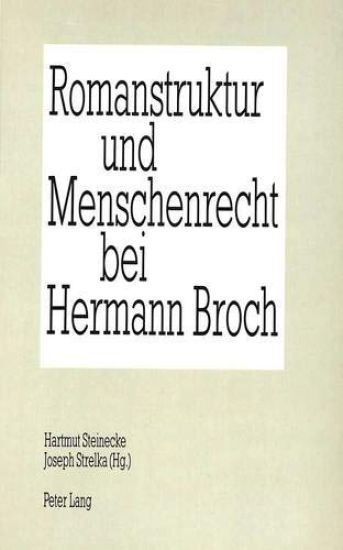
Romanstruktur Und Menschenrecht Bei Hermann Broch
Herbert Cie Lang AG, Buchhandlung Antiquariat
1990
nidottu
Neue Beitrage zur Eigenart und Bedeutung von Hermann Brochs Dichten und Denken. Einerseits wird der geschichtliche Ausgangspunkt seines Schaffens und dessen Einfluss auf das Werk sichtbar gemacht, andererseits werden bestimmte Aspekte seiner Romane und seiner Massenpsychologie genauer untersucht. Schliesslich wird ein bestimmter Sektor der Wirkungsgeschichte genauer als je zuvor ausgeleuchtet."
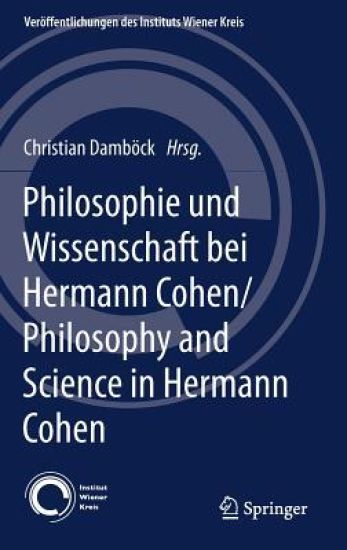
Philosophie und Wissenschaft bei Hermann Cohen/Philosophy and Science in Hermann Cohen
Springer
2018
sidottu
Der Band versammelt einen Großteil der Beiträge, die internationale Experten anlässlich der Tagung „Philosophie und Wissenschaft bei Hermann Cohen“ im November 2014 am Institut Wiener Kreis der Universität Wien präsentiert haben. Mit der Tagung zu Hermann Cohen (1842 – 1918), der zusammen mit Paul Natorp die Marburger Schule begründete, wurden zwei Ziele verfolgt: erstens die Aspekte in der Philosophie des Kantianers Cohen herauszuarbeiten, die an die Idee einer Einheitswissenschaft anknüpfen und zweitens Divergenzen und Übereinstimmungen Cohens mit der wissenschaftlichen Weltauffassung, der Programmatik des Wiener Kreises um Rudolf Carnap und Moritz Schlick zu identifizieren. Der Tagungsband ist in drei Teile gegliedert. Die Aufsätze im ersten Teil beschäftigen sich mit der Bedeutung von Erfahrung und Empirismus für das Philosophieverständnis Hermann Cohens. Im zweiten Teil gehen die Autoren der Frage nach, welche Rolle Theorien aus den Bereichen Mathematik, Naturwissenschaften und Psychologie für Cohens Denken gespielt haben – unter anderem Hermann von Helmholtz‘ Theorie des Messens und die Bedeutung der Infinitesimalrechnung für die Philosophie der Marburger Schule. Die Beiträge im dritten Teil des Bandes stellen die Philosophie Cohens und der Marburger Schule den Vertretern des Wiener Kreises und der Berliner Gruppe um Hans Reichenbach gegenüber. Dabei wird Reichenbachs Rezeption der Relativitätstheorie in den Kontext einer Relativierung Kants bei Cohen und Ernst Cassirer gestellt und „versteckte Verwandtschaften“ zwischen Cohen und dem Logischen Empirismus aufgedeckt. Der Band richtet sich an Wissenschaftler auf dem Gebiet der Geschichte der Philosophie.