
Kirjahaku
Etsi kirjoja tekijän nimen, kirjan nimen tai ISBN:n perusteella.
1000 tulosta hakusanalla J Collier
J. G. S.: Verzeichniss Aller Romischen Bischofe Und Papste (
J. G. S.
KESSINGER PUBLISHING, LLC
2010
nidottu
This edited collection of brand new essays examines The Hobbit and The Lord of the Rings in the light of children's literature theory and approaches. Exploring issues such as gender, language, narrative, and ecocriticism, the volume also places Tolkien's most popular works in the context of a range of visual media including the film adaptations.

This edited collection of brand new essays examines The Hobbit and The Lord of the Rings in the light of children's literature theory and approaches. Exploring issues such as gender, language, narrative, and ecocriticism, the volume also places Tolkien's most popular works in the context of a range of visual media including the film adaptations.
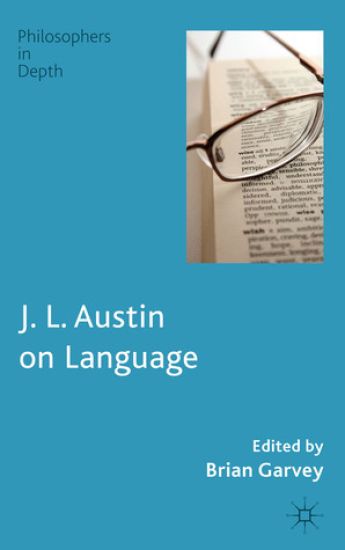
J. L. Austin on Language
Palgrave Macmillan
2014
sidottu
Looking at the work of J.L. Austin, who subjected language to a close and intense analysis, this book deals with his examination of the various things we do with words, and with the philosophical insights he believed could be gained by closely examining the uses of words by non-philosophers.

Drawing on postcolonial and gender studies, as well as affect theory, the book interrogates cosmopolitan philosophies. Through analysis of J.M. Coetzee's later fiction, Hallemeier invites the re-imagining of cosmopolitanism, particularly as it is performed through the reading of literature.

Clarkson pays sustained attention to the dynamic interaction between Coetzee's fiction and his critical writing, exploring the Nobel prize-winner's participation in, and contribution to, contemporary literary-philosophical debates. The book engages with the most recent literary and philosophical responses to Coetzee's work.

J. S. Mill’s Journal and Notebook of a Year in France, May 1820-July 1821
Routledge
2014
sidottu
The Kwansei Gakuin University obtained a notebook of John S. Mill’s sojourn in France (1820-21) in February 2001. This notebook consists of diary entries dated from July 20 to September 15, 1820 and miscellaneous notes. One remarkable feature of this notebook is its inclusion of the entries dated from August 3 to 9, that are missing from both the Journal in the British Library collection and the notebook in the St. Andrews University Library collection. The book reproduces the entries of this week-long blank, and in doing so, presents a picture of John S. Mill’s life in this week. According to these entries, his French language, French literature, chemistry, zoology, metaphysics, logic, mathematics and other lessons continued right up until August 9, the day before his departure on a trip to the Pyrenees. He not only read books and studied French as before but also wrote an essay about "dialogue on government." Finally, the book presents a complete version of John S. Mill’ sojourn in France (1820-21), providing scholars for the first time with the information of Mill’s life and the education he received during those years.
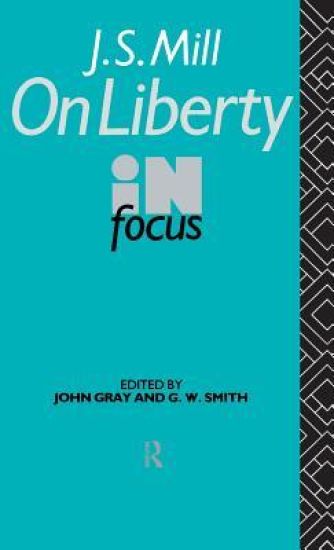
J.S. Mill's On Liberty in Focus
Routledge
2015
sidottu
This volume brings together J.S. Mills On Liberty and a selection of important essays by such eminent scholars as Isaiah Berlin, Alan Ryan, John Rees, C.L. Ten and Richard Wollheim. As well as providing authoritative commentary upon On Liberty, the essays reflect a broader debate about the philosophical foundations of Mill's liberalism, particularly the question of the connection betweenMill's professed utilitarianism and his commitment to individual liberty. Introduced and edited by John Gray and G.W. Smith, the book will be of interest to students of Mill, to ethical and political philosophers and to anyone interested in the contemporary status of liberalism.
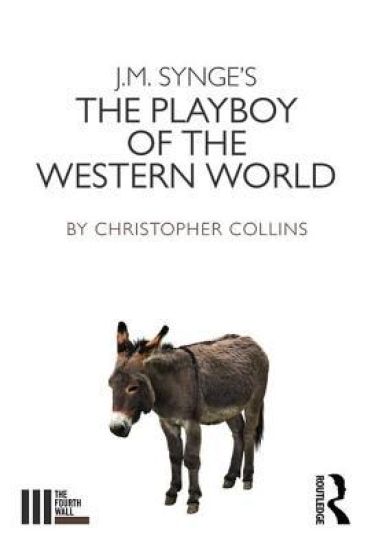
‘I’m thinking this night wasn’t I a foolish fellow not to kill my father in years gone by.’ – Christy MahonOn the first night of J. M. Synge’s The Playboy of the Western World (1907) the audience began protesting in the theatre; by the third night the protests had spilled onto the streets of Dublin. How did one play provoke this? Christopher Collins addresses The Playboy ’s satirical treatment of illusion and realism in light of Ireland’s struggle for independence, as well as Synge’s struggle for artistic expression. By exploring Synge’s unpublished diaries, drafts and notebooks, he seeks to understand how and why the play came to be.This volume invites the reader behind the scenes of this inflammatory play and its first performances, to understand how and why Synge risked everything in the name of art.

J.M.W. Turner and the Subject of History is an in-depth consideration of the artist's complex response to the challenge of creating history paintings in the early nineteenth century. Structured around the linked themes of making and unmaking, of creation and destruction, this book examines how Turner's history paintings reveal changing notions of individual and collective identity at a time when the British Empire was simultaneously developing and fragmenting. Turner similarly emerges as a conflicted subject, one whose artistic modernism emerged out of a desire to both continue and exceed his eighteenth-century aesthetic background by responding to the altered political and historical circumstances of the nineteenth century.

Published in 1998, J. M. Robertson: Rationalist and Literary Critic is a study of the life of one of the most erudite and prolific critics of the late nineteenth and early twentieth centuries. The Scotsman John MacKinnon Robertson (1856-1933), rationalist and enemy of religion to the core, published over one hundred books and thousands of articles in fields as diverse as sociology, economics, history, anthropology, biblical criticism and literary criticism. This once widely known (and feared!) author was all too quickly forgotten after his death and his work is now seldom read. The aim of this book is to demonstrate that Robertson’s writings and in particular his acute and powerful literary criticism – much respected by T. S. Eliot – have not lost their relevance for late twentieth century readers.Moreover, through the examinations of Robertson’s work in its contextual framework, this study provides a wide-ranging perspective on the late-Victorian literary scene, which perhaps present-day literary historians have not given the detailed attention it deserves.
Published in 1998, J. M. Robertson: Rationalist and Literary Critic is a study of the life of one of the most erudite and prolific critics of the late nineteenth and early twentieth centuries. The Scotsman John MacKinnon Robertson (1856-1933), rationalist and enemy of religion to the core, published over one hundred books and thousands of articles in fields as diverse as sociology, economics, history, anthropology, biblical criticism and literary criticism. This once widely known (and feared!) author was all too quickly forgotten after his death and his work is now seldom read. The aim of this book is to demonstrate that Robertson’s writings and in particular his acute and powerful literary criticism – much respected by T. S. Eliot – have not lost their relevance for late twentieth century readers.Moreover, through the examinations of Robertson’s work in its contextual framework, this study provides a wide-ranging perspective on the late-Victorian literary scene, which perhaps present-day literary historians have not given the detailed attention it deserves.
I'm thinking this night wasn't I a foolish fellow not to kill my father in years gone by.' – Christy MahonOn the first night of J. M. Synge's The Playboy of the Western World (1907) the audience began protesting in the theatre; by the third night the protests had spilled onto the streets of Dublin. How did one play provoke this? Christopher Collins addresses The Playboy 's satirical treatment of illusion and realism in light of Ireland's struggle for independence, as well as Synge's struggle for artistic expression. By exploring Synge's unpublished diaries, drafts and notebooks, he seeks to understand how and why the play came to be.This volume invites the reader behind the scenes of this inflammatory play and its first performances, to understand how and why Synge risked everything in the name of art.
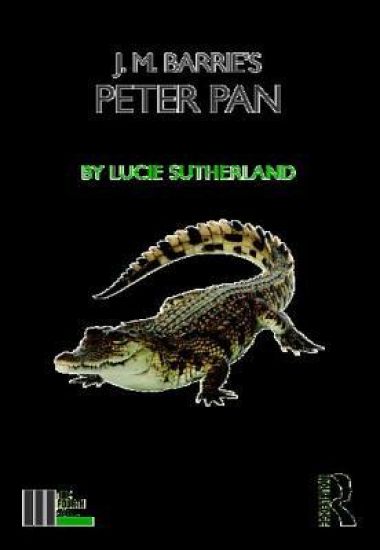
‘Do you believe in fairies? Say quick that you believe!’ – Peter PanPeter Pan is a narrative many of us believe we know well, and yet the J.M. Barrie play that premiered on a West End stage in December 1904 is not the depiction of Peter, Wendy, Hook, and Never Land that most people have experienced. It was the critical and commercial success of this particular play which propelled the notoriety and appeal of the story, and without the success of that first production, Peter Pan would not be such a familiar part of our mainstream culture. Lucie Sutherland examines how, and why, this play became so popular, why the trans-Atlantic collaboration of Barrie and Charles Frohman was vital to the success of the 1904 production, and how key versions in England and America have created an iconic narrative that remains popular today. This book charts the ‘awfully big adventure’ of creating Peter Pan, as well as the many entertaining, enthralling, and often extraordinary ways the play has been adapted ever since.
First published in 1974. As logician, economist, political theorist, practical politician and active champion of social freedom, John Stuart Mill is a figure of continuing importance. In this book the author does full justice to the range of Mill’s achievements, providing an introductory guide to his most important and best known writings including Autobiography, A System of Logic, Utilitarianism, Liberty, and The Subjugation of Women. In their treatment of his works, the author seeks to emphasise Mill’s approach to those issues — education, the conflict between social order and individual freedom, the unresolved state of the social sciences, rights and duties of citizens in a democratic state — which remain most alive to us today. At the same time Mill is seen as part of his own age, responding to the anxieties that beset his contemporaries. This book will be of interest to students of politics and philosophy.
First published in 1974. As logician, economist, political theorist, practical politician and active champion of social freedom, John Stuart Mill is a figure of continuing importance. In this book the author does full justice to the range of Mill’s achievements, providing an introductory guide to his most important and best known writings including Autobiography, A System of Logic, Utilitarianism, Liberty, and The Subjugation of Women. In their treatment of his works, the author seeks to emphasise Mill’s approach to those issues — education, the conflict between social order and individual freedom, the unresolved state of the social sciences, rights and duties of citizens in a democratic state — which remain most alive to us today. At the same time Mill is seen as part of his own age, responding to the anxieties that beset his contemporaries. This book will be of interest to students of politics and philosophy.

J.M. Coetzee: Fictions of the Real
Routledge
2017
sidottu
J.M. Coetzee has new things to say about this relation between the ‘real’ and ‘fictions of the real’, and while much has already been written about him, these questions need to be more fully explored. The contributions to this volume are drawn together by the idea of the hinge between the world (whether understood in ontological, bio-ethical, personal and interpersonal, or socio-political terms) and fictional representations of it (whether understood in epistemological, ficto-biographical, formal, or stylistic terms). In this collection, the question of understanding itself — how we understand or imagine our place in the world — is shown to be central to our conception of that world. That is, rather than beginning with forms developed in socio-political understandings, Coetzee’s works ask us to consider what role fiction might play in relation to politics, in relation to history, in relation to ethics and our understanding of human agency and responsibility. Coetzee has a profound interest in the methods through which we make sense of the contemporary world and our place in it, and his approach appeals to readers of fiction, critics and philosophers alike. The central problems he deals with in his fiction are of the kind that confront people everywhere and so involve a "translatability" that allow the works to maintain relevance across cultures. Added to this, though, his fiction makes us question the nature of understanding itself. This book was originally published as a special issue of Textual Practice.

This book was first published in 1966. It was surprising that so small and so remote a country as Switzerland should have played such an important part in the industrial revolution on the Continent in the nineteenth century. A lack of natural resources and basic raw materials and population of 1,687,000 in 1817, faraway trade ports, and until 1848 no real central government with the administrative structure to support expansion of manufacturers. However, the people were hardworking, thrifty and high standards of workmanship; and had good relations with France and Germany, which saw the watchmakers, silkweavers and chocolate crafters start to thrive. Johann Conrad Fischer was typical of the entrepreneurs who laid the foundations of Switzerland's prosperity with his steelworks.
J. R. R. Tolkien
Routledge
2017
muu
J. R. R. Tolkien (1892–1973) is widely regarded as one of the most important writers of the twentieth century. His popularity began with the publication in 1937 of The Hobbit, and was cemented by the appearance of The Lord of the Rings in the early 1950s. However, engagement with his work was until relatively recently sidelined by literary and other scholars. Consequently, many foundational analyses of his fiction, and his work as a medievalist, are dispersed in hard-to-find monographs and obscure journals (often produced by dedicated amateurs). In contrast, over the last decade or so, academic interest in Tolkien has risen dramatically. Indeed, interpretative and critical commentary is now being generated on a bewildering scale, in part aided by the continuing posthumous publication of his work (most recently, his Beowulf translation which appeared in 2014). The dizzying quantity—and variable quality—of this later criticism makes it difficult to discriminate the useful from the tendentious, superficial, and otiose.Now, in four volumes, a new collection from Routledge’s Critical Assessments of Major Writers series meets the need for an authoritative reference work to collect early evaluations and to make sense of the more recent explosion in research output. Users are now able easily and rapidly to locate the best and most influential critical assessments. With material gathered into one easy-to-use set, Tolkien researchers and students can now spend more of their time with the key journal articles, book chapters, and other pieces, rather than on time-consuming (and sometimes fruitless) archival searches.