Kirjojen hintavertailu. Mukana 12 083 983 kirjaa ja 12 kauppaa.

Kirjahaku

Etsi kirjoja tekijän nimen, kirjan nimen tai ISBN:n perusteella.

1000 tulosta hakusanalla JAMES LINDSAY

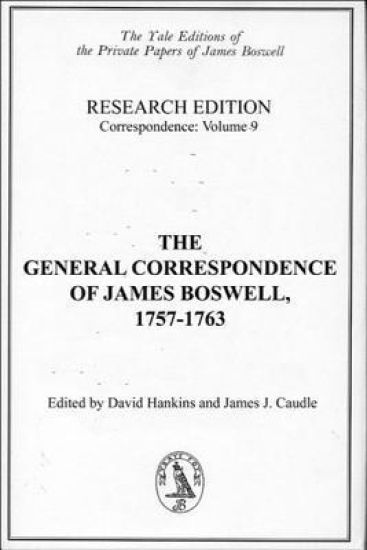
The General Correspondence of James Boswell, 17571763

The General Correspondence of James Boswell, 17571763

James Boswell

Edinburgh University Press
2006
sidottu
This volume, ninth in the Research Series of correspondence in the Yale Boswell Editions, assembles the bulk of the surviving letters between the young Boswell and his circle of friends and acquaintances in a period crucial to his personal and authorial development, up to the time he wrote his now famous journal in London in 1762-63. Opening with an exchange - rooted in his rebellious adolescent fascination with the Edinburgh theatre - with the gentleman-actor West Digges, it closes with letters written in July 1763 near the end of his second visit to London (the one in which he first met Samuel Johnson), a short time before his reluctant departure for legal study in Utrecht. The volume features centrally the correspondence between Boswell and his friend and literary collaborator Andrew Erskine (1740-93), a poet-soldier of the kind the young Boswell briefly aspired to be. Their surviving letters, printed here alongside the revised versions in the facetious Letters between the Honourable Andrew Erskine, and James Boswell, Esq., Boswell's first book-length publication, and the first to bear his name, offer revealingly early evidence of the kinds of selective self-revision Boswell would employ in his later writings and perfect in the Life of Johnson (1791). Overall, these letters document Boswell's fluid experiments in selfhood as he ponders his life's future possible trajectories - as soldier, lawyer, wit, author, bon-vivant, Scots laird, or M.P. Some thirty-five correspondents are represented in more than 150 letters and other documents (such as verse-epistles), comprehensively annotated to the long-established standards of the Yale Boswell Editions.
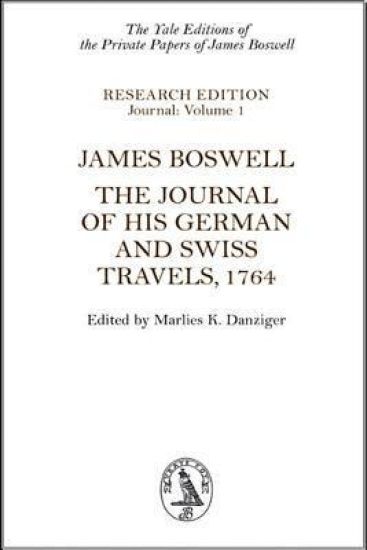
James Boswell: The Journal of His German and Swiss Travels, 1764
This volume, first in the Yale Research Series of Boswell's journals, covers his emotionally eventful youthful travels through the German and Swiss territories, from mid-June 1764 (after his law studies in Utrecht) to New Year's Day, 1765, when he crossed the Alps for the next stages of his European tour, in Italy, Corsica and France. The volume is the Research Series parallel to Boswell on the Grand Tour: Germany and Switzerland, 1764, ed. F. A. Pottle (1953), whose annotation the editor, Marlies K. Danziger, has greatly deepened, expanded, supplemented and in many cases corrected. In keeping with the editorial policies of the Research Series, it restores Boswell's original spelling, punctuation and paragraphing (and his generally less than perfect French). The editor's detailed notes illuminate the contemporary political and historical context as well as a vast array of contemporary issues, concepts and personalities no longer familiar to modern readers (especially English-speaking ones). As well as the text of the fully-written journal, the volume includes Boswell's personal daily memoranda and his frequently revealing 'Ten Lines a Day' poems; the autobiographical 'Ebauche de ma vie' written for Rousseau, along with its various drafts, outlines, and attendant correspondence; his detailed expense accounts (a window on the fluctuating currencies and erratic economy of a Europe not yet formed into our modern nation-states); and four maps, adapted from contemporary cartographic records, illustrating Boswell's complicated and often arduous itinerary. Boswell's European travels followed his exhilarating stay in London of 1762-1763 and his mostly bleak winter in the United Provinces in 1763-64. Though forever to be best known for his later accounts of his principal biographical subject, Samuel Johnson, Boswell has emerged since the recovery of his private papers as a compelling autobiographer, and here shows his fascination with, and abilities to record with typical liveliness and percipience, men and women across a strikingly diverse social range. The European journal, which Boswell had unfulfilled hopes later in life of revising and publishing in the manner of his Corsican and Hebridean diaries, records the young Scot's quest for experience in hopes of a cosmopolitan broadening, cultural enrichment, and religious and spiritual security, and conversations culminating in his deeply gratifying meetings with Rousseau and Voltaire. At the same time, it documents in close personal detail an unstable Europe rebuilding and restoring itself a little more than a year after the end of the Seven Years' War, a Europe whose quest for stability amid ominous political and religious fluctuation mirrors and parallels the diarist's own.
James Joyce

James Joyce

Lee Spinks

Edinburgh University Press
2009
sidottu
James Joyce: A Critical Guide presents a full and comprehensive account of the major writing of the great modernist novelist James Joyce. Ranging right across Joyce's literary corpus from his earliest artistic beginnings to his mature prose masterpieces Ulysses and Finnegans Wake, the book provides detailed textual analysis of each of his major works. It also provides an extended discussion of the biographical, historical, political and social contexts that inform Joyce's writing and a wide-ranging discussion of the multiple strands of Joyce criticism that have established themselves over the last eighty years. The book's combination of sustained close reading of individual texts and critical breadth makes it an ideal companion for both undergraduate students and the wider community of Joyce's readers. Key Features: *An extended discussion of Joyce's life, times and historical milieu *Detailed close readings of each of Joyce's major literary works *A thorough critical introduction to the style, plot and characterisation of Finnegans Wake *A comprehensive guide to the critical reception of Joyce's work
James Joyce

James Joyce

Lee Spinks

Edinburgh University Press
2009
nidottu
James Joyce: A Critical Guide presents a full and comprehensive account of the major writing of the great modernist novelist James Joyce. Ranging right across Joyce's literary corpus from his earliest artistic beginnings to his mature prose masterpieces Ulysses and Finnegans Wake, the book provides detailed textual analysis of each of his major works. It also provides an extended discussion of the biographical, historical, political and social contexts that inform Joyce's writing and a wide-ranging discussion of the multiple strands of Joyce criticism that have established themselves over the last eighty years. The book's combination of sustained close reading of individual texts and critical breadth makes it an ideal companion for both undergraduate students and the wider community of Joyce's readers. Key Features: *An extended discussion of Joyce's life, times and historical milieu *Detailed close readings of each of Joyce's major literary works *A thorough critical introduction to the style, plot and characterisation of Finnegans Wake *A comprehensive guide to the critical reception of Joyce's work
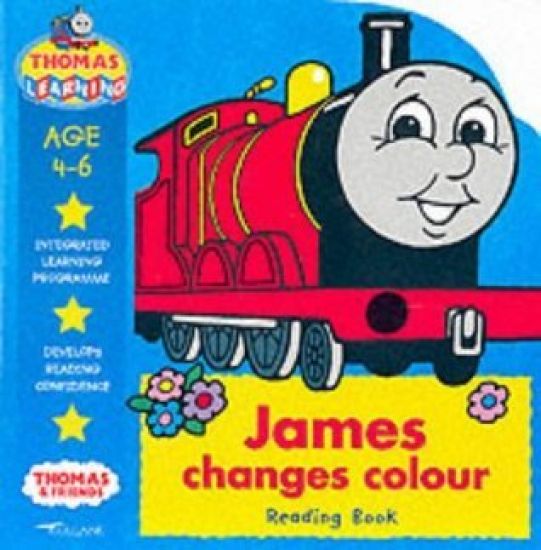
James Changes Colour

James Changes Colour

EGMONT CHILDRENS BOOKS
2002
nidottu
This exciting new Learning Programme Series has been researched and developed by Betty Root, a leading educational specialist. Thomas is a character who will immediately engage the attention of young children, and will be an important factor in helping them to learn.
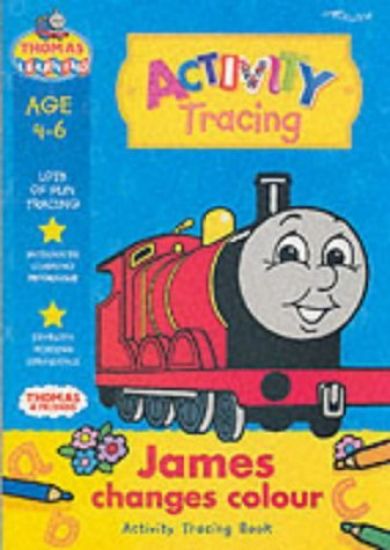
James Changes Colour

James Changes Colour

EGMONT CHILDRENS BOOKS
2002
nidottu
This exciting new Learning Programme Series has been researched and developed by Betty Root, a leading educational specialist. Thomas is a character who will immediately engage the attention of young children, and will be an important factor in helping them to learn.
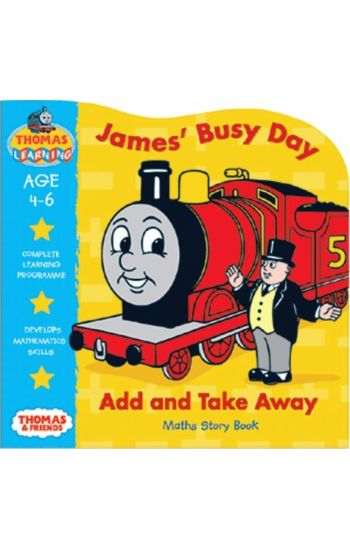
JAMES BUSY DAY, ADD AND TAKE AWAY
Covers all the basic early maths skills to build your child's confidence before school. Topics covered are an introduction to maths, number bonds to 20, shapes and sizes, adding and subtracting, and time. A fun way to encourage confidence in approaching maths.
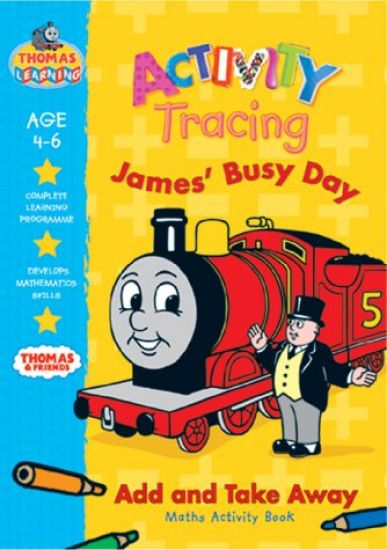
JAMES' BUSY DAY; MATHS READING BOOK

JAMES' BUSY DAY; MATHS READING BOOK

NICOLA MORGAN

EGMONT CHILDRENS BOOKS
2003
nidottu
Covers all the basic early maths skills to build your child's confidence before school. Topics covered are an introduction to maths, number bonds to 20, shapes and sizes, adding and subtracting, and time. A fun way to encourage confidence in approaching maths.
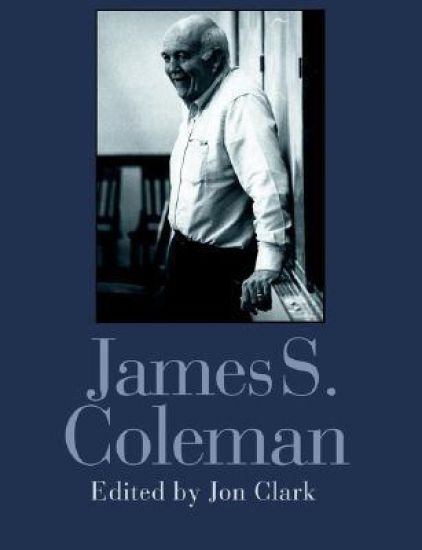
James S. Coleman

James S. Coleman

Routledge Falmer
1996
sidottu
James S. Coleman was one of a distinguished generation of sociology students who passed through the Columbia Sociology Department in the 1940s and `50s. This book critically debates his work and his contribution to society and the social sciences more generally. It consists of 18 major papers by 20 authors from six countries on a range of themes. The volume is framed by an extended editorial introduction reflecting on the five- year exchange of correspondence between James Coleman and the editor, together with two of Coleman's own works.
James S. Coleman

James S. Coleman

Routledge Falmer
1996
nidottu
James S. Coleman was one of a distinguished generation of sociology students who passed through the Columbia Sociology Department in the 1940s and `50s. This book critically debates his work and his contribution to society and the social sciences more generally. It consists of 18 major papers by 20 authors from six countries on a range of themes. The volume is framed by an extended editorial introduction reflecting on the five- year exchange of correspondence between James Coleman and the editor, together with two of Coleman's own works.
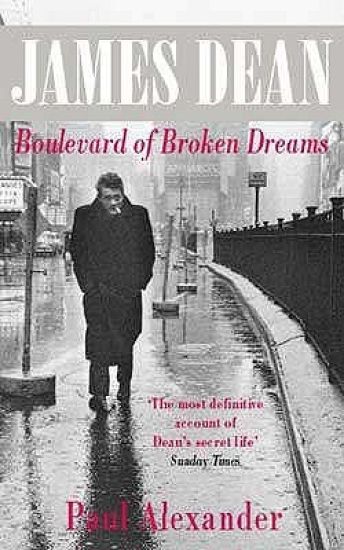
James Dean

James Dean

William Hall

The History Press Ltd
2003
nidottu
They called him America's first teenager, James Dean starred in just three films but his death in 1955 aged 24 - dying as he lived - made him an icon of the rebellious youth culture that he had symbolised in Rebel without Cause. This biography explores the myth that built up around Dean's turbulent private life and unravels the truth behind it.
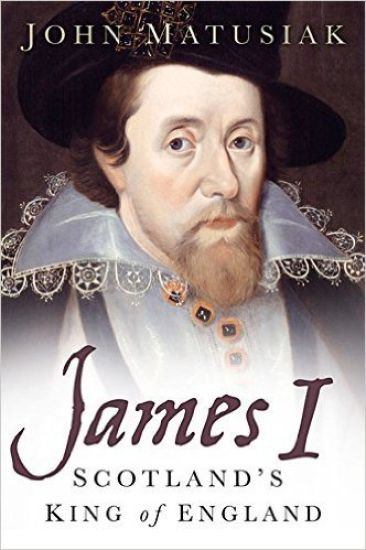
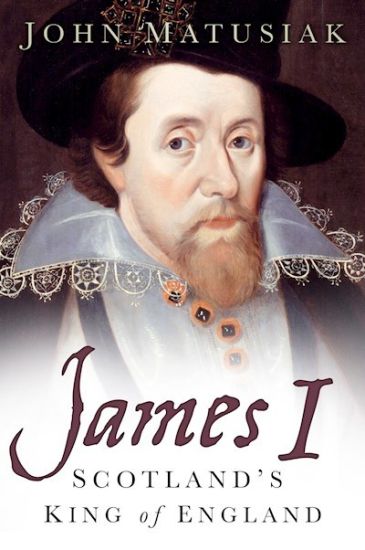
James I

James I

John Matusiak

The History Press Ltd
2015
sidottu
Few kings have been more savagely caricatured or grossly misunderstood than England’s first Stuart. Yet, as this biography demonstrates, the modern tendency to downplay his defects and minimise the long-term consequences of his reign has gone too far.In spite of genuine idealism and flashes of considerable resourcefulness, James I remains a perplexing figure – a uniquely curious ruler, shot through with glaring inconsistencies. His vices and foibles not only undermined his high hopes for healing and renewal after Elizabeth I’s troubled last years, but also entrenched political and religious tensions that eventually consumed his successor. A flawed, if well-meaning, foreigner in a rapidly changing and divided kingdom, his passionate commitment to time-honoured principles of government would, ironically, prove his undoing, as England edged unconsciously towards a crossroads and the shadow of the Thirty Years War descended upon Europe.
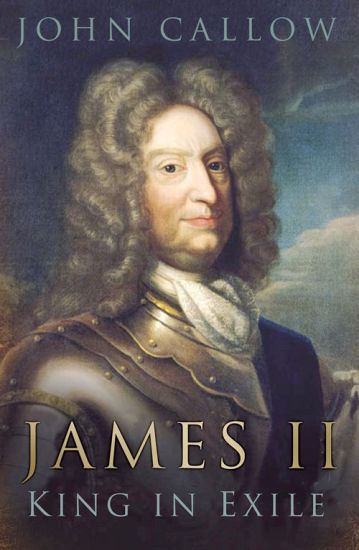
James II: King in Exile

James II: King in Exile

John Callow

The History Press Ltd
2017
nidottu
James II was Britain’s last Catholic king. The spectacular collapse of his regime in 1688 and the seizure of his throne by his nephew William of Orange are the best-known events of his reign. But what of his life after this? What became of him during his final exile? John Callow’s groundbreaking study focuses on this hitherto neglected period of his life: the twelve years he spent attempting to recover his crown through war, diplomacy, assassination and subterfuge. This is the story of the genesis of Jacobitism; of the devotion of the fallen king’s followers, who shed their blood for him at the battle of the Boyne and the massacre at Glencoe, gave up estates and riches to follow him to France, and immortalised his name in artworks, print, and song. Yet, this first ‘King Over the Water’ was far more than a figurehead. A grim, inflexible warlord and a maladroit politician, he was also a man of undeniable principle, which he pursued regardless of the cost to either himself or his subjects. He was an author of considerable talent, and a monarch capable of successive reinventions. Denied his earthly kingdoms, he finally settled upon attaining a heavenly crown and was venerated by the Jacobites as a saint. This powerful, evocative and original book will appeal to anyone interested in Stuart history, politics, culture and military studies.
James I

James I

John Matusiak

The History Press Ltd
2018
nidottu
Few kings have been more savagely caricatured or grossly misunderstood than England’s first Stuart. Yet, as this biography demonstrates, the modern tendency to downplay his defects and minimise the long-term consequences of his reign has gone too far.In spite of genuine idealism and flashes of considerable resourcefulness, James I remains a perplexing figure – a uniquely curious ruler, shot through with glaring inconsistencies. His vices and foibles not only undermined his high hopes for healing and renewal after Elizabeth I’s troubled last years, but also entrenched political and religious tensions that eventually consumed his successor. A flawed, if well-meaning, foreigner in a rapidly changing and divided kingdom, his passionate commitment to time-honoured principles of government would, ironically, prove his undoing, as England edged unconsciously towards a crossroads and the shadow of the Thirty Years War descended upon Europe.
James Brindley

James Brindley

Nick Corble

The History Press Ltd
2005
nidottu
It can be said of few men that without them the course of their nation's history would have been very different, yet through the force of his ideas and sheer bloody-mindedness, James Brindley, the first great canal builder, provided the spark that ignited the Industrial Revolution, united the nation and set Britain on course to become the world's first superpower. Born into poverty and barely literate, Brindley had a vision for the country that defied both established society and the natural order, dividing mid-eighteenth-century scientific and political opinion. Crowds flocked to marvel at this new canals and the engineering feats that accompanied them, with Brindley's inventiveness earning him the nickname 'The Schemer'.
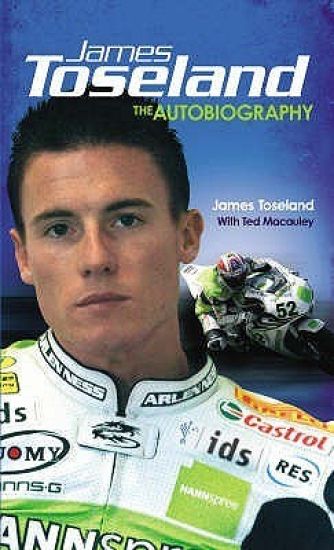
James Toseland

James Toseland

James Toseland; Ted Macauley

Virgin Books
2008
pokkari
James Toseland, youngest ever World Superbike Champion at just 23 years old, has rocketed into a league of biking legends, following in the footsteps of Carl Fogarty, Troy Bayliss and Neil Hodgson. Toseland's success has been driven by a lifetime of tragedy. Using racing as a release, he became a fearless daredevil and had moved his way up through the ranks of British Superbikes by the time he was sixteen. But there was even more turmoil to come - a career of dramatic crashes and a collision in Monza, Italy, which left James seriously injured and his Honda team-mate dead. Winning his second Superbike championship in 2007, and about to make the move to MotoGP for 2008, James' story is one of genius, tragedy and an overwhelming will to succeed.
James Hunt

James Hunt

Gerald Donaldson

Virgin Books
2009
pokkari
James Hunt was a towering personality with a commanding presence, a glamorous public figure who brought Formula One motor racing to the attention of a whole new audience. This work offers an account of his life.
James VI and I

James VI and I

Ashgate Publishing Limited
2006
sidottu
James VI and I was the first king to rule both England and Scotland. He was unique among British monarchs in his determination to communicate his ideas by means of print, pen, and spoken word. James's own work as an author is one of the themes of this volume. One essay also sheds new light on his role as a patron and protector of plays and players. A second theme is the king's response to the problems posed by religious divisions in the British Isles and Europe as a whole. Various contributors to this collection elucidate James's own religious beliefs and their expression, his efforts before 1603 to counter a potential Catholic claim to the English throne, his attempted appropriation of scripture in support of his own authority, and his distinctive vision of imperial kingship in Britain. Some different reactions to the king, to his expression of his ideas and to the implementation of his policies form this book's third theme. They include the vigorous resistance to his attempt to change Scottish religious practice, and the sharply contrasting assessments of his life and reign written after James's death.