Kirjojen hintavertailu. Mukana 11 717 486 kirjaa ja 12 kauppaa.

Kirjahaku

Etsi kirjoja tekijän nimen, kirjan nimen tai ISBN:n perusteella.

1000 tulosta hakusanalla Joel Colón-Ríos

Telling Tales

Telling Tales

Joel T. Rosenthal

Pennsylvania State University Press
2012
pokkari
One of the great challenges facing historians of any era is to make the strangeness of the past comprehensible in the present. This task is especially difficult for scholars of the Middle Ages, a period that can seem particularly alien to modern sensibilities. In Telling Tales, Joel Rosenthal takes us on a journey through some familiar sources from fourteenth- and fifteenth-century England to show how memories and recollections can be used to build a compelling portrait of daily life in the late Middle Ages. Rosenthal is a senior medievalist whose work over the years has spanned several related areas, including family history, women’s history, the life cycle, and memory and testimony. In Telling Tales, he brings all of these interests to bear on three seemingly disparate bodies of sources: the letters of Margaret Paston, depositions from a dispute between the Scropes and Grosvenors over a contested coat of arms, and Proof of Age proceedings, whereby the legal majority of an heir was established.In Rosenthal’s hands these familiar sources all speak to questions of testimony, memory, and narrative at a time when written records were just becoming widespread. In Margaret Paston, we see a woman who helped hold family and family business together as she mastered the arduous and complex task of letter writing. In the knights whose tales were elicited for the Scrope and Grosvenor case, we witness the bonding of men-at-arms in the Hundred Years War. From the Proofs of Age, we have brief tales that are rich in the give-and-take of daily life in the village—memories of baptisms, burials, a trip to market, a fall from a roof, or marriage to another juror’s sister. From a historian at the top of his craft, Telling Tales shows how medievalists can turn scraps of recollection into a synthetic story, one that enables us to recapture the strange and lost country of the European Middle Ages.
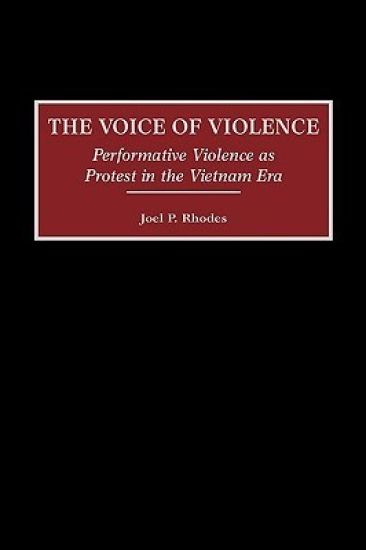
The Voice of Violence

The Voice of Violence

Joel P. Rhodes

Praeger Publishers Inc
2001
sidottu
The tide of 1960s political upheaval, while mistaken at the time by some as a unified assault against America carried out by revolutionaries at home and abroad, was actually hundreds of locally constructed expressions of political discourse, reflecting the influences of race, class, gender, and local conditions on each unique group of practitioners. This is a comparative study of how radicals at the local level staged, displayed, and ultimately narrated symbolic acts of performative violence against the symbols of the American system. The term performative violence refers to a method of public protest whereby participants create the conditions in which their violent actions become a political text, a powerful symbol with a strong historical precedent. Recognizing the textuality of history, this interdisciplinary examination deconstructs the performative violence within its historically specific and socially constructed contexts using four representative case histories of late 1960s and early 1970s activism. These are the African-American rioters in Kansas City, the Black Panther Party in Detroit, campus radicals at Kansas State University, and activists at the University of Kansas. Rather than focusing on the major clashes of the Vietnam era, this book contributes to recent scholarship on the 1960s which has attempted to offer a more textured analysis of the era's activism, particularly its political violence, based on more local studies.
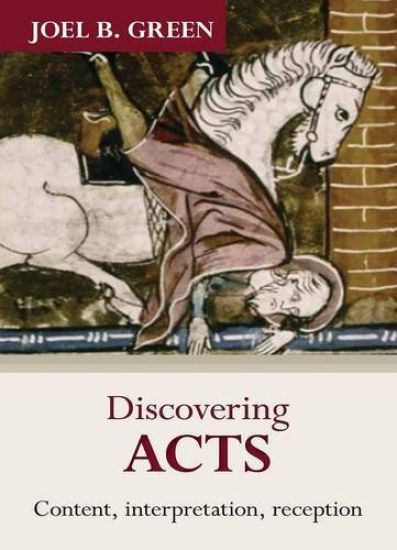
Discovering Acts

Discovering Acts

Joel B. Green

SPCK Publishing
2020
nidottu
This introduction to the interpretation of Acts encourages in-depth study of the text, and genuine grappling with the theological and historical questions raised, by providing a 'map' to the book as a whole, and to key interpreters and interpretative debates. It draws on a range of methodological approaches (author-, text- and reader-centred), as complementary rather than mutually exclusive ways of interpreting the text. In particular, it reflects the growing scholarly attention to the reception history of biblical texts, increasingly viewed as a vital aspect of interpretation rather than an optional extra.
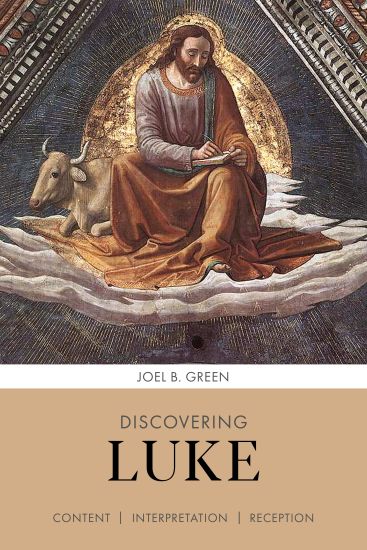
Discovering Luke

Discovering Luke

Joel B. Green

SPCK Publishing
2021
nidottu
Discovering Luke is the perfect introduction to the interpretation of Luke’s gospel. Through a critical assessment of key interpreters and interpretative debates, this is a New Testament commentary that encourages in-depth study of the text and a genuine grappling with the theological and historical questions raised. As part of the Discovering Biblical Texts series, Discovering Luke draws on a range of author-, text- and reader-centred methodological approaches as complementary rather than mutually exclusive ways of understanding the text. It also focuses on the reception history of Luke’s gospel, increasingly viewed by Biblical scholars as a vital aspect of interpretation rather than an optional extra. Discovering Luke is an ideal Bible commentary for students and those looking to dig deeper into this key book of the New Testament. You will gain a solid grasp of the structure and content of Luke’s gospel, and a thorough understanding of a wide range of interpretative approaches and theological concerns that will enhance your own reading of the text.
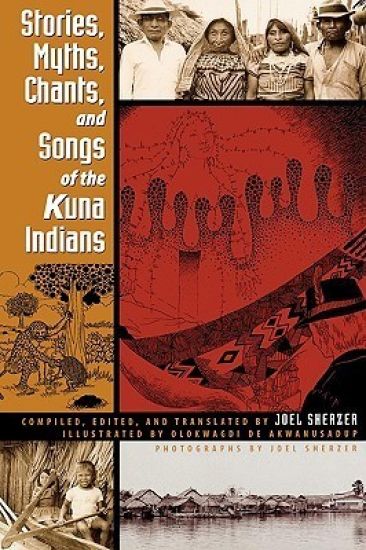
Stories, Myths, Chants, and Songs of the Kuna Indians

Stories, Myths, Chants, and Songs of the Kuna Indians

Joel Sherzer

University of Texas Press
2004
pokkari
The Kuna Indians of Panama, probably best known for molas, their colorful appliqué blouses, also have a rich literary tradition of oral stories and performances. One of the largest indigenous groups in the South American tropics, the majority of them (about 70,000) reside in Kuna Yala, a string of island and mainland villages stretching along the Caribbean coast. It is here that Joel Sherzer lived among them, photographing and recording their verbal performances, which he feels are representative of the beauty, complexity, and diversity of the oral literary traditions of the indigenous peoples of Latin America. This book is organized into three types of texts: humorous and moralistic stories; myths and magical chants; and women's songs. While quite different from one another, they share features characteristic of Kuna literature as a whole, including appreciation of their environment and a remarkable knowledge of their plants and animals; a belief in spirits as an important component of their world in curing, magic, and aesthetics; and, especially, great humor and a sense of play. Vividly illustrated by a Kuna artist and accompanied by photographs that lend a sense of being present at the performances, the texts provide readers with a unique aesthetic perspective on this rich culture while preserving an endangered and valuable indigenous oral tradition.
Danger All Around

Danger All Around

Joel B. Goldsteen

University of Texas Press
1993
pokkari
The problem of where to store waste has grabbed a lot of headlines, but people have been slow to realize that the environmental damage caused by storage sites is an even greater menace. This book makes the danger clear, as Joel Goldsteen offers the first comprehensive look at the selection and environmental impact of municipal and petrochemical waste storage sites along the Texas and Louisiana coasts.Goldsteen has distilled a large landfill-worth of data into a highly readable account of the creation and regulation of waste disposal sites, the health issues that surround them, and the human and natural factors that affect how safe or dangerous they become. Chapters that describe industrial development along the Gulf Coast and the concurrent challenges of wastewater treatment, solid waste management, and hazardous waste control are followed by in-depth descriptions of nine Texas and four Louisiana sites, all representative of problems far beyond the Texas-Louisiana coast.
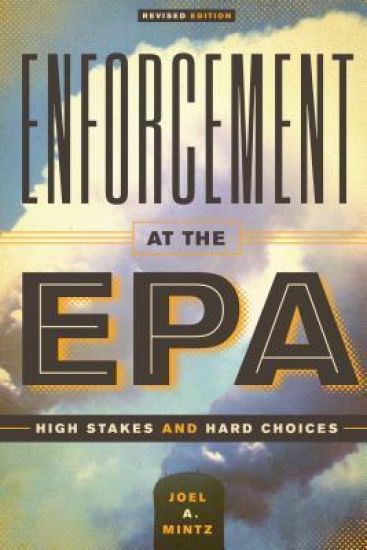
Enforcement at the EPA

Enforcement at the EPA

Joel A. Mintz

University of Texas Press
2012
nidottu
The only published work that treats the historical evolution of EPA enforcement, this book provides a candid inside glimpse of a crucial aspect of the work of an important federal agency. Based on 190 personal interviews with present and former enforcement officials at EPA, the U.S. Department of Justice, and key congressional staff members-along with extensive research among EPA documents and secondary sources-the book vividly recounts the often tumultuous history of EPA’s enforcement program. It also analyzes some important questions regarding EPA’s institutional relationships and the Agency’s working environment.This revised and updated edition adds substantial new chapters examining EPA enforcement during the Clinton and George W. Bush administrations. Its treatment of issues of civil service decline and the applicability of captive agency theory is also new and original.
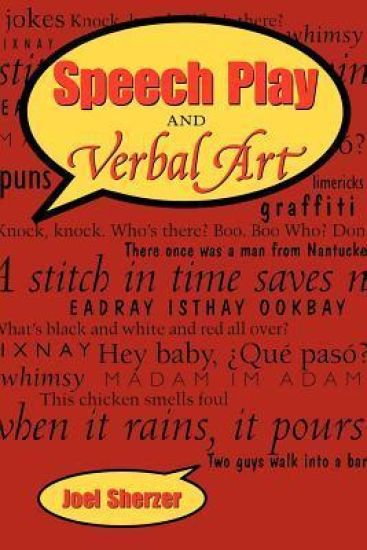
Speech Play and Verbal Art

Speech Play and Verbal Art

Joel Sherzer

University of Texas Press
2002
pokkari
Puns, jokes, proverbs, riddles, play languages, verbal dueling, parallelism, metaphor, grammatical stretching and manipulation in poetry and song- people around the world enjoy these forms of speech play and verbal artistry which form an intrinsic part of the fabric of their lives. Verbal playfulness is not a frivolous pursuit. Often indicative of people's deepest values and worldview, speech play is a significant site of intersection among language, culture, society, and individual expression.In this book, Joel Sherzer examines many kinds of speech play from places as diverse as the United States, France, Italy, Bali, and Latin America to offer the first full-scale study of speech play and verbal art. He brings together various speech-play forms and processes and shows what they have in common and how they overlap. He also demonstrates that speech play explores and indeed flirts with the boundaries of the socially, culturally, and linguistically possible and appropriate, thus making it relevant for anthropological and linguistic theory and practice, as well as for folklore and literary criticism.
The Everyday Life of the State

The Everyday Life of the State

Joel S. Migdal

University of Washington Press
2013
sidottu
Today there are more states controlling more people than at any other point in history. We live in a world shaped by the authority of the state. Yet the complexion of state authority is patchy and uneven. While it is almost always possible to trace the formal rules governing human interaction to the statute books of one state or another, in reality the words in these books often have little bearing upon what is happening on the ground. Their meanings are intentionally and unintentionally misrepresented by those who are supposed to enforce them and by those who are supposed to obey them, generating a range of competing authorities, voices, and allegiances. The Everyday Life of the State explores this "everyday" transformation of state authority into multiple scripts, narratives, and political activities. Drawing upon case studies from across the Middle East, North Africa, and Asia, the chapters in this book investigate the many ways in which those subjects traditionally regarded as being weak, passive, and obedient manage not only to resist the authority of state actors but to actively subvert and appropriate it, in the process making, unmaking, and remaking the boundaries between state and society over and over again. Collectively, these chapters make an important contribution to the expanding literature on "everyday politics."The "state in society" concept used in this volume has been developed by political scientist Joel S. Migdal, the Robert F. Philip Professor of International Studies in the University of Washington's Henry M. Jackson School of International Studies.
The Everyday Life of the State

The Everyday Life of the State

Joel S. Migdal

University of Washington Press
2013
pokkari
Today there are more states controlling more people than at any other point in history. We live in a world shaped by the authority of the state. Yet the complexion of state authority is patchy and uneven. While it is almost always possible to trace the formal rules governing human interaction to the statute books of one state or another, in reality the words in these books often have little bearing upon what is happening on the ground. Their meanings are intentionally and unintentionally misrepresented by those who are supposed to enforce them and by those who are supposed to obey them, generating a range of competing authorities, voices, and allegiances. The Everyday Life of the State explores this "everyday" transformation of state authority into multiple scripts, narratives, and political activities. Drawing upon case studies from across the Middle East, North Africa, and Asia, the chapters in this book investigate the many ways in which those subjects traditionally regarded as being weak, passive, and obedient manage not only to resist the authority of state actors but to actively subvert and appropriate it, in the process making, unmaking, and remaking the boundaries between state and society over and over again. Collectively, these chapters make an important contribution to the expanding literature on "everyday politics."The "state in society" concept used in this volume has been developed by political scientist Joel S. Migdal, the Robert F. Philip Professor of International Studies in the University of Washington's Henry M. Jackson School of International Studies.
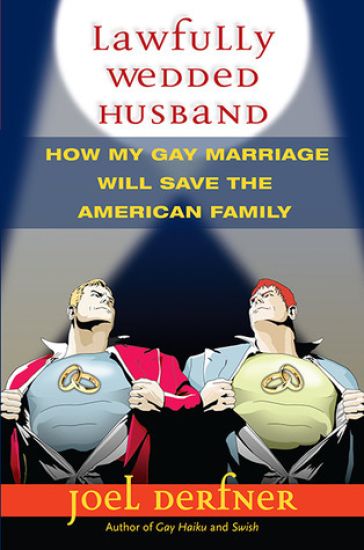
Lawfully Wedded Husband

Lawfully Wedded Husband

Joel Derfner

University of Wisconsin Press
2013
sidottu
When Joel Derfner's boyfriend proposed to him, there was nowhere in America the two could legally marry. That changed quickly, however, and before long the two were on what they expected to be a rollicking journey to married bliss. What they didn't realise was that, along the way, they would confront not just the dilemmas every couple faces on the way to the altar—what kind of ceremony would they have? what would they wear? did they have to invite Great Aunt Sophie?—but also questions about what a relationship can and can't do, the definition of marriage, and, ultimately, what makes a family.Add to the mix a reality show whose director forces them to keep signing and notarising applications for a wedding license until the cameraman gets a shot she likes; a family marriage history that includes adulterers, arms smugglers, and poisoners; and discussions of civil rights, Sophocles, racism, grammar, and homemade Ouija boards—coupled with Derfner's gift for getting in his own way—and what results is a story not just of gay marriage and the American family but of what it means to be human.
Philosophical Hermeneutics and Literary Theory

Philosophical Hermeneutics and Literary Theory

Joel Weinsheimer

Yale University Press
1991
sidottu
In this lucid and elegantly written book, Joel Weinsheimer discusses how the insights of Hans-Georg Gadamer alter our understanding of literary theory and interpretation. Weinsheimer begins by surveying modern hermeneutics from Schleiermacher to Riocoeur, showing that Gadamer’s work is situated in the middle of an ongoing dialogue. Gadamer’s hermeneutics, says Weinsheimer, is specifically philosophical for it explores how understanding occurs at all, not how it should be regulated in order to function more rigorously or effectively. According to Weinsheimer, Gadamer views understanding as an effect of history, not an action but a passion, something that happens to the interpreter. Gadamer offers a new model of historical understanding that is based on metaphor: it fuses the different into the same but, like metaphor, does not repress difference. Similarly, Gadamer’s critique of the semiotic conception of language redresses the balance between difference and sameness in the relation of word and world. The common thread in the contributions of philosophical hermeneutics to literary theory is the multifaceted tension between the one and the many, between sameness and difference. This appears in metaphor and application, in the complex dialogue between the past and present, and between the interpretation and the interpreted generally. In the final chapter of the book, “The Question of the Classic,” Weinsheimer explores the implications of this analysis of Gadamer’s hermeneutics for the current debate concerning the study of the canon and the classic.
The Poverty of Welfare Reform

The Poverty of Welfare Reform

Joel F. Handler

Yale University Press
1995
pokkari
Once again, America is getting tough on welfare. Democrats and Republicans at both the national and state levels seem to have agreed that paying public funds to the poor—particularly to single mothers and their children—perpetuates dependency and undermines self-sufficiency and the work ethic.In this book Joel Handler, a national expert on welfare, points out the fallacies in the current proposals for welfare reform, arguing that they merely recycle old remedies that have not worked. He analyzes the prejudice that has historically existed against "the undeserving poor" and shows that the stereotype of the inner-city woman of color who has children in order to stay on welfare is untrue. Most welfare mothers are in the labor market, says Handler; however, the work that is available to them is most often low-wage, part-time employment with no benefits. Efforts to move large numbers of welfare recipients to full-time employment are not likely to be successful, especially since most of the welfare programs for single mothers are at the state and local levels, and these governments are reluctant to spend the extra money needed to institute work or other reform programs. Handler suggests that national reform efforts should focus less on welfare and blaming the victim and more on increasing labor markets and reducing poverty through legislation that promotes, for example, the Earned Income Tax Credit and universal health care benefits. Welfare reform, by itself, does nothing to improve the job market, and unless there are more jobs paying more income, we will have done nothing to lessen poverty or reduce welfare.
We the Poor People

We the Poor People

Joel F. Handler; Yeheskel Hasenfeld

Yale University Press
1997
pokkari
Current welfare reforms—including recently enacted federal legislation—are largely symbolic politics, argue two experts in this important new book. According to Joel F. Handler and Yeheskel Hasenfeld, the real problem we face is not the spread of welfare but the spread of poverty among the working poor, a group that includes most welfare recipients. The surest way to solve the problem is to create jobs and supplement low-wage work. The authors offer proposals that would make it possible for individuals to support themselves and their families through working and that would establish a safety net for those relatively few individuals who are unable to do so.The authors discuss current policies, efforts, and programs designed to deal with the poor and analyze what works, what does not work, and why. Instead of income maintenance strategies, they promote policies that would facilitate leaving welfare for work—particularly in the case of single mothers. Their proposals range from creating jobs and supplementing income through the Earned Income Tax Credit (EITC) to raising the minimum wage to providing health insurance and child care support. These are not inexpensive solutions, but they must occur if we truly wish to live in a society that strives to provide opportunities for all.
Consciousness and Culture

Consciousness and Culture

Joel Porte

Yale University Press
2004
sidottu
Emerson and Thoreau are the most celebrated odd couple of nineteenth-century American literature. Appearing to play the roles of benign mentor and eager disciple, they can also be seen as bitter rivals: America’s foremost literary statesman, protective of his reputation, and an ambitious and sometimes refractory protégé. The truth, Joel Porte maintains, is that Emerson and Thoreau were complementary literary geniuses, mutually inspiring and inspired.In this book of essays, Porte focuses on Emerson and Thoreau as writers. He traces their individual achievements and their points of intersection, arguing that both men, starting from a shared belief in the importance of “self-culture,” produced a body of writing that helped move a decidedly provincial New England readership into the broader arena of international culture. It is a book that will appeal to all readers interested in the writings of Emerson and Thoreau.
Mark 1-8

Mark 1-8

Joel Marcus

Yale University Press
2002
pokkari
Although it appears second in the New Testament, Mark is generally recognized as the first Gospel to be written. Captivating nonstop narrative characterizes this earliest account of the life and teachings of Jesus. In the first installment of his two-volume commentary on Mark, New Testament scholar Joel Marcus recaptures the power of Mark’s enigmatic narrative and capitalizes on its lively pace to lead readers through familiar and not-so-familiar episodes from the ministry of Jesus. As Marcus points out, the Gospel of Mark can be understood only against the backdrop of the apocalyptic atmosphere of the Jewish rebellions of 66-73 c.e., during which the Roman army destroyed the Temple of Jerusalem (70 c.e.). While the Jewish revolutionaries believed that the war was “the beginning of the end” and that a messianic redeemer would soon appear to lead his people to victory over their human enemies (the Romans) and cosmic foes (the demons), for Mark the redeemer had already come in the person of Jesus. Paradoxically, however, Jesus had won the decisive holy-war victory when he was rejected by his own people and executed on a Roman cross. The student of two of this generation’s most respected Bible scholars and Anchor Bible authors, Raymond E. Brown and J. Louis Martyn, Marcus helps readers understand the history, social customs, economic realities, religious movements, and spiritual and personal circumstances that made Jesus who he was. The result is a Bible commentary of the quality and originality readers have come to expect of the renowned Anchor Bible series. Challenging to scholars and enlightening to laypeople, Mark 1-8 is an invaluable tool for anyone reading the Gospel story.
Mark 8-16

Mark 8-16

Joel Marcus

Yale University Press
2009
sidottu
In the final nine chapters of the Gospel of Mark, Jesus increasingly struggles with his disciples’ incomprehension of his unique concept of suffering messiahship and with the opposition of the religious leaders of his day. The Gospel recounts the events that led to Jesus’ arrest, trial, and crucifixion by the Roman authorities, concluding with an enigmatic ending in which Jesus’ resurrection is announced but not displayed. In this volume New Testament scholar Joel Marcus offers a new translation of Mark 8–16 as well as extensive commentary and notes. He situates the narrative within the context of first-century Palestine and the larger Greco-Roman world; within the political context of the Jewish revolt against the Romans (66–73 C.E.); and within the religious context of the early church’s sometimes rancorous engagement with Judaism, pagan religion, and its own internal problems. For religious scholars, pastors, and interested lay people alike, the book provides an accessible and enlightening window on the second of the canonical Gospels.
The Composition of the Pentateuch

The Composition of the Pentateuch

Joel S. Baden

Yale University Press
2012
sidottu
For well over two centuries the question of the composition of the Pentateuch has been among the most central and hotly debated issues in the field of biblical studies. In this book, Joel Baden presents a fresh and comprehensive argument for the Documentary Hypothesis. Critically engaging both older and more recent scholarship, he fundamentally revises and reorients the classical model of the formation of the Pentateuch. Interweaving historical and methodological chapters with detailed textual case studies, Baden provides a critical introduction to the history of Pentateuchal scholarship, discussions on the most pressing issues in the current debate, and a practical model for the study of the biblical text.
The Enlightened Economy: An Economic History of Britain 1700-1850
An incisive examination of the origins of the modern economy during the Industrial Revolution, from a 2025 Nobel laureate "Spirited and erudite."--Peter Marsh, Financial Times This book focuses on the importance of ideological and institutional factors in the rapid development of the British economy during the years between the Glorious Revolution and the Crystal Palace Exhibition. Joel Mokyr shows that we cannot understand the Industrial Revolution without recognizing the importance of the intellectual sea changes of Britain's Age of Enlightenment. In a vigorous discussion, Mokyr goes beyond the standard explanations that credit geographical factors, the role of markets, politics, and society to show that the beginnings of modern economic growth in Britain depended a great deal on what key players knew and believed, and how those beliefs affected their economic behavior. He argues that Britain led the rest of Europe into the Industrial Revolution because it was there that the optimal intersection of ideas, culture, institutions, and technology existed to make rapid economic growth achievable. His wide-ranging evidence covers sectors of the British economy often neglected, such as the service industries.
Storylife

Storylife

Joel P. Christensen

YALE UNIVERSITY PRESS
2025
sidottu
From Homer’s epics to mainstream news, stories have lives of their own—and humans may not always control the narratives we create Combining ancient epic and myth with analogies from biology and the natural world, Joel P. Christensen explores the creative process and how narratives develop. This bold work urges readers to treat narratives as living things with their own agency in the world. Christensen starts by using Homeric epic to explore the way language and meaning develop alongside audiences in complex ecosystems and then moves through storytelling in the ancient Mediterranean over a thousand years. In this study, which ranges from the evolution of narratives to viral ideas, and to the dangerous side of stories in mass shootings and war, we see how narratives function as independent entities with consequences that cause lasting harm. Connecting his argument to the present day, Christensen addresses contemporary cultural panics, including AI and ChatGPT, “post-truth” or alt-facts in the digital age, and free speech and cancel culture. Storylife invites readers to rethink human creativity, the importance of collective actions, and the lives we build together with and against narrative. In an age rife with misinformation, it is time to reconsider how much control we have over stories and how to educate ourselves once we acknowledge the power that narrative exerts over us.