Kirjojen hintavertailu. Mukana 12 016 292 kirjaa ja 12 kauppaa.

Kirjahaku

Etsi kirjoja tekijän nimen, kirjan nimen tai ISBN:n perusteella.

1000 tulosta hakusanalla John Class

Chronology of Western Classical Music, 1751-2000
This 2-volume reference work offers a complete chronology of classical music from the 18th-century through the end of the 20th. Organized by year, each entry gives: births of key musicians/composers, deaths, performing debuts, new positions, prizes/honors, bibliographical highlights, cultural beginnings, musical literature, and compositions. This work answers hundreds of common questions, from "Who wrote that piece?" to "When was it first performed"? A complete index is given in each volume, making finding information quick and easy. This book will strongly appeal to music students, professors, and lovers of classical music.
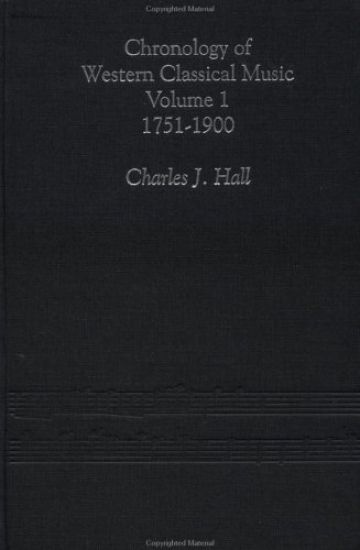
Chronology of Western Classical Music, Volume I: 1751-1900
This 2-volume reference work offers a complete chronology of classical music from the 18th-century through the end of the 20th. Organized by year, each entry gives: births of key musicians/composers, deaths, performing debuts, new positions, prizes/honors, bibliographical highlights, cultural beginnings, musical literature, and compositions. This work answers hundreds of common questions, from "Who wrote that piece?" to "When was it first performed"? A complete index is given in each volume, making finding information quick and easy. This book will strongly appeal to music students, professors, and lovers of classical music.
Chronology of Western Classical Music, Volume II: 1901-2000
This 2-volume reference work offers a complete chronology of classical music from the 18th-century through the end of the 20th. Organized by year, each entry gives: births of key musicians/composers, deaths, performing debuts, new positions, prizes/honors, bibliographical highlights, cultural beginnings, musical literature, and compositions. This work answers hundreds of common questions, from "Who wrote that piece?" to "When was it first performed"? A complete index is given in each volume, making finding information quick and easy. This book will strongly appeal to music students, professors, and lovers of classical music.
The Maximal Subgroups of the Low-Dimensional Finite Classical Groups

The Maximal Subgroups of the Low-Dimensional Finite Classical Groups

John N. Bray; Derek F. Holt; Colva M. Roney-Dougal

Cambridge University Press
2013
pokkari
This book classifies the maximal subgroups of the almost simple finite classical groups in dimension up to 12; it also describes the maximal subgroups of the almost simple finite exceptional groups with socle one of Sz(q), G2(q), 2G2(q) or 3D4(q). Theoretical and computational tools are used throughout, with downloadable Magma code provided. The exposition contains a wealth of information on the structure and action of the geometric subgroups of classical groups, but the reader will also encounter methods for analysing the structure and maximality of almost simple subgroups of almost simple groups. Additionally, this book contains detailed information on using Magma to calculate with representations over number fields and finite fields. Featured within are previously unseen results and over 80 tables describing the maximal subgroups, making this volume an essential reference for researchers. It also functions as a graduate-level textbook on finite simple groups, computational group theory and representation theory.
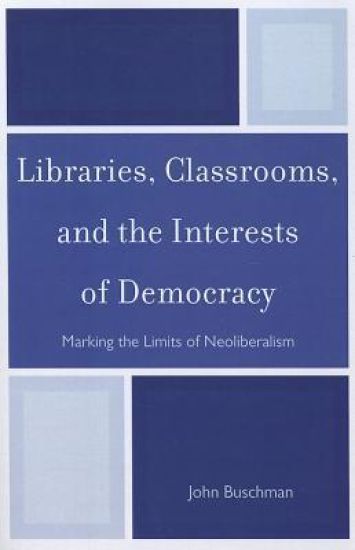
Libraries, Classrooms, and the Interests of Democracy
Library marketing and advertising in schools are now very widespread practices. Since libraries and schools have been strongly linked to economic performance, adopting marketing and advertising techniques into them is often seen as a natural extension of that linkage. But should that be the case? John Buschman argues that as we shape and guide our educative institutions, we should carefully consider the consequences. In Libraries, Classrooms, and the Interests of Democracy: Marking the Limits of Neoliberalism, Dr. Buschman details the connections between our educative institutions and democracy, and the resources within democratic theory reflecting on the tensions between marketing, advertising, consumption, and democracy. Drawing on wide scholarship to explore some of the history of democratic theory and its intertwinements with capitalism, the author helps the reader think about how democracies can deal with the challenges of this current historical phase. The complex arguments of de Tocqueville, Dewey, Marx, and many others help clarify how the market has pierced classrooms and libraries with advertising and marketing—and why this is of concern in the interests of democracy. In this volume, Buschman provides a history of marketing and advertising and their entanglements with democracy, education, and libraries. He then engages Democratic Theory and the framework it provides to critique neoliberalism’s influences. A final chapter traces the trajectory of neoliberalism and educative institutions on our democracy. Throughout, the book makes clear that issues concerning public educative institutions in a democracy are political. A provocative and engaging book, Libraries, Classrooms, and the Interests of Democracy should be required reading for anyone interested in the challenges facing libraries today.
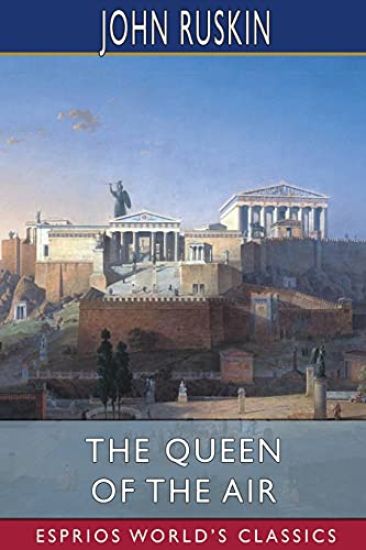
The Queen of the Air (Esprios Classics)
John Ruskin (1819-1900) was the leading English art critic of the Victorian era, as well as an art patron, draughtsman, watercolourist, philosopher, prominent social thinker and philanthropist. He wrote on subjects as varied as geology, architecture, myth, ornithology, literature, education, botany and political economy. His writing styles and literary forms were equally varied. He wrote essays and treatises, poetry and lectures, travel guides and manuals, letters and even a fairy tale. He also made detailed sketches and paintings of rocks, plants, birds, landscapes, architectural structures and ornamentation. The elaborate style that characterised his earliest writing on art gave way in time to plainer language designed to communicate his ideas more effectively. In all of his writing, he emphasised the connections between nature, art and society.
With the "Die-Hards" in Siberia (Esprios Classics)
Lieutenant-Colonel John Ward CB CMG (21 November 1866 - 19 December 1934) was an English Liberal Party politician, trade union leader and soldier. In 1889, Ward founded the Navvies, Bricklayers' Labourers and General Labourers' Union, and continued to serve as its general secretary throughout its existence. He was also a co-founder of the short-lived National Federation of Labour Union the same year. In 1901, he was elected to the management committee of the new General Federation of Trade Unions and served on it until 1929; from 1913 he was its treasurer.
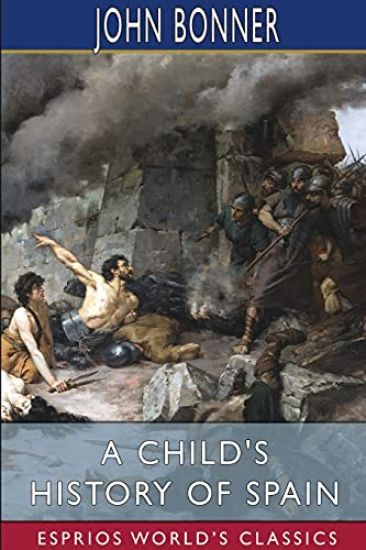
A Child's History of Spain (Esprios Classics)
"AWAY down in the south-western corner of Europe, cut off from the rest of the continent by a range of mountains six to twelve thousand feet high, is the beautiful country of Spain. It is a country of lofty and rugged mountain chains and long level plains. Some of the latter lie low, and are watered by flowing rivers; here the climate is genial and the rainfall copious, so that the fields are fat and rich; others, in the centre of the country, stand higher above the level of the sea; these have a scanty rainfall, excessive beat in summer, and extreme cold in winter, and are sometimes baked and sometimes frozen, but always dry and poor."
A Nuclear Magnetic Resonance Device for Classifying Grounded Mines
This work has been selected by scholars as being culturally important and is part of the knowledge base of civilization as we know it.This work is in the public domain in the United States of America, and possibly other nations. Within the United States, you may freely copy and distribute this work, as no entity (individual or corporate) has a copyright on the body of the work.Scholars believe, and we concur, that this work is important enough to be preserved, reproduced, and made generally available to the public. To ensure a quality reading experience, this work has been proofread and republished using a format that seamlessly blends the original graphical elements with text in an easy-to-read typeface.We appreciate your support of the preservation process, and thank you for being an important part of keeping this knowledge alive and relevant.
Corporations, Classes and Capitalism

Corporations, Classes and Capitalism

John Scott

TAYLOR FRANCIS LTD
2024
sidottu
First published in 1985, Corporations, Classes and Capitalism raises some crucial questions – how important are large multinational companies? Who really controls the economy? Is government policy able to influence business activities? John Scott examines the transformation of industrial property over the last hundred years and, through the use of extensive empirical data, relates this transformation to the actual structure of control over business decision-making. The book considers the rival theories of industrial society and capitalist society and argues that neither provides a satisfactory account of the development of industrial capitalism. Building on these theories, and the critical debates they have generated, John Scott develops an alternative model of corporate control – control through a constellation of interests. He argues that this new form of impersonal possession has emerged in Britian, America, Australia and Canada but is not so strongly developed in other economies. This book will be of interest to students of sociology, political science, and economics.
Corporations, Classes and Capitalism

Corporations, Classes and Capitalism

John Scott

TAYLOR FRANCIS LTD
2026
nidottu
First published in 1985, Corporations, Classes and Capitalism raises some crucial questions – how important are large multinational companies? Who really controls the economy? Is government policy able to influence business activities? John Scott examines the transformation of industrial property over the last hundred years and, through the use of extensive empirical data, relates this transformation to the actual structure of control over business decision-making. The book considers the rival theories of industrial society and capitalist society and argues that neither provides a satisfactory account of the development of industrial capitalism. Building on these theories, and the critical debates they have generated, John Scott develops an alternative model of corporate control – control through a constellation of interests. He argues that this new form of impersonal possession has emerged in Britian, America, Australia and Canada but is not so strongly developed in other economies. This book will be of interest to students of sociology, political science, and economics.