Kirjojen hintavertailu. Mukana 12 039 528 kirjaa ja 12 kauppaa.

Kirjahaku

Etsi kirjoja tekijän nimen, kirjan nimen tai ISBN:n perusteella.

1000 tulosta hakusanalla John F. Ince

Latin American Art

Latin American Art

John F. Scott

University Press of Florida
2000
nidottu
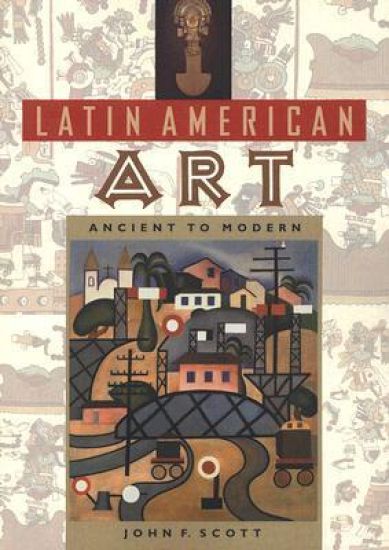
In this history of the art of Latin America, the author traces the development of art in the region from pre-Columbian times to the present. Illustrated with colour and black-and-white photographs, ""Latin American Art"" spans all geographical areas and time periods to provide a picture of artistic culture in the entire area. Linking pre-Columbian and Hispanic cultures, the book encompasses art forms ranging from sculpture, pottery and painting, to architecture and cultures from the Ice Age, Classic civilizations, Native empires, and the colonial period of American viceroyalties, to independence and the 20th century. Relating the arts to the life and politics of each age, Scott addresses the major media, styles and artists that defined each period, placing special emphasis on the areas that were the centre of high cultures and analyzing a few distinctive works from each, such as the Inca architecture at Cuzco and the great murals of Mexico.
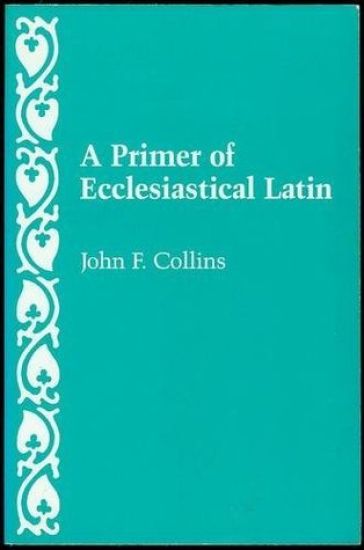
A Primer of Ecclesiastical Latin

A Primer of Ecclesiastical Latin

John F. Collins

The Catholic University of America Press
1988
nidottu
The chief aim of this primer is to give the student, within one year of study, the ability to read ecclesiastical Latin. Collins includes the Latin of Jerome's Bible, of canon law, of the liturgy and papal bulls, of scholastic philosophers, and of the Ambrosian hymns, providing a survey of texts from the fourth century through the Middle Ages. An ""Answer Key"" to this edition is now available. Please see An Answer Key to A Primer of Ecclesiastical Latin, prepared by John Dunlap.
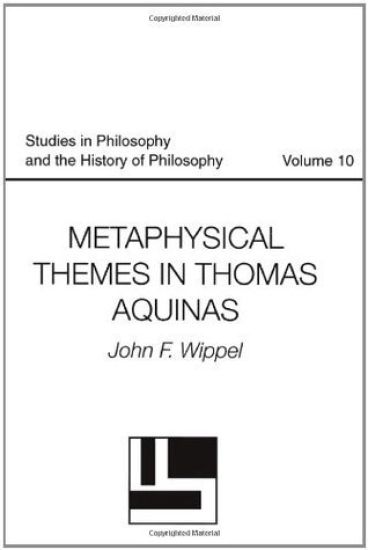
Metaphysical Themes in Thomas Aquinas

Metaphysical Themes in Thomas Aquinas

John F. Wippel

The Catholic University of America Press
1995
nidottu
In this volume, John Wippel has collected a number of his essays dealing with Aquinas's metaphysical thought. The volume begins with a presentation and critical evaluation of certain twentieth-century attempts to describe the philosophical thought of Thomas Aquinas as a "Christian philosophy." The book is then divided into two major parts, with Part I devoted to Aquinas's usage of Avicenna in explaining the interrelationship between first philosophy and the other theoretical sciences, Aquinas's different reasons for naming metaphysics "first philosophy," and his appeal to a distinctive kind of intellectual operation—separation—in order to account for our discovery of being as being, or the subject of metaphysics.The chapters in Part II are directed to Thomas's argumentation for real distinction between essence and existence in created beings both as this is presented in the De ente et essentia and in many of his other writings. Thomas's views concerning the ontological status of nonexisting possibles are examined in a following chapter, along with the positions of Henry of Ghent and Godfrey of Fontaines. Chapters are then devoted to Aquinas's positions concerning the possibility of an eternally created universe, and our capacity to arrive at quidditative knowledge of God in the present life. A final chapter concentrates on the issues of divine knowledge, divine power, and human freedom in Aquinas and in Henry of Ghent.
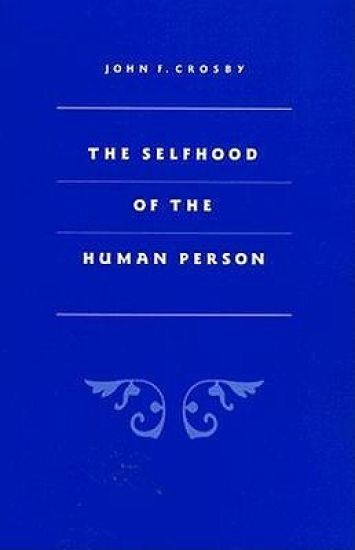
The Selfhood of the Human Person

The Selfhood of the Human Person

John F. Crosby

The Catholic University of America Press
1996
nidottu
This study attempts to explain the mystery of personal individuality or uniqueness. It sheds light on the ""incommunicability"" and unrepeatability of each human person and their ""transcendence"", giving particular attention to the transcendence achieved by persons in moral existence.
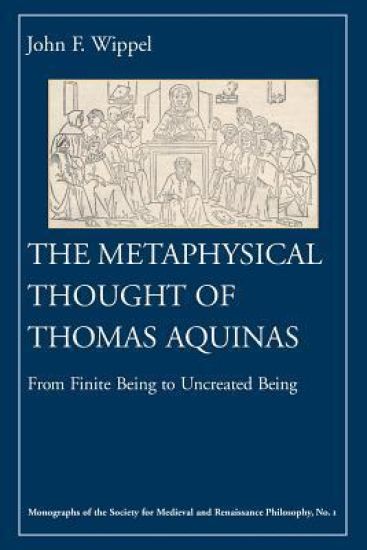
The Metaphysical Thought of Thomas Aquinas

The Metaphysical Thought of Thomas Aquinas

John F. Wippel

The Catholic University of America Press
2000
nidottu
Written by a highly respected scholar of Thomas Aquinas's writings, this volume offers a comprehensive presentation of Aquinas's metaphysical thought. It is based on a thorough examination of his texts organized according to the philosophical order as he himself describes it rather than according to the theological order.In the introduction and opening chapter, John F. Wippel examines Aquinas's view on the nature of metaphysics as a philosophical science and the relationship of its subject to divine being. Part One is devoted to his metaphysical analysis of finite being. It considers his views on the problem of the One and the Many in the order of being, and includes his debt to Parmenides in formulating this problem and his application of analogy to finite being. Subsequent chapters are devoted to participation in being, the composition of essence and esse in finite beings, and his appeal to a kind of relative nonbeing in resolving the problem of the One and the Many. Part Two concentrates on Aquinas's views on the essential structure of finite being, and treats substance-accident composition and related issues, including, among others, the relationship between the soul and its powers and unicity of substantial form. It then considers his understanding of matter-form composition of corporeal beings and their individuation. Part Three explores Aquinas's philosophical discussion of divine being, his denial that God's existence is self-evident, and his presentation of arguments for the existence of God, first in earlier writings and then in the "Five Ways" of his Summa theologiae. A separate chapter is devoted to his views on quidditative and analogical knowledge of God. The concluding chapter revisits certain issues concerning finite being under the assumption that God's existence has now been established.
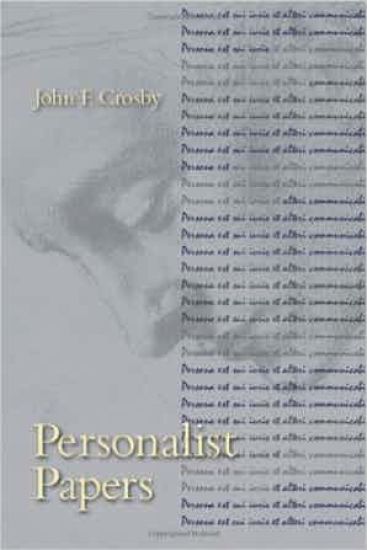
Personalist Papers

Personalist Papers

John F. Crosby

The Catholic University of America Press
2003
nidottu
This work explores the unrepeatability of persons, drawing out the worth and dignity of each individual person. It also explores interpersonal relation, giving an account of how persons can achieve empathic understanding of others, and where the limit of empathy is reached.
Aquinas and the Cry of Rachel

Aquinas and the Cry of Rachel

John F.X. Knasas

The Catholic University of America Press
2013
sidottu
In Aquinas and the Cry of Rachel, John F. X. Knasas explores Thomas Aquinas’s philosophical thinking about evil, and brings the results into discussion with the contemporary theodicies - philosophies of the problem of evil. It examines the relation of the human person and human nature to nature as a whole.Generally speaking, possible philosophical accounts for evil are two kinds: cosmological or personal. The cosmological account has evils rebounding to the perfection of creation. The personal account would have evils suffered rebounding to the good of the sufferer. Knasas argues that for Aquinas no philosophical resolution of these two kinds of accounts is possible. This argument is based upon Aquinas’s understanding of the human as an intellector of analogical being. Such an understanding establishes two truths. First, the human is by nature only a principal part of the created whole. Second, there is the philosophically discernible possibility of supernatural elevation by the creator.Hence, as far as philosophy can discern, evil may have a natural explanation or it may have a supernatural one. The Thomistic philosopher has no answer as to why evil exists because that philosopher discerns too many possible ones. In that respect, Aquinas’s thinking on evil is similar to his thinking about the philosophical knowledge of the biblical truth of the world’s creation in time. Such a creation is one metaphysical possibility among others. Some authors that Aquinas and the Cry of Rachel considers are Anthony Flew and Albert Camus, Jacques Maritain and Charles Journet, William Rowe, Marily McCord Adams, William Hasker, John Hick, David Ray Griffin, David Hume, Diogenes Allen, J. L. Mackie, Alvin Plantinga, Richard Swinburne, Bruce Reichenbach, Brian Davies, and Eleonore Stump.
Metaphysical Themes in Thomas Aquinas II

Metaphysical Themes in Thomas Aquinas II

John F. Wippel

The Catholic University of America Press
2014
nidottu
This volume contains eleven articles and book chapters written by John Wippel since the publication of his Metaphysical Themes in Thomas Aquinas in 1984. Many of them have also been published since the completion of his The Metaphysical Thought of Thomas Aquinas: From Finite Being to Uncreated Being. It is intended to serve as a complement to but not as a substitute for those volumes.The essays considered in this volume range widely over many different topics such as the possibility of a Christian philosophy from a Thomistic perspective, the Latin Avicenna as a source for Aquinas's metaphysics, truth in Thomas Aquinas (including truth in the intellect and truth of being), and Platonism and Aristotelianism in Aquinas's metaphysics. Several of them consider certain important axioms or adages used by Aquinas in developing his metaphysical thought, and still another investigates Aquinas's intention in writing his Commentary on Aristotle's Metaphysics.Others examine Aquinas's views on whether created agents can cause esse, whether divine omnipotence can be demonstrated philosophically, and whether Aquinas has successfully shown on philosophical grounds that God is free to create or whether because of his goodness he had to create. All of them are concerned in one way or another with important aspects of Aquinas's metaphysics.Wippel bases his interpretations on a close reading of Aquinas's texts, taking into account certain difficulties that arise from some of those texts, along with other current and sometimes quite divergent readings. While Wippel argues for a strong Platonic-Neoplatonic influence on Aquinas's metaphysics along with the widely recognized influence of Aristotle, he concludes that Aquinas's metaphysics cannot be reduced to any of these earlier sources but is a truly original production by Thomas himself.
Fyodor Dostoevsky, Walker Percy, and the Age of Suicide

Fyodor Dostoevsky, Walker Percy, and the Age of Suicide

John F. Desmond

The Catholic University of America Press
2019
sidottu
Fyodor Dostoevsky, Walker Percy, and the Age of Suicide is a study of the phenomenon of suicide in modern and post-modern society as represented in the major fictional works of Fyodor Dostoevsky and Walker Percy. In his study, suicide is understood in both a literal and spiritual sense as referring to both the actual suicides in their works and to the broader social malaise of spiritual suicide, or despair. In the 19th century Dostoevsky called suicide ""the terrible question of our age"". For his part, Percy understood 20th century Western culture as ""suicidal"" in both its social, political and military behavior and in the deeper sense that its citizenry had suffered an ontological ""loss of self"" or ""deformation"" of being. Likewise, Thomas Merton called the 20th century an ""age of suicide"". John Desmond examines the cultural ethos of suicide as it is developed in eleven major works of fiction?Dostoevsky's Notes from Underground, Crime and Punishment, The Idiot, Demons and The Brothers Karamazov; and Percy's The Moviegoer, The Last Gentleman, Love in the Ruins, Lancelot, The Second Coming and The Thanatos Syndrome. His study is analogical and progressive in that it demonstrates how Percy ""furthered"" Dostoevsky's prophetic insights and intuitions about suicide as they evolved in modern Western culture. It reveals how the spiritual, moral and ideological conditions that Dostoevsky analyzed in the latter 19th century came to prophetic?and dire?fulfillment in the 20th century, as Percy observed. The study develops its argument through a close analysis of themes, characters, actions and images that reveal both correspondence between and development from Dostoevsky to Percy. In the Epilogue, Desmond offers a Christian counter-vision to the suicidal ethos of the age.
Aquinas and the Cry of Rachel

Aquinas and the Cry of Rachel

John F.X. Knasas

THE CATHOLIC UNIVERSITY OF AMERICA PRESS
2021
nidottu
In Aquinas and the Cry of Rachel , John F. X. Knasas explores Thomas Aquinas's philosophical thinking about evil, and brings the results into discussion with the contemporary theodicies - philosophies of the problem of evil. It examines the relation of the human person and human nature to nature as a whole.Generally speaking, possible philosophical accounts for evil are two kinds: cosmological or personal. The cosmological account has evils rebounding to the perfection of creation. The personal account would have evils suffered rebounding to the good of the sufferer. Knasas argues that for Aquinas no philosophical resolution of these two kinds of accountsis possible. This argument is based upon Aquinas's understanding of the human as an intellector of analogical being. Such an understanding establishes two truths. First, the human is by nature only a principal part of the created whole. Second, there is the philosophically discernible possibility of supernatural elevation by the creator.Hence, as far as philosophy can discern, evil may have a natural explanation or it may have a supernatural one. The Thomistic philosopher has no answer as to why evil exists because that philosopher discerns too many possible ones. In that respect, Aquinas's thinking on evil is similar to his thinking about the philosophical knowledge of the biblicaltruth of the world's creation in time. Such a creation is one metaphysical possibility among others. Some authors that Aquinas and the Cry of Rachel considers are: Anthony Flew and Albert Camus, Jacques Maritain and Charles Journet, William Rowe, Marily McCord Adams, William Hasker, John Hick, David Ray Griffin, David Hume, Diogenes Allen, J. L. Mackie, Alvin Plantinga, Richard Swinburne, Bruce Reichenbach, Brian Davies, and Eleonore Stump.
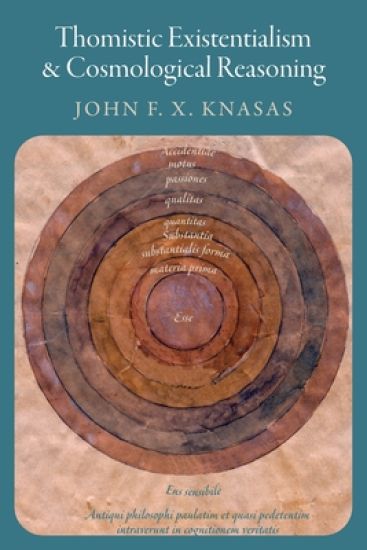
Thomistic Existentialism and Cosmological Reasoning

Thomistic Existentialism and Cosmological Reasoning

John F.X. Knasas

THE CATHOLIC UNIVERSITY OF AMERICA PRESS
2023
nidottu
Cosmological reasoning is an important facet of classical arguments for the existence of God, but these arguments have been subject to may criticisms. The thesis of this book is that Thomas Aquinas can dodge many of the classic objections brought against cosmological reasoning. These objections criticize cosmological reasoning for its use of the Principle of Sufficient Reason; its notion of existence as a predicate; its use of ontological reasoning; its reliance on sense realism; its ignoring of the problem of evil; and its susceptibility to the critique of "ontotheology" as famously put forward by Heidegger. All of these objections receive a reply, showing that Aquinas's De Ente et Essentia reasoning for God as esse tantum employs a more nuanced understanding of a thing's existence than is found in Leibniz's classic cosmological arguments.Secondly, the book proposes that the kind of reasoning found in Aquinas's De Ente can be formulated in a more robust version. Prompted by Aquinas's admissions that philosophical knowledge of God is the prerogative of metaphysics, the second main portion of the book extensively illustrates how the more robust version of the De Ente is the interpretive key for Aquinas's many arguments for God. Hence, the book should be of interest both to philosophers engaged in cosmological reasoning discussion and to Thomists interested in understanding Aquinas's viae to God.Finally, the deep purpose of the book is to reawaken interest in Thomistic Existentialism, an interpretation of Aquinas that flourished in the 1950's in the works of Etienne Gilson, Jacques Maritain, and Joseph Owens. In this interpretation, a particular thing's existence is the actuality of the thing in the sense of a distinctive actus not translatable into something else, for example, the fact of the thing or the thing having form. This book clearly explains how this interpretation looks at Thomas's metaphysics, and why it helps illuminate metaphysical realities.
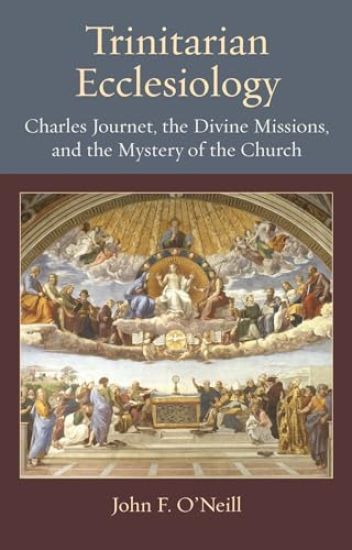
Trinitarian Ecclesiology

Trinitarian Ecclesiology

John F. O'Neill

THE CATHOLIC UNIVERSITY OF AMERICA PRESS
2024
sidottu
Venerable Fulton Sheen once famously said that ""There are not one hundred people in the United States who hate the Catholic Church, but there are millions who hate what they wrongly perceive the Catholic Church to be - which is, of course, quite a different thing."" What is the true understanding of the mystery of the Church? In Lumen Gentium, the Church famously identifies herself as the sacrament of salvation, and various attempts have been made at developing an ecclesiology rooted in this idea. Another approach, nevertheless, prominent in the opening chapter of Lumen Gentium, is the relation of the Church to the Trinity in light of the divine missions, especially those of the Incarnation and Pentecost.Trinitarian Ecclesiology is an example of this approach to the mystery of the Church that places the divine missions at the head and the heart of the work. The order of Journet's work is based on the four causes of the Church. Journet situates the treatise on the hierarchy in its proper place as belonging to the efficient cause of the Church in order to treat the more central mystery of the Church in her formal and material causes, namely the sanctifying gift of fully Christic charity and its visible manifestation.While Journet's magisterial work may already be identified as a Trinitarian Ecclesiology, recent research into the Trinitarian theology of St. Thomas Aquinas has deepened our understanding of his teaching, particularly in the way that creatures can relate to the divine persons in the divine missions. With a clearer understanding of the relation of creatures to the divine persons rooted in grace and its effects, a deeper vision of the mystery of the Church emerges, one that sees the Church as the visible mission of the Holy Spirit, inseparably joined with the visible mission of the Son in the Incarnation. The Great Mystery of Christ and the Church is the unity of the visible missions of the Son and the Spirit who have been sent into the world for our salvation.
Political Reform In Francophone Africa

Political Reform In Francophone Africa

John F Clark; David Gardinier

Westview Press Inc
1996
nidottu
Most African states experienced only a few fleeting years of democratic rule after independence before succumbing to authoritarianism. During the 1970s and 1980s, Africans and Westerners alike came to view dictatorship to be as much a part of the region’s social landscape as its grinding poverty. Yet the end of the Cold War and the sharpening of the economic crisis at the end of the 1980s have breathed new life into campaigns for democracy in Africa, shaking the foundations of many long-standing autocracies. In some cases, dramatic transitions took place, though the fate of the new democracies is far from certain. This volume explores the origins and evolution of political reform movements in several states of francophone Africa. The authors first make the case for the distinctiveness of francophone Africa, based on the influences of colonial history, language, and France’s contemporary role in Africa, then survey the challenges of reform, including the problems of transition from authoritarianism and consolidation of democratic regimes. Case studies of thirteen former French and Belgian colonies follow, organized by level of reform achieved: peaceful regime change, incremental reforms, repressed reform efforts, and reform in the midst of war.
Two Parties--or More?

Two Parties--or More?

John F Bibby

Westview Press Inc
2002
nidottu
Students of American government are faced with an enduring dilemma: Why two parties? Why has this system remained largely intact while around the world democracies support multiparty systems? Should our two-party system continue as we enter the new millennium? This newly revised and updated edition of Two Parties-Or More? answers these questions by placing the dilemma in the context of recent elections and the environment in which all parties must function. The text provides students with a historical overview of minor parties and their impact on politics. By focusing on Ross Perot's efforts in 1992 and 1996 and the difficulty the Reform party faced in 2000, Jesse Ventura's gubernatorial victory in Minnesota, and Ralph Nader's Green party campaign for the presidency in 2000, the text lays out the current dilemma regarding third parties and explores the extent and cause of the current dissatisfaction with the two major parties. The authors conclude with predictions about the future of third-party politics in the states and the nation. The text is enhanced with a glossary, discussion questions, and an appendix of important third parties in presidential elections and recent officeholders who were neither Democrats nor Republicans. The revised edition highlights the implications of recent successes (Angus King in Maine in 1994 and 1998, Ventura in Minnesota, Perot in 1992, and Nader in 2000) and failures (the Reform party in 2000 and fewer third party winners in the states) of third party efforts for the future of America's traditionally two-party system.
God After Darwin

God After Darwin

John F. Haught; John Haught

Westview Press Inc
2007
nidottu
In God After Darwin, eminent theologian John F. Haught argues that the ongoing debate between Darwinian evolutionists and Christian apologists is fundamentally misdirected: Both sides persist in focusing on an explanation of underlying design and order in the universe. Haught suggests that what is lacking in both of these competing ideologies is the notion of novelty, a necessary component of evolution and the essence of the unfolding of the divine mystery. He argues that Darwin's disturbing picture of life, instead of being hostile to religion-as scientific skeptics and many believers have thought it to be-actually provides a most fertile setting for mature reflection on the idea of God. Solidly grounded in scholarship, Haught's explanation of the relationship between theology and evolution is both accessible and engaging. The second edition of God After Darwin features an entirely new chapter on the ongoing, controversial debate between intelligent design and evolution, including an assessment of Haught's experience as an expert witness in the landmark case of Kitzmiller v. Dover Area School District on teaching evolution and intelligent design in schools.
Desolate Landscapes

Desolate Landscapes

John F. Hoffecker

Rutgers University Press
2002
nidottu
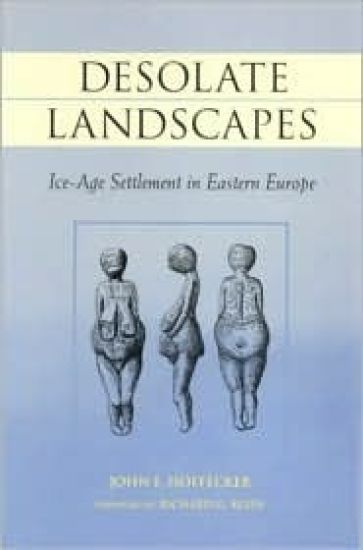
Ice-Age Eastern Europe was an inhospitable place, isolated from the moderating influence of oceans. Unlike Western Europe, which was settled over half a million years ago, Eastern Europe remained largely unoccupied until the appearance of the cold-adapted Neanderthals. When modern humans arrived from southern latitudes, they were anatomically less suited to colder climates, but successfully colonized Eastern Europe with the aid of innovative technologies that their Neanderthal predecessors lacked. John F. Hoffecker provides an overview of Pleistocene or Ice-Age settlement in Eastern Europe with a heavy focus on the adaptations of Neanderthals and modern humans to this harsh environmental setting. Hoffecker argues that the Eastern European record reveals a stark contrast between Neanderthals and modern humans with respect to technology and social organization, both of which are tied to the development of language and the use of symbols. Desolate Landscapes will bring readers up to date with the rich archaeological record in this significant region and its contribution to our understanding of one of our most important events in human evolution - the rise of modern humans and the extinction of the Neanderthals. The book is divided into seven chapters. The first discusses general anthropological principles and theories pertaining to human adaptation and development in cold environments. The second outlines the environmental conditions of the specific area under study in the book. The next two chapters focus on Neanderthal finds in the area. The following two chapters discuss the replacement of the local Neanderthal population by the Cro-magnons, and the development of their way of life in the cold Loess Steppe environment. The final chapter summarizes the discussion and is followed by an extremely valuable and extensive bibliography, more than half of which consists of non-English (primarily Russian) sources.
A Prehistory of the North

A Prehistory of the North

John F. Hoffecker

Rutgers University Press
2004
nidottu
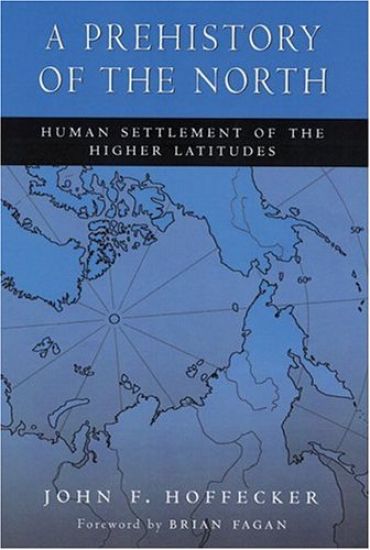
Early humans did not simply drift northward from their African origins as their abilities to cope with cooler climates evolved. The initial settlement of places like Europe and northern Asia, as well as the later movement into the Arctic and the Americas, actually occurred in relatively rapid bursts of expansion. A Prehistory of the North is the first full-length study to tell the complex story, spanning almost two million years, of how humans inhabited some of the coldest places on earth.In an account rich with illustrations, John Hoffecker traces the history of anatomical adaptations, diet modifications, and technological developments, such as clothing and shelter, which allowed humans the continued ability to push the boundaries of their habitation. The book concludes by showing how in the last few thousand years, peoples living in the circumpolar zone—with the exception of western and central Siberia—developed a thriving maritime economy.Written in nontechnical language, A Prehistory of the North provides compelling new insights and valuable information for professionals and students.
The Fusarium Laboratory Manual

The Fusarium Laboratory Manual

John F. Leslie; Brett A. Summerell

Iowa State University Press
2006
kierre
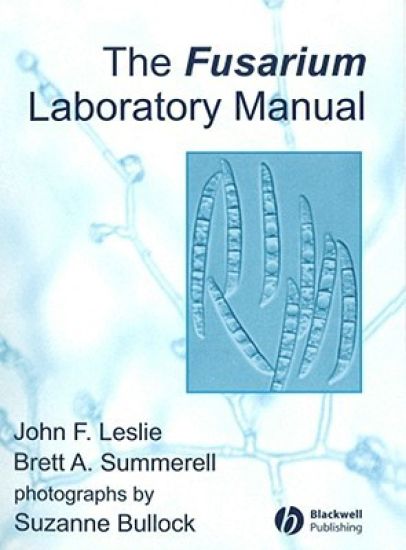
For the first time in over 20 years, a comprehensive collection of photographs and descriptions of species in the fungal genus Fusarium is available. This laboratory manual provides an overview of the biology of Fusarium and the techniques involved in the isolation, identification and characterization of individual species and the populations in which they occur. It is the first time that genetic, morphological and molecular approaches have been incorporated into a volume devoted to Fusarium identification. The authors include descriptions of species, both new and old, and provide protocols for genetic, morphological and molecular identification techniques. The Fusarium Laboratory Manual also includes some of the evolutionary biology and population genetics thinking that has begun to inform the understanding of agriculturally important fungal pathogens. In addition to practical “how-to” protocols it also provides guidance in formulating questions and obtaining answers about this very important group of fungi. The need for as many different techniques as possible to be used in the identification and characterization process has never been greater. These approaches have applications to fungi other than those in the genus Fusarium. This volume presents an introduction to the genus Fusarium, the toxins these fungi produce and the diseases they can cause. "The Fusarium Laboratory Manual is a milestone in the study of the genus Fusarium and will help bridge the gap between morphological and phylogenetic taxonomy. It will be used by everybody dealing with Fusarium in the Third Millenium."--W.F.O. Marasas, Medical Research Council, South Africa
Students to Soldiers

Students to Soldiers

John F. Morris

UNIVERSITY OF VIRGINIA PRESS
2025
sidottu
An expansive study of the brutal rites of initiation at elite institutions that shaped young men into military leaders Informed by his own experience as a cadet at West Point, John Morris offers the first transnational history of student life at elite military preparatory institutions in Europe and America and the unofficial, underground rituals, practices, and codes that formed a crucial part of the education there. Comparing British public schools, the monarchical cadet schools in Imperial Germany, Austria, and Russia, and the US Military Academy over the course of the nineteenth and into the twentieth century and the world wars, Morris presents critical insights on the unsanctioned methods employed to transform young students into leaders of men. Extracurricular traditions—including but not limited to severe hazing—Morris argues, shaped the officers-in-training much more than their official courses of study. He also shows how romantic and sexual relations between boys facilitated the cultivation of hypermasculinity at these institutions. Students to Soldiers offers a fascinating glimpse into the lives of the budding military elites of Europe and America, both unpacking the arcane rituals that eventually became codified into honored traditions and analyzing their influence over the long term.
Students to Soldiers

Students to Soldiers

John F. Morris

UNIVERSITY OF VIRGINIA PRESS
2025
pokkari
An expansive study of the brutal rites of initiation at elite institutions that shaped young men into military leaders Informed by his own experience as a cadet at West Point, John Morris offers the first transnational history of student life at elite military preparatory institutions in Europe and America and the unofficial, underground rituals, practices, and codes that formed a crucial part of the education there. Comparing British public schools, the monarchical cadet schools in Imperial Germany, Austria, and Russia, and the US Military Academy over the course of the nineteenth and into the twentieth century and the world wars, Morris presents critical insights on the unsanctioned methods employed to transform young students into leaders of men. Extracurricular traditions—including but not limited to severe hazing—Morris argues, shaped the officers-in-training much more than their official courses of study. He also shows how romantic and sexual relations between boys facilitated the cultivation of hypermasculinity at these institutions. Students to Soldiers offers a fascinating glimpse into the lives of the budding military elites of Europe and America, both unpacking the arcane rituals that eventually became codified into honored traditions and analyzing their influence over the long term.