Kirjojen hintavertailu. Mukana 12 016 292 kirjaa ja 12 kauppaa.

Kirjahaku

Etsi kirjoja tekijän nimen, kirjan nimen tai ISBN:n perusteella.

1000 tulosta hakusanalla John Kitchen

John of Damascus

John of Damascus

Vassa Kontouma

Routledge
2020
nidottu
For more than five hundred years the life and work of John of Damascus (c. 655-c.745) have been the subject of a very extensive literature, scholarly and popular, in which it is often difficult to get one’s bearings. Through the studies included here (of which 6 appear in a translation into English made specially for this volume), Vassa Kontouma provides a critical review of this literature and attempts to answer several open questions: the author and date of composition of the official Life of John, the philosophical significance of the Dialectica (a study which has its first publication here), the original structure of the Exposition of the Orthodox faith, the identity of ps.-Cyril, the authenticity of the Letter on Great Lent, and questions of Mariology. She also opens new vistas for research along four main lines: the life of John of Damascus and its sources, Neochalcedonian philosophy, systematic theology in Byzantium, and Christian practices under the Umayyads.
John Rawls and Environmental Justice

John Rawls and Environmental Justice

John Töns

TAYLOR FRANCIS LTD
2021
sidottu
Using the principles of John Rawls’ theory of justice, this book offers an alternative political vision, one which describes a mode of governance that will enable communities to implement a sustainable and socially just future.Rawls described a theory of justice that not only describes the sort of society in which anyone would like to live but that any society can create a society based on just institutions. While philosophers have demonstrated that Rawls’s theory can provide a framework for the discussion of questions of environmental justice, the problem for many philosophical theories is that discussions of sustainable development open the need to address questions of ecological interdependence, historical inequality in past resource use and the recognition that we cannot afford to ignore the limitations of growth. These ideas do not fit in comfortably in standard discourse about theories of justice. In contrast, this book frames the discussion of global justice in terms of environmental sustainability. The author argues that these ideas can be used to develop a coherent political theory that reconciles cosmopolitan arguments and the non-cosmopolitan or nationalist arguments concerning social and environmental justice.This book will be of great interest to students and scholars of environmental philosophy and ethics, moral and political philosophy, global studies and sustainable development.
John Rawls and Environmental Justice

John Rawls and Environmental Justice

John Töns

TAYLOR FRANCIS LTD
2023
nidottu
Using the principles of John Rawls’ theory of justice, this book offers an alternative political vision, one which describes a mode of governance that will enable communities to implement a sustainable and socially just future.Rawls described a theory of justice that not only describes the sort of society in which anyone would like to live but that any society can create a society based on just institutions. While philosophers have demonstrated that Rawls’s theory can provide a framework for the discussion of questions of environmental justice, the problem for many philosophical theories is that discussions of sustainable development open the need to address questions of ecological interdependence, historical inequality in past resource use and the recognition that we cannot afford to ignore the limitations of growth. These ideas do not fit in comfortably in standard discourse about theories of justice. In contrast, this book frames the discussion of global justice in terms of environmental sustainability. The author argues that these ideas can be used to develop a coherent political theory that reconciles cosmopolitan arguments and the non-cosmopolitan or nationalist arguments concerning social and environmental justice.This book will be of great interest to students and scholars of environmental philosophy and ethics, moral and political philosophy, global studies and sustainable development.
John Wallis: Writings on Music

John Wallis: Writings on Music

Benjamin Wardhaugh

Routledge
2020
nidottu
John Wallis (1616-1703), was one of the foremost British mathematicians of the seventeenth century, and is also remembered for his important writings on grammar and logic. An interest in music theory led him to produce translations into Latin of three ancient Greek texts - those of Ptolemy, Porphyry and Bryennius - and involved him in discussions with Henry Oldenburg, the Secretary of the Royal Society, Thomas Salmon and other individuals as his ideas developed. The texts presented in this volume cover the relationship of ancient and modern tuning theory, the building of organs, the phenomena of resonance, and other musical topics.
John Rawls and the Common Good
The chapters in this book analyze the relationship between core concepts of the common good and the work of American political philosopher John Rawls.One of the main criticisms that has been made of Rawls is his supposed neglect of central aspects of collective life. The contributors to this book explore the possibility of a substantive and community-oriented interpretation of Rawls’s thought. The chapters investigate Rawls’s views on values such as community, faith, fraternity, friendship, gender equality, love, political liberty, reciprocity, respect, sense of justice, and virtue. They demonstrate that Rawls finds a balance between certain individualistic aspects of his theory of justice and the value of community. In doing so, the book offers insightful new readings of Rawls.John Rawls and the Common Good will be of interest to scholars and advanced students working in political, moral, and legal philosophy.
John Rawls and the Common Good
The chapters in this book analyze the relationship between core concepts of the common good and the work of American political philosopher John Rawls.One of the main criticisms that has been made of Rawls is his supposed neglect of central aspects of collective life. The contributors to this book explore the possibility of a substantive and community-oriented interpretation of Rawls’s thought. The chapters investigate Rawls’s views on values such as community, faith, fraternity, friendship, gender equality, love, political liberty, reciprocity, respect, sense of justice, and virtue. They demonstrate that Rawls finds a balance between certain individualistic aspects of his theory of justice and the value of community. In doing so, the book offers insightful new readings of Rawls.John Rawls and the Common Good will be of interest to scholars and advanced students working in political, moral, and legal philosophy.
John the Baptist as a Rewritten Figure in Luke-Acts

John the Baptist as a Rewritten Figure in Luke-Acts

Christina Michelsen Chauchot

TAYLOR FRANCIS LTD
2024
nidottu
John the Baptist as a Rewritten Figure in Luke-Acts compares the Gospel of Luke’s account of John’s ministry with those of Matthew, Mark, and John to make the case for the hypertextual relationship between the synoptic gospels.The book is divided into three parts. Part I situates the Gospel of Luke within the broader context of biblical rewritings and makes the general case that a rewriting strategy can be detected in Luke, while Parts II and III combined offer a more detailed and specific argument for Luke’s refiguring of the public ministry of John the Baptist through the use of omitted, new, adapted, and reserved material. While the "two source hypothesis" typically presupposes the independence of Luke and Matthew in their rewritings of Mark and Q, Chauchot argues that Luke was heavily reliant on Matthew as suggested by the "L/M hypothesis". Approaching the Baptist figure in the synoptic gospels from a literary-critical perspective, Chauchot examines "test cases" of detailed comparative analysis between them to argue that the Gospel of Luke makes thematic changes upon John the Baptist and is best characterized as a highly creative reshaping of Matthew and Mark.Making a contribution to current research in the field of New Testament exegesis, the book is key reading for students, scholars, and clergy interested in New Testament hermeneutics and Gospel writing.
John Williams: Changing the Culture of the Classical Guitar
This book assesses the influence and reception of many different forms of guitar playing upon the classical guitar and more specifically through the prism of John Williams. Beginning with an examination of Andrés Segovia and his influence upon Williams’ life’s work, a further three incisive chapters cover key areas such as performance, perception, education and construction, considering social and cultural contexts of the guitar over the past century. A final chapter on new directions in classical guitar examines the change in reception of the instrument from the mid-1970s to the present day, and Williams’ impact upon what might be termed ‘standard classical guitar repertoire’.With in-depth discussion of the cultural and perceptual impact of Williams’ more daring crossover projects and numerous musical examples, this is an informative reference for all classical guitar practitioners, as well as scholars and researchers of guitar studies, reception studies, cultural musicology and performance studies. An online lecture by the author and a transcript of the author’s interview with John Williams are also available as e-resources.
John Locke and the Bank of England

John Locke and the Bank of England

Claude Roche

TAYLOR FRANCIS LTD
2023
nidottu
John Locke was one of the first shareholders of the Bank of England and participated in parliamentary debates surrounding its creation. He had a key role in the monetary reform of 1696. This book examines Locke’s thought in relation to credit, banking regulation, the monetary and financial system, the gold standard and the principles of Natural Right. It also establishes a link between Locke’s economic and financial ideas and his political philosophy.John Locke and the Bank of England will be of interest to advanced students and researchers of central banking, financial history, the history of economic thought and political economy.
John Dowland

John Dowland

K. Dawn Grapes

Routledge
2021
nidottu
John Dowland: A Research and Information Guide offers the first comprehensive guide to the musical works and literature on one of the major composers of the English Renaissance. Including a catalog of works, discography of recordings, extensive annotated bibliography of secondary sources, and substantial indexes, this volume is a major reference tool for all those interested in Dowland's works and place in music history, and a valuable resource for researchers of Renaissance and English music.
John Locke and the Bank of England
John Locke was one of the first shareholders of the Bank of England and participated in parliamentary debates surrounding its creation. He had a key role in the monetary reform of 1696. This book examines Locke’s thought in relation to credit, banking regulation, the monetary and financial system, the gold standard and the principles of Natural Right. It also establishes a link between Locke’s economic and financial ideas and his political philosophy.John Locke and the Bank of England will be of interest to advanced students and researchers of central banking, financial history, the history of economic thought and political economy.
John Cage

John Cage

Sara Haefeli

Routledge
2019
nidottu
This annotated bibliography uncovers the wealth of resources available on the life and music of John Cage, one of the most influential and fascinating composers of the twentieth-century. The guide will focus on documentary studies, archival resources, scholarly research, and autobiographical materials, and place the composer and his work in a larger context of postmodern philosophy, art and theater movements, and contemporary politics. It will support emerging scholarship and inquiry for future research on Cage, with carefully selected sources and useful annotations.
John II Komnenos, Emperor of Byzantium
The Emperor John II Komnenos (1118–1143) has been overshadowed by both his father Alexios I and his son Manuel I. Written sources have not left us much evidence regarding his reign, although authors agree that he was an excellent emperor. However, the period witnessed territorial expansion in Asia Minor as well as the construction of the most important monastic complex of twelfth-century Constantinople. What else do we know about John’s rule and its period? This volume opens up new perspectives on John’s reign and clearly demonstrates that many innovations generally attributed to the genius of Manuel Komnenos had already been fostered during the reign of the second great Komnenos. Leading experts on twelfth-century Byzantium (Jeffreys, Magdalino, Ousterhout) are joined by representatives of a new generation of Byzantinists to produce a timely and invaluable study of the unjustly neglected figure of John Komnenos.
John Bunyan?s Imaginary Writings in Context
Within the last half-century, early scholarly approaches and analysis of John Bunyan’s Pilgrim’s Progress have seen siginificant advances in mandating and enabling a more contextualized view of Bunyan’s oeuvre. Utilizing this fresh examination of context, John Bunyan’s Imaginary Writings in Context explores Bunyan’s writings in a double context: his fictional works vis-à-vis his own non-fictional writings, and his fictional writings in the context of written materials by other authors – books, tracts, spiritual biographies, and poems available to Bunyan. This volumepresents these recent developments by blurring the boundaries between fiction and non-fiction, between literature and history, and in the case of Bunyan, between imaginative literatures in fiction and theological writing. Moreover, this book aims to delineate the imaginary world underlying Bunyan’s fictional writings by viewing Bunyan’s own fictional works in tandem with his non-fiction writings. Simultaneously it situates aspects of Bunyan’s fiction in the context of writings available to him, whether these be Holy Scripture, religious tracts by other authors, or ballads and short texts current in the wider culture of the time.
John Owen and the Civil War Apocalypse

John Owen and the Civil War Apocalypse

Martyn Calvin Cowan

Routledge
2019
nidottu
John Owen was one of the most significant figures in Reformed Orthodox theology during the Seventeenth Century, exerting considerable religious and political influence in the context of the British Civil War and Interregnum. Using Owen’s sermons from this period as a window into the mind of a self-proclaimed prophet, this book studies how his apocalyptic interpretation of contemporary events led to him making public calls for radical political and cultural change.Owen believed he was ministering at a unique moment in history, and so the historical context in which he writes must be equally considered alongside the theological lineage that he draws upon. Combining these elements, this book allows for a more nuanced interpretation of Owen’s ministry that encompasses his lofty spiritual thought as well as his passionate concerns with more corporeal events.This book represents part of a new historical turn in Owen Studies and will be of significant interest to scholars of theological history as well as Early Modern historians.
John Wesley and the Education of Children
Scholars have historically associated John Wesley’s educational endeavours with the boarding school he established at Kingswood, near Bristol, in 1746. However, his educational endeavours extended well beyond that single institution, even to non-Methodist educational programmes. This book sets out Wesley’s thinking and practice concerning child-rearing and education, particularly in relation to gender and class, in its broader eighteenth-century social and cultural context.Drawing on writings from Churchmen, Dissenters, economists, philosophers and reformers as well as educationalists, this study demonstrates that the political, religious and ideological backdrop to Wesley’s work was neither static nor consistent. It also highlights Wesley’s eighteenth-century fellow Evangelicals including Lady Huntingdon, John Fletcher, Hannah More and Robert Raikes to demonstrate whether Wesley’s thinking and practice around schooling was in any way unique. This study sheds light on how Wesley’s attitudes to education were influencing and influenced by the society in which he lived and worked. As such, it will be of great interest to academics with an interest in Methodism, education and eighteenth-century attitudes towards gender and class.
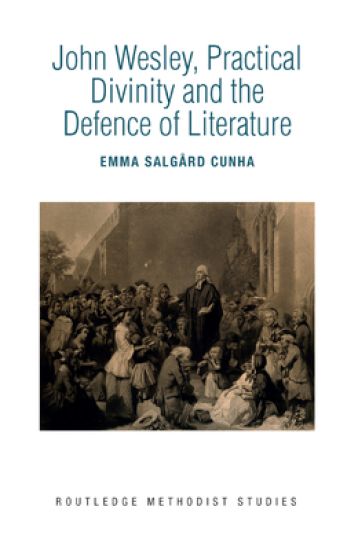
John Wesley, Practical Divinity and the Defence of Literature
John Wesley (1703–1791), leader of British Methodism, was one of the most prolific literary figures of the eighteenth century, responsible for creating and disseminating a massive corpus of religious literature and for instigating a sophisticated programme of reading, writing and publishing within his Methodist Societies. John Wesley, Practical Divinity and the Defence of Literature takes the influential genre of practical divinity as a framework for understanding Wesley’s role as an author, editor and critic of popular religious writing. It asks why he advocated the literary arts as a valid aspect of his evangelical theology, and how his Christian poetics impacted upon the religious experience of his followers.
John Stearne’s Confirmation and Discovery of Witchcraft
Between 1645-7, John Stearne led the most significant outbreak of witch-hunting in England. As accusations of witchcraft spread across East Anglia, Stearne and Matthew Hopkins were enlisted by villagers to identify and eradicate witches. After the trials finally subsided in 1648, Stearne wrote his only publication, A confirmation and discovery of witchcraft, but it had a limited readership. Consequently, Stearne and his work fell into obscurity until the 1800s, and were greatly overshadowed by Hopkins and his text. This book is the first study which analyses Stearne’s publication and contextualises his ideas within early modern intellectual cultures of religion, demonology, gender, science, and print in order to better understand the witch-finder’s beliefs and motives. The book argues that Stearne was a key player in the trials, that he was not a mainstream ‘puritan’, and that his witch-finding availed from contemporary science. It traces A confirmation’s reception history from 1648 to modern day and argues that the lack of research focusing on Stearne has resulted in misrepresentations of the witch-finder in the historiography of witchcraft. This book redresses the imbalance and seeks to provide an alternative reading of the East Anglian witch-hunt and of England’s premier witch-hunter, John Stearne.
The John McPhee Reader

The John McPhee Reader

John McPhee

Farrar, Straus and Giroux
1982
nidottu
The John McPhee Reader, first published in 1976, is comprised of selections from the author's first twelve books. In 1965, John McPhee published his first book, A Sense of Where You Are; a decade later, he had published eleven others. His fertility, his precision and grace as a stylist, his wit and uncanny brilliance in choosing subject matter, his crack storytelling skills have made him into one of our best writers: a journalist whom L.E. Sissman ranked with Liebling and Mencken, who Geoffrey Wolff said "is bringing his work to levels that have no measurable limit," who has been called "a master craftsman" so many times that it is pointless to number them.
Carsick: John Waters Hitchhikes Across America

Carsick: John Waters Hitchhikes Across America

John Waters

Farrar, Straus and Giroux
2015
nidottu
Carsick is the New York Times bestselling chronicle of a cross-country hitchhiking journey with America's most beloved weirdo. John Waters is putting his life on the line. Armed with wit, a pencil-thin mustache, and a cardboard sign that reads "I'm Not Psycho," he hitchhikes across America from Baltimore to San Francisco, braving lonely roads and treacherous drivers. But who should we be more worried about, the delicate film director with genteel manners or the unsuspecting travelers transporting the Pope of Trash? Before he leaves for this bizarre adventure, Waters fantasizes about the best and worst possible scenarios: a friendly drug dealer hands over piles of cash to finance films with no questions asked, a demolition-derby driver makes a filthy sexual request in the middle of a race, a gun-toting drunk terrorizes and holds him hostage, and a Kansas vice squad entraps and throws him in jail. So what really happens when this cult legend sticks out his thumb and faces the open road? His real-life rides include a gentle eighty-one-year-old farmer who is convinced Waters is a hobo, an indie band on tour, and the perverse filmmaker's unexpected hero: a young, sandy-haired Republican in a Corvette. Laced with subversive humor and warm intelligence, Carsick is an unforgettable vacation with a wickedly funny companion--and a celebration of America's weird, astonishing, and generous citizenry.