Kirjojen hintavertailu. Mukana 11 577 477 kirjaa ja 12 kauppaa.

Kirjahaku

Etsi kirjoja tekijän nimen, kirjan nimen tai ISBN:n perusteella.

1000 tulosta hakusanalla John Utgaard; Thomas Gregory Perry

John Calvin

John Calvin

Michael Mullett

Routledge
2011
sidottu
John Calvin (1509-1564) is one of the most important figures in religious history. Sitting on the cusp of the medieval and early modern world, he was centre stage during the Reformation. In this new biography, Michael Mullett introduces us to this most important figure, tying his life together with that of Martin Luther, but also valuing his individual contribution and influence.From what Calvin himself described as ‘humble beginnings’, he became one of the most influential theologians of the Protestant Reformation. The influence of his teachings and the development of Christian theology into what was to become known as Calvinism, swept across Europe, reinforcing the Reformation’s radical break from the Catholic Church. John Calvin was ‘a mighty and formidable man, able to achieve the vast amount he did because of his unbending conviction of his rightness’.Michael Mullett explores the significant influences on Calvin and his work, and the relationships that he formed along his reforming path. Looking not only at the impact of Calvin throughout the early modern period and the importance of his work to contemporaries, Michael Mullett also assesses the impact that Calvin’s works have had in shaping the modern world, and the relevance that they still have today.
John Calvin

John Calvin

Michael Mullett

Routledge
2011
nidottu
John Calvin (1509-1564) is one of the most important figures in religious history. Sitting on the cusp of the medieval and early modern world, he was centre stage during the Reformation. In this new biography, Michael Mullett introduces us to this most important figure, tying his life together with that of Martin Luther, but also valuing his individual contribution and influence.From what Calvin himself described as ‘humble beginnings’, he became one of the most influential theologians of the Protestant Reformation. The influence of his teachings and the development of Christian theology into what was to become known as Calvinism, swept across Europe, reinforcing the Reformation’s radical break from the Catholic Church. John Calvin was ‘a mighty and formidable man, able to achieve the vast amount he did because of his unbending conviction of his rightness’.Michael Mullett explores the significant influences on Calvin and his work, and the relationships that he formed along his reforming path. Looking not only at the impact of Calvin throughout the early modern period and the importance of his work to contemporaries, Michael Mullett also assesses the impact that Calvin’s works have had in shaping the modern world, and the relevance that they still have today.
John F. Kennedy

John F. Kennedy

Peter Ling

Routledge
2013
sidottu
A lively, concise and cutting-edge biography of one of the towering figures of 20th-century history. Of all the US presidents of the post-Second World War period, John F. Kennedy is the most clearly idolized. There is a well-documented gulf between the public’s largely positive appraisal of this glamorous historical figure and professional historians’ skeptical and mixed evaluation of a president who had only a foreshortened single term in which to make his mark. What made JFK the man he was? How does he fit into the politics of his time? What were his policy goals, how did they shift, and how far did he manage to advance them? What was the Kennedy style of governance? Why was he killed and how can we explain the unprecedented outpouring of grief that his death elicited? How has his memory evolved since 1963?Acclaimed biographer Peter J. Ling explores all these important questions, sifting and synthesizing the prodigious mass of Kennedy scholarship to provide readers with a fresh and strongly contextualized portrait of the man and his presidency.John F. Kennedy will be essential reading for students of modern American history and anyone else seeking to understand the political and private life of America’s best known president.
John F. Kennedy

John F. Kennedy

Peter Ling

Routledge
2013
nidottu
A lively, concise and cutting-edge biography of one of the towering figures of 20th-century history. Of all the US presidents of the post-Second World War period, John F. Kennedy is the most clearly idolized. There is a well-documented gulf between the public’s largely positive appraisal of this glamorous historical figure and professional historians’ skeptical and mixed evaluation of a president who had only a foreshortened single term in which to make his mark. What made JFK the man he was? How does he fit into the politics of his time? What were his policy goals, how did they shift, and how far did he manage to advance them? What was the Kennedy style of governance? Why was he killed and how can we explain the unprecedented outpouring of grief that his death elicited? How has his memory evolved since 1963?Acclaimed biographer Peter J. Ling explores all these important questions, sifting and synthesizing the prodigious mass of Kennedy scholarship to provide readers with a fresh and strongly contextualized portrait of the man and his presidency.John F. Kennedy will be essential reading for students of modern American history and anyone else seeking to understand the political and private life of America’s best known president.
John Stuart Mill - Thought and Influence
More than two hundred years after his birth, and 150 years after the publication of his most famous essay On Liberty, John Stuart Mill remains one of the towering intellectual figures of the Western tradition. This book combines an up-to-date assessment of the philosophical legacy of Mill’s arguments, his complex version of liberalism and his account of the relationship between character and ethical and political commitment. Bringing together key international and interdisciplinary scholars, including Martha Nussbaum and Peter Singer, this book combines the latest insights of Mill scholarship with a long-term appraisal of the ways in which Mill’s work has been received and interpreted from the time of his death in 1873 to today.The book offers compelling insights into Mill’s posthumous fate and reputation; his youthful political and intellectual activism; his views on the formation of character; the development of his thought on logic; his differences from his father and Bentham; his astonishingly prescient, environmentally sensitive and ‘green’ thought; his relation to virtue ethics; his conception of higher pleasures and its relation to his understanding of justice; his feminist thought and its place in contemporary debates and feminist discourses; his defence of free speech and its fundamental significance for his liberalism; and his continued contemporary relevance on a number of major issues. This book will be of interest to students and scholars of Politics, Political Theory, Philosophy, History, English, Psychology, and also Cultural Studies, Empire studies, nationalism and ethnicity studies.
John Dewey reconsidered (International Library of the Philosophy of Education Volume 19)
John Dewey was one of the most influential American philosophers of his time and also one of the most prolific, with about forty books and 700 articles to his credit. When this book was originally published in 1977 Dewey's work, with the exception of his important contributions to the philosophy of education, had suffered an unwarranted scholarly neglect and remained little known outside the USA. This present volume helped redress this balance.
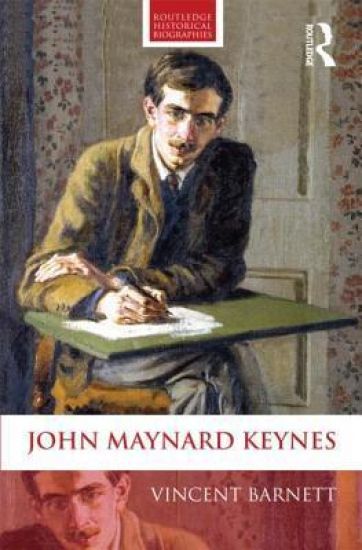
John Maynard Keynes

John Maynard Keynes

Vincent Barnett

Routledge
2012
sidottu
John Maynard Keynes is arguably the most important and influential economist of the twentieth century, and stands alongside Adam Smith and Karl Marx as one of the most famous economic thinkers of all time. Keynes’s radical reassessment of the accepted principles of economics led to new ways of thinking about how to deal with financial crises and economic depressions, and encouraged governments to increase levels of state investment to create economic growth.This historical biography shows how Keynes was more than an academic theorist and how his policy proposals had a significant impact on the economic and financial architecture of many Western countries from the 1920s onward, and on the post-war international financial system. It also tells the story of his colourful private life - Keynes was an active member of the Bloomsbury group of artists and intellectuals, he entertained various ‘secret’ male lovers in his youth, he married a famous Russian ballerina in 1925 and he was also an astute collector of fine art and antiquarian books. Vincent Barnett emphasizes the relationship between the personal and professional by presenting the book chapters in pairs, examining first the central features of Keynes’s life, personal development and policy ideas over the period in question, and then the theoretical content of his major writings from the same period.Barnett argues controversially that allowing psychology a much greater role within economics was a main but often-neglected feature of The General Theory of Employment, Interest and Money, and that Keynes’s policy writings were more concerned with the Britain’s national interest than is sometimes recognised. The result is a concise new biography that is both intellectually rigorous and easily accessible to students and anyone else seeking to understand the life and work of England‘s foremost economist.
John Maynard Keynes

John Maynard Keynes

Vincent Barnett

Routledge
2012
nidottu
John Maynard Keynes is arguably the most important and influential economist of the twentieth century, and stands alongside Adam Smith and Karl Marx as one of the most famous economic thinkers of all time. Keynes’s radical reassessment of the accepted principles of economics led to new ways of thinking about how to deal with financial crises and economic depressions, and encouraged governments to increase levels of state investment to create economic growth.This historical biography shows how Keynes was more than an academic theorist and how his policy proposals had a significant impact on the economic and financial architecture of many Western countries from the 1920s onward, and on the post-war international financial system. It also tells the story of his colourful private life - Keynes was an active member of the Bloomsbury group of artists and intellectuals, he entertained various ‘secret’ male lovers in his youth, he married a famous Russian ballerina in 1925 and he was also an astute collector of fine art and antiquarian books. Vincent Barnett emphasizes the relationship between the personal and professional by presenting the book chapters in pairs, examining first the central features of Keynes’s life, personal development and policy ideas over the period in question, and then the theoretical content of his major writings from the same period.Barnett argues controversially that allowing psychology a much greater role within economics was a main but often-neglected feature of The General Theory of Employment, Interest and Money, and that Keynes’s policy writings were more concerned with the Britain’s national interest than is sometimes recognised. The result is a concise new biography that is both intellectually rigorous and easily accessible to students and anyone else seeking to understand the life and work of England‘s foremost economist.
John Milton

John Milton

Routledge
2010
nidottu
The Critical Heritage gathers together a large body of critical sources on major figures in literature. Each volume presents contemporary responses to a writer's work, enabling student and researcher to read the material themselves.
John Milton

John Milton

Routledge
2009
nidottu
The Critical Heritage gathers together a large body of critical sources on major figures in literature. Each volume presents contemporary responses to a writer's work, enabling students and researchers to read for themselves, for example, comments on early performances of Shakespeare's plays, or reactions to the first publication of Jane Austen's novels. The carefully selected sources range from landmark essays in the history of criticism to journalism and contemporary opinion, and little published documentary material such as letters and diaries. Significant pieces of criticism from later periods are also included, in order to demonstrate the fluctuations in an author's reputation. Each volume contains an introduction to the writer's published works, a selected bibliography, and an index of works, authors and subjects. The Collected Critical Heritage set will be available as a set of 68 volumes and the series will also be available in mini sets selected by period (in slipcase boxes) and as individual volumes.
John Keats

John Keats

Routledge
2009
nidottu
The Critical Heritage gathers together a large body of critical sources on major figures in literature. Each volume presents contemporary responses to a writer's work, enabling students and researchers to read for themselves, for example, comments on early performances of Shakespeare's plays, or reactions to the first publication of Jane Austen's novels. The carefully selected sources range from landmark essays in the history of criticism to journalism and contemporary opinion, and little published documentary material such as letters and diaries. Significant pieces of criticism from later periods are also included, in order to demonstrate the fluctuations in an author's reputation. Each volume contains an introduction to the writer's published works, a selected bibliography, and an index of works, authors and subjects. The Collected Critical Heritage set will be available as a set of 68 volumes and the series will also be available in mini sets selected by period (in slipcase boxes) and as individual volumes.y
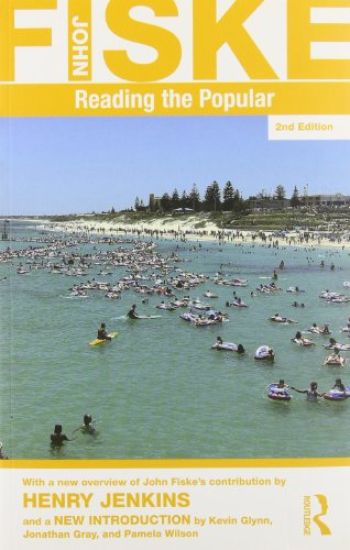
The John Fiske Collection
These revised editions of four classic texts each include a new introduction by Henry Jenkins, explaining ‘Why Fiske Still Matters’ for today’s students, followed by a discussion chapter between former Fiske students. This new material underlines the continuing relevance of these foundational texts in the study of communication, contemporary media and popular culture.The John Fiske Collection includes re-issues of the following four classic texts:Introduction to Communication Studies Television Culture Reading the Popular Understanding Popular CultureThis collection will be highly useful to undergraduate and postgraduate students on all communication, media and cultural studies courses.
John Kenneth Galbraith: The Economic Legacy
One hundred years after his birth, J. K. Galbraith’s The Great Crash 1929 is again on the bestseller lists. And in the current financial and economic tumult, familiar Galbraithian concerns—such as the power and dominance of overweening corporations, national and global poverty, and the careless destruction of the natural environment—once again loom large in the public consciousness.Galbraith’s contemporaries included such towering intellects as Paul Samuelson, Robert Solow, Milton Friedman, Wassily Leontief, Simon Kuznets, James Meade, Nicolas Kaldor, and Joan Robinson. These intellectual giants took Galbraith and his ideas seriously. Today, however, Galbraith remains professionally unpopular, and many economists have either forgotten his contribution, or fail sufficiently to acknowledge their intellectual debt to him.This new four-volume collection from Routledge remedies this failing by highlighting Galbraith’s centrality to the crucial economic debates of the second half of the twentieth century. The collection has been designed to acquaint the user to Galbraith’s economics and his vision of the economic process; to contribute to the long overdue re-evaluation of Galbraith’s place in the study of economics; and to help establish new directions for future research in the Galbraithian tradition.The collection reproduces J. K. Galbraith’s major theoretical economic contributions including: Galbraith’s original—but largely ignored—contribution to the theory of the firm, which shares many similarities with the work of Ronald Coase and Oliver Williamson; his monetary economics (which embodies elements of both Keynes and the new consensus in macroeconomics); and Galbraith’s exploration of financial euphoria, which predates Robert Shiller’s analysis of ‘irrational exuberance’.The set also brings together the critical and professional reactions to American Capitalism, The Affluent Society, The New Industrial State, and Economics and the Public Purpose, with an additional focus on more recent assessments which identify Galbraith’s deeper theoretical contributions and highlight its contemporary relevance.J. K. Galbraith: The Economic Legacy is edited by Stephen P. Dunn, a leading scholar in the field. The collection is fully indexed and has a comprehensive introduction, newly written by the editor, which places the material in its intellectual context. It is an essential work of reference and is destined to be valued by scholars and students as a vital one-stop research resource.
John Donne

John Donne

Routledge
2010
nidottu
The Critical Heritage gathers together a large body of critical sources on major figures in literature. Each volume presents contemporary responses to a writer's work,enabling students and researchers to read for themselves, for example, comments on early performances of Shakespeare's plays, or reactions to the first publication of Jane Austen's novels. The carefully selected sources range from landmark essays in the history of criticism to journalism and contemporary opinion, and little published documentary material such as letters and diaries. Significant pieces of criticism from later periods are also included, in order to demonstrate the fluctuations in an author's reputation. Each volume contains an introduction to the writer's published works, a selected bibliography, and an index of works, authors and subjects The Collected Critical Heritage set will be available as a set of 68 volumes and the series will also be available in mini sets selected by period (in slipcase boxes), and as individual volumes.
John Henry Muirhead (Routledge Revivals)
First published in 1942, Reflections documents the life of John Henry Muirhead and the philosophical age that he observed. The first part of the volume derives from Muirhead’s own autobiographical narrative, left unfinished when he died in May 1940. The second part features two final chapters written by John W. Harvey that comprehensively record the final stages of Muirhead’s life. Harvey’s chapters incorporate Muirhead’s unfinished final years of commentary and begin at the man’s retirement from Birmingham Chair in 1921.As a student and teacher of philosophy, Muirhead’s life ran almost precisely parallel to what he himself refers to as ‘one of the most vivid and important movements in British and American philosophy’. He came into contact with some of the age’s primary thinkers and as such, his own autobiography is important in providing an insight into his contemporary philosophical environment.
John Henry Muirhead (Routledge Revivals)
First published in 1942, Reflections documents the life of John Henry Muirhead and the philosophical age that he observed. The first part of the volume derives from Muirhead’s own autobiographical narrative, left unfinished when he died in May 1940. The second part features two final chapters written by John W. Harvey that comprehensively record the final stages of Muirhead’s life. Harvey’s chapters incorporate Muirhead’s unfinished final years of commentary and begin at the man’s retirement from Birmingham Chair in 1921.As a student and teacher of philosophy, Muirhead’s life ran almost precisely parallel to what he himself refers to as ‘one of the most vivid and important movements in British and American philosophy’. He came into contact with some of the age’s primary thinkers and as such, his own autobiography is important in providing an insight into his contemporary philosophical environment.
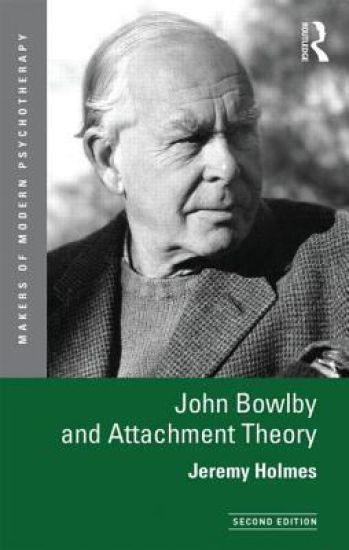
John Bowlby and Attachment Theory

John Bowlby and Attachment Theory

Jeremy Holmes

Routledge
2014
sidottu
Second edition, completely revised and updatedJohn Bowlby is one of the outstanding psychological theorists of the twentieth century. This new edition of John Bowlby and Attachment Theory is both a biographical account of Bowlby and his ideas and an up-to-date introduction to contemporary attachment theory and research, now a dominant force in psychology, counselling, psychotherapy and child development.Jeremy Holmes traces the evolution of Bowlby’s work from a focus on delinquency, material deprivation and his dissatisfaction with psychoanalysis's imperviousness to empirical science to the emergence of attachment theory as a psychological model in its own right. This new edition traces the explosion of interest, research and new theories generated by Bowlby’s followers, including Mary Main’s discovery of Disorganised Attachment and development of the Adult Attachment Interview, Mikulincer and Shaver’s explorations of attachment in adults and the key contributions of Fonagy, Bateman and Target. The book also examines advances in the biology and neuroscience of attachment.Thoroughly accessible yet academically rigorous, and written by a leading figure in the field, John Bowlby and Attachment Theory is still the perfect introduction to attachment for students of psychology, psychiatry, counselling, social work and nursing.
John Bowlby and Attachment Theory

John Bowlby and Attachment Theory

Jeremy Holmes

Routledge
2014
nidottu
Second edition, completely revised and updatedJohn Bowlby is one of the outstanding psychological theorists of the twentieth century. This new edition of John Bowlby and Attachment Theory is both a biographical account of Bowlby and his ideas and an up-to-date introduction to contemporary attachment theory and research, now a dominant force in psychology, counselling, psychotherapy and child development.Jeremy Holmes traces the evolution of Bowlby’s work from a focus on delinquency, material deprivation and his dissatisfaction with psychoanalysis's imperviousness to empirical science to the emergence of attachment theory as a psychological model in its own right. This new edition traces the explosion of interest, research and new theories generated by Bowlby’s followers, including Mary Main’s discovery of Disorganised Attachment and development of the Adult Attachment Interview, Mikulincer and Shaver’s explorations of attachment in adults and the key contributions of Fonagy, Bateman and Target. The book also examines advances in the biology and neuroscience of attachment.Thoroughly accessible yet academically rigorous, and written by a leading figure in the field, John Bowlby and Attachment Theory is still the perfect introduction to attachment for students of psychology, psychiatry, counselling, social work and nursing.
John Dee's Natural Philosophy

John Dee's Natural Philosophy

Nicholas Clulee

Routledge
2012
sidottu
This is the definitive study of John Dee and his intellectual career. Originally published in 1988, this interpretation is far more detailed than any that came before and is an authoritative account for anyone interested in the history, literature and scientific developments of the Renaissance, or the occult.John Dee has fascinated successive generations. Mathematician, scientist, astrologer and magus at the court of Elizabeth I, he still provokes controversy. To some he is the genius whose contributions to navigation made possible the feats of Elizabethan explorers and colonists, to others an alchemist and charlatan.Thoroughly examining Dee’s natural philosophy, this book provides a balanced evaluation of his place, and the role of the occult, in sixteenth-century intellectual history. It brings together insights from a study of Dee’s writings, the available biographical material, and his sources as reflected in his extensive library and, more importantly, numerous surviving annotated volumes from it.