

Kirjahaku
Etsi kirjoja tekijän nimen, kirjan nimen tai ISBN:n perusteella.
1000 tulosta hakusanalla Jorge Mario Marchetti
This text provides a critical but systematic overview of democratic theory and practice in the contemporary world. The authors show that recent developments are more complex than admitted by proponents of the idea of a democratic world with, what they call, de-democratization of various forms running in parallel with democratization.
'Summer was drawing to a close, and I realized that the book was monstrous.'Fantastical tales of mazes, puzzles, lost labyrinths and bookish mysteries, from the unique imagination of a literary magician. Penguin Modern: fifty new books celebrating the pioneering spirit of the iconic Penguin Modern Classics series, with each one offering a concentrated hit of its contemporary, international flavour. Here are authors ranging from Kathy Acker to James Baldwin, Truman Capote to Stanislaw Lem and George Orwell to Shirley Jackson; essays radical and inspiring; poems moving and disturbing; stories surreal and fabulous; taking us from the deep South to modern Japan, New York's underground scene to the farthest reaches of outer space.


Este libro pretende ser una breve introducci n a los fascinantes mecanismos por los que el sistema inmunitario mantiene a raya a los microorganismos que amenazan con causarnos enfermedad. Se estructura como una historia en la que se produce un ataque al organismo. Pare defenderse, este pone en marcha distintos actores celulares y mecanismos moleculares, que vamos introduciendo a medida que la historia se desarrolla. De esta forma, la comprensi n de los diversos mecanismos de defensa que el sistema inmunitario pone en marcha se ve facilitada. Los conocimientos adquiridos con la lectura de los siete primeros cap tulos se aplican en el ltimo para analizar por qu el nuevo virus SARS-CoV-2, causante de la enfermedad COVID-19, puede comportarse de una manera tan diferente dependiendo del mejor o peor funcionamiento de los mecanismos de defensa de los que cada persona dispone seg n su estado de salud, su edad o su bagaje gen tico.
Los 154 sonetos de William Shakespeare traducidos al castellano. Esta version incluye los sonetos en ingles como editados por Thomas Tyler en 1890. La traduccion esta hecha en diez silabas metricas asonantadas.
Lo que usted va a encontrar en las p+ginas de este y de los otros voloemenes que lo preceden o lo siguen es una colecci-n de art'culos de divulgaci-n cient'fica publicados en diarios espa-oles desde el a-o 2000 al 2018 (todos los que he escrito excepto los ya publicados en los libros Las mil y una bases del ADN y otras historias cient'ficas -2005- y El embudo de la inteligencia y otros ensayos -2008-). Los art'culos abarcan un amplio espectro de temas cient'ficos, principalmente biomedicina, y hablan de los avances que nos promete el siglo XXI. Est+n escritos con la mayor sencillez de la que he sido capaz, intentando educar, sorprender y divertir al lector, todo al mismo tiempo.

Lo que usted va a encontrar en las p+ginas de este y de los otros voloemenes que lo preceden o lo siguen es una colecci-n de art'culos de divulgaci-n cient'fica publicados en diarios espa-oles desde el a-o 2000 al 2017 (todos los que he escrito excepto los ya publicados en los libros "Las mil y una bases del ADN y otras historias cient'ficas" -2005- y "El embudo de la inteligencia y otros ensayos" -2008-). Los art'culos abarcan un amplio espectro de temas cient'ficos, principalmente biomedicina, y hablan de los avances que nos promete el siglo XXI. Los art'culos est+n escritos con la mayor sencillez de la que he sido capaz, intentando educar, sorprender y divertir al lector, todo al mismo tiempo.
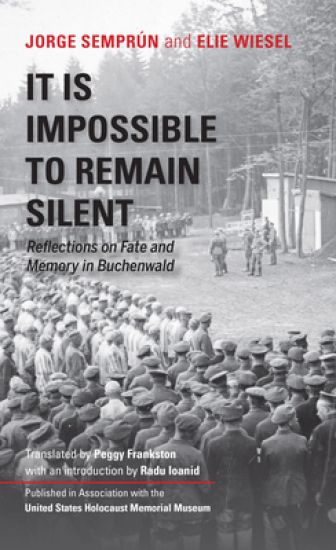
On March 1, 1995, at the time of the fiftieth anniversary of the liberation of the Nazi concentration camps, ARTE (a French-German state-funded television network) proposed an encounter between two highly-regarded figures of our time: Elie Wiesel and Jorge Semprún. These two men, whose destinies were unparalleled, had probably crossed paths—without ever meeting—in the Nazi concentration camp Buchenwald in 1945. This short book is the entire transcription of their recorded conversation. During World War II, Buchenwald was the center of a major network of sub-camps and an important source of forced labor. Most of the internees were German political prisoners, but the camp also held a total of 10,000 Jews, Roma, Sinti, Jehovah's Witnesses, and German military deserters. In these pages, Wiesel and Semprún poignantly discuss the human condition under catastrophic circumstances. They review the categories of inmate at Buchenwald and agree on the tragic reason for the fate of the victims of Nazism—as well as why this fate was largely ignored for so long after the end of the war. Both men offer riveting testimony and pay vibrant homage to the Jewish victims of the Holocaust. Today, seventy-five years after the liberation of the Nazi camps, this book could not be more timely for its confrontation with ultra-nationalism and antisemitism.

Harvest of Hope is the remarkable autobiography of Dr. Jorge Prieto, a respected physician and former president of the Chicago Board of Health. Prieto immigrated to the United States as a struggling intern from Mexico and dedicated his life to bringing medical care to the disadvantaged and displaced Hispanic community in the United States. It is this experience that lends so much credence and compassion to this book. Prieto's story is one of faith, hope, and love in the face of hardship and discrimination; and it is both a professional and a personal pilgrimage through half a century of dynamic change in medicine and the Hispanic community.
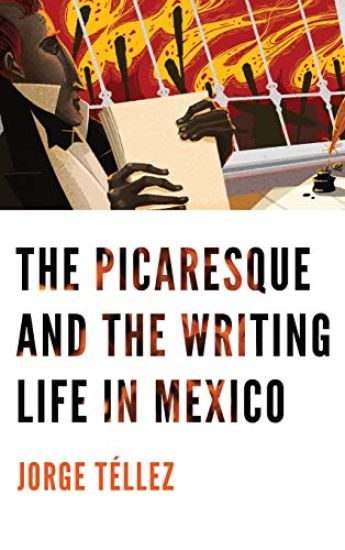
The Picaresque and the Writing Life in Mexico
Jorge Téllez
University of Notre Dame Press
2021
sidottu
This book studies picaresque narratives from 1690 to 2013, examining how this literary form serves as a reflection on the material conditions necessary for writing literature in Mexico. In The Picaresque and the Writing Life in Mexico, Jorge Téllez argues that Mexican writers have drawn on the picaresque as a device for pondering what they regard as the perils of intellectual and creative labor. Surveying ten narratives from 1690 to 2013, Téllez shows how, by and large, all of them are iterations of the same basic structure: pícaro meets writer; pícaro tells life story; writer eagerly writes it down. This written mediation (sometimes fictional but other times completely factual) is presented as part of a transaction in which it is rarely clear who is exploiting whom. Highlighting this ambiguity, Téllez's study brings into focus the role that the picaresque has played in the presentation of writers as disenfranchised and vulnerable subjects. But as Téllez demonstrates, these narratives embody a discourse of precarity that goes beyond pícaros, and applies to all subjects who engage in the production and circulation of literature. In this way, Téllez shows that the literary form of the picaresque is, above all, a reflection on the value of literature, as well as on the place and role of writing in Mexican society more broadly. The Picaresque and the Writing Life in Mexico is a unique work that suggests new paths for studying the reiteration of literary forms across centuries. Looking at the picaresque in particular, Téllez offers a new interpretation of this genre within its national context and suggests ways in which this genre remains relevant for reflecting on literature in contemporary society. It will be of interest to students and scholars of Latin American studies, Mexican cultures and literatures, and comparative literature.
Oil and Development in Venezuela During the Twentieth Century
Jorge Salazar-Carrillo
Praeger Publishers Inc
1994
sidottu
This work is the only economic history of Venezuela written in English. In it, Salazar-Carrillo provides estimates that have not been published previously on the Venezuelan economy in general, and the oil component in particular. Evolution of the oil industry in Venezuela is covered in detail and the concept of the retained value of oil expenditures and tnvestment is developed. Recent government policies and the performance of the Venezuelan economy are evaluated, and export-oriented strategies are considered. The appropriateness of these plans in fostering economic development is discussed.
Price Policies and Economic Growth
Jorge Salazar-Carrillo; Antonio Jorge
Praeger Publishers Inc
1997
sidottu
An understanding of price structures and their impact on trade, productivity, and other related factors will aid in formulation of price policies promoting economic growth and development. Price formulation issues are examined within the context of nonmarket and imperfect market conditions, providing insightful linking of exchange rates and domestic prices to a wide array of factors that determine economic growth. Different facets of primary commodity price formation are explored, arriving at such conclusions as the fact that the dramatic rise in oil prices during the 1970s had little to do with the Latin American debt crisis or with the world recession that followed. Some new techniques for analysis are used, and commonly used techniques in price comparison studies are discussed.
Capital Markets, Growth, and Economic Policy in Latin America
Jorge Salazar-Carrillo; Antonio Jorge; Bernadette West
Praeger Publishers Inc
2000
sidottu
Looking at how Latin American countries have coped with the 1994 Mexican crisis and the earlier debt crisis of the 1980s, this book reveals the full extent of what has come to be known as the tequila effect. Written by distinguished economists and financiers from Latin America, the Caribbean, and the United States, the volume also examines the social, political, and economic issues associated with ever-expanding trade and globalization.The book opens with chapters considering the impact of the Mexican crisis on Argentina, Colombia, and Venezuela, and it provides an interesting account of the events leading up to the crisis itself. In the following section, the contributors examine issues of economic growth by considering such topics as the need for a new growth strategy, by comparing the Latin American and Asian economies, and by looking at the Cuban economy from a trading partner's perspective. The final section takes an indepth look at the complex issues of neoliberalist versus neopopulist thinking in shaping Latin America's economic policies for the 21st century.
Oil and Development in Venezuela during the 20th Century
Jorge Salazar-Carrillo; Bernadette West
Praeger Publishers Inc
2004
sidottu
This book advances the theory that a potential leading export sector—in this case, the oil sector—is capable of inducing economic growth even in peripheral countries where the product line is primary in nature. In Venezuela the oil sector has contributed directly and indirectly to the development of the country's overall economy, particularly from 1936 to 1973, when that sector met the criteria of a leading sector, i.e., one that expands rapidly and obtains a large specific size relative to the economy as a whole. Oil investment in Venezuela contributed to the fiscal sector, the foreign sector, GDP, income, backward and forward linkages, the multiplier and accelerator effects, and the retained value of total expenditures. In spite of recent efforts to diversify the production and export mix, the Venezuelan economy continues to remain heavily dependent on oil production for export.During the midcentury decades of solid growth, it became evident that government oversight was needed to ensure that the numerous contributions flowing from the oil sector would be put to good use. Overall, it appears that the contributions were well utilized by the Venezuelan government, although there was plenty of room for improvement. Income distribution problems and other social inequities continued to beset the development process, leaving the economy rigid and inflexible. Consequently, when the oil sector faltered (1974 to 2000), Venezuela was unable to shift into other product lines. Political disarray soon followed, and with it a pervasive aura of economic uncertainty that persists to this day.
Dreamtigers has been heralded as one of the literary masterpieces of the twentieth century by Mortimer J. Adler, editor of Great Books of the Western World. It has been acknowledged by its author as his most personal work. Composed of poems, parables, and stories, sketches and apocryphal quotations, Dreamtigers at first glance appears to be a sampler-albeit a dazzling one-of the master's work. Upon closer examination, however, the reader discovers the book to be a subtly and organically unified self-revelation.Dreamtigers explores the mysterious territory that lies between the dreams of the creative artist and the "real" world. The central vision of the work is that of a recluse in the "enveloping serenity " of a library, looking ahead to the time when he will have disappeared but in the timeless world of his books will continue his dialogue with the immortals of the past - Homer, Don Quixote, Shakespeare. Like Homer, the maker of these dreams is afflicted with failing sight. Still, he dreams of tigers real and imagined and reflects upon of a life that, above all, has been intensely introspective, a life of calm self-possession and absorption in the world of the imagination. At the same time he is keenly aware of that other Borges, the public figure about whom he reads with mixed emotions: "It's the other one, it's Borges, that things happen to."
Analysts attempting to assess economic growth in revolutionary Cuba are faced with two formidable obstacles: (1) official macroeconomic indicators published by the government are scarce and sometimes inconsistent because of frequent changes in the method of calculation; and (2) these indicators are not compatible with those produced by market economies because of differences in national income concepts. Because of these obstacles, it is difficult to analyze the performance of Cuba’s economy over time and to compare its economic performance directly with that of other nations.Using a variant of the method developed by Abram Bergson to estimate the growth rates of the Soviet Union and subsequently applied to centrally planned economies in Eastern Europe, Jorge Perez-López has estimated the growth rate of the Cuban economy in real terms for the 1965–1982 period. His estimated indexes suggest that the Cuban economy expanded at a considerably slower pace than would be implied by official data.By constructing yardsticks of economic performance for revolutionary Cuba that are compatible with those used by Western nations, Perez-López provides for the first time a basis for analyzing the real growth of the Cuban economy during the revolutionary period.
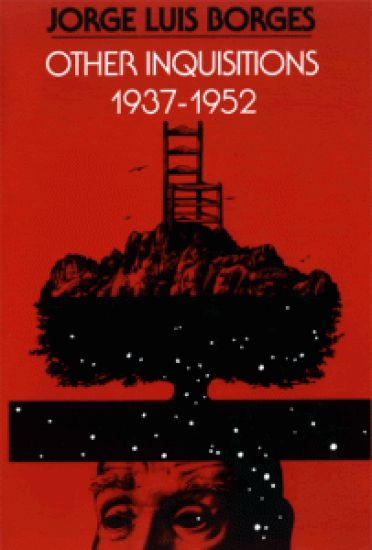
This remarkable book by one of the great writers of the twentieth century includes essays on a proposed universal language, a justification of suicide, a refutation of time, the nature of dreams, and the intricacies of linguistic forms. Borges comments on such literary figures as Pascal, Coleridge, Cervantes, Hawthorne, Whitman, Valéry, Wilde, Shaw, and Kafka. With extraordinary grace and erudition, he ranges in time, place, and subject from Omar Khayyam to Joseph Conrad, from ancient China to modern England, from world revolution to contemporary slang.
Men in a Developing Society
Jorge Balán; Harley Linwood Browning; Elizabeth Jelin
University of Texas Press
1973
nidottu
The central objective of Men in a Developing Society is to show, as concretely as possible, how men experience a period of rapid economic development, particularly in the areas of migration, occupational mobility, and status attainment. It is based mainly on a sample of 1,640 men in Monterrey, Mexico, a large and rapidly growing manufacturing metropolis in northern Mexico with much in-migration, and a sample of 380 men in Cedral, San Luis Potosí, a small, economically depressed community with high rates of out-migration, much of it to Monterrey.The study of men in Monterrey is perhaps the most thorough one yet conducted of geographic and social mobility in a Latin American city. In part, this was possible because of the innovation of collecting complete life histories that record what each man was doing for any given year in the lay areas of residence, education, family formation, and work. These data permit the effective use of the concepts of life cycle and cohort analysis in the interpretation of the men's geographic and occupational mobility.The experience of the Monterrey men in adapting to the varied changes required by their mobility was not found to be as difficult as is often indicated in the social science literature on the consequences of economic development. In part this may be because Monterrey, in comparison with most other Latin American cities, has been unusually successful in its economic growth. The impact of migration also was lessened because most of the men had visited the city prior to moving there and many had friends or relatives in the city.The age of the migrants upon arrival in Monterrey made a significant difference in subsequent occupational mobility; those of nonfarm background who arrived before age 25 fared better than natives of the city. Although it appears that status inheritance in Monterrey is somewhat higher than in industrialized countries, a considerable proportion of men do move up the occupational ladder. And perhaps as important, the Monterrey men, whether or not they themselves are moving up, perceive the society as an open one.The very success of Monterrey's development created conditions that would bring about changes in the educational, economic, and cultural expectations of its inhabitants. Thus, paradoxically, the general satisfaction and the lack of group and class conflict in Monterrey over the previous decades may well have given rise to future dissatisfaction and conflict.

"In order to talk with the dead you have to know how to wait: they are fearful like the first steps of a child. But if we are patient one day they will answer us with a poplar leaf trapped in a broken mirror, with a flame that suddenly revives in the fireplace, with a dark return of birds before the glance of a girl who waits motionless on the threshold."-from "In Order to Talk with the Dead"Reared in the rainy forests of Chile's "La Frontera" region which had nurtured Pablo Neruda a generation earlier, Jorge Teillier has become one of Chile's leading contemporary poets, whose work is widely read in Latin America and Europe along with the poetry of his well-known contemporaries Nicanor Parra and Enrique Lihn. This English-Spanish bilingual anthology now introduces English-speaking readers to Teillier, with a representative selection of his best work from all phases of his career.Carolyne Wright has translated poems from the volumes Muertes y maravillas (1971), Para un pueblo fantasma (1978), and Cartas para reinas de otras primaveras (1985). Avoiding the bravura effects of some of his contemporaries, Teillier writes from a life lived directly and simply, returning time and again in his poetry to the timeless and mythic South of his boyhood, the "Land of Nevermore."