Kirjojen hintavertailu. Mukana 11 244 527 kirjaa ja 12 kauppaa.

Kirjahaku

Etsi kirjoja tekijän nimen, kirjan nimen tai ISBN:n perusteella.

1000 tulosta hakusanalla Jude Stringfellow

Martin Luther’s Greatest Commentaries: Theological Reformation Texts on Genesis, Psalms, Galatians, Peter, Jude, and Christ’s Teachings on the Mount
"The Bible is the cradle wherein Christ is laid." - Martin Luther Martin Luther's Greatest Commentaries gathers his most influential biblical expositions that ignited the Reformation and shaped Protestant theology for generations. This definitive volume features Luther's landmark commentary on Galatians-a bold declaration of justification by faith-and his deeply pastoral writings on Genesis, the Psalms, and the Sermon on the Mount. Included in this collection: Genesis Volumes I & II - Luther's verse-by-verse exposition of creation, sin, and God's covenant promises The Book of Psalms - Devotional, Christ-centered reflections on prayer, suffering, and divine kingship Galatians - A fiery defense of salvation by grace alone, through faith alone Peter & Jude - Warnings against false teachers and exhortations to Christian endurance Sermon on the Mount - Profound insights on Christ's teachings, discipleship, and godly living Luther's commentary style is both theological and practical-rooted in Scripture and ablaze with conviction. His fearless tone, deep reverence for Christ, and pastoral wisdom still resonate with modern readers seeking truth and clarity in turbulent times. This treasury of commentaries is essential for pastors, students, and anyone desiring a deeper understanding of Scripture through the eyes of a reformer whose voice still thunders with gospel clarity.
The Doctrine of Universal Salvation Examined and Refuted. Containing, a Concise and Distinct Answer to the Writings of Mr. Relly, and Mr. Winchester, Upon That Subject. By Isaac Backus, Preacher of the Gospel. [Three Lines From Jude]
The 18th century was a wealth of knowledge, exploration and rapidly growing technology and expanding record-keeping made possible by advances in the printing press. In its determination to preserve the century of revolution, Gale initiated a revolution of its own: digitization of epic proportions to preserve these invaluable works in the largest archive of its kind. Now for the first time these high-quality digital copies of original 18th century manuscripts are available in print, making them highly accessible to libraries, undergraduate students, and independent scholars.The Age of Enlightenment profoundly enriched religious and philosophical understanding and continues to influence present-day thinking. Works collected here include masterpieces by David Hume, Immanuel Kant, and Jean-Jacques Rousseau, as well as religious sermons and moral debates on the issues of the day, such as the slave trade. The Age of Reason saw conflict between Protestantism and Catholicism transformed into one between faith and logic -- a debate that continues in the twenty-first century.++++The below data was compiled from various identification fields in the bibliographic record of this title. This data is provided as an additional tool in helping to insure edition identification: ++++Bodleian Library (Oxford)W038214Running title: The doctrine of universal salvation refuted. Advertised as "just published" in the Providence gazette, June 15, 1782. Booksellers' advertisement, p. 2].Providence: Printed and sold by John Carter. Also sold by Philip Freeman, in Union-Street, Boston, 1782]. 40p.; 4
Byron Easy

Byron Easy

Jude Cook

Cornerstone
2014
pokkari
It's 24 December, 1999. Byron Easy, a poverty-stricken poet - half-cut and suicidal - sits on a stationary train at King's Cross waiting to depart. In his lap is a bag containing his remaining worldly goods: an empty bottle of red wine, a few books, a handful of crumpled banknotes. He is on the run.
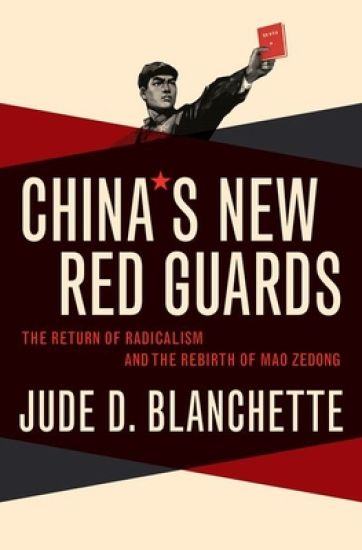
China's New Red Guards

China's New Red Guards

Jude Blanchette

Oxford University Press Inc
2019
sidottu
Ever since Deng Xiaoping effectively de-radicalized China in the 1980s, there have been many debates about which path China would follow. Would it democratize? Would it embrace capitalism? Would the Communist Party's rule be able to withstand the adoption and spread of the Internet? One debate that did not occur in any serious way, however, was whether Mao Zedong would make a political comeback. As Jude Blanchette details in China's New Red Guards, contemporary China is undergoing a revival of an unapologetic embrace of extreme authoritarianism that draws direct inspiration from the Mao era. Under current Chinese leader Xi Jinping, state control over the economy is increasing, civil society is under sustained attack, and the CCP is expanding its reach in unprecedented new ways. As Xi declared in late 2017, "Government, military, society and schools, north, south, east and west-the party is the leader of all." But this trend is reinforced by a bottom-up revolt against Western ideas of modernity, including political pluralism, the rule of law, and the free market economy. Centered around a cast of nationalist intellectuals and activists who have helped unleash a wave of populist enthusiasm for the Great Helmsman's policies, China's New Red Guards not only will reshape our understanding of the political forces driving contemporary China, it will also demonstrate how ideologies can survive and prosper despite pervasive rumors of their demise.
Globalization and the New Politics of Embedded Liberalism
As the world economy slides into the worst recession since the 1930s, there is fear that hard times will ignite a backlash against free trade policies and globalization more generally, much like happened during the earlier interwar period, the last time the international economy collapsed. This is troubling because expanding trade has been a source of growth and prosperity in developed and many developing economies for decades. There are potentially serious consequences for international peace and security too. When globalization was reversed in the 1930s, political disintegration and world war followed closely behind. Can it happen again? Political economists have argued that the domestic political foundation of the liberal international economy rests on an implicit contract between governments and their citizens called the bargain of embedded liberalism, according to which governments are expected to protect their citizens from the vagaries of the global economy in return for political support for policies like free trade that drive economic globalization. To help stem the rising tide of opposition to globalization, the bargain of embedded liberalism-currently under strain from forces associated with the multinationalization of production, the internationalization of financial markets, and now global recession-must be reestablished and bolstered. This book explores the political and economic institutional foundations of the bargain of embedded liberalism and the ways domestic institutions shape how governments redistribute the risks and benefits of economic globalization. The author identifies the Anglo-American democracies, because of their majoritarian polities combined with decentralized, competitive economies, as uniquely vulnerable to the contemporary challenges of globalization and the most susceptible to a backlash against it.
Globalization and the New Politics of Embedded Liberalism
As the world economy slides into the worst recession since the 1930s, there is fear that hard times will ignite a backlash against free trade policies and globalization more generally, much like happened during the earlier interwar period, the last time the international economy collapsed. This is troubling because expanding trade has been a source of growth and prosperity in developed and many developing economies for decades. There are potentially serious consequences for international peace and security too. When globalization was reversed in the 1930s, political disintegration and world war followed closely behind. Can it happen again? Political economists have argued that the domestic political foundation of the liberal international economy rests on an implicit contract between governments and their citizens called the bargain of embedded liberalism, according to which governments are expected to protect their citizens from the vagaries of the global economy in return for political support for policies like free trade that drive economic globalization. To help stem the rising tide of opposition to globalization, the bargain of embedded liberalism-currently under strain from forces associated with the multinationalization of production, the internationalization of financial markets, and now global recession-must be reestablished and bolstered. This book explores the political and economic institutional foundations of the bargain of embedded liberalism and the ways domestic institutions shape how governments redistribute the risks and benefits of economic globalization. The author identifies the Anglo-American democracies, because of their majoritarian polities combined with decentralized, competitive economies, as uniquely vulnerable to the contemporary challenges of globalization and the most susceptible to a backlash against it.
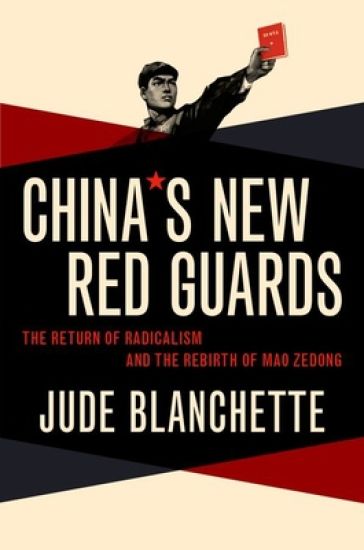
China's New Red Guards

China's New Red Guards

Jude Blanchette

OXFORD UNIVERSITY PRESS INC
2022
nidottu
In China's New Red Guards, Jude Blanchette illuminates two trends in contemporary China that point to its revival of Mao Zedong's legacy--a development that he argues will result in a more authoritarian and more militaristic China. Ever since Deng Xiaoping effectively de-radicalized China in the 1980s, there have been many debates about which path China would follow. Would it democratize? Would it embrace capitalism? Would the Communist Party's rule be able to withstand the adoption and spread of the Internet? One debate that did not occur in any serious way, however, was whether Mao Zedong would make a political comeback. As Jude Blanchette details in China's New Red Guards, contemporary China is undergoing a revival of an unapologetic embrace of extreme authoritarianism that draws direct inspiration from the Mao era. Under current Chinese leader Xi Jinping, state control over the economy is increasing, civil society is under sustained attack, and the CCP is expanding its reach in unprecedented new ways. As Xi declared in late 2017, "Government, military, society and schools, north, south, east and west--the party is the leader of all." But this trend is reinforced by a bottom-up revolt against Western ideas of modernity, including political pluralism, the rule of law, and the free market economy. Centered around a cast of nationalist intellectuals and activists who have helped unleash a wave of populist enthusiasm for the Great Helmsman's policies, China's New Red Guards not only will reshape our understanding of the political forces driving contemporary China, it will also demonstrate how ideologies can survive and prosper despite pervasive rumors of their demise.
British Settler Emigration in Print, 1832-1877

British Settler Emigration in Print, 1832-1877

Jude Piesse

Oxford University Press
2015
sidottu
An unprecedented number of emigrants left Britain to settle in America, Australia, Canada, and New Zealand during the Victorian period. Utilizing new digital resources and methodologies alongside more traditional modes of scholarship, British Settler Emigration in Print, 1832-1877 presents the first book-length study of the periodical print culture that imagined, mediated, and galvanized this important stage of empire history. It presents extensive new research on how settler emigration was registered within Victorian periodicals and situates its focus on British texts and contexts within a broader, transnational framework. The book argues that the Victorian periodical was an inherently mobile form which had an unrivalled capacity to both register mass settler emigration and moderate its disruptive potential. Part one focuses upon settler emigration genres that featured within mainstream, middle-class periodicals, incorporating the analysis of emigrant voyage texts, emigration themed Christmas stories, and serialized novels about settlement. These genres are cohesive, domestic, and reassuring, and thus of a different character from the adventure stories often associated with Victorian empire. Part two examines a feminist and radical periodical emigration literature that often challenged dominant settler ideologies. Alongside its examination of ephemeral emigration texts, the book offers fresh readings of key works by Charles Dickens, Anthony Trollope, Edward Bulwer-Lytton, Thomas Martin Wheeler, and others. Ultimately, the book shows how periodical settler emigration literature transforms our understanding of both the culture of Victorian empire and Victorian literature and culture as a whole. It also makes significant intersections into debates about periodical form and the role of digitization within Victorian Studies.
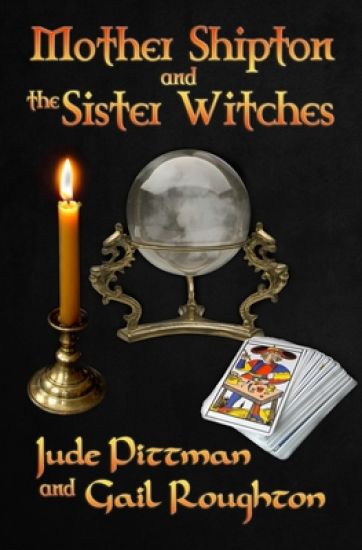
Mother Shipton and the Sister Witches

Mother Shipton and the Sister Witches

Jude Pittman; Gail Roughton

BWL Publishing Inc.
2023
pokkari
The Shipton history is complicated. Some families have a guardian angel. The Shiptons have a guardian ancestor who whizzes through the centuries and jumps right in whenever one of her girls is in trouble. All the girls have power and they're watched over by elder sister Lillian, who takes her job as family trouble shooter seriously. There's no shortage of trouble to be sorted out either and even with their own powers each of the girls needs help. First Katherine's oilman fianc disappears in the Gulf of Mexico, and then Irene's world champion saddle bronc rider fianc is sabotaged and in danger of being trampled by a bucking bronco. The spider-web of trouble stretching between these three modern sister witches might be too much for even a time-traveling guardian angel to handle on her own.
Deadly Lights

Deadly Lights

Jude Pittman

BWL Publishing Inc.
2023
pokkari
Texas PI, Kelly McWinter, has just landed a dream of a job. Nashville songstress, and family friend, Marcy Fischer has been nominated for the Academy of Country Music's female vocalist of the year award, but her husband is stuck in Russia on a special assignment for the President, and Marcy's been having trouble with a fan who tried to break into their house. Mark is determined to get his wife the best protection possible, and that means Kelly McWinter. Not only is Kelly a pal, but he once saved Marcy from a murder charge. Kelly and girlfriend Gillian are now happily married and with Mark's promise of first class accommodations in Beverly Hills and Las Vegas, for the honeymoon the couple never managed to take it seems like a win/win situation. What's so hard about guarding the beautiful songstress while attending a host of fabulous parties and having dinner with the likes of Blake Shelton. Life is good for the McWinter household. That is, until someone kidnaps Marcy's lovely young sister right out from under Gillian's nose while the two are shopping in Beverly Hills, and then all hell breaks loose when Marcy's erstwhile fan shows all the signs of turning into a fanatical killer. Yep, Kelly McWinter is going to need a vacation from his vacation.
Uncertain Heaven

Uncertain Heaven

Jude Davison

Lulu.com
2018
pokkari
From first picking up a guitar, to writing songs and discovering a connection to the universal source of creativity, Uncertain Heaven is a rock 'n roll memoir that tells the story of one man's creative path, a journey that becomes inextricably intertwined with a search for the meaning of our existence and mankind's relationship with God. A story of record deals, songs heard by billions on syndicated television shows, the highs and lows of an indifferent music industry, the painful reality of playing 'music-by-the-yard' and the sheer joy of putting your finger up into the ethos and downloading a song - just like Keith Richards. After years of following the muse wherever she leads, an existential crisis leads the author to peel back the mysteries of life itself, follow what surely seems meant to be, only to find himself standing on the precipice at his own potential demise.
The Originals

The Originals

Jude Cowan Montague

Lulu.com
2017
nidottu
Jude Cowan Montague is an artist and broadcaster. She worked on the Reuters television archive for ten years and produces The News Agentsfor Resonance FM. She has begun publishing a new series of novels about the adventures of young Alfred Hitchcock.
Curator of Silence

Curator of Silence

Jude Nutter

University of Notre Dame Press
2006
nidottu
The title poem—about a group of schoolchildren illustrating Shelley's "Ode to a Skylark"—ends with the following assertion: "these are the only / lessons they will ever need to learn: that life / is not artifact, but aperture—a stepping into / and a falling away; that to sing is to rise / from the grave of the body. And still / say less than nothing." This idea of the aperture, the gap, the silence that exists between what we want to say and what we actually do say pervades The Curator of Silence. The paradox, of course, is that the creation of art itself makes this gap, as there is always a gulf between the impulse and the gesture, the vision and the poem. Nutter's experience of living for two months in the Antarctic, perhaps the greatest silence and solitude possible on earth, is the archetype of silence whose many dimensions she explores in this volume. She considers both literal, obvious silences—death, abandonment, loneliness, the silence into which lost things vanish—and silences of a more mysterious and paradoxical nature: the (mis)perceptions of childhood, the erasures of addiction and brain damage, the isolation of Antarctic explorers, and the seemingly distant, and often fearsome, lives of animals. In the end, this great silence we batter our hearts against—call it the grave or god or the universe or the intimate silence of the white page—is the silence these poems are singing to and with, not against.
I Wish I Had a Heart Like Yours, Walt Whitman

I Wish I Had a Heart Like Yours, Walt Whitman

Jude Nutter

University of Notre Dame Press
2009
nidottu
In "Return of the Heroes," Walt Whitman refers to the casualties of the American Civil War: "the dead to me mar not. . . . / they fit very well in the landscape under the trees and grass. . . ." In her new poetry collection, Jude Nutter challenges Whitman's statement by exploring her own responses to war and conflict and, in a voice by turns rueful, dolorous, and imagistic, reveals why she cannot agree. Nutter, who was born in England and grew up in Germany, has a visceral sense of history as a constant, violent companion. Drawing on a range of locales and historical moments—among them Rwanda, Sarajevo, Nagasaki, and both world wars—she replays the confrontation of personal history colliding with history as a social, political, and cultural force. In many of the poems, this confrontation is understood through the shift from childhood innocence and magical thinking to adult awareness and guilt. Nutter responds to Whitman from another perspective as well. It was Whitman who wrote that he could live with animals because, among other things, they are placid, self-contained, and guiltless. As counterpoint, Nutter weaves a series of animal poems—a kind of personal bestiary—throughout the collection that reveals the tragedy and violence also inherent in the lives of animals. Here, as in much of Nutter's previous work, the boundaries between the animal and human worlds are permeable; the urgent voice of the poet insists we recognize that "Even from a distance, suffering / is suffering." Here is both acknowledgment and challenge: distance may be measured in terms of time, culture, or place, or it may be caused by the gap between animals and humans, but it is our responsibility to speak against atrocity and bloodshed, however voiceless we may feel.
Curator of Silence

Curator of Silence

Jude Nutter

UNIVERSITY OF NOTRE DAME PRESS
2022
sidottu
The title poem—about a group of schoolchildren illustrating Shelley's "Ode to a Skylark"—ends with the following assertion: "these are the only / lessons they will ever need to learn: that life / is not artifact, but aperture—a stepping into / and a falling away; that to sing is to rise / from the grave of the body. And still / say less than nothing." This idea of the aperture, the gap, the silence that exists between what we want to say and what we actually do say pervades The Curator of Silence. The paradox, of course, is that the creation of art itself makes this gap, as there is always a gulf between the impulse and the gesture, the vision and the poem. Nutter's experience of living for two months in the Antarctic, perhaps the greatest silence and solitude possible on earth, is the archetype of silence whose many dimensions she explores in this volume. She considers both literal, obvious silences—death, abandonment, loneliness, the silence into which lost things vanish—and silences of a more mysterious and paradoxical nature: the (mis)perceptions of childhood, the erasures of addiction and brain damage, the isolation of Antarctic explorers, and the seemingly distant, and often fearsome, lives of animals. In the end, this great silence we batter our hearts against—call it the grave or god or the universe or the intimate silence of the white page—is the silence these poems are singing to and with, not against.
I Wish I Had a Heart Like Yours, Walt Whitman

I Wish I Had a Heart Like Yours, Walt Whitman

Jude Nutter

UNIVERSITY OF NOTRE DAME PRESS
2022
sidottu
In "Return of the Heroes," Walt Whitman refers to the casualties of the American Civil War: "the dead to me mar not. . . . / they fit very well in the landscape under the trees and grass. . . ." In her new poetry collection, Jude Nutter challenges Whitman's statement by exploring her own responses to war and conflict and, in a voice by turns rueful, dolorous, and imagistic, reveals why she cannot agree. Nutter, who was born in England and grew up in Germany, has a visceral sense of history as a constant, violent companion. Drawing on a range of locales and historical moments—among them Rwanda, Sarajevo, Nagasaki, and both world wars—she replays the confrontation of personal history colliding with history as a social, political, and cultural force. In many of the poems, this confrontation is understood through the shift from childhood innocence and magical thinking to adult awareness and guilt. Nutter responds to Whitman from another perspective as well. It was Whitman who wrote that he could live with animals because, among other things, they are placid, self-contained, and guiltless. As counterpoint, Nutter weaves a series of animal poems—a kind of personal bestiary—throughout the collection that reveals the tragedy and violence also inherent in the lives of animals. Here, as in much of Nutter's previous work, the boundaries between the animal and human worlds are permeable; the urgent voice of the poet insists we recognize that "Even from a distance, suffering / is suffering." Here is both acknowledgment and challenge: distance may be measured in terms of time, culture, or place, or it may be caused by the gap between animals and humans, but it is our responsibility to speak against atrocity and bloodshed, however voiceless we may feel.