Kirjojen hintavertailu. Mukana 11 417 157 kirjaa ja 12 kauppaa.

Kirjahaku

Etsi kirjoja tekijän nimen, kirjan nimen tai ISBN:n perusteella.

1000 tulosta hakusanalla Judith L. Grams

The Last List of Miss Judith Kratt

The Last List of Miss Judith Kratt

Andrea Bobotis

Sourcebooks Landmark
2019
nidottu
"Andrea Bobotis is a new, original voice as Southern as they come! In The Last List of Miss Judith Kratt, she unravels a complicated web of dirty Southern secrets. Using masterful writing and a perfectly calculated reveal of damaged history, she ends up weaving a tapestry that is so much more."—LEAH WEISS, bestselling author of If the Creek Don't RiseIn the hard-luck cotton town of Bound, South Carolina, some bury their secrets close to home. Others scatter them to the wind and hope they land somewhere far away.Judith Kratt inherited everything her family had to offer—the pie safe, the copper clock, the murder no one talks about. She's presided over the Carolina house quite well, thank you very much, with a little help from her companion, Olva.When her wayward sister suddenly returns, Judith must make an inventory of all that belongs to them—and her sister is determined to include the skeletons the Kratt family had hoped to take to their graves.Interweaving the present with chilling flashbacks from one fateful evening in 1929, Judith pieces together the devastating influence of the Kratt family on their small South Carolina cotton town, learning that the effects of dark family secrets can last a lifetime and beyond.Perfect for fans of Kim Michele Richardson, Hannah Pittard, and Sue Monk Kidd—Andrea Bobotis presents a book of small-town, Southern charm and dark family drama.
The Last List of Miss Judith Kratt Lib/E

The Last List of Miss Judith Kratt Lib/E

Andrea Bobotis

Blackstone Publishing
2019
cd
Some bury their secrets close to home, others scatter them to the wind and hope they land somewhere far away.Judith Kratt inherited all the Kratt family had to offer--the pie safe, the copper clock, the murder that no one talks about--and she knows in her old bones that it's time to make an inventory of her household and its valuables. But she finds that cataloging the family belongings--as well as their misfortunes--won't contain her family's secrets, not when her wayward sister suddenly returns, determined to expose skeletons that the Kratts had hoped to take to their grave.Interweaving the present with chilling flashbacks from one fateful evening in 1929, Judith pieces together the influence of her family on their small South Carolina cotton town, learning that the devastating effects of dark family secrets can last a lifetime and beyond.
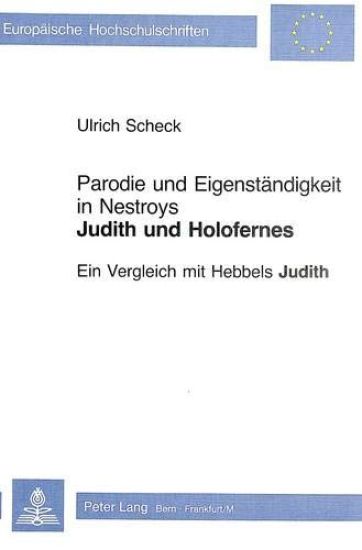
Parodie Und Eigenstaendigkeit in Nestroys «Judith Und Holofernes»

Parodie Und Eigenstaendigkeit in Nestroys «Judith Und Holofernes»

Ulrich Scheck

Herbert Cie Lang AG, Buchhandlung Antiquariat
1981
nidottu
In den in der Nestroy-Forschung bisher vorgelegten vergleichenden Analysen der beiden Stucke wird -Judith und Holofernes- meist als parodistische Meisterleistung auf Hebbels -Judith- angesehen. Ziel dieser Arbeit ist es, das Verhaltnis von Eigenstandigkeit und Anlehnung an die Vorlage in Nestroys -Judith und Holofernes- zu bestimmen und den Nachweis zu erbringen, dass die Kategorisierung des Stucks als Parodie auf Hebbel nicht haltbar ist. Vielmehr ist auch hier Nestroys schopferische Gestaltung des Stoffes deutlich erkennbar und keine literarisch-kritische Polemik gegen Hebbel beabsichtigt."
Das Motiv der Melancholie in Judith Hermanns Erzählband "Sommerhaus"
Studienarbeit aus dem Jahr 2004 im Fachbereich Germanistik - Neuere Deutsche Literatur, Note: 2,0, Friedrich-Alexander-Universit t Erlangen-N rnberg, Sprache: Deutsch, Abstract: Als 1998 der erste Erz hlband der jungen Berliner Autorin Judith Hermann erschien, bertrafen sich die Kritiker gegenseitig an Lobeshymnen. "Ein fulminantes Deb t, das Anlass gibt zu gro er Hoffnung," schw rmte zum Beispiel Martin L dke im Oktober 1998 in der, Zeit' . Roman Bucheli von der, Neuen Z richer Zeitung' schrieb von einem "unwiderstehlichem Sog," den die Erz hlungen aus ben und pries die "subtile Kunst der ersten S tze," die "gro e Virtuosit t" und die Leichtigkeit der "hochartistischen" Texte . Doch der Durchbruch des Erstlings mit dem Titel, Sommerhaus, sp ter' folgte erst einen Monat sp ter, als Marcel Reich-Ranicki das Werk im, literarischen Quartett' besprach. Er bezeichnete Hermann als hervorragende Autorin und sagte ihr gro en Erfolg voraus . Daraufhin stiegen die Verkaufszahlen explosionsartig an und Judith Hermann st rmte die Bestsellerlisten. Das einzige Bild, das man zu dieser Zeit von der Autorin kannte, war ein Portraitfoto auf dem Umschlag ihres Buches. Es zeigt ein altert mlich wirkendes Madonnengesicht, eigent mlich sch n, das melancholisch ins Leere blickt. Das Foto erregte Aufsehen, einerseits wegen dem ungew hnlichen Aussehen der Autorin, andererseits, weil die Erz hlungen und das Bild Judith Hermanns so eng miteinander verkn pft sind . Die Aura dieses Fotos entspricht exakt der Stimmung des Buches. F r die meisten Leser sahen die weiblichen Figuren der Geschichten aus wie die melancholische junge Frau auf dem Umschlag. Im Folgenden soll untersucht werden, durch welche Mittel das Gef hl der Melancholie im Text erzeugt wird. Dazu wird es n tig sein, zuerst den Begriffsinhalt der Melancholie genau zu definieren. Daraufhin soll der Erz hlband, Sommerhaus, sp ter' auf sprachlicher, struktureller und inhaltlicher Ebene untersucht werden, um herauszufinden, wie die
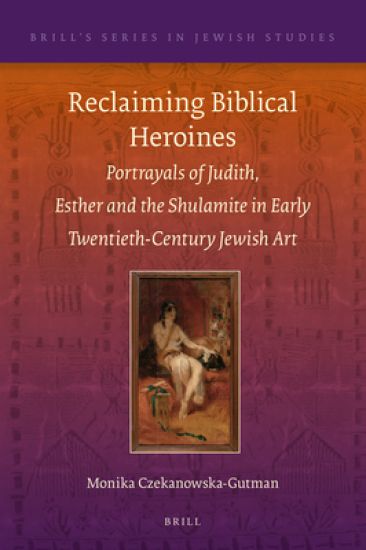
Reclaiming Biblical Heroines: Portrayals of Judith, Esther and the Shulamite in Early Twentieth-Century Jewish Art
Although recently more studies have been devoted to the representations of Biblical heroines in modern European art, less is known about the contribution to the portrayals of Biblical women by modern Jewish artists. This monograph explores why and how heroines of the Scripture: Judith, Esther and the Shulamite received a particular meaning for acculturated Jewish artists originating from the Polish lands in the last decades of the nineteenth century and the first two decades of the twentieth century. It convincingly proves that artworks by Maurycy Gottlieb, Wilhem Wachtel, Ephraim Moses Lilien, Maurycy Minkowski, Samuel Hirszenberg and Boris Schatz significantly differed from renderings of contemporary non-Jewish artists, adopting a "Jewish perspective", creating complex and psychological portrayals of the heroines inspired by Jewish literature and as well as by historical and cultural phenomena of Jewish revival and the cultural Zionism movement.