Kirjahaku
Etsi kirjoja tekijän nimen, kirjan nimen tai ISBN:n perusteella.
1000 tulosta hakusanalla Juliette Atkinson

Essai sur la quantité, la qualité, la relation chez Kant, Hegel, Deleuze
Juliette Simont
La philosophie en commun
2022
nidottu
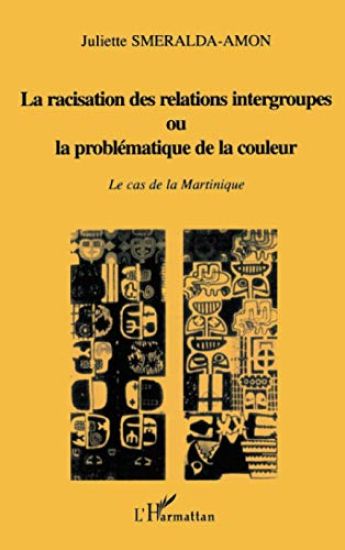
LA RACISATION DES RELATIONS INTERGROUPES OU LA PROBLÉMATIQUE
Juliette Smeralda
Editions L'Harmattan
2024
nidottu
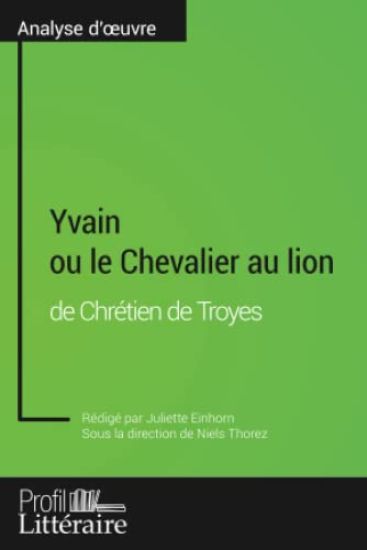
Yvain ou le Chevalier au lion de Chrétien de Troyes (Analyse approfondie)
Juliette Einhorn
Profil-Litteraire.fr
2017
pokkari
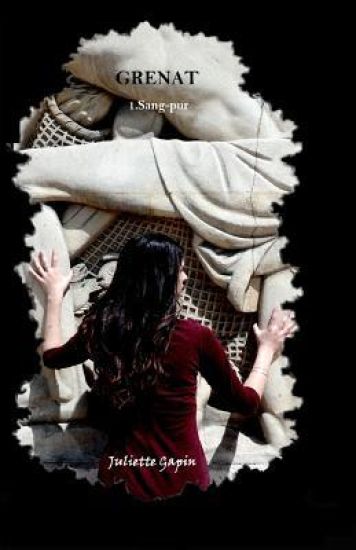
Jade a toujours v cu cach e du reste de la communaut des vampires. Son fr re l'a toujours prot g e; elle est la seule qui a de la valeurs ses yeux. Il n'a qu'elle, et il veille sur elle depuis qu'ils sont devenus orphelins. Ils viennent d'arriver dans une nouvelle ville, ils pensent pouvoir de nouveau passer quelques temps en paix. Pourtant, le destin aime nous narguer, et les choses ne se passent pas toujours comme nous le voudrions. Chez les vampires, dans cette soci t dissimul e aux regards des humains, les princes et princesse ne peuvent tre que des Sang-purs. Le monde est ainsi fait depuis la nuit des temps, c'est la loi de la nature: les plus forts r gnent. Chaque famille de Sang-pur son territoire, son peuple, et ses valeurs, mais apr s des si cles de d chirements o le sang de la race s'est sali et appauvri, d sormais qu'il ne reste qu'une dizaine de Sang-Pur travers le monde, ils poss dent tous une r gle d'or: Tuer un Sang-pur est interdit... Mais qu'advient-il quand les d sirs des uns poussent les autres dans leurs retranchements ?
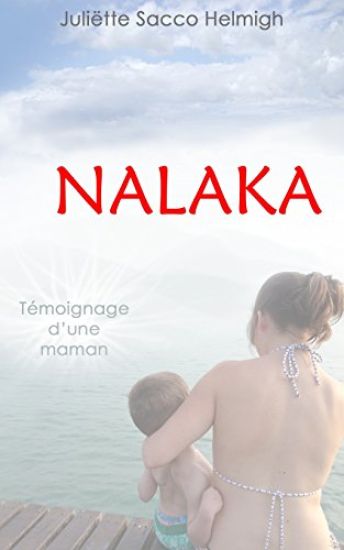
T moignage d'une maman Julien, peine 2 ans, est conduit l'h pital en toute urgence, o il est victime d'un choc septique et de multiples arr ts cardiaques. Il ressortira de l'h pital cinq mois plus tard, paralys , amput et s v rement pileptique. Au d part, il n' tait qu'enrhum . Une nouvelle vie commence, la famille part en qu te pour la meilleure r ducation possible en Europe. Car le petit Julien est consid r comme trop handicap pour vivre, mais il est trop en vie pour baisser les bras. Et quand on regarde son visage expressif, on sait qu'il comprend tout et surtout, on ne peut que l'aimer. Parall lement, Nalaka a t arrach de son monde de confort et se trouve au pied de la montagne russe, face un adversaire de taille. Symbole de l'exclusion sociale et la douleur intense d'une maman qui d fend son enfant polyhandicap , elle entreprend une ascension meurtri re pour sauver son Prom th e, qui est encha n entre les deux pics de Strobilus, la plus haute des montagnes russes.
Nalaka - au pied de la montagne russe: Temoignage d'une maman
Juliette Sacco Helmigh
Amazon Digital Services LLC - Kdp Print Us
2015
nidottu
VERSION GRAND CARACT RE Temoignage d'une maman Julien, peine 2 ans, est conduit l'h pital en toute urgence, o il est victime d'un choc septique et de multiples arr ts cardiaques. Il ressortira de l'h pital cinq mois plus tard, paralys , amput et s v rement pileptique. Au d part il n' tait qu'enrhum ... Une nouvelle vie commence, la famille part en qu te pour la meilleure r ducation possible en Europe. Car le petit Julien est consid r comme trop handicap pour vivre, mais il est trop en vie pour baisser les bras. Et quand on regarde son visage expressif, on sait qu'il comprend tout et surtout, on ne peut que l'aimer. Parall lement, Nalaka a t arrach de son monde de confort et se trouve au pied de la montagne russe, face un adversaire de taille. Symbole de l'exclusion sociale et la douleur intense d'une maman qui d fend son enfant polyhandicap , elle entreprend une ascension meurtri re pour sauver son Prom th e, qui est encha n entre les deux pics de Strobilus, la plus haute des montagnes russes.
The title of this book, Timshall; written by the author; Juliette Schlegl, is derived from John Steinbeck's definition of it "Timshel" in East of Eden. Steinbeck emphasizes this word as imperative, writing that each individual by taking stock of his or her past raises one question; was it good or was it bad? If she had chosen any other path in her pain-filled life, would she have demons running after her in the process of surviving and making a living? What is very plain to see despite the fact of the character's inherited problems as a Cameroonian and later issues of assimilation in Europe, is that her life has been based upon a moral foundation, a remarkable, even stunningly strong one. Thus, the Steinbeck imperative works as a perfect influence, the philosophical vehicle running throughout this book.That definition is "thou mayest rule over sin", and for Schlegl it opens a kind of divine desire in the minds of human beings. This autobiographical novel is about a life full of objections, heartbreak, humiliation, bullying, barriers, and temptations. It traces a path like a river from the author's native home in Cameroon and by extension Africa, and from there to Ivory Coast, Ghana, France, Germany, Sri Lanka, Ireland, and London.Schlegl writes with superb descriptive power, especially in the scenes where her character's solitude and the world's indifference came together to create the most reflective passages in the book; about her early life, her education, her search for a job, and on to her career, therein runs the psychological scar that seems more like a birthright than an accidental set of circumstances made by the serrations of history and destiny. Thus, her career or path in life is described in the subtitle "A Saw-Toothed Career. Readers, although, can readily accept what the author says it is truthful, very intelligent, and touching; reading of a problematic world and it is said in the spirit of a life-giver, successfully transmitting the base elements into spiritual fullness.

Quantum Thermodynamics and Optomechanics
Juliette Monsel
Springer Nature Switzerland AG
2020
sidottu
This thesis demonstrates the potential of two platforms to explore experimentally the emerging field of quantum thermodynamics that has remained mostly theoretical so far. It proposes methods to define and measure work in the quantum regime. The most important part of the thesis focuses on hybrid optomechanical devices, evidencing that they are proper candidates to measure directly the fluctuations of work and the corresponding fluctuation theorem. Such devices could also give rise to the observation of mechanical lasing and cooling, based on mechanisms similar to a heat engine. The final part of the thesis studies how quantum coherence can improve work extraction in superconducting circuits. All the proposals greatly clarify the concept of work since they are based on measurable quantities in state of the art devices.
Quantum Thermodynamics and Optomechanics
Juliette Monsel
Springer Nature Switzerland AG
2021
nidottu
This thesis demonstrates the potential of two platforms to explore experimentally the emerging field of quantum thermodynamics that has remained mostly theoretical so far. It proposes methods to define and measure work in the quantum regime. The most important part of the thesis focuses on hybrid optomechanical devices, evidencing that they are proper candidates to measure directly the fluctuations of work and the corresponding fluctuation theorem. Such devices could also give rise to the observation of mechanical lasing and cooling, based on mechanisms similar to a heat engine. The final part of the thesis studies how quantum coherence can improve work extraction in superconducting circuits. All the proposals greatly clarify the concept of work since they are based on measurable quantities in state of the art devices.
Wealth, Values, Culture & Education
Juliette E. Torabian
Springer Nature Switzerland AG
2022
sidottu
“The book on offer here is fascinating. I do not think it is proper to classify it as ‘philosophy’ or ‘sociology’ or ‘comparative education’. It is a work sui generis. Its cultural and historical range is extraordinary. Its illustrations are themselves arresting. Its literature is well outside disciplinary conventions and ranges across a number of languages. Mirabile dictu!” Professor Robert Cowen How have modern societies arrived at assuming: · Culture is non-essential! · Higher education is to train economically but not socio-politically active & engaged citizens! · Economic wealth is the most important and prominent form of individual and national assets! · Precariousness and socio-economic gaps are due to individuals’ skills and capacities but not the failure of legal, political, and social systems! · Freedom and equality are about “choices in having” but not necessarily about “ways of being and becoming”! Torabian argues these assumptions have not been constructed overnight and that COVID-19 has simply revealed their long-term fabrication and impact since the 1970s. This book is a fascinating voyage from the Middle Ages to today. It travels across different socio-cultural and political contexts drawing on arts, literary works, music, philosophical thoughts, economic and social concepts. It explores value systems and perceptions of wealth, poverty, and inequality and depicts the mutual impact and shifting role of (higher) education and culture and societies- particularly when related to social revolutions, political participation, and collective quests for equality and justice across time and spaces. Examining instrumentalisation of culture and education by the powerfulelite, Torabian delineates mechanisms through which values are fabricated and imposed on the masses. Drawing on some catching examples, she explains the authoritarian elite do so through visible rewards and punishments, while in capitalist societies power remains invisible and indirect. In both contexts, though, she skilfully demonstrates, the powerful groups transform the role and meaning of culture and higher education to facilitate normalisation and internalisation of their fabricated value system among the masses. Consequently, Torabian celebrates the recently accelerated quest for socio-ecological justice and sustainability across societies as a fortunate cosmopolitan shift. This, she believes, announces a rupture with the dominant capitalist ideology that has reigned the world since the 1970s through celebrity culture, media, propaganda, and by reducing higher education to an economic activity. The pursuit of a socio-ecological contract based on fairness, justice, and participation, Torabian argues, requires a renewed value system in which the socio-political role of culture and higher education can be revitalised. To this end, she introduces an innovative framework, i.e., the Big Wealth Pie (the topic of the author’s upcoming book in this series) and proposes using transgressive education, resistance pedagogy, and teaching ignorance. She reckons such a social contract can be a global reality if “being” replaces the capitalist ideology of “having”; a process that can be started and reified by questioning what is or is not essential in socio-ecologically just societies. The book is thought-provoking and timely in questioning values and social institutions that have normalised precariousness, inequality, and poverty within a consumerist logic.
Wealth, Values, Culture & Education
Juliette E. Torabian
Springer Nature Switzerland AG
2023
nidottu
“The book on offer here is fascinating. I do not think it is proper to classify it as ‘philosophy’ or ‘sociology’ or ‘comparative education’. It is a work sui generis. Its cultural and historical range is extraordinary. Its illustrations are themselves arresting. Its literature is well outside disciplinary conventions and ranges across a number of languages. Mirabile dictu!” Professor Robert Cowen How have modern societies arrived at assuming: · Culture is non-essential! · Higher education is to train economically but not socio-politically active & engaged citizens! · Economic wealth is the most important and prominent form of individual and national assets! · Precariousness and socio-economic gaps are due to individuals’ skills and capacities but not the failure of legal, political, and social systems! · Freedom and equality are about “choices in having” but not necessarily about “ways of being and becoming”! Torabian argues these assumptions have not been constructed overnight and that COVID-19 has simply revealed their long-term fabrication and impact since the 1970s. This book is a fascinating voyage from the Middle Ages to today. It travels across different socio-cultural and political contexts drawing on arts, literary works, music, philosophical thoughts, economic and social concepts. It explores value systems and perceptions of wealth, poverty, and inequality and depicts the mutual impact and shifting role of (higher) education and culture and societies- particularly when related to social revolutions, political participation, and collective quests for equality and justice across time and spaces. Examining instrumentalisation of culture and education by the powerfulelite, Torabian delineates mechanisms through which values are fabricated and imposed on the masses. Drawing on some catching examples, she explains the authoritarian elite do so through visible rewards and punishments, while in capitalist societies power remains invisible and indirect. In both contexts, though, she skilfully demonstrates, the powerful groups transform the role and meaning of culture and higher education to facilitate normalisation and internalisation of their fabricated value system among the masses. Consequently, Torabian celebrates the recently accelerated quest for socio-ecological justice and sustainability across societies as a fortunate cosmopolitan shift. This, she believes, announces a rupture with the dominant capitalist ideology that has reigned the world since the 1970s through celebrity culture, media, propaganda, and by reducing higher education to an economic activity. The pursuit of a socio-ecological contract based on fairness, justice, and participation, Torabian argues, requires a renewed value system in which the socio-political role of culture and higher education can be revitalised. To this end, she introduces an innovative framework, i.e., the Big Wealth Pie (the topic of the author’s upcoming book in this series) and proposes using transgressive education, resistance pedagogy, and teaching ignorance. She reckons such a social contract can be a global reality if “being” replaces the capitalist ideology of “having”; a process that can be started and reified by questioning what is or is not essential in socio-ecologically just societies. The book is thought-provoking and timely in questioning values and social institutions that have normalised precariousness, inequality, and poverty within a consumerist logic.
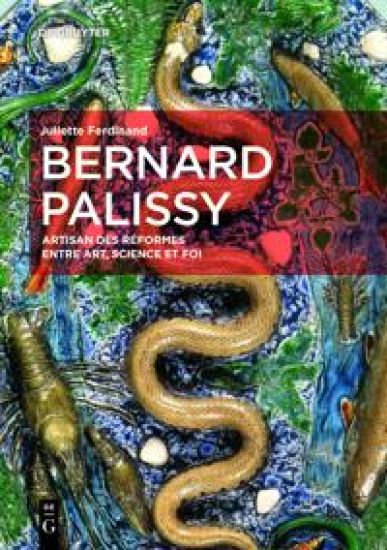
In his grotto and garden concepts, Bernard Palissy (1510–1590) developed the veristic "style rustique". It reflects the upheavals that transformed Renaissance Europe, particularly in the fields of religion and science. Juliette Ferdinand addresses all of Palissy's areas of interest, including ceramics, garden art, and natural philosophy. She sheds light on his demand for a reform of science and religion that should be guided by a return to the origins of nature and scripture. Beyond the astonishment that their appearance still arouses in the viewer, it is the complexity and richness of an era that the "rustic figulines" testify to. Look inside