Kirjojen hintavertailu. Mukana 11 244 527 kirjaa ja 12 kauppaa.

Kirjahaku

Etsi kirjoja tekijän nimen, kirjan nimen tai ISBN:n perusteella.

1000 tulosta hakusanalla Kay Stranger

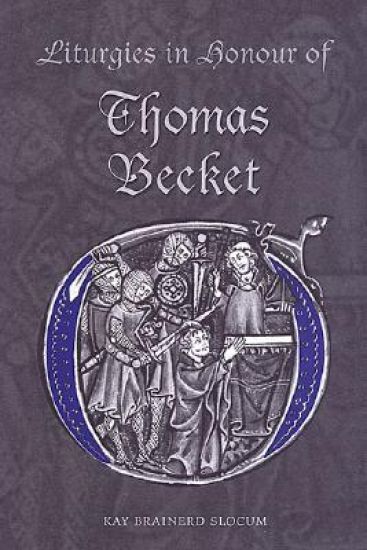
Liturgies in Honour of Thomas Becket

Liturgies in Honour of Thomas Becket

Kay Brainerd Slocum

University of Toronto Press
2004
sidottu
Martyred in 1170 when still the Archbishop of Canterbury, St. Thomas Becket was canonized only three years later, and became one of the most important religious figures in the history of the English church. In this work, Kay Slocum analyzes the image of Thomas Becket as presented in the liturgies composed in his honour, and examines these within the context of the political and social history of the late twelfth and early thirteenth centuries. Through these liturgies, Thomas Becket is presented as 'novus homo', 'bonus pastor', a defender of the church, a martyr, a miracle worker, and a type of Christ. The first part of this book examines these images, and demonstrates how each is developed using material from Becket's contemporary biographers, and analyzing the historical and political context. The second half of this book presents musical transcriptions and English translations for two complete offices, one for Thomas Becket's feast day, and another for the commemoration of the translation of his remains. Drawing on literature, music, and liturgical texts, this interdisciplinary study illustrates how varied materials can be drawn together to enhance our understanding of medieval culture and society.
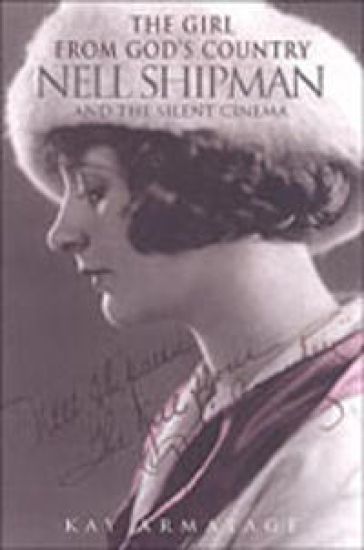
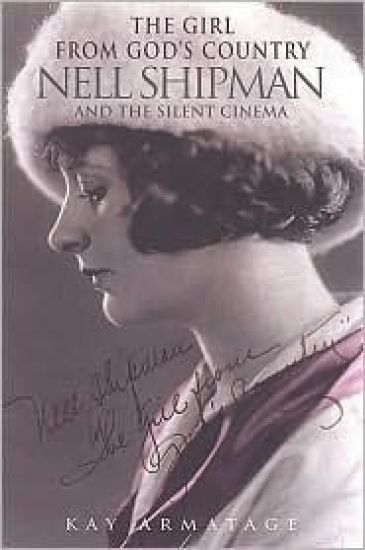
The Girl from God's Country

The Girl from God's Country

Kay Armatage

University of Toronto Press
2003
sidottu
In The Girl from God's Country, Kay Armatage reintroduces film studies scholars to Nell Shipman, a pioneer in both Canadian and American film, and one of proportionately numerous women from Hollywood's silent era who wrote, directed, produced, and acted in motion pictures. Born and raised in British Columbia, Shipman became a contract actress for Vitagraph Studios, starring in God's Country and the Woman (1915) and Back to God's Country (1919), among other films. These action-packed adventure melodramas, in which the heroine is called upon to rescue her husband and defeat the villain, were immensely successful. Later, Shipman started up her own production company to make films centred on her screen persona, 'the girl from God’s country.' By the mid 1920s, however, the formation of the large Hollywood studios and vertical integration closed down the independents, Shipman among them. Nevertheless, she continued writing until her death in 1970. Through the use of social history, feminist film theory, and biography, Armatage creates a portrait of a woman film pioneer. Using Shipman's working life as a window to the profession, Armatage explores the position of women in modernism, the developing film industry, and cinematic practice of the 1920s. The Girl from God's Country also contextualizes Shipman's work within the development of Hollywood as a locus of artistic production and in relation to women filmmakers from Europe, Australia, Russia and the United States. Armatage brings Shipman back to life in this important book.
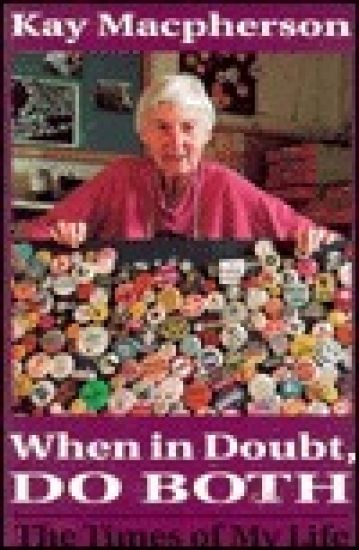
When in Doubt, Do Both

When in Doubt, Do Both

Kay MacPherson

University of Toronto Press
1994
pokkari
In this memoir Kay Macpherson, the respected feminist, pacifist, and political activist, takes a delightful look back at a rich and fascinating life, dedicated to the principles of women's rights and social justice, and to an unshakeable conviction that women working together can change the world, and have a marvellous time in the process. Born in Englad in 1913, Macpherson immigrated to Canada in 1935. Nine years later she married C.B. Macpherson, then in the early years of his distinguished career as a political philosopher, and together they raised three children. In the late 1940s, a busy mother and academic wife, Macpherson joined the Association of Women Electors. Eventually she served as its national president, an office she held also with the Voice of Women and later with the National Action Committee on the Status of Women. She ran several times as a federal candidate for the NDP. She travelled the world as an advocate of women's rights, and spent most of her time in Canada in the consuming work of social change: organizing, demonstrating, writing letters, giving speeches, and, above all, meeting. From their meetings Macpherson and her colleagues moved into the streets, into Parliament, and, eventually, into history, witho ne of the most important achievements for Canadian women int he twentieth century: the celebrated equality clause in the Constitution of 1982.Macpherson's story is the story of second-wave feminism in Canada, which cut across party, class, and language lines, and was characterized by a tremendous sense of unity and of hope. It is also a candid account of family stresses, including strained relations with her children, the death of her husband in 1987, and that of her son two years later. Kay Macpherson remains unshaken in her commitment to the grass-roots action. On receiving the Order of Canada in 1982, she was asked by the Governor General what she had been up to lately. 'Revolution,' she replied.
The Girl from God's Country

The Girl from God's Country

Kay Armatage

University of Toronto Press
2003
pokkari
In The Girl from God's Country, Kay Armatage reintroduces film studies scholars to Nell Shipman, a pioneer in both Canadian and American film, and one of proportionately numerous women from Hollywood's silent era who wrote, directed, produced, and acted in motion pictures. Born and raised in British Columbia, Shipman became a contract actress for Vitagraph Studios, starring in God's Country and the Woman (1915) and Back to God's Country (1919), among other films. These action-packed adventure melodramas, in which the heroine is called upon to rescue her husband and defeat the villain, were immensely successful. Later, Shipman started up her own production company to make films centred on her screen persona, 'the girl from God’s country.' By the mid 1920s, however, the formation of the large Hollywood studios and vertical integration closed down the independents, Shipman among them. Nevertheless, she continued writing until her death in 1970. Through the use of social history, feminist film theory, and biography, Armatage creates a portrait of a woman film pioneer. Using Shipman's working life as a window to the profession, Armatage explores the position of women in modernism, the developing film industry, and cinematic practice of the 1920s. The Girl from God's Country also contextualizes Shipman's work within the development of Hollywood as a locus of artistic production and in relation to women filmmakers from Europe, Australia, Russia and the United States. Armatage brings Shipman back to life in this important book.
Erratic Facts

Erratic Facts

Kay Ryan

Grove Press / Atlantic Monthly Press
2015
sidottu
Kay Ryan--"a classic American poet" (John Freeman)--is acclaimed for her highly intelligible, deeply insightful poems. Erratic Facts is her first new collection since the Pulitzer Prize-winning The Best of It, and it is animated with her signature swift, lucid, lyrical style. At once witty and melancholy, playful and heartfelt, Ryan examines enormous subjects--existence, consciousness, love, loss--in compact poems that have immensely powerful resonance. Sly rhymes and strong cadences lend remarkable musicality to her incisive wisdom. While these pieces are composed of the same brevity and vitality that has characterized her singular voice over the course of more than 20 years, her mind is sharper than ever, her imagination more eccentric and daring. Erratic Facts solidifies Ryan's place at the pinnacle of American poetry, and proves that she will remain among the leading innovators in literary history.
Erratic Facts

Erratic Facts

Kay Ryan

Grove Press / Atlantic Monthly Press
2016
nidottu
Erratic Facts, Kay Ryan's first collection since the Pulitzer Prize-winning The Best of It, offers sixty-plus new examples of her swift, lucid style. Ryan examines enormous subjects with compact poems in which sly rhymes and syncopation lend an off-foot musicality to unnerving wisdom. These poems demonstrate the same quick-fire brain-work that has animated her verse for the last thirty years, in ways more daring than ever.
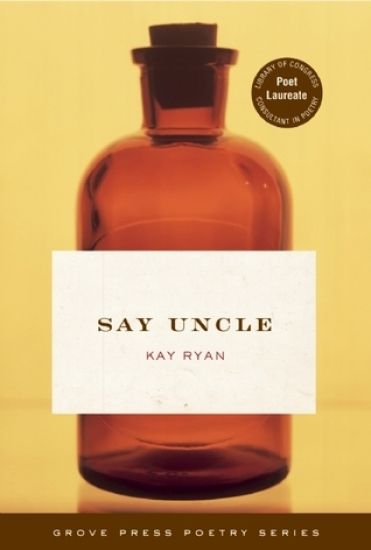
Say Uncle

Say Uncle

Kay Ryan

Grove Press / Atlantic Monthly Press
2000
pokkari
A new anthology of poetry by the award-winning author of Dragon Acts to Dragon Ends and Flamingo Watching presents an array of mgical, unpredictable, and lyrical works that explores the hidden connections of ordinary events and objects. Original.
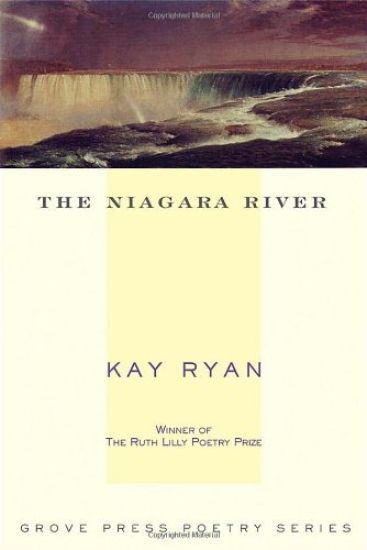
The Niagara River

The Niagara River

Kay Ryan

Grove Press / Atlantic Monthly Press
2005
pokkari
In the citation accompanying Kay's recent award of the prestigious Ruth Lilly Prize, Christine Wiman wrote: "Kay Ryan can take any subject and make it her own. Her poems-which combine extreme concision and formal expertise with broad subjects and deep feeling-could never be mistaken for anyone else's. Her work has the kind of singularity and sustained integrity that are very, very rare?. It's always a dicey business predicting the literary future?[but] for this reader, these poems feel as if there were built to last, and?they have the passion, precision and sheer weirdness to do so."Salon compared the poems in Ryan's last collection to "Fabergé eggs, tiny, ingenious devices that inevitably conceal some hidden wonder." The exquisite poems in The Niagara River provide similarly hidden gems. Bafflingly effective, they seem too brief and blithe to pack so much wallop. Intense and relaxed at once, both buoyant and rueful, their singular music appeals to many people. Her poems, products of an immaculately off-kilter mind, have been featured everywhere from the Sunday funnies to New York subways to plaques at the zoo to the pages of The New Yorker.
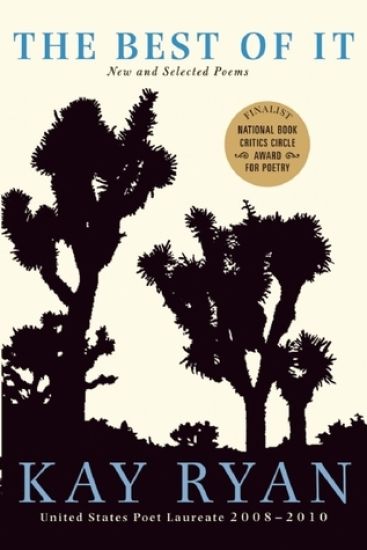
The Best of It: New and Selected Poems
Kay Ryan's recently concluded two-year term as the Library of Congress's sixteenth poet laureate is just the latest in an amazing array of accolades for this wonderfully accessible, widely loved poet--her awards include the Ruth Lilly Poetry Prize from the Poetry Foundation, four Pushcart Prizes, and a Guggenheim fellowship. Ryan's The Best of It: New and Selected Poems has garnered lavish praise. The two hundred poems in The Best of It offer a stunning retrospective of her work, as well as a swath of never-before-published poems--all of which are sure to appeal equally to longtime fans and general readers.
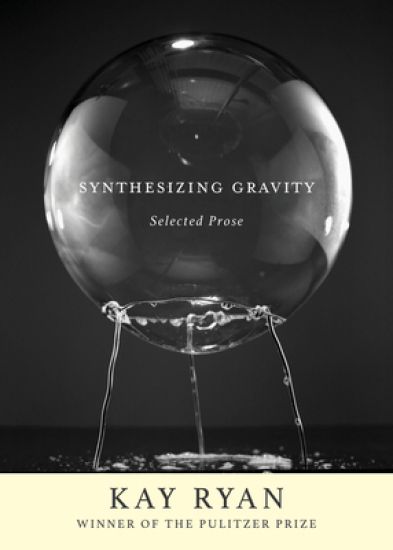
Synthesizing Gravity

Synthesizing Gravity

Kay Ryan

Black Cat
2020
sidottu
The first-ever collection of essays by one of our most distinguished and distinctive poets, Pulitzer Prize-winner and former Poet Laureate of the United States, Kay RyanSynthesizing Gravity gathers for the first time a thirty-year selection of Kay Ryan's probings into aesthetics, poetics, and the mind in pursuit of art.A bracing collection of critical prose, book reviews, and her private previously unpublished soundings of poems and poets-- including Robert Frost, Stevie Smith, Marianne Moore, William Bronk, and Emily Dickinson-- Synthesizing Gravity bristles with Ryan's crisp wit, her keen off-kilter insights, and her appetite and appreciation for the genuine. Among essays like "Radiantly Indefensible," "Notes on the Danger of Notebooks," and "The Abrasion of Loneliness," are piquant pieces on the virtues of emptiness, forgetfulness, and other under-loved concepts. Edited and with an introduction by Christian Wiman, this generous collection of Ryan's distinctive thinking gives us a surprising look into the mind of an American master.
Synthesizing Gravity

Synthesizing Gravity

Kay Ryan

Black Cat
2021
nidottu
The first-ever collection of essays by one of our most distinguished and distinctive poets, Pulitzer Prize-winner and former Poet Laureate of the United States, Kay Ryan Synthesizing Gravity gathers for the first time a thirty-year selection of Kay Ryan's probings into aesthetics, poetics, and the mind in pursuit of art. A bracing collection of critical prose, book reviews, and her private previously unpublished soundings of poems and poets-- including Robert Frost, Stevie Smith, Marianne Moore, William Bronk, and Emily Dickinson-- Synthesizing Gravity bristles with Ryan's crisp wit, her keen off-kilter insights, and her appetite and appreciation for the genuine. Among essays like "Radiantly Indefensible," "Notes on the Danger of Notebooks," and "The Abrasion of Loneliness," are piquant pieces on the virtues of emptiness, forgetfulness, and other under-loved concepts. Edited and with an introduction by Christian Wiman, this generous collection of Ryan's distinctive thinking gives us a surprising look into the mind of an American master.
Wild Seasons

Wild Seasons

Kay Young

University of Nebraska Press
1993
pokkari
For nature lovers as well as cooks, there's plenty to whet the appetite in this unique field guide-cum-cookbook. Starting with the first plants ready for eating in the early spring (watercress and nettles) and following the sequence of harvest through the late fall (persim-mons and Jerusalem artichokes), Kay Young offers full, easy-to-follow directions for identifying, gathering, and preparing some four dozen edible wild plants of the Great Plains. And since most of the plants occur elsewhere as well, residents of other regions will find much of interest here. 'This is not a survival book," writes the author; "only those plants whose flavor and availability warrant the time and effort to collect or grow them are included." The nearly 250 recipes range from old-time favorites (poke sallet; catnip tea; horehound lozenges; hickory nut cake; a cupboardful of jams, jellies, and pies) to enticing new creations (wild violet salad, milkweed sandwiches, cattail pollen pancakes, day-lily hors d'oeuvres, prickly-pear cactus relish). Reflecting the author's conviction that just as we can never go back to subsisting wholly on wild things, neither should we exclude them from our lives, this book serves up generous portions of botanical information and ecological wisdom along with good food.
Who Wrote the Book of Life?

Who Wrote the Book of Life?

Kay Lily E.

Stanford University Press
2000
pokkari
This is a detailed history of one of the most important and dramatic episodes in modern science, recounted from the novel vantage point of the dawn of the information age and its impact on representations of nature, heredity, and society. Drawing on archives, published sources, and interviews, the author situates work on the genetic code (1953-70) within the history of life science, the rise of communication technosciences (cybernetics, information theory, and computers), the intersection of molecular biology with cryptanalysis and linguistics, and the social history of postwar Europe and the United States. Kay draws out the historical specificity in the process by which the central biological problem of DNA-based protein synthesis came to be metaphorically represented as an information code and a writing technology—and consequently as a “book of life.” This molecular writing and reading is part of the cultural production of the Nuclear Age, its power amplified by the centuries-old theistic resonance of the “book of life” metaphor. Yet, as the author points out, these are just metaphors: analogies, not ontologies. Necessary and productive as they have been, they have their epistemological limitations. Deploying analyses of language, cryptology, and information theory, the author persuasively argues that, technically speaking, the genetic code is not a code, DNA is not a language, and the genome is not an information system (objections voiced by experts as early as the 1950s). Thus her historical reconstruction and analyses also serve as a critique of the new genomic biopower. Genomic textuality has become a fact of life, a metaphor literalized, she claims, as human genome projects promise new levels of control over life through the meta-level of information: control of the word (the DNA sequences) and its editing and rewriting. But the author shows how the humbling limits of these scriptural metaphors also pose a challenge to the textual and material mastery of the genomic “book of life.”
Considering Hate

Considering Hate

Kay Whitlock; Michael Bronski

Beacon Press
2016
pokkari
A provocative book about rethinking hatred and violence in America Over the centuries American society has been plagued by brutality fueled by disregard for the humanity of others: systemic violence against Native peoples, black people, and immigrants. More recent examples include the Steubenville rape case and the murders of Matthew Shepard, Jennifer Daugherty, Marcelo Lucero, and Trayvon Martin. Most Americans see such acts as driven by hate. But is this right? Longtime activists and political theorists Kay Whitlock and Michael Bronski boldly assert that American society's reliance on the framework of hate to explain these acts is wrongheaded, misleading, and ultimately harmful. All too often Americans choose to believe that terrible cruelty is aberrant, caused primarily by "extremists" and misfits. The inevitable remedy of intensified government-based policing, increased surveillance, and harsher punishments has never worked and does not work now. Stand-your-ground laws; the US prison system; police harassment of people of color, women, and LGBT people; and the so-called war on terror demonstrate that the remedies themselves are forms of institutionalized violence. Considering Hate challenges easy assumptions and failed solutions, arguing that "hate violence" reflects existing cultural norms. Drawing upon social science, philosophy, theology, film, and literature, the authors examine how hate and common, even ordinary, forms of individual and group violence are excused and normalized in popular culture and political discussion. This massive denial of brutal reality profoundly warps society's ideas about goodness and justice. Whitlock and Bronski invite readers to radically reimagine the meaning and structures of justice within a new framework of community wholeness, collective responsibility, and civic goodness.
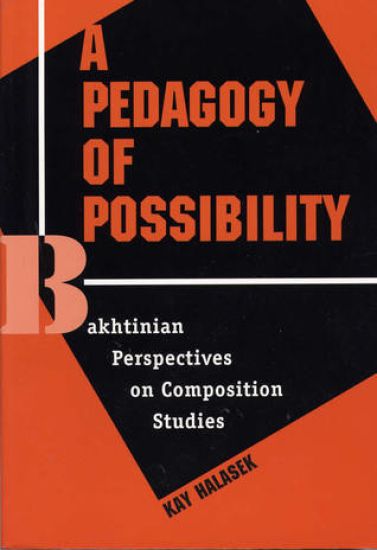
A Pedagogy of Possibility

A Pedagogy of Possibility

Kay Halasek

Southern Illinois University Press
1999
nidottu
The author reconceives composition studies from a Bakhtinian perspective, focusing on both the discipline's theoretical assumptions and its pedagogies. Halasek explores the implications of Bakhtin's work and provides a model of scholarship balanced between practice and theory.
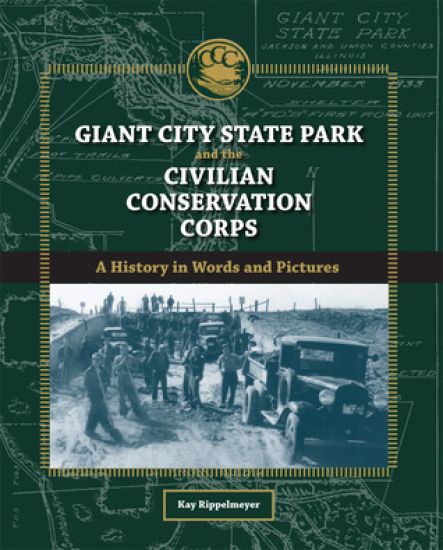
Giant City State Park and the Civilian Conservation Corps

Giant City State Park and the Civilian Conservation Corps

Kay Rippelmeyer

Southern Illinois University Press
2010
nidottu
This title documents the fascinating history of an Illinois treasure. Many recognize Giant City State Park as one of the premier recreation spots in southern Illinois, with its unspoiled forests, glorious rock formations, and famous sandstone lodge. But few know the park's history or are aware of the remarkable men who struggled to build it. ""Giant City State Park and the Civilian Conservation Corps: A History in Words and Pictures"" provides the first in-depth portrait of the park's creation, drawing on rarely seen photos, local and national archival research, and interviews to present an intriguing chapter in Illinois history. Kay Rippelmeyer traces the geological history of the park, exploring the circumstances that led to the breathtaking scenery for which Giant City is so well known, and provides insightful background and cultural history of the area surrounding the park. Rippelmeyer then outlines the effects of the Depression era and the New Deal on southern Illinois, including relief efforts by the Civilian Conservation Corps, which began setting up camps at Giant City in 1933. The men of the CCC, most of them natives of southern and central Illinois, are brought to life through vividly detailed, descriptive prose and hundreds of black and white photographs that lavishly illustrate life in the two camps at the park. This fascinating book not only documents the men's hard work - from the clearing of the first roads and building of stone bridges, park shelters, cabins, and hiking and bridle trails, to quarry work and the raising of the lodge's famous columns - it also reveals the more personal side of life in the camps, covering topics ranging from education, sports, and recreation, to camp newspapers, and even misbehavior and discipline. Supplementing the photographs and narrative are engaging conversations with CCC alumni and their family members, which give readers a rich oral history of life at Giant City in the 1930s. The book is further enhanced by maps, rosters of enrollees and officers, and a list of CCC camps in southern Illinois. The culmination of three decades of research, ""Giant City State Park and the Civilian Conservation Corps"" provides the most intimate history ever of the park and its people, honoring one of Illinois' most unforgettable places and the men who built it.
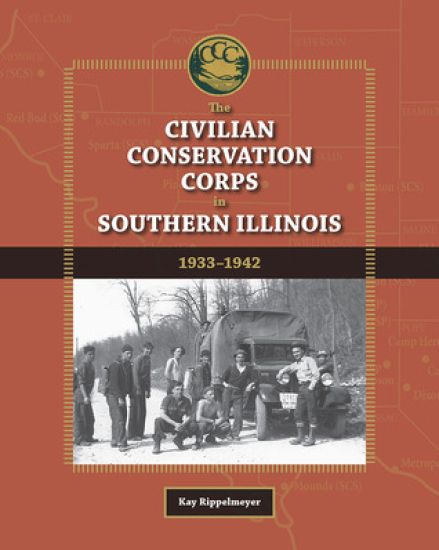
The Civilian Conservation Corps in Southern Illinois, 1933-1942

The Civilian Conservation Corps in Southern Illinois, 1933-1942

Kay Rippelmeyer

Southern Illinois University Press
2015
sidottu
Drawing on more than thirty years of meticulous research, Kay Rippelmeyer details the Depression-era history of the simultaneous creation of the Civilian Conservation Corps (CCC) and the Shawnee National Forest in southern Illinois. Through the stories of the men who worked in CCC camps devoted to soil and forest conservation projects, she offers a fascinating look into an era of utmost significance to the identity, citizens, wildlife, and natural landscape of the region, Rippelmeyer outlines the geologic and geographic history of southern Illinois, from Native American uses of the land to the timber industry’s decimation of the forest by the 1920s. Detailing both the economic hardships and agricultural land abuse plaguing the region during the Depression, she reveals how the creation of the CCC under Franklin Delano Roosevelt coincided with the regional campaign for a national forest and how locals first became aware of and involved with the program.Rippelmeyer mined CCC camp records from the National Archives, newspaper accounts and other correspondence and conducted dozens of oral interviews with workers and their families to re-create life in the camps. An extensive camp compendium augments the volume, featuring numerous photographs, camp locations and dates of operation, work history, and company rosters. Satisfying public curiosity and the need for factual information about the camps in southern Illinois, this is an essential contribution to regional history and a window to the national impact of the CCC.