Kirjojen hintavertailu. Mukana 12 016 292 kirjaa ja 12 kauppaa.

Kirjahaku

Etsi kirjoja tekijän nimen, kirjan nimen tai ISBN:n perusteella.

1000 tulosta hakusanalla Kenneth Lambert

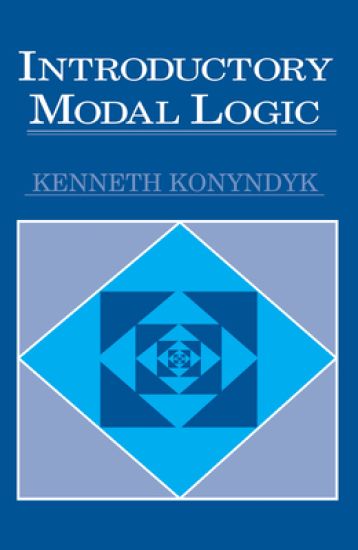
Introductory Modal Logic

Introductory Modal Logic

Kenneth J. Konyndyk

University of Notre Dame Press
1986
nidottu
Modal logic, developed as an extension of classical propositional logic and first-order quantification theory, integrates the notions of possibility and necessity and necessary implication. Arguments whose understanding depends on some fundamental knowledge of modal logic have always been important in philosophy of religion, metaphysics, and epistemology. Moreover, modal logic has become increasingly important with the use of the concept of "possible worlds" in these areas. Introductory Modal Logic fills the need for a basic text on modal logic, accessible to students of elementary symbolic logic. Kenneth Konyndyk presents a natural deduction treatment of propositional modal logic and quantified modal logic, historical information about its development, and discussions of the philosophical issues raised by modal logic. Characterized by clear and concrete explanations, appropriate examples, and varied and challenging exercises, Introductory Modal Logic makes both modal logic and the possible-worlds metaphysics readily available to the introductory level student.
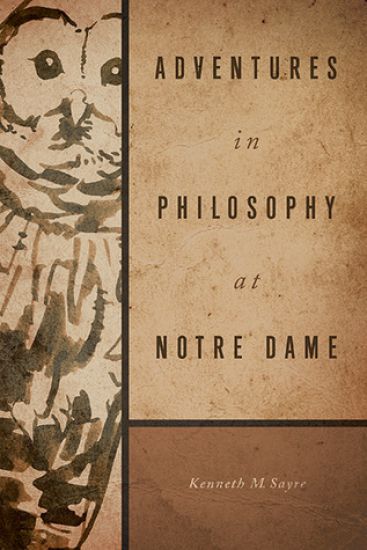
Adventures in Philosophy at Notre Dame

Adventures in Philosophy at Notre Dame

Kenneth M. Sayre

University of Notre Dame Press
2014
nidottu
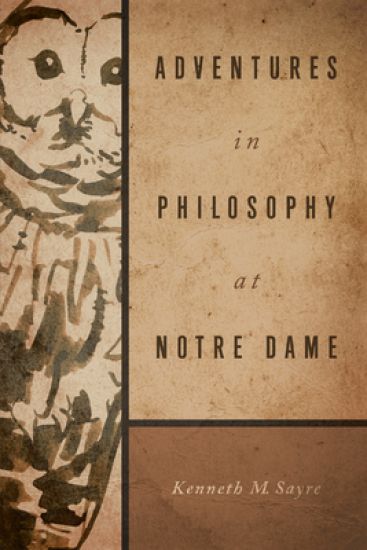
Adventures in Philosophy at Notre Dame recounts the fascinating history of the University of Notre Dame's Department of Philosophy, chronicling the challenges, difficulties, and tensions that accompanied its transition from an obscure outpost of scholasticism in the 1940s into one of the more distinguished philosophy departments in the world today. Its author, Kenneth Sayre, who has been a faculty member for over five decades, focuses on the people of the department, describing what they were like, how they got along with each other, and how their personal predilections and ambitions affected the affairs of the department overall. The book follows the department's transition from its early Thomism to the philosophical pluralism of the 1970s, then traces its drift from pluralism to what Sayre terms "professionalism," resulting in what some perceive as a severance from its Catholic roots by the turn of the century. Each chapter includes an extensive biography of an especially prominent department member, along with biographical sketches of other philosophers arriving during the period it covers. Central to the story overall are the charismatic Irishmen Ernan McMullin and Ralph McInerny, whose interaction dominated affairs in the department in the 1960s and 1970s, and who continued to play major roles in the following decades. Philosophers throughout the English-speaking world will find Adventures in Philosophy at Notre Dame essential reading. The book will also appeal to readers interested in the history of the University of Notre Dame and of American higher education generally.
Introductory Modal Logic

Introductory Modal Logic

Kenneth J. Konyndyk

University of Notre Dame Press
1986
sidottu
Modal logic, developed as an extension of classical propositional logic and first-order quantification theory, integrates the notions of possibility and necessity and necessary implication. Arguments whose understanding depends on some fundamental knowledge of modal logic have always been important in philosophy of religion, metaphysics, and epistemology. Moreover, modal logic has become increasingly important with the use of the concept of "possible worlds" in these areas. Introductory Modal Logic fills the need for a basic text on modal logic, accessible to students of elementary symbolic logic. Kenneth Konyndyk presents a natural deduction treatment of propositional modal logic and quantified modal logic, historical information about its development, and discussions of the philosophical issues raised by modal logic. Characterized by clear and concrete explanations, appropriate examples, and varied and challenging exercises, Introductory Modal Logic makes both modal logic and the possible-worlds metaphysics readily available to the introductory level student.
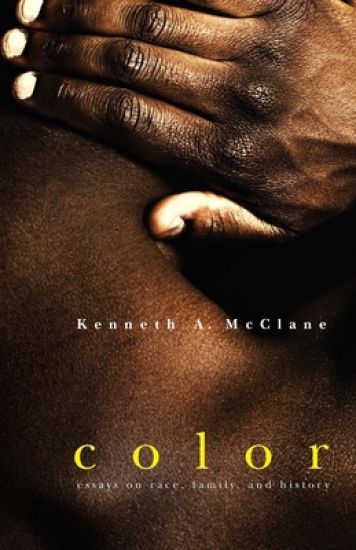
Color

Color

Kenneth A. McClane

University of Notre Dame Press
2009
nidottu
In 1991, acclaimed poet Kenneth A. McClane published Walls: Essays, 1985-1990, a volume of essays dealing with life in Harlem, the death of his alcoholic brother, and the complexities of being black and middle-class in America. Now, in Color: Essays on Race, Family, and History, McClane contributes further to his self-described "autobiographical sojourn" with a second collection of interconnected essays. In McClane's words, "All concern race, although they, like the human spirit, wildly sweep and yaw." A timely installment in our national narrative, Color is a chronicle of the black middle class, a group rarely written about with sensitivity and charity. In evocative, trenchant, and poetic prose, McClane employs the art of the memoirist to explore the political and the personal. He details the poignant narrative of racial progress as witnessed by his family during the 1950s, '60s, and '70s. We learn of his parents' difficult upbringing in Boston, where they confronted much racism; of the struggles they and McClane encountered as they became the first blacks to enter previously all-white institutions, including the oldest independent school in the United States; and of the part his parents played in the civil rights movement, working with Dr. King and others. The book ends with a tender account of his parents in the throes of Alzheimer's disease, which claimed both their lives.
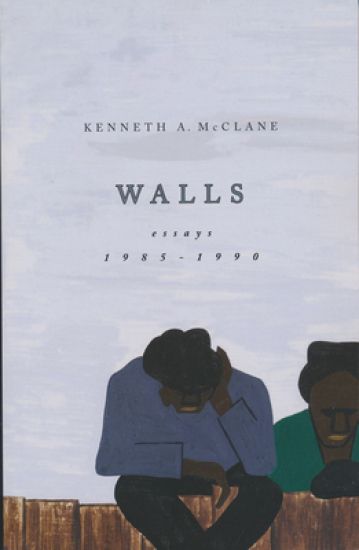
Walls

Walls

Kenneth A. McClane

University of Notre Dame Press
2010
nidottu
Walls: Essays, 1985-1990, Kenneth McClane's first book of autobiographical essays (originally published in 1991), is closely related to his second collection, Color, published by the University of Notre Dame Press in 2009. Walls is a powerful and deeply moving meditation on relationships. It begins with an essay on the death of McClane's brother, Paul, which "changed everything. Time, my work, everything found a new calculus." His brother's life and death are present in some way in all the essays that follow "A Death in the Family," as McClane tells us about giving a poetry reading in a maximum-security prison; his experience of being one of the first two African American students to attend America's oldest private school; teaching creative writing; his sister, Adrienne; a divestment protest at Cornell; and his encounters with James Baldwin. McClane has written a new preface to this paperback edition of Walls, in which he reminds us that we are inevitably interconnected: we are each other's witness.
Plato's Literary Garden: How to Read a Platonic Dialogue

Plato's Literary Garden: How to Read a Platonic Dialogue

Kenneth M. Sayre

UNIVERSITY OF NOTRE DAME PRESS
1995
sidottu
Plato's dialogues are universally acknowledged as standing among the masterworks of the Western philosophic tradition. What most readers do not know, however, is that Plato also authored a public letter in which he unequivocally denies ever having written a work of philosophy. If Plato did not view his written dialogues as works of philosophy, how did he conceive them, and how should readers view them? In Plato's Literary Garden, Kenneth M. Sayre brings over thirty years of Platonic scholarship to bear on these questions, arguing that Plato did not intend the dialogues to serve as repositories of philosophic doctrine, but instead composed them as teaching instruments.
Plato's Literary Garden

Plato's Literary Garden

Kenneth M. Sayre

University of Notre Dame Press
2002
nidottu
Plato's dialogues are universally acknowledged as standing among the masterworks of the Western philosophic tradition. What most readers do not know, however, is that Plato also authored a public letter in which he unequivocally denies ever having written a work of philosophy. If Plato did not view his written dialogues as works of philosophy, how did he conceive them, and how should readers view them? In Plato's Literary Garden, Kenneth M. Sayre brings over thirty years of Platonic scholarship to bear on these questions, arguing that Plato did not intend the dialogues to serve as repositories of philosophic doctrine, but instead composed them as teaching instruments.
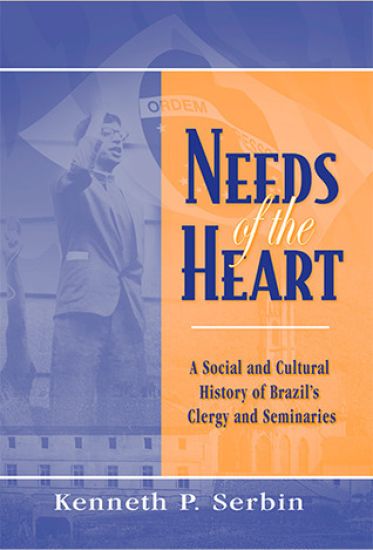
Needs of the Heart

Needs of the Heart

Kenneth P. Serbin

University of Notre Dame Press
2006
sidottu
Needs of the Heart traces five centuries of conflict and change in the life of the clergy in Brazil, home to the world's largest and arguably the most dynamic branch of the Roman Catholic Church. Serbin examines how priests participated in the colonization of Brazil, educated the elite and poor in the faith, propped up the socioeconomic status quo, and reinforced the institution of slavery, all the while living in relative freedom from church authority. Earthy men, many flouted the rule of celibacy and became embroiled in politics. Serbin also describes the conservative modernization of the clergy, effected through seminary education, in the late nineteenth and early twentieth centuries. Emphasizing discipline, the seminaries aimed to mold a new kind of priest—moral, isolated from politics and social entanglements, and, above all, obedient and celibate. However, the social, cultural, and religious upheavals of the 1960s and 1970s led students to reject the seminary. Seminarians worked to form a national union, and many left seminaries to establish greater contact with the people. The seminarians' movement sparked the practice of liberation theology; it also reflected the quest for professional and individual development, including optional celibacy. The Church responded to its seminarians' demands for personalized education by attempting to build an ambitious program in liberation psychology, a phenomenon as important as liberation theology. Seminaries necessarily dealt in the psychology of sexuality, friendship, and other basic human tendencies—what historian Marc Bloch has called the "secret needs of the heart." Serbin argues that the "needs of the heart" were a cause of the political transformation of the Brazilian Church, a transformation catalyzed by the profound identity crisis experienced by clergymen and seminarians in the 1960s and 1970s. The story of this generation of seminarians and priests is intermingled with the challenges and fears present during the repressive military dictatorship (1964 to 1985) and its aftermath. Serbin's definitive history of the Brazilian clergy combines social science research, including over one hundred interviews, with cultural and social theory and a sweeping historical perspective. Through his history of the clergy and seminaries, he provides a history of modern Brazil itself.
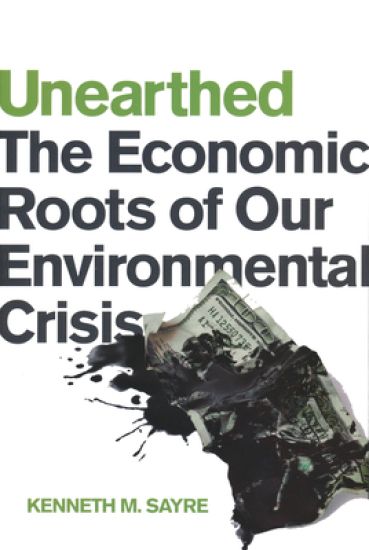
Unearthed

Unearthed

Kenneth M. Sayre

University of Notre Dame Press
2010
nidottu
In Unearthed: The Economic Roots of Our Environmental Crisis, Kenneth M. Sayre argues that the only way to resolve our current environmental crisis is to reduce our energy consumption to a level where the entropy (degraded energy and organization) produced by that consumption no longer exceeds the biosphere's ability to dispose of it. Tangible illustrations of this entropy buildup include global warming, ozone depletion, loss of species diversity, and unmanageable amounts of nonbiodegradable waste. Degradation of the biosphere is tied directly to human energy use, which has been increasing exponentially since the Industrial Revolution. Energy use, in turn, is directly correlated with economic production. Sayre shows how these three factors are invariably bound together. The unavoidable conclusion is that the only way to resolve our environmental crisis is to reverse the present pattern of growth in the world economy. Economic growth is motivated by social values. Key among them are the desire for wealth and consumer values including gratification, convenience, and acquisition of goods. Sayre maintains that economic growth can be reversed only by eliminating these social values in favor of others more conducive to environmental health. Eliminating these values will involve major changes in lifestyle within industrial societies generally. Only with such changes in lifestyle, he argues, does human society as we know it have a chance of survival. Clearly written and thoroughly documented, this book provides a comprehensive overview of our complex environmental predicament.
Can Different Cultures Think the Same Thoughts?

Can Different Cultures Think the Same Thoughts?

Kenneth Dorter

University of Notre Dame Press
2018
sidottu
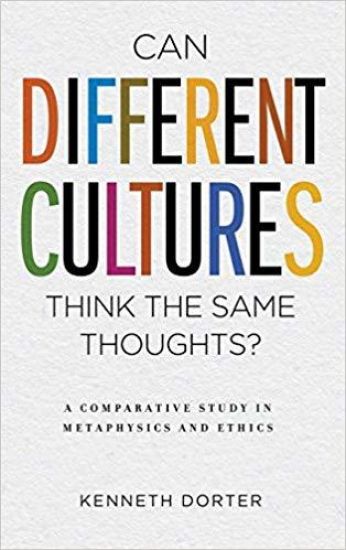
Kenneth Dorter's Can Different Cultures Think the Same Thoughts? is a study of fundamental issues in metaphysics and ethics across major philosophical traditions of the world, including the way in which metaphysics can be a foundation for ethics, as well as the importance of metaphysics on its own terms. Dorter examines such questions through a detailed comparison of selected major thinkers and classic works in three global philosophical traditions, those of India, China, and the West. In each chapter Dorter juxtaposes and compares two or more philosophers or classic works from different traditions, from Spinoza and Shankara, to Confucius and Plato, to Marcus Aurelius and the Bhagavad Gita. In doing so he explores different perspectives and reveals limitations and assumptions that might otherwise be obscure. The goal of Dorter's cross-cultural approach is to consider how far works from different cultures can be understood as holding comparable philosophical views. Although Dorter reveals commonalities across the different traditions, he makes no claim that there is such a thing as a universal philosophy. Clearly there are fundamental disagreements among the philosophers and works studied. Yet in each of the case studies of a particular chapter, we can discover a shared, or at least analogous, way of looking at issues across different cultures. All those interested in metaphysics, ethics, Indian philosophy, Chinese philosophy, and comparative philosophy will find much of interest in this book.
From Revolution to Power in Brazil

From Revolution to Power in Brazil

Kenneth P. Serbin

University of Notre Dame Press
2019
sidottu
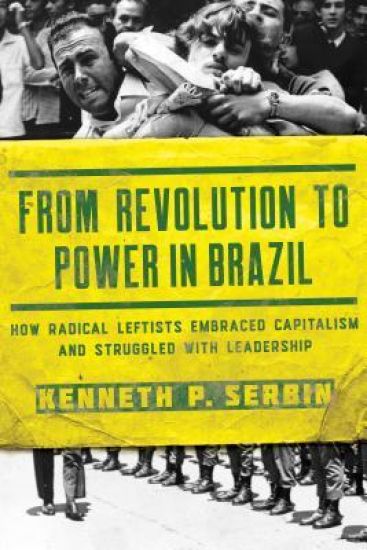
From Revolution to Power in Brazil: How Radical Leftists Embraced Capitalism and Struggled with Leadership examines terrorism from a new angle. Kenneth Serbin portrays a generation of Brazilian resistance fighters and militants struggling to rebuild their lives after suffering torture and military defeat by the harsh dictatorship that took control with the support of the United States in 1964, exiting in 1985. Based on two decades of research and more than three hundred hours of interviews with former members of the revolutionary organization National Liberating Action, Serbin's is the first book to bring the story of Brazil's long night of dictatorship into the present. It explores Brazil's status as an emerging global capitalist giant and its unique contributions and challenges in the social arena. The book concludes with the rise of ex-militants to positions of power in a capitalist democracy—and how they confronted both old and new challenges posed by Brazilian society. Ultimately, Serbin explores the profound human questions of how to oppose dictatorship, revive politics in the wake of brutal repression, nurture democracy as a value, and command a capitalist system. This book will be of keen interest to business people, journalists, policy analysts, and readers with a general interest in Latin America and international affairs.
From Revolution to Power in Brazil

From Revolution to Power in Brazil

Kenneth P. Serbin

University of Notre Dame Press
2021
nidottu
From Revolution to Power in Brazil: How Radical Leftists Embraced Capitalism and Struggled with Leadership examines terrorism from a new angle. Kenneth Serbin portrays a generation of Brazilian resistance fighters and militants struggling to rebuild their lives after suffering torture and military defeat by the harsh dictatorship that took control with the support of the United States in 1964, exiting in 1985. Based on two decades of research and more than three hundred hours of interviews with former members of the revolutionary organization National Liberating Action, Serbin's is the first book to bring the story of Brazil's long night of dictatorship into the present. It explores Brazil's status as an emerging global capitalist giant and its unique contributions and challenges in the social arena. The book concludes with the rise of ex-militants to positions of power in a capitalist democracy—and how they confronted both old and new challenges posed by Brazilian society. Ultimately, Serbin explores the profound human questions of how to oppose dictatorship, revive politics in the wake of brutal repression, nurture democracy as a value, and command a capitalist system. This book will be of keen interest to business people, journalists, policy analysts, and readers with a general interest in Latin America and international affairs.
Needs of the Heart

Needs of the Heart

Kenneth P. Serbin

University of Notre Dame Press
2017
nidottu
Needs of the Heart traces five centuries of conflict and change in the life of the clergy in Brazil, home to the world's largest and arguably the most dynamic branch of the Roman Catholic Church. Serbin examines how priests participated in the colonization of Brazil, educated the elite and poor in the faith, propped up the socioeconomic status quo, and reinforced the institution of slavery, all the while living in relative freedom from church authority. Earthy men, many flouted the rule of celibacy and became embroiled in politics. Serbin also describes the conservative modernization of the clergy, effected through seminary education, in the late nineteenth and early twentieth centuries. Emphasizing discipline, the seminaries aimed to mold a new kind of priest—moral, isolated from politics and social entanglements, and, above all, obedient and celibate. However, the social, cultural, and religious upheavals of the 1960s and 1970s led students to reject the seminary. Seminarians worked to form a national union, and many left seminaries to establish greater contact with the people. The seminarians' movement sparked the practice of liberation theology; it also reflected the quest for professional and individual development, including optional celibacy. The Church responded to its seminarians' demands for personalized education by attempting to build an ambitious program in liberation psychology, a phenomenon as important as liberation theology. Seminaries necessarily dealt in the psychology of sexuality, friendship, and other basic human tendencies—what historian Marc Bloch has called the "secret needs of the heart." Serbin argues that the "needs of the heart" were a cause of the political transformation of the Brazilian Church, a transformation catalyzed by the profound identity crisis experienced by clergymen and seminarians in the 1960s and 1970s. The story of this generation of seminarians and priests is intermingled with the challenges and fears present during the repressive military dictatorship (1964 to 1985) and its aftermath. Serbin's definitive history of the Brazilian clergy combines social science research, including over one hundred interviews, with cultural and social theory and a sweeping historical perspective. Through his history of the clergy and seminaries, he provides a history of modern Brazil itself.
Adventures in Philosophy at Notre Dame

Adventures in Philosophy at Notre Dame

Kenneth M. Sayre

UNIVERSITY OF NOTRE DAME PRESS
2022
sidottu
Adventures in Philosophy at Notre Dame recounts the fascinating history of the University of Notre Dame's Department of Philosophy, chronicling the challenges, difficulties, and tensions that accompanied its transition from an obscure outpost of scholasticism in the 1940s into one of the more distinguished philosophy departments in the world today. Its author, Kenneth Sayre, who has been a faculty member for over five decades, focuses on the people of the department, describing what they were like, how they got along with each other, and how their personal predilections and ambitions affected the affairs of the department overall. The book follows the department's transition from its early Thomism to the philosophical pluralism of the 1970s, then traces its drift from pluralism to what Sayre terms "professionalism," resulting in what some perceive as a severance from its Catholic roots by the turn of the century. Each chapter includes an extensive biography of an especially prominent department member, along with biographical sketches of other philosophers arriving during the period it covers. Central to the story overall are the charismatic Irishmen Ernan McMullin and Ralph McInerny, whose interaction dominated affairs in the department in the 1960s and 1970s, and who continued to play major roles in the following decades. Philosophers throughout the English-speaking world will find Adventures in Philosophy at Notre Dame essential reading. The book will also appeal to readers interested in the history of the University of Notre Dame and of American higher education generally.
Color

Color

Kenneth A. McClane

UNIVERSITY OF NOTRE DAME PRESS
2022
sidottu
In 1991, acclaimed poet Kenneth A. McClane published Walls: Essays, 1985-1990, a volume of essays dealing with life in Harlem, the death of his alcoholic brother, and the complexities of being black and middle-class in America. Now, in Color: Essays on Race, Family, and History, McClane contributes further to his self-described "autobiographical sojourn" with a second collection of interconnected essays. In McClane's words, "All concern race, although they, like the human spirit, wildly sweep and yaw." A timely installment in our national narrative, Color is a chronicle of the black middle class, a group rarely written about with sensitivity and charity. In evocative, trenchant, and poetic prose, McClane employs the art of the memoirist to explore the political and the personal. He details the poignant narrative of racial progress as witnessed by his family during the 1950s, '60s, and '70s. We learn of his parents' difficult upbringing in Boston, where they confronted much racism; of the struggles they and McClane encountered as they became the first blacks to enter previously all-white institutions, including the oldest independent school in the United States; and of the part his parents played in the civil rights movement, working with Dr. King and others. The book ends with a tender account of his parents in the throes of Alzheimer's disease, which claimed both their lives.
Unearthed

Unearthed

Kenneth M. Sayre

UNIVERSITY OF NOTRE DAME PRESS
2022
sidottu
In Unearthed: The Economic Roots of Our Environmental Crisis, Kenneth M. Sayre argues that the only way to resolve our current environmental crisis is to reduce our energy consumption to a level where the entropy (degraded energy and organization) produced by that consumption no longer exceeds the biosphere's ability to dispose of it. Tangible illustrations of this entropy buildup include global warming, ozone depletion, loss of species diversity, and unmanageable amounts of nonbiodegradable waste. Degradation of the biosphere is tied directly to human energy use, which has been increasing exponentially since the Industrial Revolution. Energy use, in turn, is directly correlated with economic production. Sayre shows how these three factors are invariably bound together. The unavoidable conclusion is that the only way to resolve our environmental crisis is to reverse the present pattern of growth in the world economy. Economic growth is motivated by social values. Key among them are the desire for wealth and consumer values including gratification, convenience, and acquisition of goods. Sayre maintains that economic growth can be reversed only by eliminating these social values in favor of others more conducive to environmental health. Eliminating these values will involve major changes in lifestyle within industrial societies generally. Only with such changes in lifestyle, he argues, does human society as we know it have a chance of survival. Clearly written and thoroughly documented, this book provides a comprehensive overview of our complex environmental predicament.
Walls

Walls

Kenneth A. McClane

UNIVERSITY OF NOTRE DAME PRESS
2022
sidottu
Walls: Essays, 1985-1990, Kenneth McClane's first book of autobiographical essays (originally published in 1991), is closely related to his second collection, Color, published by the University of Notre Dame Press in 2009. Walls is a powerful and deeply moving meditation on relationships. It begins with an essay on the death of McClane's brother, Paul, which "changed everything. Time, my work, everything found a new calculus." His brother's life and death are present in some way in all the essays that follow "A Death in the Family," as McClane tells us about giving a poetry reading in a maximum-security prison; his experience of being one of the first two African American students to attend America's oldest private school; teaching creative writing; his sister, Adrienne; a divestment protest at Cornell; and his encounters with James Baldwin. McClane has written a new preface to this paperback edition of Walls, in which he reminds us that we are inevitably interconnected: we are each other's witness.
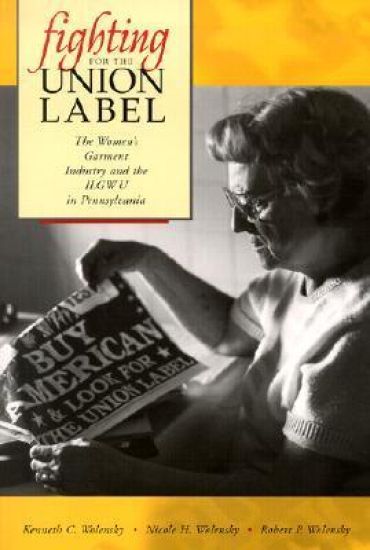
Fighting for the Union Label

Fighting for the Union Label

Kenneth C. Wolensky; Nicole H. Wolensky; Robert P. Wolensky

Pennsylvania State University Press
2002
pokkari
It is no coincidence that the garment industry gained a foothold in Pennsylvania’s hard-coal region as mines were closing or reducing operations. "Runaway" factories, especially ones from Manhattan, set up shop in mining towns where labor was plentiful and unions scarce. By the 1930s, garment factories employed thousands of wives and daughters of unemployed or underemployed coal miners in the Wyoming Valley. Organizing workers would prove difficult for the International Ladies’ Garment Workers’ Union (ILGWU). Fighting for the Union Label tells the story of how workers in the Wyoming Valley, led by Min Lurye Matheson and her husband, Bill, banded together and built one of the largest and most activist movements of garment workers in the ILGWU’s vast network. Workers’ education, political activism, a health care center, and a widely recognized chorus were among the union’s trademarks. Despite the union’s influence, however, the apparel industry migrated to the American South and then overseas in the 1970s and 1980s. Tens of thousands of workers throughout the state and nation would loose their jobs, and sweatshops would become part of the economic landscape in countries like Guatemala. The first major work on the garment industry and its workers in Pennsylvania, Fighting for the Union Label draws extensively upon the Wyoming Valley Oral History Project (co-directed by Ken and Robert Wolensky) which has collected the reminiscences of more than 325 workers, factory owners, public officials, and others. The story of the dynamic Min Matheson and the rise and fall of the garment industry provides key insights into the deindustrialization of northeastern Pennsylvania.
Democratization Without Representation

Democratization Without Representation

Kenneth C. Shadlen

Pennsylvania State University Press
2005
pokkari
When countries become more democratic, new opportunities arise for individuals and groups to participate in politics and influence the making of policy. But democratization does not ensure better representation for everyone, and indeed some sectors of society are ill-equipped to take advantage of these new opportunities. Small industry in Mexico, Kenneth Shadlen shows, is an excellent example of a sector whose representation decreased during democratization. Shadlen’s analysis focuses on the basic characteristics of small firms that complicate the process of securing representation in both authoritarian and democratic environments. He then shows how increased pluralism and electoral competition served to exacerbate the political problems facing the sector during the course of democratization in Mexico. These characteristics created problems for small firms both in acting collectively through interest associations and civil society organizations and in wielding power within political parties. The changes that democratization effected in the structure of corporatism put small industry at a significant disadvantage in the policy-making arena even while there was general agreement on the crucial importance of this sector in the new neoliberal economy, especially for generating employment. The final chapter extends the analysis by making comparisons with the experience of small industry representation in Argentina and Brazil.Shadlen uses extensive interviews and archival research to provide new evidence and insights on the difficult challenges of interest aggregation and representation for small industry. He conducted interviews with a wide range of owners and managers of small firms, state and party officials, and leaders of business associations and civil society organizations. He also did research at the National Archives in Mexico City and in the archives of the most important business organizations for small industry in the post-World War II period.
A Catholic New Deal

A Catholic New Deal

Kenneth J. Heineman

Pennsylvania State University Press
1999
pokkari
Our popular image of the era of the Great Depression is one of bread lines, labor wars, and leftist firebrands. Absent from this picture are religiously motivated social reformers, notably Catholic clergy and laity. In A Catholic New Deal, Kenneth Heineman rethinks the religious roots of labor organizing and social reform in America during the 1930s. He focuses on Pittsburgh, the leading industrial city of the time, a key center for the rise of American labor, and a critical Democratic power base, thanks in large part to Mayor David Lawrence and the Catholic vote.Despite the fact that Catholics were the core of the American industrial working class in the 1930s, historians (and many contemporary observers) have underestimated or ignored the religious component of labor activism in this era. In fact, many labor historians have argued that workers could not have formed successful industrial unions without first severing their religious ties. Heineman disputes this, arguing that there would have been no steelworkers union without Pittsburgh Catholics such as James Cox, Patrick Fagan, Carl Hensler, Phil Murray, and Charles Owen Rice. He presents a complex portrait of American Catholicism in which a large number of activist priests and laity championed a distinctly Catholic vision of social justice. This vision was anti-Communist, anti-Fascist, and anti-laissez faire. These Catholics, in turn, helped to make the Democratic Party and the CIO powerful organizations. A Catholic New Deal shows conclusively the important role that religion played in the history of organized labor in America.