
Kirjahaku
Etsi kirjoja tekijän nimen, kirjan nimen tai ISBN:n perusteella.
1000 tulosta hakusanalla Larry Trivieri
Tragic Method and Tragic Theology
Larry D. Bouchard
Pennsylvania State University Press
1989
pokkari
The book moves in a nonreductive way between literary and theological criticism to show how drama and religious thought discern the experience of evil. "Tragic method" refers to how tragic art functions as inquiry; "tragic theology" refers to how drama and theology render in thematic or symbolic form certain irreducible dimensions of evil and negativity. Bouchard defines no single tragic method or any single view of evil but searches for the distinctive interplay of tragic method of theology in each dramatist.The work opens by scrutinizing certain important interpretations of Greek tragedy. Paul Ricoeur's interpretation of "the Wicked God and the Tragic Vision" receives major focus, as does Sophocles, who as a tragedian dramatized the action of inquiry and interpretation.Bouchard then examines Augustine's views of evil and sin, Reinhold Niebuhr's critique of the ironies of history, and Tillich's conceptions of the demonic. By interpreting tragedy in terms of sin or the effects of sin, each theologian resists implications in his own thought pointing to a less resolvable tragic theology. And yet these theologians also contribute very creative understandings of the irreducible character of evil and tragic experience. Substantive and original readings of three playwrights are offered: Rolf Hochhuth's tragedy of vocation, The Deputy, Robert Lowell's trilogy of American historical blindness, The Old Glory, and Peter Shaffer's dreams of tragic awareness and accountability in Equus and Amadeus, revealing new permutations of the irreducibility of evil in contemporary Christian and Jewish religious thinkers who may be helpful in this task, and concludes with a description of the experience of perplexed thought, self-critical in view of tragedy's witness to irreducibility of evil.
This collection of essays explores the fundamental sources of U.S. economic performance, and the public policies that sustain or weaken that performance. Revitalizing the U.S. Economy explores such issues as stimulating and channelling private investment, modifying rules of competition, and reconceptualizing the economy and economic policy. This book surveys industrial policy from a national perspective, examines development policies at the subnational level, analyzes issues in human resources policy, and critiques the policy making process.
This volume is a study of the orchestration of cordial concurrence at the quadrennial nominating conventions of the two major political parties. The phrase cordial concurrence pertains to a party's endorsement of a candidate at the national convention whose nomination occurred elsewhere. Since the candidate is the product of primaries and caucuses, the convention's primary function involves not the nomination of the party standard-bearer, but the mobilization of party resources in support of a decision rendered elsewhere. Smith and Nimmo oppose the view that national political conventions serve no major purpose and are relics from the past. Instead, they explain that the conventions are products of institutional coordination and reflect the institutional qualities of American democracy.This definitive analysis examines how political party conventions mobilize resources through political, governmental, and media institutions in a telepolitical era. This volume discusses the history and background of cordial concurrence. It then explores what happens at the conventions and how the media, especially television coverage, has affected this institution. Finally, the authors examine the comments of the critics of national political conventions. This intriguing work will provide both educators and professionals interested in political communication with new insight as to how the conventions are a microcosm of all that is American politics.

This volume is a study of the orchestration of cordial concurrence at the quadrennial nominating conventions of the two major political parties. The phrase cordial concurrence pertains to a party's endorsement of a candidate at the national convention whose nomination occurred elsewhere. Since the candidate is the product of primaries and caucuses, the convention's primary function involves not the nomination of the party standard-bearer, but the mobilization of party resources in support of a decision rendered elsewhere. Smith and Nimmo oppose the view that national political conventions serve no major purpose and are relics from the past. Instead, they explain that the conventions are products of institutional coordination and reflect the institutional qualities of American democracy.This definitive analysis examines how political party conventions mobilize resources through political, governmental, and media institutions in a telepolitical era. This volume discusses the history and background of cordial concurrence. It then explores what happens at the conventions and how the media, especially television coverage, has affected this institution. Finally, the authors examine the comments of the critics of national political conventions. This intriguing work will provide both educators and professionals interested in political communication with new insight as to how the conventions are a microcosm of all that is American politics.

Readers are introduced to basic terms and principles used in the study of organizations as an invitation to further learning. The approach blends classical writing on organizations with current research and examples illustrating key elements of positions, patterns, and persons. A discussion of role analysis shows how these elements enter into the actual behavior of participants. Discussions of such topics as interaction and bureaucracy and a unique chapter on paperwork and record-keeping are presented.

Readers are introduced to basic terms and principles used in the study of organizations as an invitation to further learning. The approach blends classical writing on organizations with current research and examples illustrating key elements of positions, patterns, and persons. A discussion of role analysis shows how these elements enter into the actual behavior of participants. Discussions of such topics as interaction and bureaucracy and a unique chapter on paperwork and record-keeping are presented.
Social Workers Speak out on the HIV/AIDS Crisis
Larry Gant; Vincent Lynch; Patricia Stewart
Praeger Publishers Inc
1998
sidottu
Written by a team of nationally recognized African American social work professionals with extensive and distinguished backgrounds of HIV/AIDS service, the book examines the crisis facing African American communities. The editors strive to convey to academics, researchers, and students the magnitude of the crisis and that individuals and organizations serving African Americans need to be able to respond to the service delivery needs this crisis brings.The crisis is evident in the fact that by year 2000 fully 50% of all AIDS cases will be among African Americans—who only constitute 12% of the nation's population. This book serves as a wake-up call and is designed to stimulate discussion and planning for new models of service to all African Americans and HIV prevention, education, and treatment.

Social Workers Speak out on the HIV/AIDS Crisis
Larry Gant; Vincent Lynch; Patricia Stewart
Praeger Publishers Inc
1998
nidottu
Written by a team of nationally recognized African American social work professionals with extensive and distinguished backgrounds of HIV/AIDS service, the book examines the crisis facing African American communities. The editors strive to convey to academics, researchers, and students the magnitude of the crisis and that individuals and organizations serving African Americans need to be able to respond to the service delivery needs this crisis brings.The crisis is evident in the fact that by year 2000 fully 50% of all AIDS cases will be among African Americans—who only constitute 12% of the nation's population. This book serves as a wake-up call and is designed to stimulate discussion and planning for new models of service to all African Americans and HIV prevention, education, and treatment.
Smith explores Pete Townshend's artistic struggle between his own creative impulses and those of the commercial public. Faced with a modern version of the minstrel's dilemma, Townshend, early in his career, ignored his creative instincts to satisfy commercial agendas. After his success, he slowly withdrew to resolve his conflict between creativity and commercialism. Townshend's creative vision unfolds against the conflicts and compromises battled with the entertainment industry. A common theme, that of the seeker, weaves throughout the various phases of Townshend's career and highlights his own quest for complete artistic expression free from compromise. In The Minstrel's Dilemma, Townshend is shown as a musician confronting the same battles begun by early minstrels and later fought by composers such as Beethoven and Mozart. He is referred to as a rock auteur, creating music that reflects his personal experiences and creative views. He is called a seeker, in search of artistic freedom toward personal expression. And at the end of his thirty-year struggle he is a true artist, able to live up to audience expectation while attending to his own artistic impulses.
As society struggles to cope with the many repercussions of assisted life and death, the evening news is filled with stories of legal battles over frozen embryos and the possible prosecution of doctors for their patients' suicide. Using an institutional approach as an alternative to the prevailing rights based analysis of problems in law and medicine, this study explains why society should resist the tendency to look to science and law for a resolution of intimate matters, such as how our children are born and how we die. Palmer's institutional approach demonstrates that legislative analysis is often more important than judicial analysis when it comes to issues raised by new reproductive technologies and physician-assisted suicide. A reliance on individual rights alone for answers to the complex ethical questions that result from society's faith in scientific progress and science's close alliance with medicine will be insufficient and ill-advised.Palmer predicts that the key role of the family as a societal institution will mean that questions of assisted reproduction will be resolved more in response to market forces than through legal intervention. However, he does support a strong role for legislatures in decisions involving the physicians' role in our deaths. These findings are based on the differing views of the Supreme Court justices in these matters: a tendency to protect family formation from state interference (as in abortion decisions), but support of a legislative obligation to control medicine (assisted suicide). According to Palmer, recent Supreme Court decisions on physician assisted suicide usher in a new era in how legal institutions will resolve biomedical dilemmas.
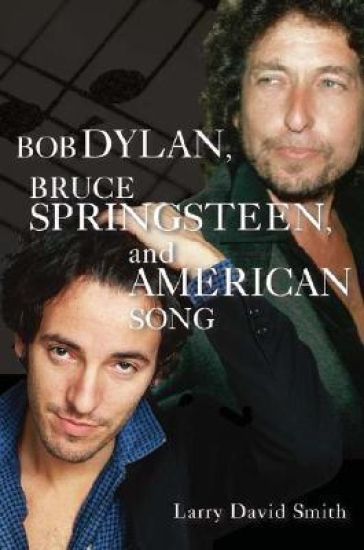
Bob Dylan, Bruce Springsteen, and American Song
Larry David Smith
Praeger Publishers Inc
2002
sidottu
Exposing the depth of two major artists' philosophies, creative visions, stylistic tendencies, and contributions to their craft, this unprecedented comparative analysis synthesizes biographical material, critical interpretation, and selected exemplars of the writers' work. Smith reinterprets their work in a new and fascinating light, presenting Dylan as a songwriter of enigmatic wordplay and Springsteen as the melodramatic narrator of a specific community's life struggles.Both songwriters have had unique responses to the celebrity singer/songwriter tradition begun by Woody Guthrie. Smith reveals the power of authorship and the creative drive necessary to negotiate an artistic vision through the complicated mechanisms of the world of commercial art. Both have discovered their own means of traveling this difficult terrain, and Smith probes their lives and work to reveal the myriad ways in which two distinct, equally significant artists have learned from and contributed to an ongoing and important American musical tradition.

Few in popular music have had as varied a career and as lasting an impact as Bob Dylan. His songs have entered the cultural consciousness in a way that some have called revolutionary. In this bold and comprehensive new study—the definitive guide to Dylan's work—author Larry David Smith explores the convergence of biography, artistic philosophy, and musical style in Bob Dylan's oeuvre. Making the case that Bob Dylan is actually a persona carefully crafted by its maker, the former Robert Zimmerman of Hibbing, Minnesota, Writing Dylan represents a new and authoritative contribution to the study of this key figure of the contemporary era. Having been granted unprecedented use of Dylan's own lyrics in his analysis, Smith interprets Dylan's narratives, characters, plots, and values, and reveals the artist's mission-oriented approach to art. Writing Dylan tackles each period of its subject's five-decade career, offering an inventive and unprecedented investigation of Dylan's artistic imperative, cultural significance, and songcraft. The result is perhaps the most important work to date on this mercurial figure, whose songs have established a fully realized portrait of his personal mysteries. Few in popular music have had as varied a career and as lasting an impact as Bob Dylan, whose songs have entered the cultural consciousness in a way that some have called revolutionary. In this bold and comprehensive new study—the definitive guide to Dylan's work—author Larry David Smith explores the convergence of biography, artistic philosophy, and musical style in Bob Dylan's oeuvre. Making the case that Bob Dylan is actually a persona carefully crafted by its maker, the former Robert Zimmerman of Hibbing, Minnesota, Writing Dylan represents a new and authoritative contribution to the study of this key figure of the contemporary era. Having been granted unprecedented use of Dylan's own lyrics in his analysis, Smith interprets Dylan's narratives, characters, plots, and values, and reveals the artist's mission-oriented approach to art. Writing Dylan tackles each period of its subject's five-decade career, offering an inventive and unprecedented investigation of Dylan's artistic imperative, cultural significance, and song craft. The result is perhaps the most important work to date on this mercurial figure, whose songs have established a fully realized portrait of his personal mysteries.
Who, from a scientific perspective, could possibly accept the idea of a virgin birth, or any of Christ's miracles, much less his death and resurrection? Only a child, or a Christian possessed of a considerable degree of discernment. This enthralling book reveals how we may develop from childhood innocence to spiritual maturity, via a series of psychological stages, through constant (but often unconscious) communication with the Holy Spirit. Growth will most often occur through adversity and the emotional healing that accompanies acceptance of God's Will. Such experiences encourage the letting go of juvenile attachments and aversions, so we are free to live with increasing spontaneity 'in the moment' - wiser, and more compassionately attuned to the sufferings of others.

Perhaps no creature has so fired the imagination of a populace as the armadillo-that most ungainly, awkward, and timid little animal. Its detractors call it a varmint and wish it good speed from the Lone Star State and its other natural territories. But its supporters claim that it is the animal kingdom's representative of all that's truly Texan: tough, pioneering, adaptable, and generous in sharing its habitation with others. What is it that sets this quizzical little creature apart from the rest of the animal kingdom? Larry L. Smith and Robin W. Doughty ably answer this question in The Amazing Armadillo: Geography of a Folk Critter. This informative book traces the spread of the nine-banded armadillo from its first notice in South Texas late in the 1840s to its current range east to Florida and north to Missouri. The authors look at the armadillo's natural history and habitat as well as the role of humans in promoting its spread, projecting that the animal is increasing in both range and number, continuing its ecological success in areas where habitat and climate are favorable. The book also contributes to a long-standing research theme in geography-the relationship between humans and wildlife. It explores the armadillo's value to the medical community in current research in Hansen's Disease (leprosy) as well as commercial uses, and abuses, of the armadillo in recent times. Of particular note is the author's engaging look at the armadillo as a symbol of popular culture, the efforts now underway to make it a "totem animal" symbolizing the easy-going lifestyles of some Sunbelt cities, and the spread of the craze for armadilliana to other urban centers.
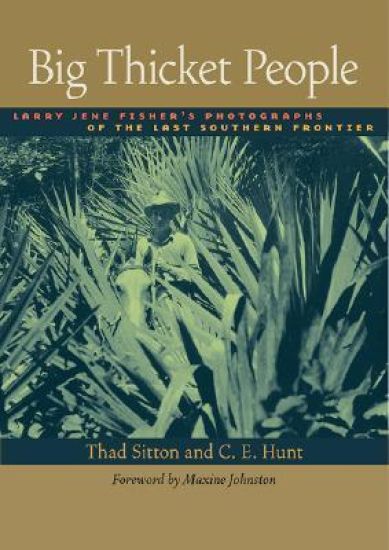
Living off the land-hunting, fishing, and farming, along with a range of specialized crafts that provided barter or cash income-was a way of life that persisted well into the twentieth century in the Big Thicket of southeast Texas. Before this way of life ended with World War II, professional photographer Larry Jene Fisher spent a decade between the 1930s and 1940s photographing Big Thicket people living and working in the old ways. His photographs, the only known collection on this subject, constitute an irreplaceable record of lifeways that first took root in the southeastern woodlands of the colonial United States and eventually spread all across the Southern frontier.Big Thicket People presents Fisher's photographs in suites that document a wide slice of Big Thicket life-people, dogs, camps, deer hunts, farming, syrup mills, rooter hogs and stock raising, railroad tie making, barrel stave making, chimney building, peckerwood sawmills, logging, turpentining, town life, church services and picnics, funerals and golden weddings, and dances and other amusements. Accompanying each suite of images is a cultural essay by Thad Sitton, who also introduces the book with a historical overview of life in the Big Thicket. C. E. Hunt provides an informative biography of Larry Jene Fisher.
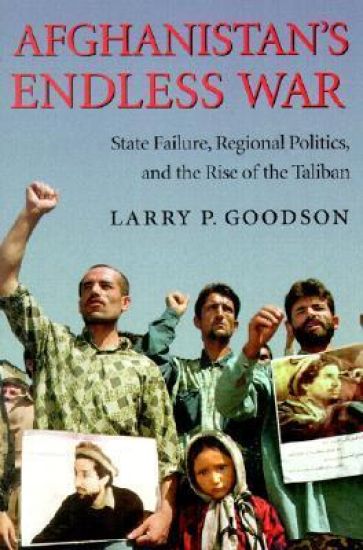
Going beyond the stereotypes of Kalashnikov-wielding Afghan mujahideen and black-turbaned Taliban fundamentalists, Larry Goodson explains in this concise analysis of the Afghan war what has really been happening in Afghanistan in the last twenty years.Beginning with the reasons behind Afghanistan's inability to forge a strong state -- its myriad cleavages along ethnic, religious, social, and geographical fault lines -- Goodson then examines the devastating course of the war itself. He charts its utter destruction of the country, from the deaths of more than 2 million Afghans and the dispersal of some six million others as refugees to the complete collapse of its economy, which today has been replaced by monoagriculture in opium poppies and heroin production. The Taliban, some of whose leaders Goodson interviewed as recently as 1997, have controlled roughly 80 percent of the country but themselves have shown increasing discord along ethnic and political lines.

Going beyond the stereotypes of Kalashnikov-wielding Afghan mujahideen and black-turbaned Taliban fundamentalists, Larry Goodson explains in this concise analysis of the Afghan war what has really been happening in Afghanistan in the last twenty years.Beginning with the reasons behind Afghanistan's inability to forge a strong state -- its myriad cleavages along ethnic, religious, social, and geographical fault lines -- Goodson then examines the devastating course of the war itself. He charts its utter destruction of the country, from the deaths of more than 2 million Afghans and the dispersal of some six million others as refugees to the complete collapse of its economy, which today has been replaced by monoagriculture in opium poppies and heroin production. The Taliban, some of whose leaders Goodson interviewed as recently as 1997, have controlled roughly 80 percent of the country but themselves have shown increasing discord along ethnic and political lines.