Every morning, Lenny Levin strolls into Stumpy's restaurant in Buffalo, New York to eat breakfast. Lenny is a member of a very special group. Readers can join him for coffee and see what's so "special" about this hilariously funny group.
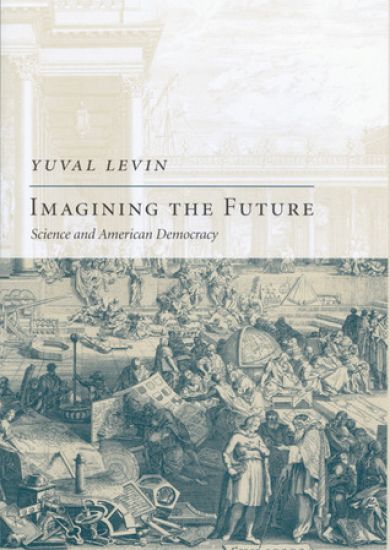
From stem cell research to global warming, human cloning, evolution, and beyond, political debates about science have raged in recent years - and, to the chagrin of most observers, have increasingly fallen into the familiar categories of America's culture wars. In Imagining the Future: Science and American Democracy, Yuval Levin explores the complicated meanings of science and technology in American politics and finds that the science debates have a lot to teach us about our political life. These debates, Levin argues, reveal some serious challenges to American self-government, and put on stark display the deepest strengths and greatest weaknesses of both the left and the right. "American life has been profoundly shaped by science and technology, and will be all the more so in the coming decades, making it crucial that we understand how to think and speak about science in politics. Yuval Levin's smart and eminently well-reasoned book makes the important point that the purpose of science is a moral one -- to improve human life -- and that judging what that involves is sometimes a job for more than science alone in a democratic society. Levin's insights speak directly to today's political debates and make his book a must-read for policymakers and all those who care about science and society." --Newt Gingrich, former Speaker of the House "Imagining the Future goes far beyond the contemporary polarized debates over science to unpack the moral premises of the modern scientific project and its consequences for American democracy. In the process, Yuval Levin provides us with a deep understanding of policy issues from genetic engineering to global warming." --Francis Fukuyama, Johns Hopkins University "This book is important to the thinking of both progressives and conservatives. Clearly and incisively, it shows how science and technology are shaping humanity's future and world views. Levin alerts democratic societies that human dignity and equality are imperiled unless we provide political and moral guidance to prevent the submergence of humanity in its own ingenuity." --Edmund Pellegrino, Chairman, President's Council on Bioethics
Jonathan Marcus, a young American lawyer and former doctoral student in classics, is summoned to Rome for a case and stumbles across a message hidden inside an ancient stone fragment. The discovery propels him and UN preservationist Dr. Emili Travia into a coldblooded modern plot to erase every remnant of Jewish and Christian presence from Jerusalem's Temple Mount, in the process redefining history itself.
Read My Thoughts is a collection of feelings, thoughts, and insights that I have experienced from day to day. They are made up of ordinary things in life. For the most part they are thoughts and/or insights that come when I'm least expecting them. They often shape my opinions and attitudes in a significant way. Therefore, I write them down so I will not forget them. A few of them have inspired actual life changes. It is like thinking on paper. If anyone wished to get inside my head to see what makes me "tick" the easiest way would probably be to "Read My Thoughts." Many times when I'd read an article to someone or a group they would say, "You really need to do something with your writing." This book is a response to that encouragement.
The contributors to Divine Love cover a broad spectrum of world religions, comparing and contrasting approaches among Christians of several denominations, Jews, Buddhists, Muslims, Hindus, and adherents of traditional African religions. Each chapter focuses on the definition and conceptual boundaries of divine love; its expression and experience; its instrumentality and salience; how it can become distorted, and how it has been made manifest or restored by great historic exemplars of altruism, compassion, and unlimited love. The ultimate aim for many of the world’s major faith traditions is to love and be loved by God-to live in connection with the Divine, in union with the Beloved, in reconciliation with the Ultimate. Religious scholars Jeff Levin and Stephen G. Post have termed this connection “divine love.” In their new collection of the same name, they have invited eight of the world’s preeminent religious scholars to share their perspectives on the what, how, and why of divine love. From this diverse gathering of perspectives emerges evidence that to love and to be loved by God, to enter into a mutual and covenantal relationship with the Divine, may well offer solutions to many of the current crises around the world. Only a loving relationship with the Source of being within the context of the great faith and wisdom traditions of the world can fully inform and motivate the acts of love, unity, justice, compassion, kindness, and mercy for all beings that are so desperately required to counter the toxic influences in the world. Contributors: William C. Chittick, Vigen Guroian, Ruben L. F. Habito, William K. Mahony, John S. Mbiti, Jacob Neusner, Clark H. Pinnock, and David Tracy.
Following in the wake of the climactic events of Broken Trinity, Finn and Glori, the bearers of the Glacier and Ember Stones, return in a pulse-pounding, world-spanning adventure series. When a fanatic cult embarks on a quest to remake the world with the mythical Pandora's Box, Finn and Glori's individual goals of gathering the 13 Artifacts is kicked into overdrive. What follows is a high octane chase which takes the pair around the world and forces them to confront their destinies. Collects Broken Trinity: Pandora's Box #1-6, written by Rob Levin (The Darkness) and Bryan Edward Hill (Broken Trinity) with art by Alessandro Vitti (Secret Warriors). This collection features a complete cover gallery by Tommy Lee Edwards (Book of Eli, 1985), along with character designs and other bonus material.
This book deals with the methods of theoretical and experimental research of antennas, which are based on the electromagnetic (EM) theory. The theory of thin antennas is the basis of antenna analysis, as thin antennas represent one of the main types of radiators and are extensively applied as both independent antennas and as elements of more complicated antennas. The contents of the book cover new methods of antenna analysis and design, including the theory of electrically coupled lines, the methods of complex potential, compensation, impedance line, and mathematical programming among others. New results of using these methods are obtained and described. The complex potential method is generalized to inhomogeneous media and is employed in conical and parabolic problems. The theory of electrically coupled lines allows considering theoretical problems of multi-conductor cables and multi-radiator antennas. The compensation method permits creating a weak field area in the near region of a transmitting antenna. The method of impedance line is applied to antennas with loads, and it permits, together with the method of mathematical programming, selecting loads to develop antennas with the required characteristics. The methods described within this text enable engineers to calculate parameters for new types of antennas, particularly, of new self-complementary antennas. In the general case, its properties pertain to the three-dimensional self-complementary antennas, their variants are considered in the book. Close attention is also paid to the field compensation in the near region of a transmitting antenna and to the creation of the 'dark spot'. The book is an essential reference for graduates and researchers requiring knowledge of the design and engineering of new antennas as well as the underlying electromagnetic and mathematical methods of its analysis and synthesis.
Identity fraud happens to everyone. So what do you do when it's your turn? Increasingly, identity theft is a fact of life. We might once have hoped to protect ourselves from hackers with airtight passwords and aggressive spam filters, and those are good ideas as far as they go. But with the breaches of huge organizations like Target, AshleyMadison.com, JPMorgan Chase, Sony, Anthem, and even the US Office of Personnel Management, more than a billion personal records have already been stolen, and chances are good that you're already in harm's way. This doesn't mean there's no hope. Your identity may get stolen, but it doesn't have to be a life-changing event. Adam Levin, a longtime consumer advocate and identity fraud expert, provides a method to help you keep hackers, phishers, and spammers from becoming your problem. Levin has seen every scam under the sun: fake companies selling "credit card insurance"; criminal, medical, and child identity theft; emails that promise untold riches for some personal information; catphishers, tax fraud, fake debt collectors who threaten you with legal action to confirm your account numbers; and much more.As Levin shows, these folks get a lot less scary if you see them coming. With a clearheaded, practical approach, Swiped is your guide to surviving the identity theft epidemic. Even if you've already become a victim, this strategic book will help you protect yourself, your identity, and your sanity.
Increasingly, identity theft is a fact of life. We might once have hoped to protect ourselves from hackers with airtight passwords and aggressive spam folders, and those are good ideas as far as they go. But the truth is, there are people out there - a lot of them - who treat stealing your identity as a full-time job.One such company is a nameless firm located in Russia, which has a trove of over a billion internet passwords. Another set up a website full of live streams of hacked web cameras, showing everything from people's offices and lobbies to the feeds from baby monitors. Even purchases made in person are still logged by retailers like Target, who are famously vulnerable to hackers. Adam Levin, a longtime consumer advocate and identity fraud expert, is your guide to this brave new world. By telling memorable stories and extracting the relevant lessons, he offers a strategy for dealing with these risks. You may not be able to prevent identity theft, but you certainly shouldn't wait until it happens to take action. Levin's approach is defined by the three M's: minimizing risk, monitoring your identity, and managing the damage. The book is also organized around the different problems caused by identity theft: financial, criminal, medical, familial, etc., enabling readers to dip into the sections most relevant to them. Swiped is a practical, lively book that is essential to surviving the ever-changing world of online security. It is invaluable not only for preventing problems but helping cope when they arrive.
This collection of 118 recipes captures the evocative food experiences of the Lake Michigan region, an ultimate vacation destination with hundreds of miles of shoreline and rich food traditions reflecting the bounty of the area’s farms and the lake’s daily catch. Recipes include Helen Suchy’s Apple Cake from Door County, Homemade Sheboygan-Style Bratwurst, Chicago’s HBFC Original Fried Chicken Sandwich, Beach House Cheesy Potatoes from Northwest Indiana, and The Cook’s House Crispy Skinned Lake Trout from Traverse City. Delightful photographs of cottage life and classic destinations, along with profiles of favorite food purveyors, bring the lakeshore’s flavors and charm to you year-round, wherever you are.
In March 1993, sixteen-year-old Rayna Rison was abducted outside the La Porte, Indiana, veterinary hospital where she worked. A month later, her body was found submerged under tree limbs in a rural pond. Police targeted her brother-in-law, Ray McCarty, as the prime suspect. Although a grand jury indicted him for the murder in 1998, prosecutors later dropped the charges. Then in 2013, county officers arrested Jason Tibbs, Rayna's middle-school boyfriend, convicted him, and sentenced him to forty years in prison.After a two-year investigation, drawing on dozens of interviews and more than a thousand pages of police files, author Hillel Levin completes the case against McCarty, following clues and leads that detectives overlooked. In the process, he reveals startling new information about the killer's murder weapon and accomplices, and uncovers the politics and misconduct that enabled the prosecutor to convict Jason Tibbs. Although cold cases are celebrated in popular culture, Jason's trial shows the perils they can pose for innocent defendants.At the heart of Submerged is the tragic story of Rayna Rison, an exceptional young woman with a promising future whose family and justice system failed to keep her from harm. Ironically, the person now held accountable for her murder is the friend she most saw as her protector.
In this groundbreaking book, Dr. Jeff Levin explores the latest compelling evidence of the connection between health and an array of spiritual beliefs and practices, including prayer, attending religious services, meditation, and faith in God. Drawing on his own and other published studies, Dr. Levin shows how religion's emphasis on healthy behaviors and supportive relationships influences one's overall health and how the optimism and hopefulness of those who profess faith promote the body's healing responses. Filled with dramatic personal stories, God, Faith, and Health will alter the way you think about your body and your faith and will show you the path to improving your own health through spiritual practice. ""Jeff Levin writes with incredible clarity, style, and passion. This book is a must-read for anyone interested in the religion-health connection, especially those wondering if such a connection exists at all.""-Harold G. Koenig, M.D., Associate Professor of Psychiatry and Medicine, Duke University Medical Center, and author of The Healing Power of Faith ""Beautifully written and packed with compelling scientific evidence for the spirituality-health connection . . . . With the precision of a scientist, the courage of a true pioneer, and the artistry of a storyteller, Levin reminds us of what we can no longer afford to ignore: that our spiritual life matters mightily to our health and well-being at every level.""-Janet F. Quinn, Ph.D., R.N., Associate Professor, University of Colorado School of Nursing
Smart Advice on how yoga can enhance emotional, physical, and spiritual well-beingSmart Ways to relieve stress, strengthen your body, prevent and treat illness, and boost your stamina and energySmart Tips on what yoga style is right for you, with step-by-step instructions on the poses that best suit your lifestyle and goals* Smart Strategies to release physical tension and mental stress with the slow, gentle movements, poses, and breathing techniques of hatha yoga* Smart Insights into the six branches of yoga, each a different experience in movement and meditation* Smart Advice on yoga as alternative medicine to heal heart disease, chronic pain, arthritis, and other illnesses* Smart Tips on finding a class and teacher that best suit your needs and will help you develop your own yoga practice* Quick reading and easy referencing with lots of photos, a comprehensive index, and loads of sidebars and sourcesSmart Guides take readers seriously. They satisfy even the most curious person's desire to know the essentials about any of a wide range of topics--from vitamins to mutual funds to stress relief.It's all about good reading and expert information. The choice is yours. Stephanie Levin-Gervasi is a writer specializing in health and family matters. She is the author of The Back Pain Sourcebook and has practiced yoga for more than twenty years. She lives in San Francisco.
Smart Advice on how yoga can enhance emotional, physical, and spiritual well-beingSmart Ways to relieve stress, strengthen your body, prevent and treat illness, and boost your stamina and energySmart Tips on what yoga style is right for you, with step-by-step instructions on the poses that best suit your lifestyle and goals* Smart Strategies to release physical tension and mental stress with the slow, gentle movements, poses, and breathing techniques of hatha yoga* Smart Insights into the six branches of yoga, each a different experience in movement and meditation* Smart Advice on yoga as alternative medicine to heal heart disease, chronic pain, arthritis, and other illnesses* Smart Tips on finding a class and teacher that best suit your needs and will help you develop your own yoga practice* Quick reading and easy referencing with lots of photos, a comprehensive index, and loads of sidebars and sourcesSmart Guides take readers seriously. They satisfy even the most curious person's desire to know the essentials about any of a wide range of topics--from vitamins to mutual funds to stress relief.It's all about good reading and expert information. The choice is yours. Stephanie Levin-Gervasi is a writer specializing in health and family matters. She is the author of The Back Pain Sourcebook and has practiced yoga for more than twenty years. She lives in San Francisco.
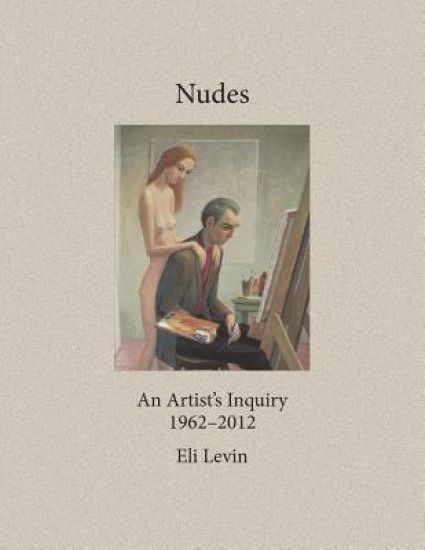
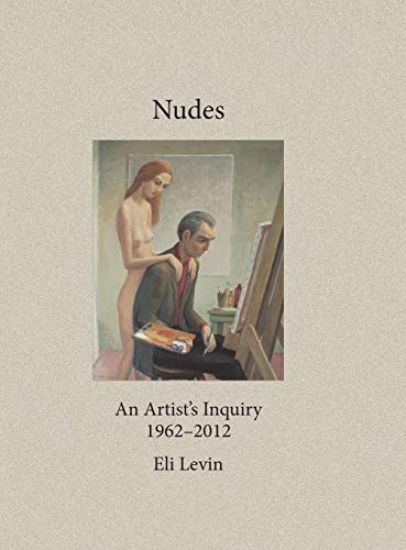
Eli Levin is best known for his second generation Social Realist paintings. These have often included nudes, as for example in striptease scenes and images of gender politics. Throughout his career he has painted nudes in many other contexts as well. In this book Levin presents an extended meditation on the practice of painting nudes. In his introduction he discusses the many reasons nudes have been painted, citing both famous and forgotten examples. He considers modern criticism from Feminists and recent theories that deconstruct the "Male Gaze." Captions to the images develop themes in the introduction and provide personal anecdotes from Levin's life and career. The 144 color images of his paintings that feature nudes are culled from a fifty-year period of work. The images are grouped into five sections, largely chronologically: Disturbing Nudes, Mostly Couples, Nudes from Life, Myths, and Contemplative Nudes. He also offers numerous images of relevant nudes from the history of art with informative captions. As a boy, Levin lived with his parents in a nudist colony near Chicago. During his teenage years and as a young man he studied drawing and painting from nude models. Three of his teachers in New York--Phillip Reisman, George Grosz, and Raphael Soyer--were Social Realists known for their figurative work. He served as the daily monitor of Soyer's figure-drawing group for two years, and later studied anatomy with Robert Beverley Hale at the Art Student's League.
Eli Levin is best known for his second generation Social Realist paintings. These have often included nudes, as for example in striptease scenes and images of gender politics. Throughout his career he has painted nudes in many other contexts as well. In this book Levin presents an extended meditation on the practice of painting nudes. In his introduction he discusses the many reasons nudes have been painted, citing both famous and forgotten examples. He considers modern criticism from Feminists and recent theories that deconstruct the "Male Gaze." Captions to the images develop themes in the introduction and provide personal anecdotes from Levin's life and career. The 144 color images of his paintings that feature nudes are culled from a fifty-year period of work. The images are grouped into five sections, largely chronologically: Disturbing Nudes, Mostly Couples, Nudes from Life, Myths, and Contemplative Nudes. He also offers numerous images of relevant nudes from the history of art with informative captions. As a boy, Levin lived with his parents in a nudist colony near Chicago. During his teenage years and as a young man he studied drawing and painting from nude models. Three of his teachers in New York--Phillip Reisman, George Grosz, and Raphael Soyer--were Social Realists known for their figurative work. He served as the daily monitor of Soyer's figure-drawing group for two years, and later studied anatomy with Robert Beverley Hale at the Art Student's League.
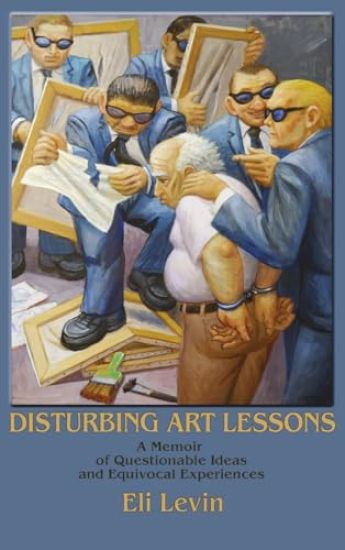
Some art lessons can inspire. Others are useless or even harmful. Eli Levin has written an amusing recollection of his art-student years and subsequent development. We witness his struggles to overcome the clich s and bombast so prevalent in the art world from 1950 to 1990. From every lesson the author hopes to find something useful, even occasionally a moment of insight. In the form of an artist's memoir, this book concentrates on the difficult question "what can artists learn?" It is a close study of the crises and breakthroughs that make up the lifetime effort of one particular artist to develop his personal vision.