Kirjojen hintavertailu. Mukana 11 244 527 kirjaa ja 12 kauppaa.

Kirjahaku

Etsi kirjoja tekijän nimen, kirjan nimen tai ISBN:n perusteella.

1000 tulosta hakusanalla Louis Howland

Louis Farrakhan: And the Bow-ties of the NOI

Louis Farrakhan: And the Bow-ties of the NOI

Andre Austin

Createspace Independent Publishing Platform
2017
nidottu
INTRODUCTIONHere's looking at Min. Louis Farrakhan in a variety of ways: Essays, articles, letters, and fictional satirical Plays. Farrakhan is still riding on his claim to fame by insulting and making mockery of Jewish people in Israel. It's not my aim to knock this apostle of hate off his pale-grey horse but to look at it critically and poke fun at it like a comedian donkey sometimes. The rider of the pale horse in revelations represented famine and pestilence (or poisoned food) and in my play All Praises Are Due, I offer some nutrition for Farrakhan to munch onFarrakhan is a wild and reckless orator, even in his mid-eighties he's still roaring or braying like the devil's jazz trumpets of an Ass/Donkey laugh. One of the symbols of the NOI is the trumpet they display high-atop corner of their propagandist newspaper The Final Call. And calling by analogy of Min. Farrakhan to the metaphor of the wild Donkey isn't out of bounds either. The Old Testament symbolized the Arab's ancestors to Ishmael would be wild and hostile towards his brothers (Gen 16:12). The Jewish community fed into Farrakhan's verbal hostility and rage by giving oxygen and air to his tongue of flames and got the heels of Louis's hoofs.Farrakhan still plays the 8-track tape of the 1930's of a Blackman by the name of Yacub creating the blond blue-eyed race of white devils. Well I have news for the hateful apostle that the son can't be more devilish then the monster father who created him. Then the chuckle gets even louder when he spouts a belief that a Space-craft (Mothership) will eventually come cruising down from the glorious clouds heaven and exterminate all these "Albino white people" and the unrighteous. His foreign policy is weird and terrible. His best friend in Africa was the late leader of Libya Gaddafi who was passing out Viagra pills to his loyalist who would rape his civilian protesters. Clearly Gaddafi went daffy on another incident when inmates in a dungeon prison cell objecting to guards leaving dead bodies to rot with them in their bunks. Gaddafi gave the word to the guards to slaughter all 2,000 plus prisoners. This is what broke the camel's back and started the revolution against him. Meanwhile Farrakhan characterized Gaddafi as an angel and God send to Libya. You can hear from the horse's mouth on his viral youtube rants and final call edicts .Following Farrakhan's leadership and advise would be like listening to the wisdom of a Mr. Ed. The best road to travel would be the tradition Civil Rights movement; and at the same avoiding the traps of being a mule to advance everybody's struggle but ours. We can't put a muzzle, bit and a bridle on the "beloved" apostle of hate. However, we can saddle this wild bucking Stallion with comedy, satire and critical analysis until the wheels fall off and the glue factory comes to pick up the remains (Hee Haw). Take it light and take it serious. This isn't no horse-shit but at times you will get a horse-laugh. When the Jews were upset with Apostle Paul they debunk him as stray donkey-ditto here.
Louis Norbert. A Twofold Romance (1914) ( NOVEL ) By: Vernon Lee

Louis Norbert. A Twofold Romance (1914) ( NOVEL ) By: Vernon Lee

Vernon Lee

Createspace Independent Publishing Platform
2017
nidottu
Vernon Lee was the pseudonym of the British writer Violet Paget (14 October 1856 - 13 February 1935). She is remembered today primarily for her supernatural fiction and her work on aesthetics. An early follower of Walter Pater, she wrote over a dozen volumes of essays on art, music, and travel.Violet Paget was born in France on 14 October 1856, at Ch teau St Leonard, Boulogne, to British expatriate parents, Henry Ferguson Paget and Matilda Lee-Hamilton (n e Abadam). Violet Paget was the half-sister of Eugene Jacob Lee-Hamilton (1845-1907) by her mother's first marriage, and from whose surname she adapted her own pseudonym. Although she primarily wrote for an English readership and made many visits to London, she spent the majority of her life on the continent, particularly in Italy Her longest residence was just outside Florence in the Palmerino villa from 1889 until her death at San Gervasio, with a brief interruption during World War I. Her library was left to the British Institute of Florence and can still be inspected by visitors. In Florence she knit lasting friendships with the painter Telemaco Signorini and the learned Mario Praz, and she encouraged his love of learning and English literature. An engaged feminist, she always dressed la gar onne. During the First World War, Lee adopted strong pacifist views, and was a member of the anti-militarist organisation, the Union of Democratic Control. She was also a lesbian, and had long-term passionate friendships with three women, Mary Robinson, Kit Anstruther-Thomson, and British author Amy Levy.She played the harpsichord and her appreciation of music animates her first major work, Studies of the Eighteenth Century in Italy (1880). In her preface to the second edition of 1907, she recalled her excitement as a girl when she came across a bundle of 18th-century music. She was so nervous that it wouldn't live up to her expectations that she escaped to the garden and listened rapturously through an open window as her mother worked out the music on the piano. Along with Pater and John Addington Symonds, she was considered an authority on the Italian Renaissance, and wrote two works that dealt with it explicitly, Euphorion (1884) and Renaissance Fancies and Studies (1895)Her short fiction explored the themes of haunting and possession. The most famous were collected in Hauntings (1890) and her story "Prince Alberic and the Snake Lady" (1895) was first printed in the notorious The Yellow Book. She was instrumental in the introduction of the German concept of 'Einf hlung', or 'empathy' into the study of aesthetics in the English-speaking world
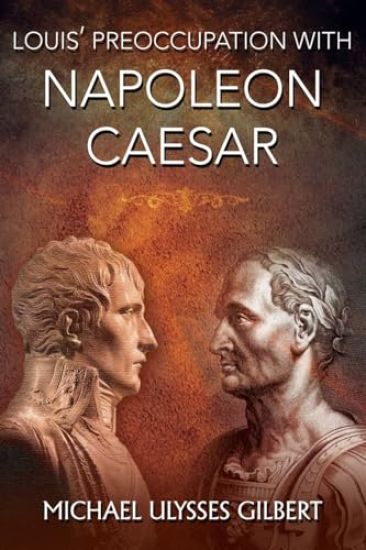
Louis' Preoccupation with Napoleon Caesar

Louis' Preoccupation with Napoleon Caesar

Michael Ulysses Gilbert

Independently Published
2024
pokkari
Louis hears the same voice day after day, Moloch. Enthralling young Louis with grand illusions of kings and emperors whose duties and obligations require a brave and puritanical society. Only now Louis's woodshop teacher, Mr. Rumstitch, has gotten in the way. Taken what rightfully belongs to him, the schools English teacher Miss Tolemy. However, Moloch's imparting grandiose visions has only spiraled Louis into deeper insanity until one day Louis decides to obey the treacherous creature once more. Only this time the outcome doesn't come without a price. A tale of mystery filled psycho drama, the reader will be asking themselves what is real and what is not from the mind of a madman.
Louis Ier, roi de Bavière

Louis Ier, roi de Bavière

Saint-René Taillandier

Createspace Independent Publishing Platform
2017
nidottu
"... Tant que le roi Louis fut l'h ritier pr somptif du tr ne de Bavi re, et m me pendant les commencements de son r gne, on ne vit que la premi re partie de son r le. Il tait un des combattants de 1813, il avait chant le soul vement de l'Allemagne, et on lui savait gr d'avoir d sir une place dans ce groupe g n reux o brillent les noms d'Arndt et de R ckert, de Th odore Koerner et de Max Schenkendorf. Le teutonisme se confondait alors dans les meilleurs esprits avec les id es lib rales, et cette confusion explique bien des m prises qui seraient aujourd'hui sans excuse. C' tait aussi le teutonisme qui mettait ressusciter les traditions de l'Allemagne un empressement beaucoup trop passionn pour tre toujours clairvoyant. Comme on avait senti durement les mis res de la patrie divis e, et comme l'unit n'apparaissait encore que dans un loignement bien obscur, c' tait au pass qu'on la demandait. Cet id al de l'Allemagne forte et puissante sous une loi commune, le pr sent ne pouvait le r aliser; en attendant les miracles de l'avenir, il fallut chercher cette grande image dans le tr sor des temps vanouis. Il y eut un instant o des milliers d' mes se r fugi rent, avec un entra nement aveugle, dans la foi du saint-empire. Plut t que de ne pas jouir de cette unit imaginaire, les esprits s'en allaient reculons dans le fond le plus t n breux des vieux si cles, et ne s'arr taient qu' Arminius..."
Louis Agassiz

Louis Agassiz

Émile Blanchard

Createspace Independent Publishing Platform
2017
nidottu
Sur la rive nord-ouest du lac de Morat, non loin du fameux champ de bataille o Charles le T m raire perdit sa gloire, on trouve le petit village de Motier. Ni le charme du paysage, ni un souvenir historique, n'ont encore attir le voyageur en cet endroit. D sormais les hommes instruits, traversant le canton de Fribourg, manqueront rarement de visiter le pauvre hameau; c'est Motier que Louis Agassiz naquit le 28 mai 1807; la mis rable localit r veillera le souvenir d'un grand nom. Personnalit brillante de la science, Agassiz, c l bre en Europe d s sa jeunesse, est devenu en Am rique la fois illustre et populaire. Un immense savoir, des d couvertes nombreuses, des vues neuves et hardies, inspir es par la p n tration de l'esprit et m ries par la raison, une parole persuasive qui charme ou captive les mes et les entra ne vers de hautes pens es, ont procur Louis Agassiz l'estime et la r putation parmi ses contemporains et dans le mouvement scientifique moderne une influence grande et heureuse. Au spectacle de cette vie si bien employ e, l'humanit appara t dans ce qu'elle a de plus noble, de plus lev , de plus g n reux. On verra la passion de l' tude aussi ardente dans les ann es de vieillesse qu'au d but de la carri re, une ambition extr me concentr e dans le d sir de p n trer les plus merveilleux ph nom nes de la nature, l'envie des richesses pour la seule joie de faire servir la richesse au progr s de la science...
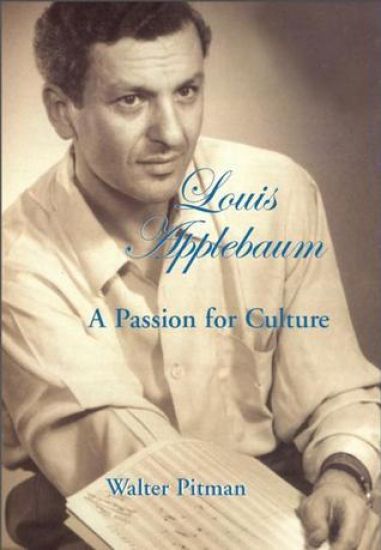
Louis Applebaum

Louis Applebaum

Walter Pitman

Dundurn Group Ltd
2002
pokkari
Canadian composer Louis Applebaum devoted his life to the cultural awakening of his native land, and this "magnificent obsession" drove him to become a founder of the Canadian League of Composers and the Canadian Music Centre. He was an instrumental figure in the early development of the National Film Board, the Stratford Festival, and the National Art Centre in Ottawa. For nearly half a century he composed music for the Stratford Festival, television, radio, and films. This illustrated biography explores the man who was beloved by his fellow artists and the icon to whom every Canadian, knowingly or not, is indebted.
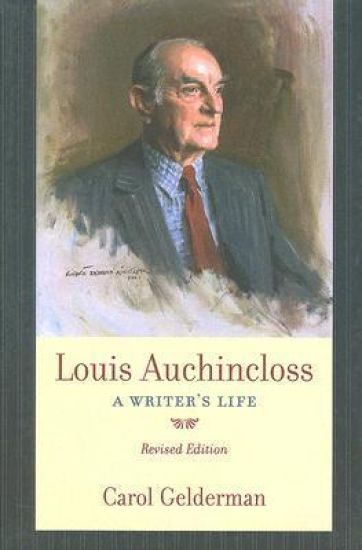
Louis Auchincloss

Louis Auchincloss

Carol Gelderman

University of South Carolina Press
2008
nidottu
This is the definitive literary biography of a New York ""living landmark"". With more than sixty published novels, short story collections, and works of criticism and history to his credit, Louis Auchincloss is the very definition of prolific. He has garnered widespread acclaim for his unrivaled critical observations of Manhattan circles of wealth and influence, the same elite society in which he moves. In her definitive literary biography of Auchincloss, Carol Gelderman traces the iconic writer from boarding school to his early literary forays at Yale, from law school to naval service in World War II, and then to Wall Street, chronicling his success in both legal and literary careers. Gelderman notes that Auchincloss' greatest personal struggle - and perhaps greatest accomplishment - was to reconcile his competing impulses to follow his father's path to prominence in law and to write the stories of his world. ""Of all our novelists,"" Gore Vidal has observed, ""Auchincloss is the only one who tells us how our rulers behave in their banks and their boardrooms, their law offices and their clubs."" Gelderman shows how Auchincloss came to be our preeminent novelist of manners and power in this update to her 1993 biography of the only writer to be named a ""living landmark"" by the New York Landmarks Conservancy. She offers keen insights into his life, careers, and writings, including his best-selling novels ""Portrait in Brownstone"", ""The House of Five Talents"", and ""The Rector of Justin"" as well as the more recent works ""The Scarlet Letters"", ""East Side Story"", and The Young Apollo and Other Stories.
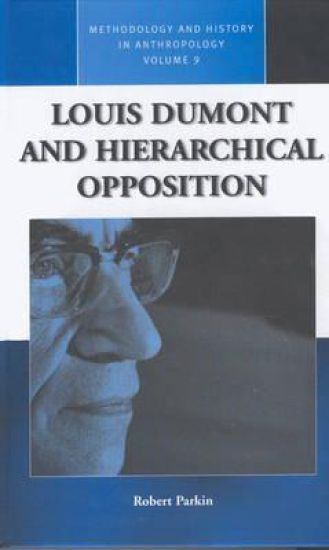
Louis Dumont and Hierarchical Opposition

Louis Dumont and Hierarchical Opposition

Robert Parkin

Berghahn Books, Incorporated
2003
sidottu
The work of Louis Dumont, who died in 1998, on India and modern individualism represented certain theoretical advances on the earlier structuralism of Claude Lévi-Strauss. One such advance is Dumont's idea of hierarchical opposition, which he proposed as a truer representation of indigenous ideologies than Lévi-Strauss's binary opposition. In this book the author argues that, although structuralism is often thought to have gone out of fashion, Dumont's greater concern with praxis and agency makes his own version of structuralism more contemporary. The work of his followers and fellow travelers, as well as his own, indicates that hierarchical opposition is capable of taking structuralism in new and more realistic directions, reminding us that it has never been the preserve of Lévi-Strauss alone.
Louis XIV's Assault on Privilege

Louis XIV's Assault on Privilege

Gary B. McCollim

University of Rochester Press
2012
sidottu
The government of Louis XIV developed two taxes during the last thirty years of the king's reign that forced the privileged to pay. This book is a study of how those taxes developed and what caused them to be adopted. Louis XIV's Assault on Privilege examines Nicolas Desmaretz, one of the most important finance ministers of the Bourbon monarchy. McCollim brings to life the man who was arguably the central figure in the final transformative years of Louis XIV's reign. Controller General Desmaretz was the nephew of famed finance minister Jean-Baptiste Colbert and had extensive experience in the administration prior to 1683 when he suffered disgrace. His expertisewas so renowned in his day that other chief financial officials sought his advice in secret. Desmaretz has been called the ablest man ever to head French finances, and the war financing problems he faced from 1708-14 the greatestchallenge faced by the Bourbon monarchy until the French Revolution. Desmaretz became one of the chief financial officials early in the War of the Spanish Succession and took full charge of French finances from 1708-15.In that time, he introduced one of the two most radical financial measures ever taken by the Bourbon monarchy: the dixième, a tax on income. This tax revolutionized the relationship of French elites to the Crown because iteliminated the issue of status that affected all other forms of taxation: the dixième fell on all income, no matter the recipient. The tax lasted until 1717, appeared again during the Wars of the Polish (1733-35) and Austrian (1743-48) Successions, and became permanent, in a reduced form, as the vingtième, in 1749. The story of the dixième has been oddly ignored by fiscal historians. In his rich analysis, McCollim lays outfor historians precisely how the royal financial council actually made policy. His book establishes once and for all that from the perspective of state finance, and state taxation, the post-1710 French monarchy had left far behindthe institutional framework of the seventeenth century. Gary B. McCollim received his doctoral degree in history from The Ohio State University and is a retired federal employee.
Louis Kahn

Louis Kahn

John Lobell

Monacelli Press
2020
sidottu
For everyone interested in the enduring appeal of Louis Kahn, this book demonstrates that a close look at how Kahn put his buildings together will reveal a deeply felt philosophy. Louis I. Kahn is one of the most influential and poetic architects of the twentieth century, a figure whose appeal extends beyond the realm of specialists. In this book, noted Kahn expert John Lobell explores how Kahn's focus on structure, respect for materials, clarity of program, and reverence for details come together to manifest an overall philosophy. Kahn's work clearly conveys a kind of "transcendent rootedness" - a rootedness in the fundamentals of architecture that also asks soaring questions about our experience of light and space, and even how we fit into the world. In Louis Kahn: Architecture as Philosophy, John Lobell seeks to reveal how Kahn's buildings speak to grand humanistic concerns. Through examinations of five of Kahn's great buildings - the Richards Medical Research Building in Philadelphia; the Salk Institute for Biological Studies in La Jolla; the Phillips Exeter Academy Library in New Hampshire; the Kimbell Art Museum in Fort Worth; and the Yale Center for British Art in New Haven - Lobell presents a clear but detailed look at how the way these buildings are put together presents Kahn's philosophy, including how Kahn wishes us to experience them. An architecture book that touches on topics that addresses the universal human interests of consciousness and creativity, Louis Kahn: Architecture as Philosophy helps us understand our place and the nature of well-being in the built environment.
Louis Evans' Creole Cookbook

Louis Evans' Creole Cookbook

Louis Evans; Edward Rhinehart; Mel Leavitt

Pelican Publishing Co
2006
nidottu
Executive chef at the Caribbean Room, as well as chef at the popular Kabbys restaurant, the late Chef Louis Evans established a reputation as one of the most creative and skilled Creole chefs in the nation. The first black chef in history to be admitted to the exclusive Order of the Golden Toque, Evans utilized his unique talent and distinct blending of flavors to create some of New Orleans finest Creole dishes.
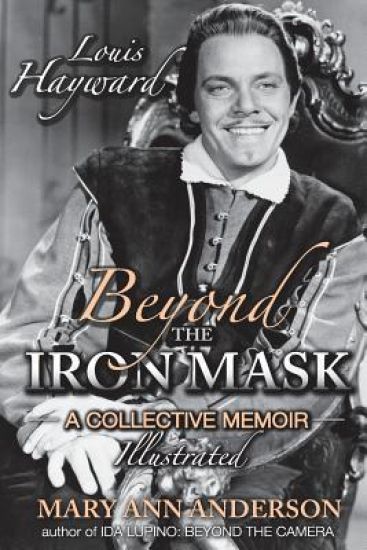
Louis Hayward: Beyond the Iron Mask A Collective Memoir Illustrated
Louis Hayward, Marine Corps Captain, Academy Award-winning director, and star on Broadway and in motion pictures, is best-known today for The Man in the Iron Mask (1939), but he appeared in dozens of films and stage roles, and he won other major awards for his brave wartime service. Discover the man behind the mask in Mary Ann Anderson's extraordinary memoir. From his Bronze Star Medal and Presidential Citation for his World War Two gallantry to winning the 1944 Academy Award for Best Documentary Short Subject for directing With the Marines at Tarawa, Louis' life and career reached heights that few have achieved. His early role on stage in London as the title character in Dracula led to a film, stage, and television career that spanned 1932-1974. His major appearances included No l Coward's Point Valaine (1935) on Broadway with Alfred Lunt and Lynn Fontanne; Mervyn Leroy's film, Anthony Adverse (1936); The Saint in New York (1938); James Whale's The Man in the Iron Mask (1939); The Son of Monte Cristo (1940); television series, The Lone Wolf (1954), The Pursuers (1961), Alfred Hitchcock Presents (1962), Rawhide (1964), and Night Gallery (1970). Through this richly researched work, learn the full story of how the man in the iron mask flourished as a gentleman with steely strength during World War Two and Broadway and Hollywood's Golden Years. 110 pages. Illustrated.
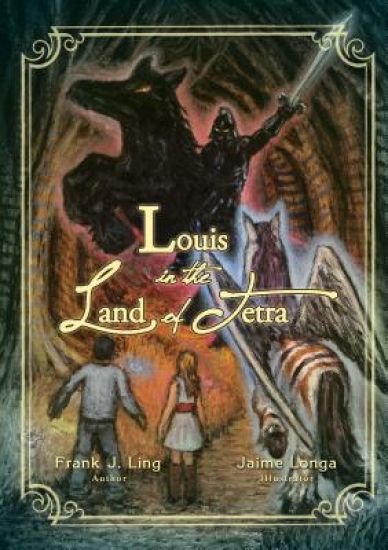
Louis in the Land of Tetra

Louis in the Land of Tetra

Frank J. Ling

Elm Hill Books
2018
nidottu
In this story, Louis in the Land of Tetra, young Louis and Crystal find themselves in the midst of terrifying danger.They have to face the horrible Zombos, struggle to protect themselves from the rampaging Zeros and stand against the cunning Shadow Warriors. Discovering their own potentials and learning to work together helps them to survive.They soon realize that their ability to succeed depends on faith, love, and hope. This journey will take them to new place where all things are possible
Louis in the Land of Tetra

Louis in the Land of Tetra

Frank J. Ling

Elm Hill Books
2018
sidottu
In this story, Louis in the Land of Tetra, young Louis and Crystal find themselves in the midst of terrifying danger.They have to face the horrible Zombos, struggle to protect themselves from the rampaging Zeros and stand against the cunning Shadow Warriors. Discovering their own potentials and learning to work together helps them to survive.They soon realize that their ability to succeed depends on faith, love, and hope. This journey will take them to new place where all things are possible
Louis Carlos Bernal: Monografa

Louis Carlos Bernal: Monografa

Elizabeth Ferrer

APERTURE
2024
sidottu
A landmark survey of one of the most significant American photographers of the twentieth century Best known for his intimate portrayals of barrio communities of the Southwest United States, Louis Carlos Bernal made photographs in the late 1970s and 1980s that draw upon the resonance of Catholicism, Indigenous beliefs, and popular practices tied to the land. For Bernal, photography was a potent tool in affirming the value of individuals and communities who lacked visibility and agency. Working in both black and white and in color, he photographed the interiors of homes and their inhabitants, often presenting his subjects surrounded by the objects they lived with—framed portraits of family members, religious pictures and statuaries, small shrines festooned with flowers, and elements of contemporary popular culture. Bernal viewed these spaces as rich with personal, cultural, and spiritual meaning, and his unforgettable photographs express a vision of la vida cotidiana—everyday life—as a state of grace. The first major scholarly account of Bernal’s life and work by the esteemed historian Elizabeth Ferrer, Louis Carlos Bernal: Monografía is the definitive book about an essential photographic artist. Copublished by Aperture and the Center for Creative Photography, Tucson