Kirjojen hintavertailu. Mukana 12 377 206 kirjaa ja 12 kauppaa.

Kirjahaku

Etsi kirjoja tekijän nimen, kirjan nimen tai ISBN:n perusteella.

1000 tulosta hakusanalla Madison Moore

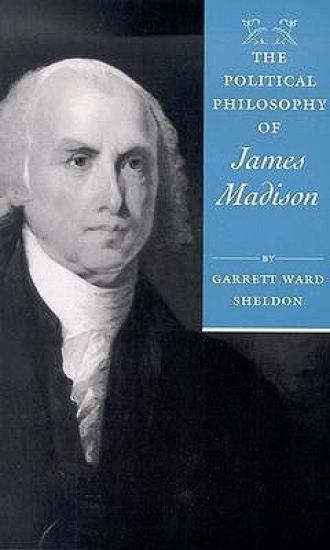
The Political Philosophy of James Madison

The Political Philosophy of James Madison

Garrett Ward Sheldon

Johns Hopkins University Press
2003
pokkari
Among the founders, James Madison wielded the greatest influence in drafting the Constitution of 1789. In this book, Garrett Ward Sheldon offers a concise synthesis of Madison's political philosophy in the context of the social and political history of his day. Tracing the history of Madison's thought to his early education in Protestant theology, Sheldon argues that it was a fear of the potential "tyranny of the majority" over individual rights, along with a firmly Calvinist suspicion of the motives of sinful men, that led him to support a constitution creating a strong central government with power over state laws. In this way, Madison aimed to protect individual liberties and provide checks to "spiteful" human interests and selfish parochial prejudices. Among the topics Sheldon covers are Madison's Princeton education, his contributions to the Federalist Papers, his arguments in defense of states' rights on behalf of Virginia, his views on federal power during his terms as secretary of state and president, and, in his later years, his defense of the Union against those Southerners who advocated nullification.
Prairie Plants of the University of Wisconsin-Madison Arboretum

Prairie Plants of the University of Wisconsin-Madison Arboretum

Theodore S. Cochrane; Kandis Elliot; Claudia S. Lipke

University of Wisconsin Press
2006
nidottu
A pioneer and leader in the preservation and restoration of native Midwest prairies since the 1930s, the University of Wisconsin - Madison Arboretum has a stellar collection of prairie plant species, including horsetails, ferns, rushes, sedges, grasses, shrubs, vines, and wildflowers. This guide illustrates and describes more than 360 native and introduced species that grow and bloom on the Arboretum prairies and also briefly discusses or mentions many additional species, infraspecific taxa, and hybrids. Its intent is to increase awareness and respect for remaining small prairie remnants, motivate readers to work for prairie preservation and restoration, and encourage the planting of native species in yards and gardens. Botanist and taxonomist Theodore S. Cochrane has written the text to engage a variety of readers: prairie enthusiasts, gardeners, amateur botanists, younger students learning about plants, and college students and professionals. Nomenclature follows in part the new APG classification system. Richly illustrated with detailed color photographs by Claudia S. Lipke and botanical illustrations and maps by Kandis Elliot, the guide provides a beautiful and informative sample of the flora of the Arboretum and of the southern Wisconsin prairie landscape. Many of the plants, of course, are also found throughout the upper Midwestern United States and in adjacent southern Canada.
A First Draft History: The Madison College Experiment in Christian Education

A First Draft History: The Madison College Experiment in Christian Education

M. Bessie Degraw; Percy T. Magan

Forwardmoving Publishing
2018
nidottu
This book presents a fresh and thorough account of the Madison experiment, told by those most closely involved in its development. The original typewritten manuscript, written in 1912, was found in the archives of the Layman Foundation headquarters in Collegedale, Tennessee. This is a faithful transcription of that previously unpublished document.
History of the Clark Family of Madison County, Iowa.
This work has been selected by scholars as being culturally important and is part of the knowledge base of civilization as we know it.This work is in the public domain in the United States of America, and possibly other nations. Within the United States, you may freely copy and distribute this work, as no entity (individual or corporate) has a copyright on the body of the work.Scholars believe, and we concur, that this work is important enough to be preserved, reproduced, and made generally available to the public. To ensure a quality reading experience, this work has been proofread and republished using a format that seamlessly blends the original graphical elements with text in an easy-to-read typeface.We appreciate your support of the preservation process, and thank you for being an important part of keeping this knowledge alive and relevant.
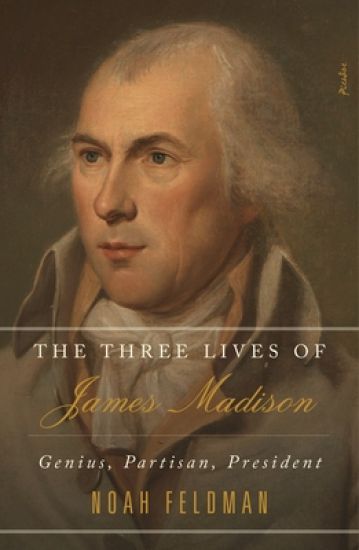
The Three Lives of James Madison: Genius, Partisan, President
A sweeping reexamination of the Founding Father who transformed the United States in each of his political "lives"--as a revolutionary thinker, as a partisan political strategist, and as a president "In order to understand America and its Constitution, it is necessary to understand James Madison."--Walter Isaacson, #1 New York Times bestselling author of Leonardo da Vinci Over the course of his life, James Madison changed the United States three times: First, he designed the Constitution, led the struggle for its adoption and ratification, then drafted the Bill of Rights. As an older, cannier politician he co-founded the original Republican party, setting the course of American political partisanship. Finally, having pioneered a foreign policy based on economic sanctions, he took the United States into a high-risk conflict, becoming the first wartime president and, despite the odds, winning. Now Noah Feldman offers an intriguing portrait of this elusive genius and the constitutional republic he created--and how both evolved to meet unforeseen challenges. Madison hoped to eradicate partisanship yet found himself giving voice to, and institutionalizing, the political divide. Madison's lifelong loyalty to Thomas Jefferson led to an irrevocable break with George Washington, hero of the American Revolution. Madison closely collaborated with Alexander Hamilton on the Federalist papers--yet their different visions for the United States left them enemies. Alliances defined Madison, too. The vivacious Dolley Madison used her social and political talents to win her husband new supporters in Washington--and define the diplomatic customs of the capital's society. Madison's relationship with James Monroe, a mixture of friendship and rivalry, shaped his presidency and the outcome of the War of 1812. We may be more familiar with other Founding Fathers, but the United States today is in many ways Madisonian in nature. Madison predicted that foreign threats would justify the curtailment of civil liberties. He feared economic inequality and the power of financial markets over politics, believing that government by the people demanded resistance to wealth. Madison was the first Founding Father to recognize the importance of public opinion, and the first to understand that the media could function as a safeguard to liberty. The Three Lives of James Madison is an illuminating biography of the man whose creativity and tenacity gave us America's distinctive form of government. His collaborations, struggles, and contradictions define the United States to this day.
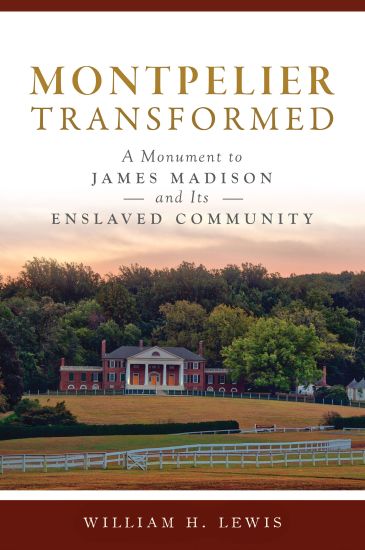
Montpelier Transformed: A Monument to James Madison and Its Enslaved Community
By the late 20th century, Montpelier, the home of James and Dolley Madison, had been altered until it would no longer have been recognizable to the couple.In 2000 the newly-created Montpelier Foundation took over management of the historic home with the seemingly insurmountable task of restoring it to be a visual record of the Madisons' era. Within ten years, the Foundation overcame numerous hurdles, turning Montpelier into a monument to the Father of the Constitution. Over the next decade the site also became a monument to Montpelier's enslaved. The buildings in their community next to the Madisons' home were reconstructed, and award-winning exhibits dramatically illustrate the tragedy of slavery and essential role of enslaved people in Madison's life. Foundation co-founder William H. Lewis details the nonprofit's ambitious preservation projects and remarkable achievements.