Kirjojen hintavertailu. Mukana 11 389 334 kirjaa ja 12 kauppaa.

Kirjahaku

Etsi kirjoja tekijän nimen, kirjan nimen tai ISBN:n perusteella.

1000 tulosta hakusanalla Maral Atmaca

Moral Pedagogies for Africa
This volume engages with issues of moral responsibility and multiethnic co-existence in the context of contemporary Africa. Post-colonial African states are by and large ethnically diverse. Constructively managing ethnic diversity, however, has always been a challenge to these states, which often fail to be democratic and all-inclusive. As a result, ethnic enmity and conflicts that obliterate bonds of togetherness between ethnic communities have been rampant throughout the continent. In dialogue with Africa’s cultural and religious assets, this interdisciplinary multi-authored book aims at articulating the need to interpret past and present ethnic hostilities in Africa, and generating moral resources of togetherness to foster a social pedagogy of responsible cohabitation for Africans. The chapters of this volume, categorized into two parts, are framed according to these two niches.
Moral Pedagogies for Africa
This volume engages with issues of moral responsibility and multiethnic co-existence in the context of contemporary Africa. Post-colonial African states are by and large ethnically diverse. Constructively managing ethnic diversity, however, has always been a challenge to these states, which often fail to be democratic and all-inclusive. As a result, ethnic enmity and conflicts that obliterate bonds of togetherness between ethnic communities have been rampant throughout the continent. In dialogue with Africa’s cultural and religious assets, this interdisciplinary multi-authored book aims at articulating the need to interpret past and present ethnic hostilities in Africa, and generating moral resources of togetherness to foster a social pedagogy of responsible cohabitation for Africans. The chapters of this volume, categorized into two parts, are framed according to these two niches.
Moral Enhancement and the Public Good

Moral Enhancement and the Public Good

Parker Crutchfield

Taylor Francis Ltd
2021
sidottu
Currently, humans lack the cognitive and moral capacities to prevent the widespread suffering associated with collective risks, like pandemics, climate change, or even asteroids. In Moral Enhancement and the Public Good, Parker Crutchfield argues for the controversial and initially counterintuitive claim that everyone should be administered a substance that makes us better people. Furthermore, he argues that it should be administered without our knowledge. That is, moral bioenhancement should be both compulsory and covert. Crutchfield demonstrates how our duty to future generations and our epistemic inability to promote the public good highlight the need for compulsory, covert moral bioenhancement. This not only gives us the best chance of preventing widespread suffering, compared to other interventions (or doing nothing), it also best promotes liberty, autonomy, and equality. In a final chapter, Crutchfield addresses the most salient objections to his argument.
Moral Enhancement and the Public Good

Moral Enhancement and the Public Good

Parker Crutchfield

TAYLOR FRANCIS LTD
2024
nidottu
Currently, humans lack the cognitive and moral capacities to prevent the widespread suffering associated with collective risks, like pandemics, climate change, or even asteroids. In Moral Enhancement and the Public Good, Parker Crutchfield argues for the controversial and initially counterintuitive claim that everyone should be administered a substance that makes us better people. Furthermore, he argues that it should be administered without our knowledge. That is, moral bioenhancement should be both compulsory and covert. Crutchfield demonstrates how our duty to future generations and our epistemic inability to promote the public good highlight the need for compulsory, covert moral bioenhancement. This not only gives us the best chance of preventing widespread suffering, compared to other interventions (or doing nothing), it also best promotes liberty, autonomy, and equality. In a final chapter, Crutchfield addresses the most salient objections to his argument.
Moral Cupidity and Lettres de cachet in Diderot’s Writing

Moral Cupidity and Lettres de cachet in Diderot’s Writing

Jennifer Vanderheyden

Taylor Francis Ltd
2021
nidottu
This volume explores the influence of the lettre de cachet on both Diderot’s personal life and his works, beginning with an examination of Diderot’s experience as recipient of two such arrest warrants, followed by an analysis of his references to these warrants in three of his fictional works, Le Père de famille, Jacques le fataliste and Est-il bon? Est-il méchant?. A scrutiny of Diderot’s mémoire/lettre novel La Religieuse proposes that, on the basis of moral cupidity, or self-gain, Madame Simonin sends her daughter Suzanne two veiled lettres de cachet that demand her confinement to a convent. The exploration of a fascinating real-life case of Henriette-Émilie de Bautru, a young comtesse whose mother confined her to a convent as a result of a lettre de cachet also based on motives of greed, leads to an examination of the similarities between Suzanne and the Comtesse in terms of their illegitimacy, questioning of authority and subsequent rebellion. A consideration of writing and communication in La Religieuse as they relate to this rebellion leads to an investigation of Diderot’s admiration of the mystery of female genius and artistic creativity as discussed in his essay Sur les femmes. The works of Julia Kristeva, especially her Post-Scriptum addressed to Diderot at the end of her work Thérèse mon amour: Thérèse d’Avila, serve as a theoretical basis for an interpretation of Suzanne’s experience as victim of a lettre de cachet and her search for a psychological rebirth of her être caché.
Moral Rights and Their Grounds

Moral Rights and Their Grounds

David Alm

Taylor Francis Ltd
2021
nidottu
Moral Rights and Their Grounds offers a novel theory of rights based on two distinct views. The first—the value view of rights—argues that for a person to have a right is to be valuable in a certain way, or to have a value property. This special type of value is in turn identified by the reasons that others have for treating the right holder in certain ways, and that correlate with the value in question. David Alm then argues that the familiar agency view of rights should be replaced with a different version according to which persons’ rights, and thus at least in part their value, are based on their actions rather than their mere agency. This view, which Alm calls exercise-based rights, retains some of the most valuable features of the agency view while also defending it against common objections concerning right loss. This book presents a unique conception of exercise-based rights that will be of keen interest to ethicists, legal philosophers, and political philosophers interested in rights theory.
Moral Discourse in the History of Economic Thought

Moral Discourse in the History of Economic Thought

Laurent Dobuzinskis

TAYLOR FRANCIS LTD
2022
sidottu
Providing an account of the development of economic thought, this book explores the extent to which economic ideas are rooted in moral values. Adopting an approach rooted in ‘pragmatism’, the work explores key questions which have been considered by economists since the classical political economists. These include: what degree of priority ought to be granted to property rights among all individual liberties; whether uncertainties in economic life justify investing political authorities with the power to stabilize business cycles; whether it is better to trust entrepreneurial initiatives to resolve societal dilemmas or to centralize policy-making in the hands of a benevolent government. The chapters argue that economic thought has evolved from an emphasis on "sympathy" (as defined by Adam Smith) and that there has more recently been a rediscovery of the significance of sympathy reinvented as "fair reciprocity" in the wake of the emergence of behavioural economics and its connection to evolutionary psychology.This key book is of great interest to readers in the history of ideas, political and moral philosophy, and political economy.
Moral Discourse in the History of Economic Thought

Moral Discourse in the History of Economic Thought

Laurent Dobuzinskis

TAYLOR FRANCIS LTD
2024
nidottu
Providing an account of the development of economic thought, this book explores the extent to which economic ideas are rooted in moral values. Adopting an approach rooted in ‘pragmatism’, the work explores key questions which have been considered by economists since the classical political economists. These include: what degree of priority ought to be granted to property rights among all individual liberties; whether uncertainties in economic life justify investing political authorities with the power to stabilize business cycles; whether it is better to trust entrepreneurial initiatives to resolve societal dilemmas or to centralize policy-making in the hands of a benevolent government. The chapters argue that economic thought has evolved from an emphasis on "sympathy" (as defined by Adam Smith) and that there has more recently been a rediscovery of the significance of sympathy reinvented as "fair reciprocity" in the wake of the emergence of behavioural economics and its connection to evolutionary psychology.This key book is of great interest to readers in the history of ideas, political and moral philosophy, and political economy.
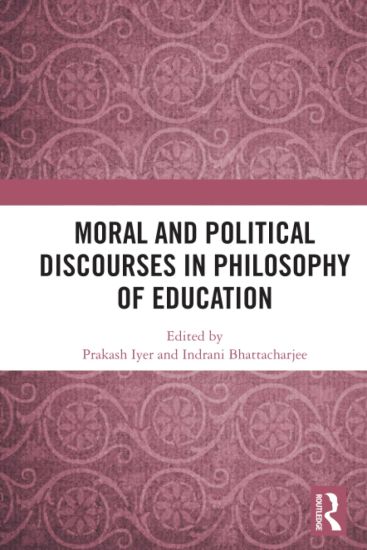
Moral and Political Discourses in Philosophy of Education
This book focuses on moral and political education and critically engages with educational issues from a philosophical perspective. It engages with questions of moral education as well as questions about citizenship education, to address apprehensions on learning in a liberal democracy while parallelly invoking issues from within the curriculum, the school environment and teacher-student relationship.With contributions from renowned philosophers and educationists, this volume discusses themes like civic education and liberal democracy; toleration and freedom; Tagore’s conception of the moral and political self; key issues in moral education; cosmopolitanism, compassion, care ethics and moral purpose of schooling; to revisit and rethink some foundational questions related to education, curriculum and pedagogy.This volume will be essential reading for educationists and educators and will be important for scholars and researchers of philosophy of education, education, teacher education and school education.
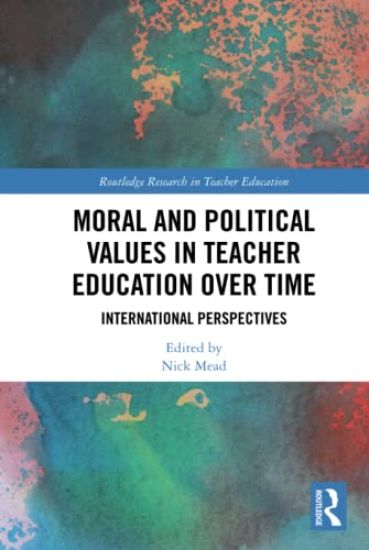
Moral and Political Values in Teacher Education over Time
This collection brings together international teacher educators to employ a ‘long view’ of an historic and values-based dialectic in teacher education. The authors reflect how employing historical consciousness to look back can offer greater continuity to teachers’ moral and political values within their training. The book draws on research from experienced teacher educators representing different historical, social and political contexts in North America, Europe, Asia as well in post-conflict South Africa. Within each section, the authors reflect on the development of the moral and political values of pre-service and in-service teachers in an era of global neo-liberalism and how this is inextricably bound up with the narratives of professionals in the past within their own national context. Each chapter takes a ‘long view’ of the role of historical consciousness in informing the moral and political values of pre-service and in-service teachers, providing examples of how international teacher educators can collectively support one another in restoring a vibrant, values-based dialectic within the processes, pedagogies and provision of university and school-based training for which they are responsible. The ‘long view’ approach offers a compelling argument for the need to connect pre-service and in-service teachers’ values and narrative to the legacy of professionals of the past. Moral and Political Values in Teacher Education over Time will be of great interest to researchers, academics and students in teacher education, comparative education and the history of education. It will also be of interest to international university and school-based teacher educators and policymakers in the field.
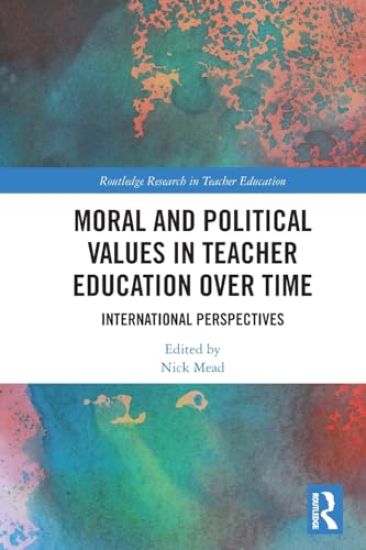
Moral and Political Values in Teacher Education over Time
This collection brings together international teacher educators to employ a ‘long view’ of an historic and values-based dialectic in teacher education. The authors reflect how employing historical consciousness to look back can offer greater continuity to teachers’ moral and political values within their training. The book draws on research from experienced teacher educators representing different historical, social and political contexts in North America, Europe, Asia as well in post-conflict South Africa. Within each section, the authors reflect on the development of the moral and political values of pre-service and in-service teachers in an era of global neo-liberalism and how this is inextricably bound up with the narratives of professionals in the past within their own national context. Each chapter takes a ‘long view’ of the role of historical consciousness in informing the moral and political values of pre-service and in-service teachers, providing examples of how international teacher educators can collectively support one another in restoring a vibrant, values-based dialectic within the processes, pedagogies and provision of university and school-based training for which they are responsible. The ‘long view’ approach offers a compelling argument for the need to connect pre-service and in-service teachers’ values and narrative to the legacy of professionals of the past. Moral and Political Values in Teacher Education over Time will be of great interest to researchers, academics and students in teacher education, comparative education and the history of education. It will also be of interest to international university and school-based teacher educators and policymakers in the field.
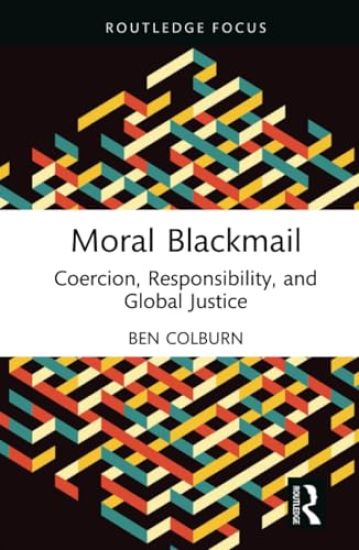
Moral Blackmail

Moral Blackmail

Ben Colburn

TAYLOR FRANCIS LTD
2024
sidottu
Moral Blackmail: Coercion, Responsibility, and Global Justice identifies a novel kind of forced action, yet one that is relatively neglected in ethics and moral philosophy. Moral blackmail occurs when someone is forced to do something because someone else has made all its alternatives morally unacceptable.Ben Colburn explores moral blackmail by first examining existing theories of coercion, responsibility, and voluntary action, and defending its existence from various sceptical metaethical arguments, before arguing that moral blackmail's significance is not limited to the interpersonal: it is also endemic in the structures of distribution and decision-making at the largest scale. To show this, he considers two problems in intergenerational and international justice: the problem of ‘passing the buck’ in environmental and population policies in the former, and the problem of ‘taking up the slack’ in situations of partial compliance with the demands of the latter. Recognising these as instances of moral blackmail writ large offers novel solutions to these long-standing philosophical problems, as well as offering proof in use of the account Colburn proposes.Moral Blackmail will be of interest to those studying and researching political philosophy, ethical theory, applied ethics, and politics.
Moral Injury and the Humanities
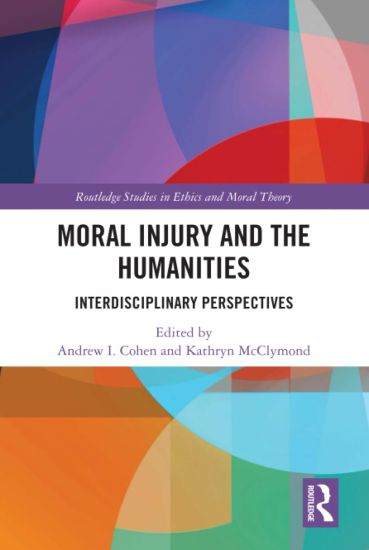
This book brings together leading interdisciplinary scholars to broaden and deepen the conversation about moral injury. In the original chapters, the contributors present new research to show how the humanities are crucial for understanding the expressions, meaning, and significance of moral injury.Moral injury is the disorientation we suffer when we are complicit in some moral transgression. Most existing works address moral injury from a clinical or neuroscientific perspective. The chapters in this volume show how the humanities are crucial for understanding the meaning and significance of moral injury as well as suggesting how to grapple with its lived challenges. The chapters address the conceptual, sociological, historical, and ritualistic dimensions of moral injury across three thematic sections. Section 1 explores how tools of the humanities provide new lenses for understanding conceptual and genealogical themes about moral injury. Section 2 highlights the experiences of moral injury in combat soldiers, law enforcement, and noncombatants such as photojournalists. These chapters examine the power and limits to theorizing moral phenomena by appeals to lived experience. Section 3 considers how humanistic inquiry illuminates important dimensions of the aftermath of moral injury beyond the scope of clinical research. These chapters consider how ritual, relationship repair, and atonement might shape the ways people navigate moral injury and consider how such responses shape our understanding of what we owe to one another. Moral Injury and the Humanities: Interdisciplinary Perspectives is an essential resource for researchers and advanced students in philosophy, religious studies, literature, journalism, and the arts who are interested in moral injury.
Moral Injury and the Humanities
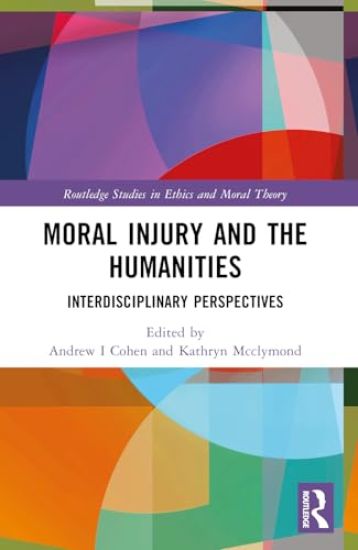
This book brings together leading interdisciplinary scholars to broaden and deepen the conversation about moral injury. In the original chapters, the contributors present new research to show how the humanities are crucial for understanding the expressions, meaning, and significance of moral injury.Moral injury is the disorientation we suffer when we are complicit in some moral transgression. Most existing works address moral injury from a clinical or neuroscientific perspective. The chapters in this volume show how the humanities are crucial for understanding the meaning and significance of moral injury as well as suggesting how to grapple with its lived challenges. The chapters address the conceptual, sociological, historical, and ritualistic dimensions of moral injury across three thematic sections. Section 1 explores how tools of the humanities provide new lenses for understanding conceptual and genealogical themes about moral injury. Section 2 highlights the experiences of moral injury in combat soldiers, law enforcement, and noncombatants such as photojournalists. These chapters examine the power and limits to theorizing moral phenomena by appeals to lived experience. Section 3 considers how humanistic inquiry illuminates important dimensions of the aftermath of moral injury beyond the scope of clinical research. These chapters consider how ritual, relationship repair, and atonement might shape the ways people navigate moral injury and consider how such responses shape our understanding of what we owe to one another. Moral Injury and the Humanities: Interdisciplinary Perspectives is an essential resource for researchers and advanced students in philosophy, religious studies, literature, journalism, and the arts who are interested in moral injury.