
Kirjahaku
Etsi kirjoja tekijän nimen, kirjan nimen tai ISBN:n perusteella.
916 tulosta hakusanalla Marnham Patrick
The Journal of Christopher Columbus During His First Voyage, 1492-93, and Documents Relating to the Voyages of John Cabot and Gaspar Corte Real
Christopher Columbus; Clements Robert Markham
Kessinger Pub
2007
pokkari
The Book of the Master of the Egyptian Doctrine of the Light Born of the Virgin Mother
W. Marsham Adams
Kessinger Pub
2004
sidottu
The Voyages of William Baffin, 1612-1622
William Baffin; Clements Robert Markham
Kessinger Pub
2007
pokkari

A Family Memoir of the Macdonalds of Keppoch
Angus MacDonald; Clements Robert Markham; Charles Edward (CON) Stuart
Kessinger Pub
2009
pokkari
The Book of the Master of the Egyptian Doctrine of the Light Born of the Virgin Mother
W. Marsham Adams
Literary Licensing, LLC
2014
sidottu
The Book of the Master of the Egyptian Doctrine of the Light Born of the Virgin Mother is a book written by W. Marsham Adams. The book is a translation of an ancient Egyptian text that reveals the secrets of the Egyptian religion and its connection to the Virgin Mary. The book provides insight into the beliefs and practices of the ancient Egyptians, including their worship of the goddess Isis and their belief in the afterlife. The text also explores the role of the Virgin Mary in the Egyptian religion and how she was seen as a manifestation of the goddess Isis. The book is a fascinating exploration of the ancient Egyptian religion and its connection to Christianity, and is a must-read for anyone interested in the history of religion.This Is A New Release Of The Original 1898 Edition.This scarce antiquarian book is a facsimile reprint of the old original and may contain some imperfections such as library marks and notations. Because we believe this work is culturally important, we have made it available as part of our commitment for protecting, preserving, and promoting the world's literature in affordable, high quality, modern editions, that are true to their original work.

The Power Pop Investor: Small Investors Technical Approach to Trading Stock
Don L. Markham
Createspace Independent Publishing Platform
2013
nidottu
The Book of the Master of the Egyptian Doctrine of the Light Born of the Virgin Mother
W. Marsham Adams
Literary Licensing, LLC
2014
nidottu
The House of the Hidden Places: A Clue to the Creed of Early Egypt from Egyptian Sources 1895
W. Marsham Adams
Literary Licensing, LLC
2014
nidottu
The War Between Peru and Chile 1879-1882
Clements R. Sir Markham
Literary Licensing, LLC
2014
nidottu
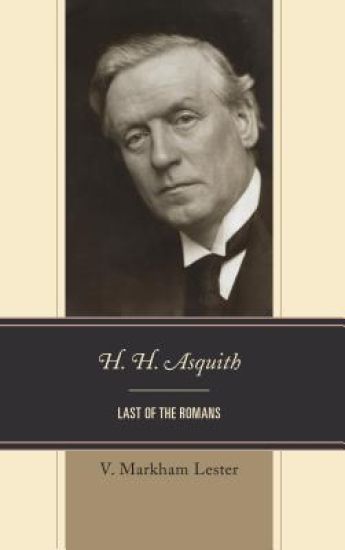
H. H. Asquith: Last of the Romans chronicles the life of H. H. Asquith (1852–1928), the longest-serving British prime minister between Lord Liverpool and Margaret Thatcher. In this study, V. Markham Lester argues that the key to understanding Asquith is to recognize the classical virtues he acquired early in his education. Employing unpublished sources and documents made public since the last full-scale biography of Asquith was published more than forty years ago, Lester challenges many interpretations in earlier biographies. Previous studies of Asquith have often glossed over his education and early years, contending that his development did not contribute materially to his mature outlook. On the contrary, by examining thoroughly Asquith’s early career—particularly his tenure as home secretary and his time as a barrister—this book offers unappreciated insights into Asquith’s character and development as a political leader. Lester further challenges the previous conclusions that Asquith failed as a war leader, demonstrating that Asquith succeeded in meeting the novel challenges of World War I and that his accomplishments have been insufficiently understood. He explains how Asquith’s lifelong reliance on rational thought, eloquence, and self-control produced the impressive leadership required to hold the fragile government together as it struggled to handle the unexpected and unprecedented challenges of world war and to lay the foundation for ultimate victory in the Great War.
H. H. Asquith: Last of the Romans chronicles the life of H. H. Asquith (1852–1928), the longest-serving British prime minister between Lord Liverpool and Margaret Thatcher. In this study, V. Markham Lester argues that the key to understanding Asquith is to recognize the classical virtues he acquired early in his education.Employing unpublished sources and documents made public since the last full-scale biography of Asquith was published more than forty years ago, Lester challenges many interpretations in earlier biographies. Previous studies of Asquith have often glossed over his education and early years, contending that his development did not contribute materially to his mature outlook. On the contrary, by examining thoroughly Asquith’s early career—particularly his tenure as home secretary and his time as a barrister—this book offers unappreciated insights into Asquith’s character and development as a political leader. Lester further challenges the previous conclusions that Asquith failed as a war leader, demonstrating that Asquith succeeded in meeting the novel challenges of World War I and that his accomplishments have been insufficiently understood. He explains how Asquith’s lifelong reliance on rational thought, eloquence, and self-control produced the impressive leadership required to hold the fragile government together as it struggled to handle the unexpected and unprecedented challenges of world war and to lay the foundation for ultimate victory in the Great War.
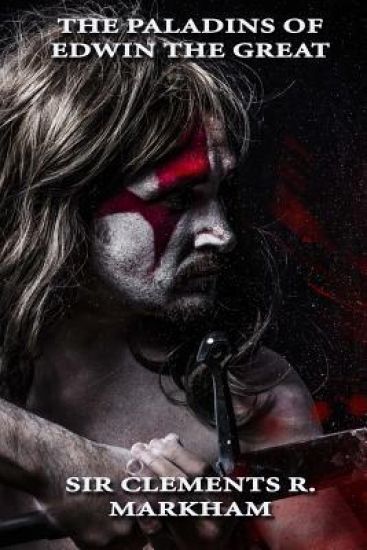
The Paladins of Edwin the Great
Clements R. Markham
Createspace Independent Publishing Platform
2014
nidottu
Very little is known for certain of one of the most important events in the history of the world, the coming of the Englishmen to England. It took a long time, fully a century, from 450 A.D. to 550 A.D., and they came constantly, in small detachments for the most part, landing on the coast, in all directions, from the Forth to the Isle of Wight. They came amidst the ruins of the mighty Roman Empire, a new race of empire-founders, with all the germs of a still mightier future. The new-comers from the older Angeln or England, now called Sleswig, came in the greatest numbers. We know not why, but it certainly was a wholesale movement. They kept launching their small fleets of dragon ships, and crossing the North Sea with their gods, their doorposts, and their beautiful golden-haired wives and children, until none were left. They brought with them all the deep religious feeling, all the imaginative mythology, all the heroic tales of the old land. They first disembarked on the coast between the Forth and the Tees, driving back the natives into Strathclyde, after a struggle which lasted for many years. Among them came Ida the son of Eoppa, with twelve sons, in forty dragon ships full of English warriors. He founded the castle of Bambrough on the coast, which was at first surrounded with a hedge and afterwards with a wall; and in 547 A.D. he became king of the country of Bernicia, between the Forth and the Tees. Ida was surnamed the "Flame-bearer." He reigned for twelve years in Bernicia, when Ethelric his son succeeded him. Many more warriors landed on the coast between the Tees and the Humber. In 559 A.D. their Eolderman, named Ella, the son of Iffi, the son of Wuscfrea, and 12th in descent from Woden, became king of the more southern Northumbrian kingdom of Deira. When they were settled in their kingdom of Deira, with Ella as their king, and Elfric as their leader in war, the sea-rovers became farmers, ready to defend their possessions and to fight for the acquisition of more territory for their countrymen. They were the ceorls or freemen assembling in communities of families, within a boundary or mark, and known by a common name with the addition of the patronymic ing. The ceorl owned a hide of land, bore arms, had a vote, and took part in the thing, or general assembly of his mark. The union of marks formed a wapentake (Vopnatak), from the custom of touching the chief's spear in token of fealty. The union of Wapentakes formed the Scire or Shire with its Shirem t. The Ceorl was the freeman, while the Eorl was the nobleman or chief in peace and war, and the Eolderman was a prince of the family of the Cyning (from cyne, generous) or king, who wore the cynehelm or circlet of gold. The Englishmen came with their immemorial gods, and their grand old traditions. Woden was their All-father and Creator, Thor the mighty enemy of giants and trolls, Tyr the god of war. They invoked Balder the bright and fair of aspect; Freyr, who presided over rain and sunshine; Niord, who ruled the winds; gir, god of the ocean; and many more. "Our forefathers derived comfort in affliction, support in difficulty, from the belief that the gods watched over them. They bent in gratitude for the blessings they conferred, and were guided and directed in the daily business of life by the conviction of their responsibility to higher powers than any which they recognised in the world around them." A religious feeling was the basis of their respect for law-of their loyalty, of their free institutions, and of those customs and habits of thought which were the foundation-stones of the edifice of English liberty. These old warriors brought with them to their new homes all those germs which were fertilised by their virtues, and watered with the lifeblood of their valour, until, in the course of centuries, they grew up to form the greatest nation this earth has ever seen, a fruitful and beneficent tree, spreading its branches far and wide round the world.
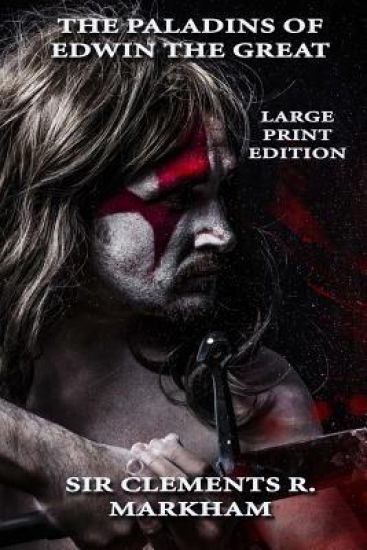
The Paladins of Edwin the Great - Large Print Edition
Clements R. Markham
Createspace Independent Publishing Platform
2014
nidottu
Very little is known for certain of one of the most important events in the history of the world, the coming of the Englishmen to England. It took a long time, fully a century, from 450 A.D. to 550 A.D., and they came constantly, in small detachments for the most part, landing on the coast, in all directions, from the Forth to the Isle of Wight. They came amidst the ruins of the mighty Roman Empire, a new race of empire-founders, with all the germs of a still mightier future. The new-comers from the older Angeln or England, now called Sleswig, came in the greatest numbers. We know not why, but it certainly was a wholesale movement. They kept launching their small fleets of dragon ships, and crossing the North Sea with their gods, their doorposts, and their beautiful golden-haired wives and children, until none were left. They brought with them all the deep religious feeling, all the imaginative mythology, all the heroic tales of the old land. They first disembarked on the coast between the Forth and the Tees, driving back the natives into Strathclyde, after a struggle which lasted for many years. Among them came Ida the son of Eoppa, with twelve sons, in forty dragon ships full of English warriors. He founded the castle of Bambrough on the coast, which was at first surrounded with a hedge and afterwards with a wall; and in 547 A.D. he became king of the country of Bernicia, between the Forth and the Tees. Ida was surnamed the "Flame-bearer." He reigned for twelve years in Bernicia, when Ethelric his son succeeded him. Many more warriors landed on the coast between the Tees and the Humber. In 559 A.D. their Eolderman, named Ella, the son of Iffi, the son of Wuscfrea, and 12th in descent from Woden, became king of the more southern Northumbrian kingdom of Deira. When they were settled in their kingdom of Deira, with Ella as their king, and Elfric as their leader in war, the sea-rovers became farmers, ready to defend their possessions and to fight for the acquisition of more territory for their countrymen. They were the ceorls or freemen assembling in communities of families, within a boundary or mark, and known by a common name with the addition of the patronymic ing. The ceorl owned a hide of land, bore arms, had a vote, and took part in the thing, or general assembly of his mark. The union of marks formed a wapentake (Vopnatak), from the custom of touching the chief's spear in token of fealty. The union of Wapentakes formed the Scire or Shire with its Shirem t. The Ceorl was the freeman, while the Eorl was the nobleman or chief in peace and war, and the Eolderman was a prince of the family of the Cyning (from cyne, generous) or king, who wore the cynehelm or circlet of gold. The Englishmen came with their immemorial gods, and their grand old traditions. Woden was their All-father and Creator, Thor the mighty enemy of giants and trolls, Tyr the god of war. They invoked Balder the bright and fair of aspect; Freyr, who presided over rain and sunshine; Niord, who ruled the winds; gir, god of the ocean; and many more. "Our forefathers derived comfort in affliction, support in difficulty, from the belief that the gods watched over them. They bent in gratitude for the blessings they conferred, and were guided and directed in the daily business of life by the conviction of their responsibility to higher powers than any which they recognised in the world around them." A religious feeling was the basis of their respect for law-of their loyalty, of their free institutions, and of those customs and habits of thought which were the foundation-stones of the edifice of English liberty. These old warriors brought with them to their new homes all those germs which were fertilised by their virtues, and watered with the lifeblood of their valour, until, in the course of centuries, they grew up to form the greatest nation this earth has ever seen, a fruitful and beneficent tree, spreading its branches far and wide round the world.