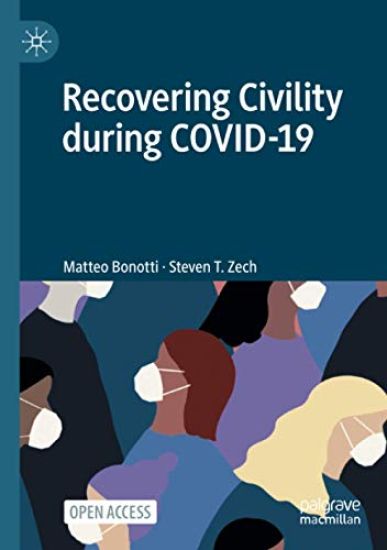
This Open Access book examines many of the challenges posed by the COVID-19 pandemic through the distinctive lens of civility. The idea of civility appears often in both public and academic debates, and a polarized political climate frequently leads to allegations of uncivil speech and behaviour. Norms of civility are always contested, even more so in moments of crisis such as a global pandemic. A focus on civility provides crucial insight and guidance on how to navigate the social and political challenges resulting from COVID-19. Furthermore, it offers a framework through which citizens and policymakers can better understand the causes and consequences of incivility, and devise ways to recover civility in our social and political lives.
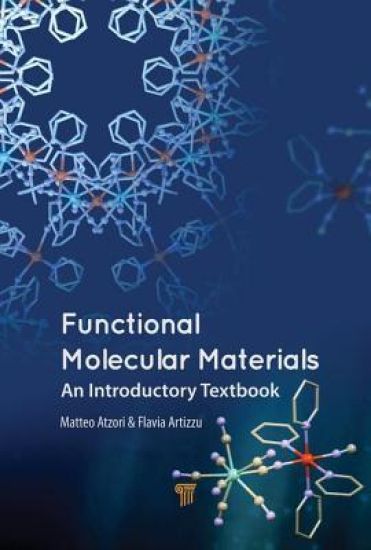
The field of molecular materials represents an exciting playground for the design, tailoring, and combination of chemical building blocks as carriers of physical properties and aims at the understanding and development of novel functional molecular devices. Within this extraordinarily widespread framework, the realization of materials with the desired functionalities can only be achieved through a rational design strategy based on a solid understanding of the chemical and physical features of each constituting building block.This book provides a general overview of molecular materials, discussing their key features in a simple and organic way by focusing more on basic concepts rather than on specialized descriptions, in order to supply the non-expert reader with the immediate fundamental tools and hints to understand and develop research in this field. With this view, it is a step-by-step guide toward the preparation of functional molecular materials, where the knowledge and understanding so far attained by the scientific community through the investigation of significant archetypical examples is deconstructed down to the fundamental basis and then presented in reverse, from the base to the top.
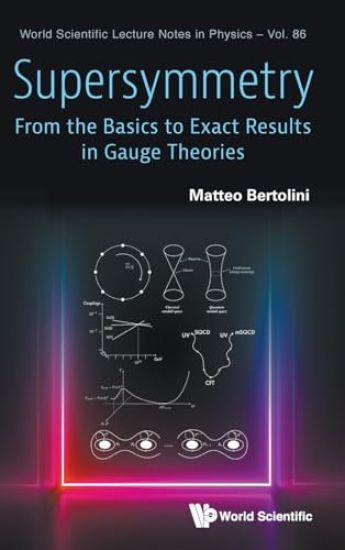
What is Supersymmetry? Is it something real? If not, can it be useful in any way? This book, structured as a textbook for a one semester graduate course on supersymmetry, provides an introduction to this fascinating subject and seeks to answer these questions.Theoretically inclined in its contents, the book can be divided into three parts. The first part introduces the supersymmetry algebra and its representations, and provides a detailed description of the superfield formalism. The second part focuses on the construction of supersymmetric field theories; it includes an overview on non-renormalization theorems, the analysis of several examples of tree-level supersymmetry breaking and a discussion of the basic structure of supersymmetric models for describing physics beyond the Standard Model. The third part discusses the quantum behavior of supersymmetric (gauge) theories, in which holomorphy and dualities play a prominent role. The reader will become familiar with topics like Seiberg duality, dynamical supersymmetry breaking (both in stable and metastable vacua), Seiberg-Witten theory, Argyres-Douglas fixed points, S-duality and more. Several exercises at the end of each chapter will allow readers to test their understanding, discuss some extensions, or prove statements from the main text.
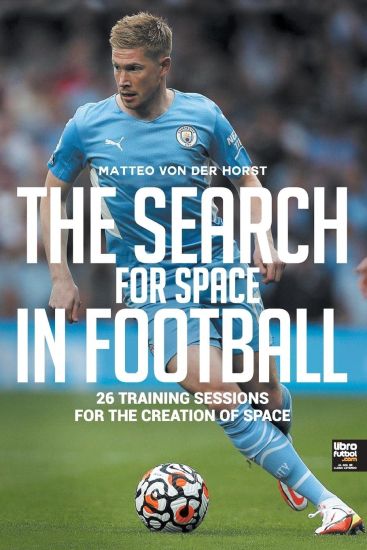
Para crear espacios, adem s de tener una gran velocidad mental y f sica, es necesario entrenar la t cnica. La prontitud en la ejecuci n combinada con la rapidez de los movimientos, son las claves para que los jugadores puedan marcar diferencias con los tiempos durante un partido de f tbol. Esta obra incluye 26 pr cticas para que los entrenadores puedan generar espacios tiles en sus equipos, aprovechando al m ximo la amplitud del campo y encontrando futbolistas en la zona de finalizaci n.
The book provides practitioners and researchers with a complete overview of the latest and most important non-invasive and non-destructive techniques for inspecting structures and bodies by using microwaves. Placing emphasis on applications, the book considers many areas, from medical imaging and security, to industrial engineering and subsurface prospection. For each application, readers are presented with the objectives of the inspection and related challenges. Moreover, it details computational methods that can be used to solve inverse problems related to specific applications. Including clear examples or the most significant practical results, this forward-looking reference focuses on systems that have been recently developed. Professionals gain the knowledge needed to compare imaging methods used in different applications and develop new uses of imaging apparatuses and systems.
This book explores the moral and political significance of gastrospaces: the spaces where we eat. It adopts an innovative approach, combining analytic political philosophy and analytic ontology, to lay down the theoretical foundations for a multi- and interdisciplinary research agenda on the complex interconnections between food and space. Social science and humanities scholars have studied the ties between food consumption and space from multiple angles. This book sets up a different and more foundational approach, which engages with these bodies of work and integrates them into a coherent framework. While taking the reader through a theoretical journey of varying complexities, the book also illustrates the social, political, and cultural significance of gastrospaces by surveying an array of examples from diverse historical and geographical contexts. It then draws on political philosophy to show that gastrospaces are sites of justice and injustice and complements this analysis by developing an ontological model for gastrospaces that facilitates a systematic analysis of their social, political, and cultural significance. The book ends with a toolbox for the study of gastrospaces that different stakeholders may apply to their respective contexts of intervention. This book will appeal to philosophers, political scientists, food scholars, geographers, and anyone interested in the intersection between food and space. By focusing on a wide range of real-world topics related to gastrospaces, such as racist dress codes, family-friendly restaurants, speakeasies, and gendered kitchen designs, the book will also be of interest to nonacademic stakeholders such as urban planners, policymakers, designers, managers, and consumers.
How to talk to boys about the toxic manosphere - and de-radicalise those who have already found it Boys and young men are facing a crisis: misogynistic beliefs and behaviour, amplified by the internet's echo chamber, are gaining significant traction. The 'manosphere' is unregulated, seductive and full of misinformation. It's no wonder so many are unable to resist. Drawing on the authors'expertise with Shout Out UK, the award-winning social enterprise providing political and media literacy training, Man Enough will teach parents how to talk so their boys will listen. From fake news to emotional resilience, this reassuring guide will help parents empower boys to engage in responsible online behaviour. This is how to talk to boys about the toxic manosphere - and de-radicalise those who have already entered it.
Against Post-Truth: An Empirical-Theoretical Inquiry into News Media delivers a refreshingly critical perspective on the post-truth debate, challenging the naturalized status of this concept as an epochal crisis in contemporary epistemology, media and politics. By subverting the very logic behind such diagnosis, the book refuses to look at post-truth as a taken-for-granted phenomenon and rather focuses on the way the term was concretely conceptualized and talked of. The book traces the historical trajectory of the neologism, critically dissects its interpretations in academia and media, and analyzes nearly 1,700 articles from Italian and British news outlets in search for the meanings and the subjectivities associated with the term. Drawing on post-structuralist discourse theory and culturalist cognitive sociology, it reveals how the “post-truth discourse” simplifies complex phenomena and identities, overemphasises the deviant side of the debate, builds on problematic premises, and ultimately obscures critical questions about truth, knowledge, and democracy. Against Post-Truth is crafted in a clear and accessible language and will be of interest to scholars and students in media studies, political theory, philosophy and discourse analysis. It equips readers with conceptual tools to critically deconstruct the common post-truth narratives and provides valuable insights for navigating the challenges and anxieties of our time without falling into simplistic or utopian solutions.
It is a well-known fact that current Icelandic language policy urges users to resort to the inner potential of their mother tongue instead of borrowing lexemes. This often leads to the formation of word pairs, consisting of a loanword and its respective native equivalent, as the process of borrowing systematically eludes the tight tangles of language policy. The outcome of such coexistence in Modern Icelandic is known and widely studied. But what happened in the Middle Ages, a period free from any puristic ideology? Through a linguistic-philological investigation of texts from all medieval Icelandic prosa genres, the book delves into a previously neglected area of study and answers the question of how loanwords and native synonyms interacted before purism. The work explores the strategies by which the variation between loanwords and native words manifests itself in the Icelandic medieval period, and suggests that the very same dynamics apply to any other language with a comparable literary tradition, hence bridging the gap between case-study and general linguistic theory.
This book is a significant contribution within and across High Energy Physics and Algebraic Combinatorics. It is the first book on the amplituhedron, which encodes the scattering amplitudes of N=4 Yang-Mills theory, a cousin of the theory of strong interactions of quarks and gluons.
This book describes testing methods for Novel Photonic Integrated Circuits, which have become one of the hottest topics in the context of information technology. Readers will learn that these objects are used not only to enhance the throughput of optical communications (backbone of the internet network), but also to for smart-sensing, metrology, quantum application and artificial intelligence. The increasing demand for this kind of device drives the need for fast and effective testing methods, as described in this book.
This book explores the key conceptual stakes underpinning historical epistemology. The strong Anglophone interest in historical epistemology, since at least the 1990s, is typically attributed to its simultaneously philosophical and historical synthetic approach to the study of science. Yet this account, considered by critics to be an unreflective assumption, has prevented historical epistemology from developing a clear understanding and definition, especially regarding how precisely historical and philosophical reflections on the sciences should be combined. Thus, this book uniquely analyses how the problems and tensions inherent to the “contemporary” phase of historical epistemology can be clarified by reference to the “classical” French phase. The archaeological method of Michel Foucault, which draws on and transforms fundamental insights by Gaston Bachelard and Georges Canguilhem, is used to exert an enduring influence on the field—especially through the work of Ian Hacking and his philosophical cum historical analyses of “styles of scientific reasoning”. Though this book is of great value to academic specialists and graduate students, the fact it addresses questions broad in scope ensures it is also relevant to a range of scholars in many disciplines and will provoke discussion among those interested in foundational issues in history and philosophy of science. “In this highly sophisticated synthetic work, Matteo Vagelli provides a very clear and informative history of epistemology and the philosophy and history of science. He makes instructive and subtle distinctions that are often overlooked, and makes full and productive use of Ian Hacking's notion of “styles”, discerning different ways of doing science, philosophy and history. It is a thoughtful and erudite book that will help a diverse array of scholars become more reflective about their own practices, and more tolerant and curious about other styles of inquiry.”(Hasok Chang, Hans Rausing Professor of History and Philosophy of Science, University of Cambridge, UK) Vagelli’s book provides a both unique and uniquely important window into historical epistemology and its relation to contemporary philosophy of science. Unique because nowhere else can one find a single work that treats the range of topics that he covers. Uniquely important because Vagelli’s clear, concise, and comprehensive survey details key interrelationships among a range of American, British, and European views currently in play regarding historical epistemology and philosophy of science as well as the institutional and intellectual vectors driving their associated epistemological positions – Paul Roth, UC Santa Cruz, USA Uneasily, the history and philosophy of science have bolstered and undermined each other for all too long. Would history offer nothing but potted episodes to confirm or contradict transhistorical claims about science? Would philosophy dismantle uncritical historicist accounts of scientific discoveries? Historical epistemology offers a more integrated path, at once a history of the present and a philosophy of the past. Matteo Vagelli draws together the insights of the Francophone, Anglophone and Germanophone traditions to give us a sparkling, lucid account of seeing our standards of scientific understanding as developing across time, always asking: how did we come to our standards of demonstration and argument? – Peter Galison, Harvard University, USA
This book presents a groundbreaking ecological perspective on territorial cohesion, a cornerstone of the European Union's vision outlined in the Lisbon Treaty of 2009, defined as the pursuit of balanced and harmonious development across regions.
Ristampa immutata dell'edizione originale del 1839. La casa editrice Antigonos specializzata nella pubblicazione di ristampe di libri storici. Ci assicuriamo che queste opere siano messe a disposizione del pubblico in buone condizioni, al fine di preservare il patrimonio culturale.