Welcome to the Pot-Limit Omaha boot camp! Are you ready to work hard and study hard? If the answer is yes", then this book will teach you all you need to know to start playing PLO, establish your game at the low-stakes and then move up to the higher limits. You will learn all the key concepts in step-by-step fashion. The material is split into 28 chapters and each chapter topic is discussed in four sections: *The Introduction*The Exercise*The Solutions*The Practice At the end of each chapter there is an overview of the material so you can be absolutely sure that you have understood all the key information. This book is ideal for players at the low-stakes level but there is also a great deal of useful information for more advanced players
This handy pocket guide enables divers and snorkelers to identify more than 270 of the most common species of marine life likely to be encountered in and around the coral reefs of the Indo-Pacific region, including fish, reptiles and amphibians, and invertebrates.
Two Ways to Live: The choice we all facethe Gospel of LukeWhat, we thought, if we combined to two?That's what The Essential Jesus does. Most of its 80 pages are made up of a fresh and accurate translation of Luke's Gospel. But the text of Luke is preceded by some important background information ('Previously in the Bible') that explains the biblical context and Jewish expectations as Jesus walks on centre stage (this explanation is based on boxes 1 to 3 of Two Ways to Live). The text of Luke also includes numerous footnotes, helpfully explaining to the modern reader some of the unfamiliar terms and names that appear from time to time. After Luke's account of Jesus, a summary of the message is presented using the Two Ways to Live framework, concepts and illustrations, but linking back to the content of Luke. This second edition includes updates in the Two Ways to Live-related sections so that it matches the updated Two Ways to Live tract.
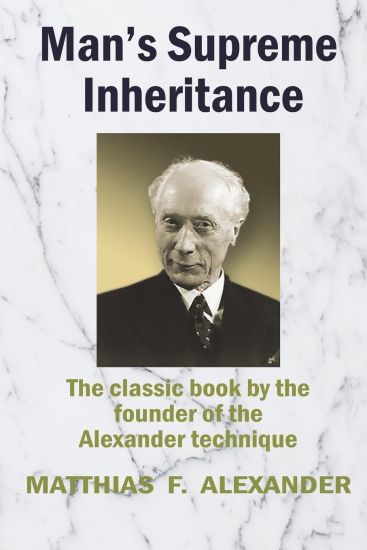
F.M. Alexander (1869-1955) was an Australian actor who began to experience chronic laryngitis whenever he performed. When his doctors could not help him, Alexander discovered a solution on his own. He had not been aware that excess tension in his neck and body were causing his problems, and began to find new ways to speak and move with greater ease.His health improved to such an extent that his friends and several of the doctors he had consulted earlier persuaded him to teach others what he had learned. Over a career span of more than fifty years, he refined his method of instruction. After teaching for over 35 years, he began to train teachers of what has now become known as the Alexander Technique.Written by the founder of the Alexander Technique, this book lays down some of the foundation principles in regards to posture, body use, 'conscious guidance' of movement, habit, and the Alexander Technique in general. Man's Supreme Inheritance sets the scene for how the Alexander Technique started and where it currently sits today.
Packaged in a resealable plastic envelope, Reusable Universes serves as an instruction manual to the immersive kinetic art of Taiwanese artist Shih Chieh Huang (born 1975), showing how nature, technology and everyday materials inspire Huang’s practice.
A First Course in Complex Analysis was developed from lecture notes for a one-semester undergraduate course taught by the authors. For many students, complex analysis is the first rigorous analysis (if not mathematics) class they take, and these notes reflect this. The authors try to rely on as few concepts from real analysis as possible. In particular, series and sequences are treated from scratch.
The story of Matth Toebben begins as a tale of a young child growing up under the scourge of Nazi Germany. He was forced to witness things a boy of his age should never see. For Matth and his family, every day was a struggle for survival in a time of overwhelming oppression. At the age of twenty-one, he headed forth across the Atlantic Ocean to America. Although he was unable to speak a word of English and had only ten dollars in his pocket, he wasn't deterred. Those obstacles were offset by an abundance of ambition and determination. He found the United States to be a land of immense opportunity for anyone willing to work hard and make their visions a reality. He dedicated himself to the principles upon which his new country was founded: devotion to God, love of family, and dedication to the community. Through sheer determination, he succeeded, and with each success came another. Along the way, he faced multiple disasters, both professionally and personally. It was the way in which he overcame the setbacks that had defined him as one of the area's most respected and influential leaders.
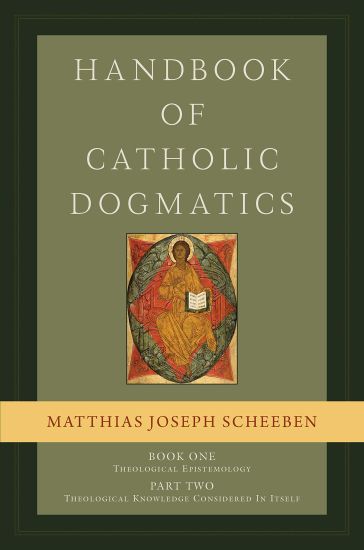
Where and how do we encounter God's revelation made once for-all in Christ Jesus? The answer to this urgent question is explored in Matthias Joseph Scheeben's Handbook of Catholic Dogmatics, Book One, Part One, here translated for the first time in English by Michael J. Miller. Scheeben (1835–1888), a renowned German theologian.This unabridged first part of a two-volume set, begins with a discussion of the nature and scope of dogmatic theology as a science. He treats divine revelation as the source of theological knowledge and as transmitted in Scripture and in the Apostolic Tradition. Included in this volume is Scheeben's treatise, "The Objective Principles of Theological Knowledge". Scheeben writes on faith in its source, contents, and handing on in the Church as it confronts the believer, eliciting his or her assent.
Matthias Joseph Scheeben's masterful Handbook of Catholic Dogmatics: Book One, Part Two concludes the first book of Scheeben's magnum opus.Readers will find Scheeben's examination of faith, the subjective principle of theological knowledge. In exact yet beautiful prose, he moves from the study of human belief to supernatural faith, while preserving the reasonableness, freedom, and certainty that accompany faith.Maintaining theology is indeed a "sacred science", Scheeben treats the understanding of faith by demonstrating human reason's relationship to the deposit of faith. He concludes this work by shedding light on the subject of dogmatic theology itself, recounting its history from the Patristic era to his own time.
Anta the aardvark learns to appreciate his own looks and stop trying to be like all of his friends. He discovers that he is like no one else and that is a good thing.
Synopsis: Innovating: How to Thrive in an Ever-Changing Business Environment, is a comprehensive guide to navigate the challenges of the modern business world. Written by Dr. Matthias I. Chijioke, the book draws on his experience in finance, accounting, and business management to provide practical advice and insights for individuals and business organizations seeking to adapt to the rapidly evolving business environment. The book is divided into three parts. Part one focuses on understanding the changing business landscape and the factors driving innovation and disruption. It covers topics such as the impact of technology, globalization, and changing consumer behavior on business models. Part two is dedicated strategies for driving innovation and growth in businesses. It covers topics such as product innovation, marketing strategies, and talent management. This section also includes case studies and examples of successful companies that have adapted to the changing business landscape. Finally, part three focuses on leadership and management in an ever-changing business environment. It covers topics such as effective communication, risk management and developing a culture of Innovation. Throughout the book, Dr. Chijioke emphasizes the significance of adapting to change and staying ahead of the curve in order to thrive in the modern business world. He provides practical advice and insights that can be applied by individuals and organizations at all levels. Innovating Corporate America is a valuable resource for anyone seeking to understand and navigate the business challenges of the modern landscape. Whether you are a business leader, entrepreneur, or student of business, this book provides insights and strategies that can help you stay ahead of the curve and thrive in an ever-changing world.Autobiography: DR. MATTHIAS I. CHIJIOKE is an Enrolled Agent (EA) representing taxpayers before the Internal Revenue Services (IRS), and Business Consultant, a highly accomplished professional with extensive experience in the fields of finance, accounting, and business management. As the President and CEO of Macro Resource Group, he has demonstrated a remarkable ability to lead and grow organizations in the ever-changing business Environment.
"The exposition will be as profound and comprehensive as I can make it; nature and grace must furnish the basis for a reasonable chart of life and growth. My cherished aim is to bring out the supernatural character of the Christian economy of salvation in its full sublimity, beauty, and riches. The main task of our time, it seems to me, consists in propoupding and emphasizing the supernatural quality of Christianity, for the benefit of both science and life. Theoretical as well as practical naturalism and rationalism, which seek to throttle and destroy all that is specifically Christian, must be resolutely and energetically repudiated." Thus writes the great 19th-century theologian Matthias Scheeben, a vibrant, original, and poetic author who re-opened the enchanting world of St. Thomas to new generations of Catholics in a period marred by the desiccated rationalism of the Enlightenment period in its last rays before the darkness of modernism. In the new Thomism that has sprung up in the postconciliar Church, Scheeben makes for essential reading.
Wir leben in Fernsehbildern und sind alle Teil eines gro en Werbefilms f r das demokratische und kapitalistische westliche Gesellschaftssystem. F r Theodor Adorno ist das Fernsehen das alles berragende Instrument der verflachenden Kulturindustrie, f r Neil Postman ist es eine Verdummungsmaschine, f r Hans-Magnus Enzensberger das Nullmedium, und der Kriminologe Christian Pfeiffer kommt zu dem Schluss: "Ein berma an Medienkonsum macht dick, dumm, krank und traurig." Was fr her undenkbar schien, ist heute Wirklichkeit und wird nicht mehr als mediales Absurdistan erkannt: dass Shows Menschen dazu zwingen, ihren Kopf in eine Box mit Kakerlaken zu stecken oder sich in F kalien zu w lzen, dass Fernsehsender sich darin berbieten, dreistellige Millionen-Euro-Betr ge auszugeben f r die bertragungsrechte von Sportereignissen, dass den ffentlich-rechtlichen Sendern in Deutschland mehr als acht Milliarden Euro an Einnahmen zuflie en, dass fr hlich-anspruchslose TV-Moderatoren zweistellige Millionenhonorare bekommen, dass die Geb hrensender sich ohne Not dem Quotenwettlauf der privaten anschlie en und ihre Vollprogramme zunehmend nach den Unterhaltungsanspr chen der kommerziellen Konkurrenz ausrichten, dass nicht der ffentlich-rechtliche Rundfunk in Deutschland die Politik kontrolliert, sondern die Rollen vertauscht sind und die politischen Parteien die Sender kontrollieren undsoweiter. Das selbstreferentielle System ist berversorgt mit Geld und es berversorgt die Menschen mit Kan len, die niemand braucht und kaum jemand sieht. Es steht au erhalb der konomie, verwaltet sich selbst, ist durchdrungen von Vetternwirtschaft, Pfr ndedenken, Parteieneinfluss und festgefahren in Verwaltungshandeln. Der Intendant lebt wie ein absolutistischer Herrscher. Die Welt au erhalb seines Senders versteht er nicht. Er denkt gro , in Kategorien von Gottschalk, Jauch, Weltmeisterschaft, Olympia, Tatort und Tagesthemen. Das ist seine Welt. Die Welt der Medien spielt verr ckt, und diese irre digitale Gegenwelt wird zunehmend zum Ma stab f r die echte. Das Fernsehen versorgt uns mit Gegenwart, definiert, worauf es im Leben ankommt und beeinflusst unseren Realit tssinn. Es kolonisiert gleichzeitig andere Systeme wie die Wirtschaft, die Politik, die Kultur, denn wer sich seinen Gesetzen und Vorgaben nicht beugt, verliert an Bedeutung, deshalb machen alle mit. Dabei verspricht das Fernsehen best ndiges Gl ck. Alle Probleme der Welt sind auf der anderen Seite, weit entfernt oder fiktional. Es wirkt wie die Werbung, die uns sagt: Wir sind in Ordnung, Du bist in Ordnung, ich bin in Ordnung. Alles ist in Ordnung. So wird das System stabilisiert, der Status quo gefestigt und niemand muss sich Sorgen machen. Je schlimmer das Fernsehen die Zust nde zeigt, desto eher geben sich die Zuschauer zufrieden mit ihrer eigenen kleinen Welt, so unbefriedigend ihre Lage auch sei. Wirklichkeit und Illusion, tats chliches Erleben und gesehene Handlungen, die Fiktionen des Fernsehens, die nachgestellten Szenen, die Inszenierungen und die nicht nachpr fbaren und wie mit einem Maschinengewehr abgefeuerten Nachrichten aus der ganzen Welt, das Innere und das u ere, die ganze therische Welt im Kopf wirken auf die Menschen ein, verwirren und stiften Unruhe. Das Reale wird verwechselbar. War es berhaupt echt? Wo ist es uns unter gekommen? Wo haben wir den Eindruck her? Die Konfusion geht einher mit einer sensorischen Deprivation.
Got RESTful APIs? Great. API consumers love them. But today, such RESTful APIs are not enough for the evolving expectations of API consumers. Their apps need to be responsive, event-based and react to changes in near real-time. This results in a new set of requirements for the APIs, which power the apps. APIs now need to provide concepts such as events, notifications, triggers, and subscriptions. These concepts are not natively supported by the REST architectural style. The good thing: we can engineer RESTful APIs that support events with a webhook infrastructure. The bad thing: it requires some heavy lifting. The webhook infrastructure needs to be developer-friendly, easy to use, reliable, secure and highly available. With the best practices and design templates provided in this book, we want to help you extend your API portfolio with a modern webhook infrastructure. So you can offer both APIs and events that developers love to use.
Want to build APIs like Facebook? Since Facebook's framework for building APIs, GraphQL, has become publicly available, this ambition seems to be within reach for many companies. And that is great. But first, let's learn what GraphQL really is and - maybe even more importantly - let's figure out how to apply GraphQL to build APIs that consumers love. In this book, we take a hands-on approach to learning GraphQL. We first explore the concepts of the two GraphQL languages using examples. Then we start writing some code for our first GraphQL API. We develop this API step by step, from creating a schema and resolving queries, over mocking data and connecting data sources all the way to developing mutations and setting up event subscriptions.Are your API consumers important to you? This book shows you how to apply a consumer-oriented design process for GraphQL APIs, so you can deliver what your consumers really want: an API that solves their problems and offers a great developer experience.Do you want to enable the API consumers so they can build great apps? This book explains the GraphQL query language, which allows the API consumers to retrieve data, write data and get notified when data changes. More importantly, you let them decide, which data they really need from the API.Do you want to make your API easy and intuitive to use? This book shows you how to use the GraphQL schema language to define a type system for your API, which serves as a reference documentation and helps your API consumers write queries that are syntactically correct.Do you want to profit from what has worked for others? This book provides a collection of best practices for GraphQL that have worked for other companies, e.g. regarding pagination, authentication and caching.GraphQL and REST are competing philosophies for building APIs. It is not in the scope of this book to compare or discuss the two approaches. The focus of this book is on a hands-on approach for learning GraphQL.
Signup and login with a Google, Yahoo, or Microsoft account can be found in more and more web and mobile apps. One login used by many, freeing the end-user from the burden of managing many accounts and passwords. Signup and login to a new app become so smooth and convenient, that end-users are much more likely to try a new app. For us developers of web and mobile apps, these signup and login features are attractive, too: we do not need to manage user credentials, and we get a higher conversion rate resulting in more new customers. In effect, this means cutting costs and increasing the number of new customers for our apps.So how does this feature "Signup and login with Google, Yahoo, or Microsoft" work? It is realized with OpenID Connect, a standardized protocol for sharing end-user data in a secure and controlled manner. Exploring how OpenID Connect works, so we as developers can enjoy its benefits is the subject of this book. This book explains the overall concept of OpenID Connect, so we understand who the actors are, which endpoints and tokens are involved and how these elements interact in so-called flows. These flows tend to get confusing, so we visualize these flows as sequence diagrams, and show how to choose the flow that is appropriate for a given scenario. Using examples, we explore how the tokens are constructed, signed and encrypted with JWT, JWS, and JWE. This is not a programming book, don't expect implementations with a specific programming language or library. Instead, we focus on understanding OpenID Connect on a conceptual level, so we can design and architect apps that work with OpenID Connect. And OpenID Connect is the standard behind creating smooth login and signup experiences, increasing the customer signup rate, and creating highly converting apps.
Now in full colour, Desk Top Publishing with QuarkXPress has been completely rewritten and redesigned for the latest edition of the world's most powerful layout application. This book, which links with the video series Desk Top Publishing with QuarkXPress, is the go-to guide in English for all experienced Quarkers, returning Quarkers and those new to the application. This edition introduces all the new features of QX2018, but has also been designed to be useful to people working with QX2015, QX2016 and QX2017, and indicates at which point a feature was introduced. This is a book not just about Desktop Publishing, a software category invented in 1983, but about Desk Top Publishing, an art, craft and science that goes back more than a thousand years. QuarkXPress is uniquely able to deliver everything from the most recent colour fonts (which themselves hark back to medieval illumination) to the most austere grid-locked renaissance type design, and to do it for iOS or Android app, HTML5 web publication, eBook, Kindle, print on demand or honest old-fashioned offset press.
Die Neuauflage von "Trinkertage" ist eine 2-teilige, autobiografische Zeitreise, die den weitverbreiteten Alkoholismus unter jungen Menschen in der DDR zum Thema macht. Erz hlt Teil 1 "Blauer Sommer" vorrangig von den Abenteuern, Begegnungen, Tr umen und Alkoholexzessen des Protagonisten Ralle und seiner Freunde w hrend des letzten "DDR-Sommers" 1989, so beschreibt dieser 2. Teil "Kein Land in Sicht" die Zeit nach Ralles letztem Absturz - seine Therapie und "Das gro e N chtern werden", mit neuen Erfahrungen und Krisen -, aber auch die gesellschaftlichen Entwicklungen w hrend und nach der politischen Wende im Osten Deutschlands, die nicht nur viele junge Menschen berfordert hat