Kirjojen hintavertailu. Mukana 11 468 877 kirjaa ja 12 kauppaa.

Kirjahaku

Etsi kirjoja tekijän nimen, kirjan nimen tai ISBN:n perusteella.

1000 tulosta hakusanalla Michael J. Perry

Developing Cognitive-Behavioural Counselling

Developing Cognitive-Behavioural Counselling

Michael J Scott; Stephen G Stradling; Windy Dryden

SAGE Publications Ltd
1995
sidottu
Seminars by Professor Windy Dryden. See the man live and in action. To find out more and to book your place go to www.cityminds.com ________________________________________ `[This book has] many useful insights for other therapists... make a copy of the competency checklist: if we all scored highly and consistently, there would be no need for talk of "national registration" ' - The Therapist In this volume the authors develop the cognitive-behavioural counselling approach by offering newer conceptualizations of many common client problems. It is suggested that effective interventions will often need to take account of early maladaptive interpretations of situations and of the presence of personality disorders. The specifics of tackling problems as diverse as surviving in a family with a personality disordered member and post-traumatic stress disorder are elaborated, and recent developments in the counselling of clients with anxiety and depression are also incorporated. Hitherto neglected issues such as the use of groups and the assessment of counsellor competence are also highlighted.
Developing Cognitive-Behavioural Counselling

Developing Cognitive-Behavioural Counselling

Michael J Scott; Stephen G Stradling; Windy Dryden

SAGE Publications Ltd
1995
nidottu
Seminars by Professor Windy Dryden. See the man live and in action. To find out more and to book your place go to www.cityminds.com ________________________________________ `[This book has] many useful insights for other therapists... make a copy of the competency checklist: if we all scored highly and consistently, there would be no need for talk of "national registration" ' - The Therapist In this volume the authors develop the cognitive-behavioural counselling approach by offering newer conceptualizations of many common client problems. It is suggested that effective interventions will often need to take account of early maladaptive interpretations of situations and of the presence of personality disorders. The specifics of tackling problems as diverse as surviving in a family with a personality disordered member and post-traumatic stress disorder are elaborated, and recent developments in the counselling of clients with anxiety and depression are also incorporated. Hitherto neglected issues such as the use of groups and the assessment of counsellor competence are also highlighted.
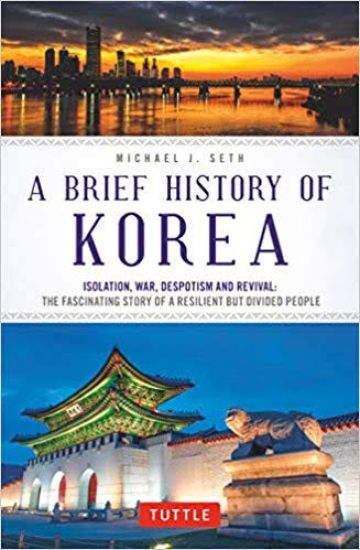
A Brief History of Korea

A Brief History of Korea

Michael J. Seth

Tuttle Publishing
2019
nidottu
Exploring Korean history from its ancient roots to the present day, A Brief History of Korea is the story of a people with a rich and united culture that has become two Koreas in modern times—one isolated and secretive and the other among the world's most successful economies. Korean culture developed on a 600-mile-long peninsula, bordered on the north by mountains and three sides by the sea, set apart from the Asian mainland. Korea was one of the last countries in Asia to be visited by Westerners and its borders have remained largely unchanged since it was unified in the seventh century. Though it is one of the world's oldest and most ethnically homogeneous states, Korea was not born in a vacuum. Geographically isolated, the country was heavily influenced by powerful China and was often used as a bridge to the mainland by Japan. Calling themselves as "a shrimp among whales," Koreans borrowed elements of government, culture and religion all the while fiercely fighting to maintain independence from powerful neighbors. This fascinating book tells the story of Korean domestic dynasties, empires and states, as well as foreign conquest, occupation and division. Today, the two Koreas are starkly different—North Korea a nation closed to the world and South Korea an economic powerhouse and center of Asian democracy. Chronicling significant events right up through 2018's Singapore Summit, author Michael J. Seth presents a relevant, interesting and important history of Korea within a larger global context. Korea's history is a turbulent one, but ultimately the story of a resistant and resourceful people in search of lasting peace.
Korea at War

Korea at War

Michael J. Seth

TUTTLE PUBLISHING
2023
nidottu
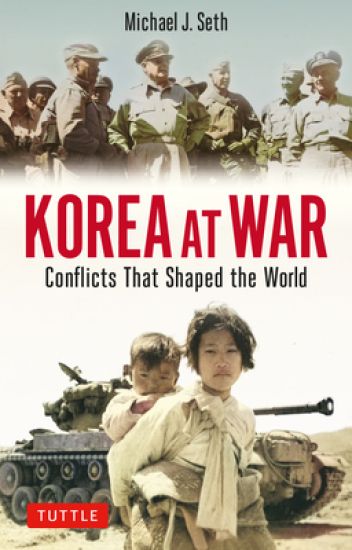
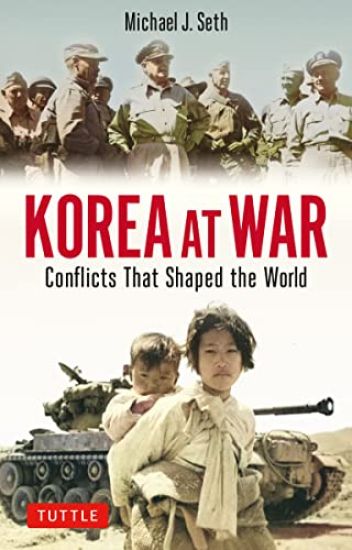
An engaging history covering a century of conflict on the Korean PeninsulaKorea at War recounts how two separate nations emerged on the Korean peninsula as the result of devastating conflicts involving provocative personalities and superpower intrigues. The topics covered in this fascinating book include:The brutal years of Japanese colonial rule which began with Japan's annexation of Korea and ended with its defeat in World War II—and which still dominate Japanese-Korean relations todayThe division of the country into a totalitarian North and a prosperous, democratic SouthNorth Korea's invasion of the South, motivated by Stalin, which led to the bloody Korean War—a conflict that is still not settled to this dayThe irascible General Douglas MacArthur, who was relieved of his command by President Truman when he disobeyed a direct order and attempted to expand the war into ChinaThe rise of the Kim regime in North Korea and the continuing threat of nuclear war todayHistorian Michael J. Seth explores these and other themes including the complete story of North Korea—a nation and a people who for three generations have lived under the world's most repressive regime. He also discusses how South Korea has made the incredible leap from one of the world's poorest nations to one its richest and most dynamic.Korea at War is the story of two nations with a shared past that could hardly be more different today. With over 50 color photographs and maps, this book is a must-read for anyone wanting to understand contemporary Asian politics and current affairs.
Korea at War

Korea at War

Michael J. Seth

TUTTLE PUBLISHING
2026
nidottu
An engaging history covering a century of conflict on the Korean Peninsula Korea at War recounts how two separate nations emerged on the Korean peninsula as the result of devastating conflicts involving provocative personalities and superpower intrigues. The topics covered in this fascinating book include: The brutal years of Japanese colonial rule which began with Japan's annexation of Korea and ended with its defeat in World War II—and which still dominate Japanese-Korean relations today The division of the country into a totalitarian North and a prosperous, democratic South North Korea's invasion of the South, motivated by Stalin, which led to the bloody Korean War—a conflict that is still not settled to this day The irascible General Douglas MacArthur, who was relieved of his command by President Truman when he disobeyed a direct order and attempted to expand the war into China The rise of the Kim regime in North Korea and the continuing threat of nuclear war today Historian Michael J. Seth explores these and other themes including the complete story of North Korea—a nation and a people who for three generations have lived under the world's most repressive regime. He also discusses how South Korea has made the incredible leap from one of the world's poorest nations to one its richest and most dynamic. Korea at War is the story of two nations with a shared past that could hardly be more different today. With over 50 color photographs and maps, this book is a must-read for anyone wanting to understand contemporary Asian politics and current affairs.
Body Learning: An Introduction to the Alexander Technique
Michael J. Gelb reveals the methods behind Frederick Matthias Alexander's groundbreaking health exercise regimen in Body Learning: An Introduction to the Alexander Technique. The Alexander Technique is now recognized the world over as the most revolutionary and far-reaching method developed for maintaining the health and efficiency of the body. Essentially a type of therapy that aims to treat and prevent a range of disorders through a system of postural changes, the Technique stresses the importance of reeducating the muscular system as a means to achieve physical and mental well-being. By unlearning common bad postural habits and ways of using the body, people can alleviate tension, fatigue, back pain, neck stiffness, asthma, headaches, depression, and many other ailments. Body Learning also shows how the Technique can be applied to every kind of learning experience, from children's education and the acquiring of basic skills to the most advanced needs of musicians, entertainers, professionals, and athletes. This revised and updated edition features: * Answers to the most commonly asked questions about the Technique* Further adventures in learning how to learn* The Balanced Resting State procedure: an aid to dynamic relaxation* Glossary of significant terms* And much more
Has the Church Replaced Israel?

Has the Church Replaced Israel?

Michael J. Vlach

Broadman Holman Publishers
2010
nidottu
The relationship between Israel and the church continues to be a controversial topic led by this question: Does the church replace, supersede, or fulfill the nation of Israel in God's plan, or will Israel be saved and restored with a unique identity and role?In Has the Church Replaced Israel?, author Michael J. Vlach evaluates the doctrine of replacement theology (also known as supersessionism) down through history but ultimately argues in favor of the nonsupersessionist position. Thoroughly vetting the most important hermeneutical and theological issues related to the Israel/church relationship, Vlach explains why, "there are compelling scriptural reasons in both testaments to believe in a future salvation and restoration of the nation Israel."
Creating A Memory of Causal Relationships

Creating A Memory of Causal Relationships

Michael J. Pazzani

Psychology Press
1990
sidottu
This book presents a theory of learning new causal relationships by making use of perceived regularities in the environment, general knowledge of causality, and existing causal knowledge. Integrating ideas from the psychology of causation and machine learning, the author introduces a new learning procedure called theory-driven learning that uses abstract knowledge of causality to guide the induction process. Known as OCCAM, the system uses theory-driven learning when new experiences conform to common patterns of causal relationships, empirical learning to learn from novel experiences, and explanation-based learning when there is sufficient existing knowledge to explain why a new outcome occurred. Together these learning methods construct a hierarchical organized memory of causal relationships. As such, OCCAM is the first learning system with the ability to acquire, via empirical learning, the background knowledge required for explanation-based learning. Please note: This program runs on common lisp.
Communication of Complex Information

Communication of Complex Information

Michael J. Albers

Routledge Member of the Taylor and Francis Group
2004
sidottu
The amount of information available for any realistic complex situation is likely to overwhelm most users, as well as stymie any designer tasked with presenting the information. Providing large amounts of information in a coherent and usable format remains an unresolved problem. Choosing, structuring, formatting, and displaying information to allow easy access and to facilitate understanding are critical issues for effective design. To build an effective design that addresses complex information needs, one must look at research from psychology, sociology, human computer interaction, and technical communication, and develop a complete picture of the situation. This book develops a foundation for analysis and design of the approaches to providing complex information in real-world situations. Author Michael Albers takes the view that the content of the information system is the most important component. As such, this volume presents the analysis that needs to be done before the interface is designed and before content is created. It strives to provide clear understanding of how the user thinks and what the user needs, so interface operation, content, and presentation can maximize their respective potentials in communicating with a user. This volume is intended for technical communicators, human-computer interaction designers, and information designers. It will also be useful for system designers and researchers, and those studying adaptive hypertext and related topics.
Communication of Complex Information

Communication of Complex Information

Michael J. Albers

Routledge Member of the Taylor and Francis Group
2004
nidottu
The amount of information available for any realistic complex situation is likely to overwhelm most users, as well as stymie any designer tasked with presenting the information. Providing large amounts of information in a coherent and usable format remains an unresolved problem. Choosing, structuring, formatting, and displaying information to allow easy access and to facilitate understanding are critical issues for effective design. To build an effective design that addresses complex information needs, one must look at research from psychology, sociology, human computer interaction, and technical communication, and develop a complete picture of the situation. This book develops a foundation for analysis and design of the approaches to providing complex information in real-world situations. Author Michael Albers takes the view that the content of the information system is the most important component. As such, this volume presents the analysis that needs to be done before the interface is designed and before content is created. It strives to provide clear understanding of how the user thinks and what the user needs, so interface operation, content, and presentation can maximize their respective potentials in communicating with a user. This volume is intended for technical communicators, human-computer interaction designers, and information designers. It will also be useful for system designers and researchers, and those studying adaptive hypertext and related topics.
Isaac C. Parker

Isaac C. Parker

Michael J. Brodhead

University of Oklahoma Press
2003
sidottu
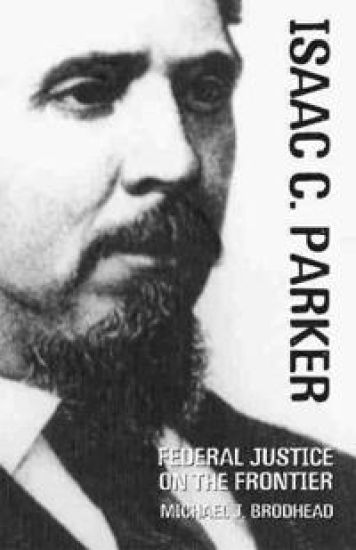
The legend of "hanging judge" Isaac C. Parker is re-examined, looking past his penchant for executions to reveal the true legacy of his tenure as U.S. District Court for the Western District of Arkansas and nearby Indian Territory. (Biography)
Banking in Oklahoma Before Statehood

Banking in Oklahoma Before Statehood

Michael J. Hightower

University of Oklahoma Press
2013
sidottu
This lively book takes Oklahoma history into the world of Wild West capitalism. It begins with a useful survey of banking from the early days of the American republic until commercial patterns coalesced in the East. It then follows the course of American expansion westward, tracing the evolution of commerce and banking in Oklahoma from their genesis to the eve of statehood in 1907.Banking in Oklahoma before Statehood is not just a story of men sitting behind desks. Author Michael J. Hightower describes the riverboat trade in the Arkansas and Red River valleys and freighting on the Santa Fe Trail. Shortages of both currency and credit posed major impediments to regional commerce until storekeepers solved these problems by moving beyond barter to open ad hoc establishments known as merchant banks.Banking went through a wild adolescence during the territorial period. The era saw robberies and insider shenanigans, rivalries between banks with territorial and national charters, speculation in land and natural resources, and land fraud in the Indian Territory. But as banking matured, the better-capitalized institutions became the nucleus of commercial culture in the Oklahoma and Indian Territories.To tell this story, the author blends documentary historical research in both public and corporate archives with his own interviews and those that WPA field-workers conducted with old-timers during the New Deal. Bankers were never far from the action during the territorial period, and the institutions they built were both cause and effect of Oklahoma's inclusion in national networks of banking and commerce. The no-holds-barred brand of capitalism that breathed life into the Oklahoma frontier has remained alive and well since the days of the fur traders. As one knowledgable observer said in the 1980s, ""You've always had the gambling spirit in Oklahoma.
Banking in Oklahoma, 1907-2000

Banking in Oklahoma, 1907-2000

Michael J. Hightower; Frank Keating

University of Oklahoma Press
2014
sidottu
The story of banking in twentieth-century Oklahoma is also the story of the Sooner State's first hundred years, as Michael J. Hightower's new book demonstrates. Oklahoma statehood coincided with the Panic of 1907, and both events signaled seismic shifts in state banking practices. Much as Oklahoma banks shed their frontier persona to become more tightly integrated in the national economy, so too was decentralized banking revealed as an anachronism, utterly unsuited to an increasingly global economy. With creation of the Federal Reserve System in 1913 and subsequent choice of Oklahoma City as the location for a branch bank, frontier banking began yielding to systems commensurate with the needs of the new century. Through meticulous research and personal interviews with bankers statewide, Hightower has crafted a compelling narrative of Oklahoma banking in the twentieth century. One of the first acts of the new state legislature was to guarantee that depositors in state-chartered banks would never lose a penny. Meanwhile, land and oil speculators and the bankers who funded their dreams were elevating get-rich-quick (and often get-poor-quick) schemes to an art form. In defense of country banks, the Oklahoma Bankers Association dispatched armed vigilantes to stop robbers in their tracks. Subsequent developments in Oklahoma banking include adaptation to regulations spawned by the Great Depression, the post-World War II boom, the 1980s depression in the oil patch, and changes fostered by rapid-fire advances in technology and communication. The demise of Penn Square Bank offers one of history's few unambiguous lessons, and it warrants two chapters - one on the rise, and one on the fall. Increasing regulation of the banking industry, the survival of family banks, and the resilience of community banking are consistent themes in a state that is only a few generations removed from the frontier.
1889

1889

Michael J. Hightower

University of Oklahoma Press
2018
nidottu
After immigrants flooded into central Oklahoma during the land rush of 1889 and the future capital of Oklahoma City sprang up ""within a fortnight,"" the city's residents adopted the slogan ""born grown"" to describe their new home. But the territory's creation was never so simple or straightforward. The real story, steeped in the politics of the Gilded Age, unfolds in 1889, Michael J. Hightower's revealing look at a moment in history that, in all its turmoil and complexity, transcends the myth. Hightower frames his story within the larger history of Old Oklahoma, beginning in Indian Territory, where displaced tribes and freedmen, wealthy cattlemen, and prospective homesteaders became embroiled in disputes over public land and federal government policies. Against this fraught background, 1889 travels back and forth between Washington, D.C., and the Oklahoma frontier to describe the politics of settlement, public land use, and the first stirrings of urban development. Drawing on eyewitness accounts, Hightower captures the drama of the Boomer incursions and the Run of '89, as well as the nascent urbanization of the townsite that would become Oklahoma City. All of these events played out in a political vacuum until Congress officially created Oklahoma Territory in the Organic Act of May 1890. The story of central Oklahoma is profoundly American, showing the region to have been a crucible for melding competing national interests and visions of the future. Boomers, businessmen, cattlemen, soldiers, politicians, pundits, and African and Native Americans squared off - sometimes peacefully, often not - in disagreements over public lands that would resonate in western history long after 1889.
Banking in Oklahoma, 1907-2000

Banking in Oklahoma, 1907-2000

Michael J. Hightower; Frank Keating

University of Oklahoma Press
2019
nidottu
The story of banking in twentieth-century Oklahoma is also the story of the Sooner State's first hundred years, as Michael J. Hightower's new book demonstrates. Oklahoma statehood coincided with the Panic of 1907, and both events signaled seismic shifts in state banking practices. Much as Oklahoma banks shed their frontier persona to become more tightly integrated in the national economy, so too was decentralized banking revealed as an anachronism, utterly unsuited to an increasingly global economy. With creation of the Federal Reserve System in 1913 and subsequent choice of Oklahoma City as the location for a branch bank, frontier banking began yielding to systems commensurate with the needs of the new century. Through meticulous research and personal interviews with bankers statewide, Hightower has crafted a compelling narrative of Oklahoma banking in the twentieth century. One of the first acts of the new state legislature was to guarantee that depositors in state-chartered banks would never lose a penny. Meanwhile, land and oil speculators and the bankers who funded their dreams were elevating get-rich-quick (and often get-poor-quick) schemes to an art form. In defense of country banks, the Oklahoma Bankers Association dispatched armed vigilantes to stop robbers in their tracks. Subsequent developments in Oklahoma banking include adaptation to regulations spawned by the Great Depression, the post-World War II boom, the 1980s depression in the oil patch, and changes fostered by rapid-fire advances in technology and communication. The demise of Penn Square Bank offers one of history's few unambiguous lessons, and it warrants two chapters - one on the rise, and one on the fall. Increasing regulation of the banking industry, the survival of family banks, and the resilience of community banking are consistent themes in a state that is only a few generations removed from the frontier.
Banking in Oklahoma Before Statehood

Banking in Oklahoma Before Statehood

Michael J. Hightower

UNIVERSITY OF OKLAHOMA PRESS
2024
nidottu
This lively book takes Oklahoma history into the world of Wild West capitalism. It begins with a useful survey of banking from the early days of the American republic until commercial patterns coalesced in the East. It then follows the course of American expansion westward, tracing the evolution of commerce and banking in Oklahoma from their genesis to the eve of statehood in 1907.Banking in Oklahoma before Statehood is not just a story of men sitting behind desks. Author Michael J. Hightower describes the riverboat trade in the Arkansas and Red River valleys and freighting on the Santa Fe Trail. Shortages of both currency and credit posed major impediments to regional commerce until storekeepers solved these problems by moving beyond barter to open ad hoc establishments known as merchant banks.Banking went through a wild adolescence during the territorial period. The era saw robberies and insider shenanigans, rivalries between banks with territorial and national charters, speculation in land and natural resources, and land fraud in the Indian Territory. But as banking matured, the better-capitalized institutions became the nucleus of commercial culture in the Oklahoma and Indian Territories.To tell this story, the author blends documentary historical research in both public and corporate archives with his own interviews and those that WPA field-workers conducted with old-timers during the New Deal. Bankers were never far from the action during the territorial period, and the institutions they built were both cause and effect of Oklahoma’s inclusion in national networks of banking and commerce. The no-holds-barred brand of capitalism that breathed life into the Oklahoma frontier has remained alive and well since the days of the fur traders. As one knowledgable observer said in the 1980s, “You’ve always had the gambling spirit in Oklahoma.”