Kirjojen hintavertailu. Mukana 11 424 291 kirjaa ja 12 kauppaa.

Kirjahaku

Etsi kirjoja tekijän nimen, kirjan nimen tai ISBN:n perusteella.

1000 tulosta hakusanalla Michael Perry

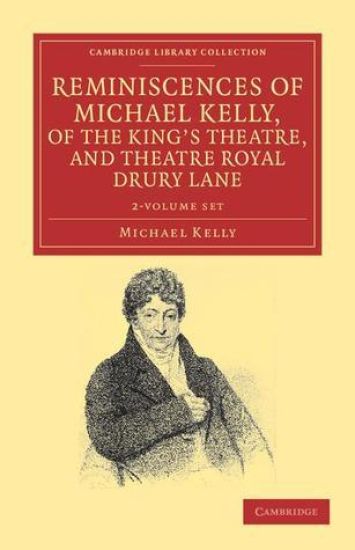
Reminiscences of Michael Kelly, of the King's Theatre, and Theatre Royal Drury Lane 2 Volume Set
Michael Kelly (1762–1826) was an Irish singer and composer who studied music in a Naples conservatory before touring Europe and performing for royalty. His voyage to Italy began with a brush with pirates, one of whom was a childhood acquaintance. Kelly also found himself stranded penniless in Venice, spent a night in prison after a fist fight at the theatre, and had a narrow escape from revolutionary France. He is probably best remembered for creating the roles of Don Basilio and Don Curzio in the first performance, in 1786, of Mozart's Le Nozze di Figaro, of which he describes the rehearsal period and reception. He later joined London's Theatre Royal as both a performer and composer and opened a music shop, which went bankrupt. These memoirs, published in 1826, cover an extraordinary life during turbulent times but also provide rich first-hand insights into a key period in theatre history.
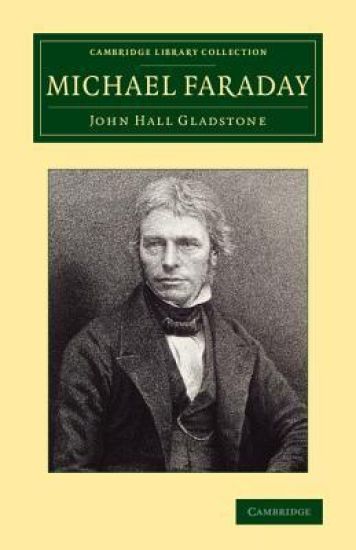
Michael Faraday

Michael Faraday

John Hall Gladstone

Cambridge University Press
2014
pokkari
Encouraged to share his memories of Michael Faraday (1791–1867), John Hall Gladstone (1827–1902) published in 1872 this short work about his late friend's life and career. Faraday's successor as Fullerian Professor of Chemistry at the Royal Institution, Gladstone discusses how Faraday approached science, and the value of his discoveries. Offering informed insights into Faraday's character, Gladstone includes a number of extracts from personal letters. The work also includes a translation of part of the eulogy given by Jean-Baptiste Dumas at the Académie des Sciences, as well as an anonymous poem honouring Faraday and published in Punch shortly after his death. An appendix lists the numerous learned societies to which Faraday belonged. Also reissued in this series are The Life and Letters of Faraday (1870), compiled by Henry Bence Jones, and John Tyndall's Faraday as a Discoverer (1868).
Michael Allen's Guide to e-Learning

Michael Allen's Guide to e-Learning

Michael W. Allen; Tony Bingham

John Wiley Sons Inc
2016
nidottu
Explore effective learning programs with the father of e-learning Michael Allen's Guide to e-Learning: Building Interactive, Fun, and Effective Learning Programs for Any Company, Second Edition presents best practices for building interactive, fun, and effective online learning programs. This engaging text offers insight regarding what makes great e-learning, particularly from the perspectives of motivation and interactivity, and features history lessons that assist you in avoiding common pitfalls and guide you in the direction of e-learning success. This updated edition also considers changes in technology and tools that facilitate the implementation of the strategies, guidelines, and techniques it presents. E-learning has experienced a surge in popularity over the past ten years, with education professionals around the world leveraging technology to facilitate instruction. From hybrid courses that integrate technology into traditional classroom instruction to full online courses that are conducted solely on the internet, a range of e-learning models is available. The key to creating a successful e-learning program lies in understanding how to use the tools at your disposal to create an interactive, engaging, and effective learning experience. Gain a new perspective on e-learning, and how technology can facilitate educationExplore updated content, including coverage regarding learner interface, gamification, mobile learning, and individualizationDiscuss the experiences of others via targeted case studies, which cover good and not so good e-learning projectsUnderstand key concepts through new examples that reinforce essential ideas and demonstrate their practical application Michael Allen's Guide to e-Learning: Building Interactive, Fun, and Effective Learning Programs for Any Company, Second Edition is an essential resource if you are studying for the e-Learning Instructional Design Certificate Program.
Michael Oakeshott’s Cold War Liberalism
In this book, leading scholars from East Asia and beyond debate Michael Oakeshott's views on liberal democracy and totalitarianism and their implications for East Asia today. His ideas on rationality in politics, the nature of liberal democracy, and how democracy can defeat anti-liberal politics are explored in ten penetrating essays.
Michael A. Weinstein
This book is a major reassessment of Michael Weinstein’s political philosophy. It situates his singular contribution, designated as "critical vitalism," in the context of both canonical American and contemporary continental theory. Weinstein is presented as a philosopher of life and as an American Nietzsche. Yet the contributors also persuasively argue for this form of thinking as a prescient prophecy addressing contemporary society’s concern over the management of life as well as the technological changes that both threaten and sustain intimacy. This is the first full scale study of Weinstein’s work which reveals surprising aspects of a philosophic journey that has encompassed most of the major American (pragmatic or vitalist) or Continental (phenomenological or existential) traditions. Weinstein is read as a comparative political theorist, a precursor to post-structuralism, and as a post-colonial border theorist. A different aspect of his oeuvre is highlighted in each of the book’s three sections. The opening essays comprising the "Action" diptych contrasts meditative versus extrapolative approaches; "Contemplation" stages a series of encounters between Weinstein and his philosophic interlocutors; "Vitalism" presents Weinstein as a teacher, media analyst, musician, and performance artist. The book contains an epilogue written by Weinstein in response to the contributors.
Michael Paul Rogin
Michael Paul Rogin’s scholarship profoundly altered the scope, content, and disposition of political theory. He reconstituted the field by opening it to an array of texts, performances, and methods previously considered beyond the purview of the discipline. His work addressed the relationship between dimensions of politics typically split apart – institutional power and cultural forms, material interests and symbolic meanings, class projects and identity politics, the public and the private. Rogin’s scholarship enlarges our sense of the borders and genres defining political theory as a field and enriches our capacity to think critically and creatively about the political.The editors have focused on three categories of substantive innovation:Demonology and CountersubversionRogin used the concepts “countersubversive tradition” and “political demonology” to theorize how constitutive exclusions and charged images of otherness generated imagined national community. He exposed not only the dynamics of suppressing and delegitimizing political opposition, but also how politics itself is devalued and displaced.The Psychic Life of Liberal SocietyRogin addressed the essential contradiction in liberalism as both an ideology and a regime – how a polity professing equality, liberty, and pluralist toleration engages in genocide, slavery, and imperial war.Political Mediation: Institutions and CultureRogin demonstrated how cultural forms – pervasive myths, literary and cinematic works – mediate political life, and how political institutions mediate cultural energies and aspirations.
Michael Collins and the Financing of Violent Political Struggle
Michael Collins was a pivotal figure in the Irish struggle for independence and his legacy has resonated ever since. Whilst Collins’ role as a guerrilla leader and intelligence operative is well documented, his actions as the clandestine Irish government Minister of Finance have been less studied. The book analyses how funds were raised and transferred in order that the IRA could initiate and sustain the military struggle, and lay the financial foundations of an Irish state.Nicholas Ridley examines the legacy of these actions by comparing Collins’ modus operandi for raising and transferring clandestine funds to those of more modern groups engaged in political violence, as well as the laying of foundations for Irish financial and fiscal regulation.