Kirjahaku
Etsi kirjoja tekijän nimen, kirjan nimen tai ISBN:n perusteella.
1000 tulosta hakusanalla Michelle Callaghan

This is my thoughts, philosophy, dreams of what I see that I've put in books. There are many happenings here on earth where people do not respect each other, cannot live in peace, or true peace with each other, and this is truly shameful. So enjoy, and make the necessary changes to save you.
The nation has transformed. The calls for racial equity are loud and insistent and they are now being listened to. And yet, companies across the country are still far behind when it comes to equity in the workplace. For decades, we've heard variations on the same theme on how to increase diversity and inclusion and we have still not moved. If we want equity to matter inside and outside the workplace, if we want to be real allies for change, then we need a new approach. We need to stop following trends. We need to lead change.In Authentic Diversity, culture change expert and diversity speaker, Michelle Silverthorn, explains how to transform diversity and inclusion from mere lip service into the very heart of leadership. Following the journey of a Black woman in the workplace, leaders learn the old rules of diversity that keep failing her and millions like her again and again, and the new rules they must put in place to make success a reality for everyone. A millennial, immigrant, and Black woman in America, Michelle will show you how to lead a space centered on equity, allyship, and inclusion and how together we can build a new organization, and nation, centered on justice.
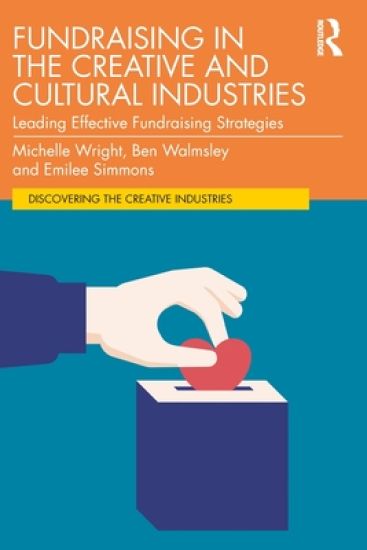
Fundraising in the Creative and Cultural Industries
Michelle Wright; Ben Walmsley; Emilee Simmons
TAYLOR FRANCIS LTD
2022
sidottu
The need for effective fundraising in the arts has never been more acute. Specialist yet accessible, Fundraising in the Creative and Cultural Industries is designed to provide strategic and practical support to individuals needing to lead or develop fundraising in their organisations. Part One explores theories of leadership and change, as well as managing fundraising in a crisis, most notably the impact of COVID-19 on cultural organisations globally. It introduces readers to specific academic frameworks and concepts from arts management, business and entrepreneurship studies – which readers can use to analyse their own situations – and provides insight via real-world case studies. Part Two explores the practical application of fundraising. Readers can begin their journey to becoming a fundraising expert, starting from the basics of fundraising to a broad understanding of the different means and channels through which income can be raised for arts and cultural organisations. This book is a practical and accessible guide to exploring current fundraising thinking, enabling the reader to develop their own fundraising expertise and to embed knowledge and practice into their own organisations. The fundraising experience from industry pioneers sets this book apart and will inspire readers to achieve their own ambitious goals.
Fundraising in the Creative and Cultural Industries
Michelle Wright; Ben Walmsley; Emilee Simmons
TAYLOR FRANCIS LTD
2022
nidottu
The need for effective fundraising in the arts has never been more acute. Specialist yet accessible, Fundraising in the Creative and Cultural Industries is designed to provide strategic and practical support to individuals needing to lead or develop fundraising in their organisations. Part One explores theories of leadership and change, as well as managing fundraising in a crisis, most notably the impact of COVID-19 on cultural organisations globally. It introduces readers to specific academic frameworks and concepts from arts management, business and entrepreneurship studies – which readers can use to analyse their own situations – and provides insight via real-world case studies. Part Two explores the practical application of fundraising. Readers can begin their journey to becoming a fundraising expert, starting from the basics of fundraising to a broad understanding of the different means and channels through which income can be raised for arts and cultural organisations. This book is a practical and accessible guide to exploring current fundraising thinking, enabling the reader to develop their own fundraising expertise and to embed knowledge and practice into their own organisations. The fundraising experience from industry pioneers sets this book apart and will inspire readers to achieve their own ambitious goals.
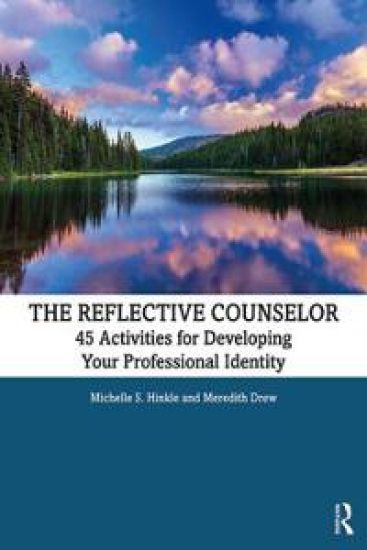
This practical workbook contains 45 experiential and creative activities intentionally created to facilitate counselor professional identity development.Each reflective activity is designed for students and supervisees to learn more about counselor professional identity, as well as integrate their knowledge of counseling skills and content with personal attributes and experiences. Individual and group process questions and group follow-up activities make this an ideal workbook to supplement classes or group supervision. Upon completion of the workbook, students and supervisees will have a journal of their process in the beginning stages of counselor professional identity development. With chapters focusing on areas including counselor wellness, self-growth, personal and professional values, multicultural awareness, research and assessment, and more, The Reflective Counselor is an essential resource for counseling graduate students, supervisees, and new professionals alike.
New Religions and the Mediation of Non-Monogamy examines the relationship between alternative American religions and the media representation of non-monogamies on reality-TV shows like Sister Wives, Seeking Sister Wife, and Polyamory: Married & Dating. The book is the first full-length study informed by fieldwork with Mormon polygamists and fieldwork with LGBTQ Neo-Pagan/Neo-Tantric polyamorists. The book tracks community members’ responses to the new media about them, their engagement with television and other media, and the likeness of representations to actual populations through fieldwork and interviews. The book highlights differences in socioeconomic privileges that shape Mormon polygamists’ lives and LGBTQ polyamorists’ lives, respectively. The polyamory movement receives support from liberal media. As reality TV has shifted the image of Mormon polygamy to one of liberal American middle-class culture, Mormon polygamists have gained in public favor. The media landscape of non-monogamy is mediated by, in addition to these alternative religious populations, the norms and practices of the reality-TV industry and by sociocultural and economic realities, including race and class. This book adds to the fields of media studies, critical race and gender studies, new religious movements, and queer studies.
Victorian Coral Islands of Empire, Mission, and the Boys’ Adventure Novel
Michelle Elleray
Routledge
2019
sidottu
Attending to the mid-Victorian boys’ adventure novel and its connections with missionary culture, Michelle Elleray investigates how empire was conveyed to Victorian children in popular forms, with a focus on the South Pacific as a key location of adventure tales and missionary efforts. The volume draws on an evangelical narrative about the formation of coral islands to demonstrate that missionary investments in the socially marginal (the young, the working class, the racial other) generated new forms of agency that are legible in the mid-Victorian boys’ adventure novel, even as that agency was subordinated to Christian values identified with the British middle class. Situating novels by Frederick Marryat, R. M. Ballantyne and W. H. G. Kingston in the periodical culture of the missionary enterprise, this volume newly historicizes British children’s textual interactions with the South Pacific and its peoples. Although the mid-Victorian authors examined here portray British presence in imperial spaces as a moral imperative, our understanding of the "adventurer" is transformed from the plucky explorer to the cynical mercenary through Robert Louis Stevenson, who provides a late-nineteenth-century critique of the imperial and missionary assumptions that subtended the mid-Victorian boys’ adventure novel of his youth.
This book develops an intersectional feminist approach to moral responsibility. It accomplisheses four main goals. First, it outlines a concise list of the main principles of intersectional feminism. Second, it uses these principles to critique prevailing philosophical theories of moral responsibility. Third, it offers an account of moral responsibility that is compatible with the ethos of intersectional feminism. And fourth, it uses intersectional feminist principles to critique culturally normative responsibility practices.This is the first book to provide an explicitly intersectional feminist approach to moral responsibility. After identifying the five principles central to intersectional feminism, the author demonstrates how influential theories of responsibility are incompatible with these principles. She argues that a normatively adequate theory of blame should not be preoccupied with the agency or traits of wrongdoers; it should instead underscore, and seek to ameliorate, oppression and adversity as experienced by the marginalized. Apt blame and praise, according to her intersectional feminist account, is both communicative and functionalist. The book concludes with an extensive discussion of culturally embedded responsibility practices, including asymmetrically structured conversations and gender- and racially biased social spaces.An Intersectional Feminist Approach to Moral Responsibility presents a sophisticated and original philosophical account of moral responsibility. It will be of interest to philosophers working at the crossroads of moral responsibility, feminist philosophy, critical race theory, queer theory, critical disability studies, and intersectionality theory.
The nation has transformed. The calls for racial equity are loud and insistent and they are now being listened to. And yet, companies across the country are still far behind when it comes to equity in the workplace. For decades, we've heard variations on the same theme on how to increase diversity and inclusion and we have still not moved. If we want equity to matter inside and outside the workplace, if we want to be real allies for change, then we need a new approach. We need to stop following trends. We need to lead change.In Authentic Diversity, culture change expert and diversity speaker, Michelle Silverthorn, explains how to transform diversity and inclusion from mere lip service into the very heart of leadership. Following the journey of a Black woman in the workplace, leaders learn the old rules of diversity that keep failing her and millions like her again and again, and the new rules they must put in place to make success a reality for everyone. A millennial, immigrant, and Black woman in America, Michelle will show you how to lead a space centered on equity, allyship, and inclusion and how together we can build a new organization, and nation, centered on justice.
Human Factors in the Maritime Domain
Michelle Grech; Tim Horberry; Thomas Koester
CRC Press
2019
nidottu
The piecemeal fashion in which human factors research has been conducted in the maritime domain makes information retrieval available only by scanning through numerous research journals and conference papers. Bringing together human factors information from this and other domains, Human Factors in the Maritime Domain integrates a common body of knowledge into one single volume. The book provides the vital background information necessary to acquire a core knowledge base and a much-needed overview of human factors within the maritime domain. It starts by putting the topic into an historical and theoretical context, moves onto more specific and detailed topics and contemporary thinking in human factors, then reviews new maritime technology. The authors take a holistic approach based on a model of the socio-technical system of work in the maritime domain. They synthesize available knowledge and research, then present in an easily acceptable framework with example, illustrations, and case studies whenever possible, making the text rigorous, useful, and enjoyable. The three authors draw on a range of diverse backgrounds including working as a maritime surveyor, transport consultant, human factors lecturer, and mechanical engineer. They have undertaken maritime research in Denmark, Australia, Malta, and the UK. They have published several other human factor books on related topics. This combination of human factors knowledge, maritime wisdom, and substantial publication experience results in a book that is effective and practical.
Hoping to add some steam and sex to your next game? Then this book is for you. This practical guide provides you with the foundational tools needed to write, design, and create healthy sexual content in video games in ways that are narratively compelling, varied, and hot! Challenging the assumptions that sex in games is superfluous, exploitative, or only of interest to straight guys, this book encourages designers to create meaningful, enjoyable sexual content for all audiences. Using examples from well-known AAA games (and some standout indie content!), each chapter provides a framework to guide game writers, designers, and developers through the steps of creating and executing sexual content in their games – from early concept, to setting it up in larger game narrative, and finally to executing specific sexual scenes and sequences. It also lays out a host of details and considerations that, while easily missed or forgotten, can have a major impact on the quality or theme of the scene.Offering expert insight and ideas for creating sex scenes in games, this book is vital reading for game designers, writers, and narrative designers who are interested in making games with sexual content. It will also appeal to artists, cutscene directors, audio engineers, composers, and programmers working on these games – or really, any game developer with an interest in the topic!
Unraveling the Assessment Industrial Complex
Michelle Tenam-Zemach; Daniel R. Conn; Paul T. Parkison
Routledge
2021
nidottu
This book offers a comprehensive critique of how the assessment industry and standardized testing adversely impact students, teachers, and society. The authors present the case that the interconnected developments of the testing industry and the Assessment Industrial Complex (AIC) have effectively anchored American schooling to testing. Using an antiracist lens, the authors deconstruct the AIC, exposing the neoliberal agenda of education reformers and how proponents utilize the rhetoric of testing, and the data extracted from them, to normalize the reliance on AIC systems. This critique further exposes education reformers’ ideological agenda, their hypocrisy, and how they grossly profit from the AIC at the expense of society’s marginalized and most vulnerable students. The COVID-19 pandemic, society’s racial unrest, and anti-testing movements have aligned to underscore the need to examine systemic oppression and the impact it has on society through our education system. This text exposes how standardized testing perpetuates these injustices and provides the opportunity to disrupt the systems they rely upon and bolster the societal resistance that is needed.
Unraveling the Assessment Industrial Complex
Michelle Tenam-Zemach; Daniel R. Conn; Paul T. Parkison
Routledge
2021
sidottu
This book offers a comprehensive critique of how the assessment industry and standardized testing adversely impact students, teachers, and society. The authors present the case that the interconnected developments of the testing industry and the Assessment Industrial Complex (AIC) have effectively anchored American schooling to testing. Using an antiracist lens, the authors deconstruct the AIC, exposing the neoliberal agenda of education reformers and how proponents utilize the rhetoric of testing, and the data extracted from them, to normalize the reliance on AIC systems. This critique further exposes education reformers’ ideological agenda, their hypocrisy, and how they grossly profit from the AIC at the expense of society’s marginalized and most vulnerable students. The COVID-19 pandemic, society’s racial unrest, and anti-testing movements have aligned to underscore the need to examine systemic oppression and the impact it has on society through our education system. This text exposes how standardized testing perpetuates these injustices and provides the opportunity to disrupt the systems they rely upon and bolster the societal resistance that is needed.
Urgent Archives argues that archivists can and should do more to disrupt white supremacy and hetero-patriarchy beyond the standard liberal archival solutions of more diverse collecting and more inclusive description.Grounded in the emerging field of critical archival studies, this book uncovers how dominant western archival theories and practices are oppressive by design, while looking toward the the radical politics of community archives to envision new liberatory theories and practices. Based on more than a decade of ethnography at community archives sites including the South Asian American Digital Archive (SAADA), the book explores how members of minoritized communities activate records to build solidarities across and within communities, trouble linear progress narratives, and disrupt cycles of oppression. Caswell explores the temporal, representational, and material aspects of liberatory memory work, arguing that archival disruptions in time and space should be neither about the past nor the future, but about the liberatory affects and effects of memory work in the present.Urgent Archives extends the theoretical range of critical archival studies and provides a new framework for archivists looking to transform their practices. The book should also be of interest to scholars of archival studies, museum studies, public history, memory studies, gender and ethnic studies and digital humanities.
This essential resource is designed to help your classroom, school, or district better identify and serve gifted English language learners in the Latinx community. Drawing on detailed case studies and vignettes from actual programs, chapters highlight the unique needs of gifted Latinx English language learners, and look at how you can best identify and support their development. Covering topics from teacher bias and systemic racism to best practices for engaging families and communities, this book lays out practical strategies and an accessible framework for implementing culturally responsive assessments, identification, and programming strategies.
Practical Considerations for Safeguarding Intangible Cultural Heritage
Michelle L. Stefano
Routledge
2021
nidottu
Practical Considerations for Safeguarding Intangible Cultural Heritage examines theoretical issues relating to intangible cultural heritage policy and practice, whilst also proposing practical ways to facilitate the safeguarding of such heritage.Providing guidelines for best practice that take into account the constraints of the UNESCO-ICH paradigm, Stefano examines the principles and practices of two alternative and largely non-UNESCO frameworks for sustaining living cultural traditions: the philosophy of ecomuseology, and the discipline of public folklore in the context of the U.S. Arguing that they offer more collaborative, equitable, and effective ways forward for safeguarding ICH, Stefano demonstrates how they can address the limitations of the UNESCO-ICH paradigm. Importantly, the book offers a personal perspective, grounded in the author’s public sector work, which allows the ICH discourse to move beyond critical analysis and explore realistic, alternative ways in which ICH can be collaboratively and equitably safeguarded. Practical Considerations for Safeguarding Intangible Cultural Heritage proposes guidelines for professionals, researchers, and communities that foster safeguarding approaches that are as unique and nuanced as ICH expressions themselves. The interdisciplinary nature of the book will ensure that it is useful to those interested in community-led ICH safeguarding, as well as the impacts of UNESCO’s 2003 Convention, in diverse geographic, political, economic, and sociocultural contexts.
Practical Considerations for Safeguarding Intangible Cultural Heritage
Michelle L. Stefano
Routledge
2021
sidottu
Practical Considerations for Safeguarding Intangible Cultural Heritage examines theoretical issues relating to intangible cultural heritage policy and practice, whilst also proposing practical ways to facilitate the safeguarding of such heritage.Providing guidelines for best practice that take into account the constraints of the UNESCO-ICH paradigm, Stefano examines the principles and practices of two alternative and largely non-UNESCO frameworks for sustaining living cultural traditions: the philosophy of ecomuseology, and the discipline of public folklore in the context of the U.S. Arguing that they offer more collaborative, equitable, and effective ways forward for safeguarding ICH, Stefano demonstrates how they can address the limitations of the UNESCO-ICH paradigm. Importantly, the book offers a personal perspective, grounded in the author’s public sector work, which allows the ICH discourse to move beyond critical analysis and explore realistic, alternative ways in which ICH can be collaboratively and equitably safeguarded. Practical Considerations for Safeguarding Intangible Cultural Heritage proposes guidelines for professionals, researchers, and communities that foster safeguarding approaches that are as unique and nuanced as ICH expressions themselves. The interdisciplinary nature of the book will ensure that it is useful to those interested in community-led ICH safeguarding, as well as the impacts of UNESCO’s 2003 Convention, in diverse geographic, political, economic, and sociocultural contexts.