Kirjojen hintavertailu. Mukana 12 016 292 kirjaa ja 12 kauppaa.

Kirjahaku

Etsi kirjoja tekijän nimen, kirjan nimen tai ISBN:n perusteella.

1000 tulosta hakusanalla Mohammad Awad

Advanced Nanocomposites

Advanced Nanocomposites

Mohammad Reza Saboktakin; Abel Maharramov; Mohammad Ali Ramazanov

Nova Science Publishers Inc
2013
sidottu
The field of nanotechnology is one of the most popular areas for current research and development in basically all technical disciplines. This obviously includes polymer science and technology and even in this field the investigations cover a broad range of topics. This would include microelectronics (which could now be referred to as nanoelectronics) as the critical dimension scale for modern devices now below 100 nm. Other areas include polymer-based biomaterials, nanoparticle drug delivery, miniemulsion particles, fuel cell electrode polymer bound catalysts, layer-by-layer self-assembled polymer films, electrospun nanofibers, imprint lithography, polymer blends and nanocomposites. Even in the field of nanocomposites, many diverse topics exist including composite reinforcement, barrier properties, flame resistance, electro-optical properties, cosmetic applications, and bactericidal properties. Nanotechnology offers unique approaches to probe and control a variety of biological and medical processes that occur at nanometer length scales, and is expected to have a revolutionary impact on biology and medicine. Among the approaches for exploiting nanotechnology in medicine, nanoparticles offer some unique advantages as sensing, image enhancement, and delivery agents. Several varieties of nanoparticles with biomedical relevance are available including, polymeric nanoparticles, metal nanoparticles, liposomes, micelles, quantum dots, dendrimers, and nanoassemblies. To further the application of nanoparticles in disease diagnosis and therapy, it is important that the systems are biocompatible and capable of being functionalised for recognition of specific target sites in the body after systemic administration. We have discussed the novel nanocomposites and nanoparticles from various applications and drug delivery systems for cancer therapy.
Mathematical Techniques for Signal Design in Modern Radar Systems

Mathematical Techniques for Signal Design in Modern Radar Systems

Mohammad Alaee-Kerahroodi; Prabhu Babu; Mojtaba Soltanalian; M. R. Bhavani Shankar

Artech House Publishers
2022
sidottu
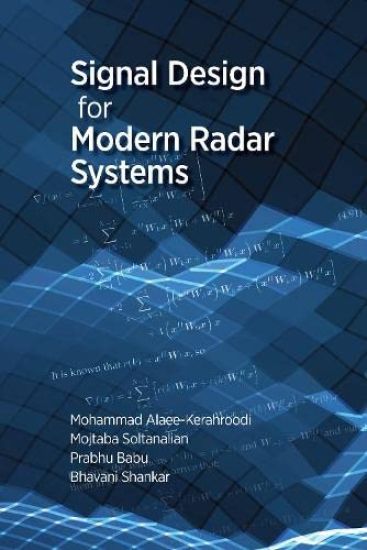
This book gives you a comprehensive overview of key optimization tools that can be used to design radar waveforms and adaptive signal processing strategies under practical constraints -- strategies such as power method-like iterations, coordinate descent, and majorization-minimization – that help you to meet the more and more stressing sensing system requirements. The book walks you through how radar waveform synthesis is obtained as the solution to a constrained optimization problem such as finite energy, unimodularity (or being constant-modulus), and finite or discrete-phase (potentially binary) alphabet, which are dictated by the practical limitations of the real systems. Several approaches in each of these broad frameworks are detailed and various applications of these optimization techniques are described. Focusing on a holistic approach rather than a problem-specific approach, the book shows you what you need to effectively formulate waveform design and understand the flexibility of the framework for adapting to your own specific needs. You’ll have full access to the tools and knowledge you need to design waveform with optimized correlation/cross-correlation properties for SISO/SIMO and MIMO radars, taking into account spectral constraints for cognitive rads, as well as coexistence with communications and mitigate possible Doppler and quantization errors, and more. The book also includes representative software codes that further help you generate the described solutions. With its unique style of covering mathematical results along with their applications from diverse areas, this is a much-needed, detailed handbook for industry researchers, scientists and designers including medical, marine, defense, and automotive companies. It is also an excellent resource for advanced courses on radar signal processing.
The Art of Electronic Security Management in Organizations

The Art of Electronic Security Management in Organizations

Mohammad Alaa Al-Hamami; Alaa Hussein Al-Hamami

Eliva Press
2021
nidottu
This book discusses the issue of security management in institutions, which is one of the important topics that determine the future of these institutions. There are a significant number of large institutions that have collapsed as a result of being blackmailed or stolen their knowledge (Know How) of a particular product because of the intransigence, arrogance and overconfidence of its managers. While good security management creates confidence in the hearts of individuals of institutions and creates in them a wonderful atmosphere of reassurance and confidence in their management, which drives them to work hard and perseverance in order to achieve the increase in production and profits, which is reflected on them and their families and society in general.
Advances in Building Science and Technology

Advances in Building Science and Technology

Mohammad Arif Kamal

Eliva Press
2021
nidottu
Technological progress has introduced many innovations and technologies in the field of building industry. Building science and technology is concerned with the technical performance of buildings, building materials, and building construction systems. Commercial construction, residential construction, institutional construction, recreational construction, industrial construction and heavy civil construction are a few examples that now display master pieces of building science and technologies. Buildings are now constructed from a bewildering array of interrelated systems and assemblies that must work together to deliver the required standard of performance. Building technology encompasses; materials and their applications, physical properties, capacities and vulnerabilities; the functioning of components and systems; the principles, procedures and details of building assembly; operating strategies and so on. Building science and technology is applied to the design of new buildings, the repair and maintenance of the increasing stock of existing buildings and also to the development of new building materials and technologies. There is a need to improve the manner in which buildings are constructed and maintained to ensure long building life, to improve building performance throughout the expected service life, and to allow demolition, reuse, and recycling. In the rapidly changing scenario of building sector, architects, engineers and builders should search for new construction technologies to adopt in future constructions that benefits like energy efficiency, resources and water conservation, improved indoor air quality, life cycle cost reduction, durability and low maintenance. Therefore, to attain these objectives, application and knowledge of latest advancements in various technologies are of prime concern. This book 'Advances in Building Science and Technology' contains five chapters which introduce some scientific methods and state-of-the-art building technologies and systems that may be beneficial to architects, engineers, building scientists and construction industry professionals.
Advances in Architectural Engineering

Advances in Architectural Engineering

Mohammad Arif Kamal

Eliva Press
2021
nidottu
Architectural engineering, also known as building engineering, is an engineering discipline that deals with the technological aspects and multidisciplinary approach to planning, design, construction, operations and maintenance of buildings, such as analysis and integrated design of environmental systems (energy conservation, HVAC, plumbing, lighting, fire protection, acoustics, vertical transportation, electrical power systems), structural systems, construction systems, behavior and properties of building components and materials, and construction management. Built on a legacy of thousands of years of gradual innovation in construction technology and scientific advancement, architectural engineering applies the latest scientific knowledge and technologies to the design of buildings. The goal is to engineer high-performance buildings that are sustainable, resilient, and economically viable, that ensure the safety, health, comfort, and productivity of occupants. Technological progress has introduced many innovations and technologies in the field of building industry. From reduction of greenhouse gas emissions to the construction of resilient buildings, architectural engineering is at the forefront of addressing several major challenges of the 21st century. It also promotes sustainable practices by lowering energy consumption and occupants' carbon footprint, so much so that architectural engineering has been identified as the discipline with the highest potential to combat climate change. This book 'Advances in Architectural Engineering' contains four chapters which introduce some scientific methods and state-of-the-art building technologies and systems that may be beneficial to the Architects, building engineers and building construction industry professionals.
Advances in Building Construction Technology

Advances in Building Construction Technology

Mohammad Arif Kamal

Eliva Press
2021
pokkari
Building construction technology is concerned with the technical performance of buildings, building materials, and building construction systems. Technological progress has introduced many innovations in the field of construction industry. The building construction technology covers a wide range of modern techniques and practices that encompass the latest developments in materials technology and their applications, design procedures, quantity surveying, structural analysis and design, the functioning of components and systems, procedures and details of building assembly; operating strategies and so on. The adoption of advanced construction technology requires an appropriate design, commitment from the whole project team, suitable procurement strategies, good quality control, appropriate training and careful commissioning. There is a difference between new and old traditional construction methods. The use of machinery and automation has made its way through the civil engineering and construction industry. Most of the building components such as columns, roofs and concrete blocks are available as prefabricated forms that increase the speed of construction process greatly. In the rapidly changing scenario of building sector, architects, engineers and builders should search for new construction technologies to adopt in future constructions that benefits like energy efficiency, resources and water conservation, improved indoor air quality, life cycle cost reduction, durability and low maintenance. Therefore, to attain these objectives, application and knowledge of latest advancements in various technologies are of prime concern. This book 'Advances in Building Construction Technology' contains six chapters which introduces various scientific methods and state-of-the-art building constriction technologies and systems that may be beneficial to architects, engineers, building scientists and construction industry professionals.
Technological Advancements in Building Construction
Technological progress has introduced many innovations in the field of the construction industry. In recent years, the building construction industry is continuously being updated and upgraded with the latest technologies to improve the cost, safety, efficiency, and quality of construction. Construction is essentially the process of moving and assembling materials and equipment into a completed, operational facility. Technology adds significant value at every stage of construction, from planning to the commission, by optimizing efficiency and productivity. The building construction technology covers a wide range of modern techniques and practices that encompass the latest developments in materials technology and their applications, design procedures, quantity surveying, structural analysis and design, the functioning of components and systems, procedures and details of building assembly and so on. New advanced materials offer opportunities to change how we construct and retrofit buildings. They give added value in terms of increased performance and functionality. The use of machinery and automation has made its way through the civil engineering, architectural and construction industries. In the rapidly changing scenario of the building sector, architects, engineers and builders should search for new construction technologies to adopt in future constructions that benefit energy efficiency, resources and water conservation, improved indoor air quality, life cycle cost reduction, durability and low maintenance. Therefore, to attain these objectives, application and knowledge of latest advancements in various building construction technologies are of prime concern. This book 'Technological Advancements in Building Construction' contains Six chapters that introduce some scientific methods and state-of-the-art building technologies that may be beneficial to architects, engineers, building scientists and construction industry professionals.
The ECHR as a Living Instrument

The ECHR as a Living Instrument

Mohammad Habibur Rahman

Eliva Press
2021
pokkari
This book is a little contribution to the ECHR jurisprudence which will make an endeavour to review the common criticisms affiliated with the ECtHRs use of "living instrument" in context of the ECHR rights. The most part of it will mainly carry out an in-depth study to find out the practical necessity of a doctrine like "living instrument" for the smooth progression of human rights standards within the Council of Europe. This book demonstrates that the application of "living instrument" doctrine is in fact a necessary and unavoidable apparatus for the ECtHR to offer effective remedies, to fulfill the demands of the contemporary society, and for the progression of human rights standards.
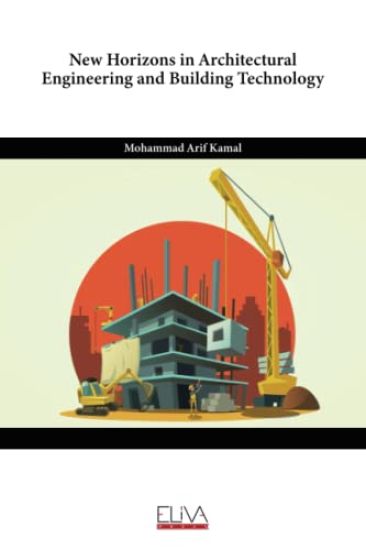
New Horizons in Architectural Engineering and Building Technology
The term 'Architectural Engineering and Building Technology' refers to the technical processes and methods used in the planning, designing, construction and operation of buildings. The building technology encompasses; the functioning of components and systems; the principles; procedures, methods and details of building assembly; operating strategies; materials and their applications, management etc. Built on a legacy of thousands of years of gradual innovation in construction technology and scientific advancement, architectural engineering applies the latest scientific knowledge and technologies to the design of buildings. The building construction industry is continuously being updated and upgraded with the latest technologies to improve the cost, safety, efficiency, and quality of construction. The technological progress has introduced many innovations in the field of building construction industry. From reduction of greenhouse gas emissions to the construction of resilient buildings, architects and building engineers are at the forefront of addressing several major challenges of the 21st century. Building Technology adds significant value at every stage of construction, from planning to the commission, by optimizing efficiency and productivity. The goal is to engineer high-performance buildings that are sustainable, efficient, resilient, economically viable, that ensure the safety, health, comfort, and productivity of occupants. The architects, planners, engineers and builders should search for new construction technologies to adopt in future constructions that benefit energy efficiency, resources and water conservation, improved indoor air quality, life cycle cost reduction, durability and low maintenance. This book 'New Horizons in Architectural Engineering and Building Technology' contains Five chapters that introduces and discusses some state-of-the-art building technologies and scientific methods that may be beneficial to building engineers, architects, students of civil engineering and architecture, research scholars, building scientists and construction industry professionals.
Rang - e - Mohabbat / ??? - ? - ???????

Rang - e - Mohabbat / ??? - ? - ???????

Mohammad Musaddiq

Notion Press, Inc.
2021
pokkari
In this collection of poems efforts have been made to reach the hearts of the readers through simple language for every poem written. Poems are based on love in this book. In today's era, it's a small effort to introduce the definition of changing love for youth in an old-fashioned way to young people. I hope this effort is worthwhile with the cooperation of all of you.
Omar Khayyam's Secret

Omar Khayyam's Secret

Mohammad H Tamdgidi

Okcir Press (Imprint of Ahead Publishing House)
2021
sidottu
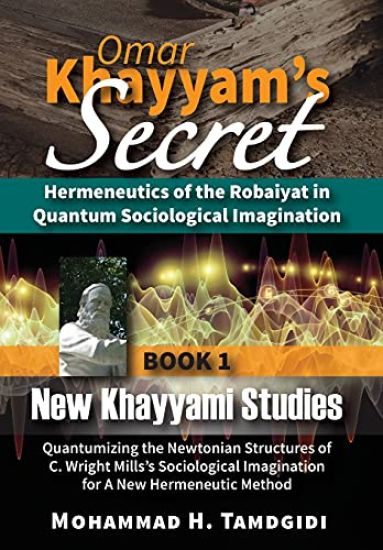
Omar Khayyam's Secret: Hermeneutics of the Robaiyat in Quantum Sociological Imagination is a twelve-book series of which this book, subtitled New Khayyami Studies: Quantumizing the Newtonian Structures of C. Wright Mills's Sociological Imagination for A New Hermeneutic Method, is the first volume. Each book is independently readable, although it will be best understood as a part of the whole series. In the overall series, the transdisciplinary sociologist Mohammad H. Tamdgidi shares the results of his decades-long research on Omar Khayyam, the enigmatic 11th/12th centuries Persian Muslim sage, philosopher, astronomer, mathematician, physician, writer, and poet from Neyshabour, Iran, whose life and works still remain behind a veil of deep mystery. Tamdgidi's purpose has been to find definitive answers to the many puzzles still surrounding Khayyam, especially regarding the existence, nature, and purpose of the Robaiyat in his life and works. To explore the questions posed, he advances a new hermeneutic method of textual analysis, informed by what he calls the quantum sociological imagination, to gather and study all the attributed philosophical, religious, scientific, and literary writings of Khayyam. In this first book of the series, following a common preface and introduction to the series, Tamdgidi develops the quantum sociological imagination method framing his hermeneutic study in the series as a whole. In the prefatory note he shares the origins of this series and how the study is itself a moment in the trajectory of a broader research project. In his introduction, he describes how centuries of Khayyami studies, especially during the last two, have reached an impasse in shedding light on his enigmatic life and works, especially his attributed Robaiyat. The four chapters of the book are then dedicated to developing the quantum sociological imagination as a new hermeneutic method framing the Khayyami studies in the series. The method builds, in an applied way, on the results of Tamdgidi's recent work in the sociology of scientific knowledge, Liberating Sociology: From Newtonian Toward Quantum Imagination: Volume 1: Unriddling the Quantum Enigma (2020), where he explored extensively, in greater depth, and in the context of understanding the so-called "quantum enigma," the Newtonian and quantum ways of imagining reality. In this first book, he shares the findings of that research in summary amid new applied insights developed in relation to Khayyami studies. In the first chapter, Tamdgidi raises a set of eight questions about the structure of C. Wright Mills's sociological imagination as a potential framework for Khayyami studies. In the second chapter, he shows how the questions are symptomatic of Newtonian structures that still continue to frame Mills's sociological imagination. In the third chapter, the author explores how the sociological imagination can be reinvented to be more in tune with the findings of quantum science. In the last chapter, the implications of the quantum sociological imagination for devising a hermeneutic method for new Khayyam and Robaiyat studies are outlined. In conclusion, the findings of this first book of the Omar Khayyam's Secret series are summarized.
Omar Khayyam's Secret

Omar Khayyam's Secret

Mohammad H Tamdgidi

Okcir Press (Imprint of Ahead Publishing House)
2021
pokkari
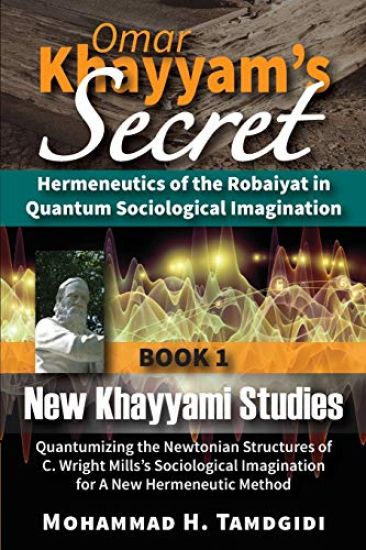
Omar Khayyam's Secret: Hermeneutics of the Robaiyat in Quantum Sociological Imagination is a twelve-book series of which this book, subtitled New Khayyami Studies: Quantumizing the Newtonian Structures of C. Wright Mills's Sociological Imagination for A New Hermeneutic Method, is the first volume. Each book is independently readable, although it will be best understood as a part of the whole series. In the overall series, the transdisciplinary sociologist Mohammad H. Tamdgidi shares the results of his decades-long research on Omar Khayyam, the enigmatic 11th/12th centuries Persian Muslim sage, philosopher, astronomer, mathematician, physician, writer, and poet from Neyshabour, Iran, whose life and works still remain behind a veil of deep mystery. Tamdgidi's purpose has been to find definitive answers to the many puzzles still surrounding Khayyam, especially regarding the existence, nature, and purpose of the Robaiyat in his life and works. To explore the questions posed, he advances a new hermeneutic method of textual analysis, informed by what he calls the quantum sociological imagination, to gather and study all the attributed philosophical, religious, scientific, and literary writings of Khayyam. In this first book of the series, following a common preface and introduction to the series, Tamdgidi develops the quantum sociological imagination method framing his hermeneutic study in the series as a whole. In the prefatory note he shares the origins of this series and how the study is itself a moment in the trajectory of a broader research project. In his introduction, he describes how centuries of Khayyami studies, especially during the last two, have reached an impasse in shedding light on his enigmatic life and works, especially his attributed Robaiyat. The four chapters of the book are then dedicated to developing the quantum sociological imagination as a new hermeneutic method framing the Khayyami studies in the series. The method builds, in an applied way, on the results of Tamdgidi's recent work in the sociology of scientific knowledge, Liberating Sociology: From Newtonian Toward Quantum Imagination: Volume 1: Unriddling the Quantum Enigma (2020), where he explored extensively, in greater depth, and in the context of understanding the so-called "quantum enigma," the Newtonian and quantum ways of imagining reality. In this first book, he shares the findings of that research in summary amid new applied insights developed in relation to Khayyami studies. In the first chapter, Tamdgidi raises a set of eight questions about the structure of C. Wright Mills's sociological imagination as a potential framework for Khayyami studies. In the second chapter, he shows how the questions are symptomatic of Newtonian structures that still continue to frame Mills's sociological imagination. In the third chapter, the author explores how the sociological imagination can be reinvented to be more in tune with the findings of quantum science. In the last chapter, the implications of the quantum sociological imagination for devising a hermeneutic method for new Khayyam and Robaiyat studies are outlined. In conclusion, the findings of this first book of the Omar Khayyam's Secret series are summarized.
Omar Khayyam's Secret

Omar Khayyam's Secret

Mohammad H Tamdgidi

Okcir Press (Imprint of Ahead Publishing House)
2021
sidottu
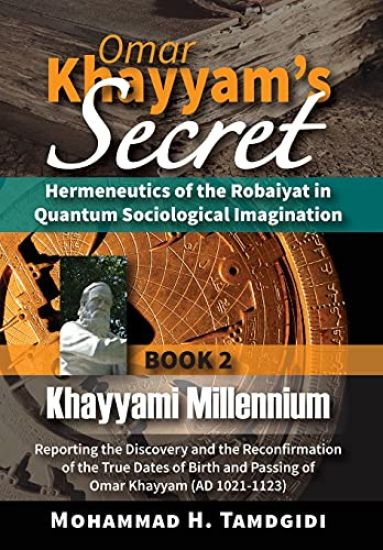
Omar Khayyam's Secret: Hermeneutics of the Robaiyat in Quantum Sociological Imagination is a twelve-book series of which this book is the second volume, subtitled Khayyami Millennium: Reporting the Discovery and the Reconfirmation of the True Dates of Birth and Passing of Omar Khayyam (AD 1021-1123). Each book is independently readable, although it will be best understood as a part of the whole series. In the overall series, the transdisciplinary sociologist Mohammad H. Tamdgidi shares the results of his decades-long research on Omar Khayyam, the enigmatic 11th/12th centuries Persian Muslim sage, philosopher, astronomer, mathematician, physician, writer, and poet from Neyshabour, Iran, whose life and works still remain behind a veil of deep mystery. Tamdgidi's purpose has been to find definitive answers to the many puzzles still surrounding Khayyam, especially regarding the existence, nature, and purpose of the Robaiyat in his life and works. To explore the questions posed, he advances a new hermeneutic method of textual analysis, informed by what he calls the quantum sociological imagination, to gather and study all the attributed philosophical, religious, scientific, and literary writings of Khayyam. In this second book of the series, Tamdgidi lays down an essential foundation for the series by revisiting the unresolved questions surrounding the dates of birth and passing of Omar Khayyam. Critically reexamining the manner in which Omar Khayyam's birth horoscope as reported in Zahireddin Abolhassan Beyhaqi's Tatemmat Sewan al-Hekmat (Supplement to the Chest of Wisdom) was used by Swāmi Govinda Tīrtha in his The Nectar of Grace: Omar Khayyam's Life and Works (1941) to determine Khayyam's birth date, Tamdgidi uncovers a number of serious internal inconsistencies and factual inaccuracies that prevented Tīrtha (and, since then, other scholars more or less taking for granted his results) from arriving at a reliable date for Khayyam's birth, hurling Khayyami studies into decades of confusion regarding Khayyam's life and works. Tamdgidi then shares in the book the detailed account of his own discovery of Khayyam's true date of birth for the first time, a finding that eluded Khayyami studies for centuries and is bound to revolutionize the studies for decades to come. Tamdgidi then turns his attention to the task of definitively establishing the true date of passing of Omar Khayyam. Conducting an in-depth, superposed analysis of Beyhaqi's Tatemmat Sewan el-Hekmat (Supplement to the Chest of Wisdom), Abdorrahman Khazeni's Mizan ol-Hekmat (Balance of Wisdom), Nezami Arouzi's Chahar Maqaleh (Four Discourses), and Yar Ahmad Rashidi Tabrizi's Tarabkhaneh (House of Joy), amid other relevant texts, he succeeds in firmly reconfirming and further discovering, in a textually reliable way, not only the year, the season, the month, and the day, but even the most likely time of day at which the poet mathematician, astronomer, and calender reformer died as a solar centenarian, completing his 102nd solar year age. Strange is that these discoveries are made just in time as we approach the first solar millennium of Omar Khayyam's birth date on June 10, AD 1021, at sunrise of Neyshabour, Iran, and the ninth solar centennial of his passing on June 10, AD 1123, on the eve also of his birthday, closing the circle of his life's "coming and going."
Omar Khayyam's Secret

Omar Khayyam's Secret

Mohammad H Tamdgidi

Okcir Press (Imprint of Ahead Publishing House)
2021
pokkari
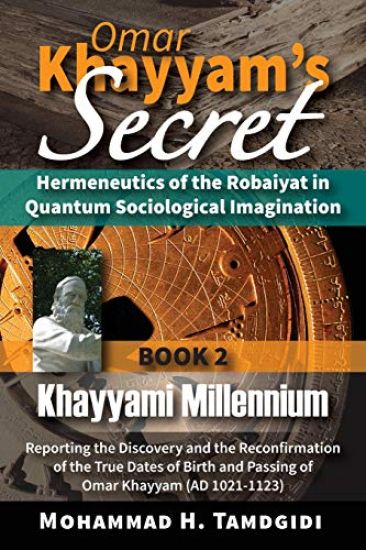
Omar Khayyam's Secret: Hermeneutics of the Robaiyat in Quantum Sociological Imagination is a twelve-book series of which this book is the second volume, subtitled Khayyami Millennium: Reporting the Discovery and the Reconfirmation of the True Dates of Birth and Passing of Omar Khayyam (AD 1021-1123). Each book is independently readable, although it will be best understood as a part of the whole series. In the overall series, the transdisciplinary sociologist Mohammad H. Tamdgidi shares the results of his decades-long research on Omar Khayyam, the enigmatic 11th/12th centuries Persian Muslim sage, philosopher, astronomer, mathematician, physician, writer, and poet from Neyshabour, Iran, whose life and works still remain behind a veil of deep mystery. Tamdgidi's purpose has been to find definitive answers to the many puzzles still surrounding Khayyam, especially regarding the existence, nature, and purpose of the Robaiyat in his life and works. To explore the questions posed, he advances a new hermeneutic method of textual analysis, informed by what he calls the quantum sociological imagination, to gather and study all the attributed philosophical, religious, scientific, and literary writings of Khayyam. In this second book of the series, Tamdgidi lays down an essential foundation for the series by revisiting the unresolved questions surrounding the dates of birth and passing of Omar Khayyam. Critically reexamining the manner in which Omar Khayyam's birth horoscope as reported in Zahireddin Abolhassan Beyhaqi's Tatemmat Sewan al-Hekmat (Supplement to the Chest of Wisdom) was used by Swāmi Govinda Tīrtha in his The Nectar of Grace: Omar Khayyam's Life and Works (1941) to determine Khayyam's birth date, Tamdgidi uncovers a number of serious internal inconsistencies and factual inaccuracies that prevented Tīrtha (and, since then, other scholars more or less taking for granted his results) from arriving at a reliable date for Khayyam's birth, hurling Khayyami studies into decades of confusion regarding Khayyam's life and works. Tamdgidi then shares in the book the detailed account of his own discovery of Khayyam's true date of birth for the first time, a finding that eluded Khayyami studies for centuries and is bound to revolutionize the studies for decades to come. Tamdgidi then turns his attention to the task of definitively establishing the true date of passing of Omar Khayyam. Conducting an in-depth, superposed analysis of Beyhaqi's Tatemmat Sewan el-Hekmat (Supplement to the Chest of Wisdom), Abdorrahman Khazeni's Mizan ol-Hekmat (Balance of Wisdom), Nezami Arouzi's Chahar Maqaleh (Four Discourses), and Yar Ahmad Rashidi Tabrizi's Tarabkhaneh (House of Joy), amid other relevant texts, he succeeds in firmly reconfirming and further discovering, in a textually reliable way, not only the year, the season, the month, and the day, but even the most likely time of day at which the poet mathematician, astronomer, and calender reformer died as a solar centenarian, completing his 102nd solar year age. Strange is that these discoveries are made just in time as we approach the first solar millennium of Omar Khayyam's birth date on June 10, AD 1021, at sunrise of Neyshabour, Iran, and the ninth solar centennial of his passing on June 10, AD 1123, on the eve also of his birthday, closing the circle of his life's "coming and going."
Omar Khayyam's Secret

Omar Khayyam's Secret

Mohammad H Tamdgidi

Okcir Press (Imprint of Ahead Publishing House)
2021
sidottu
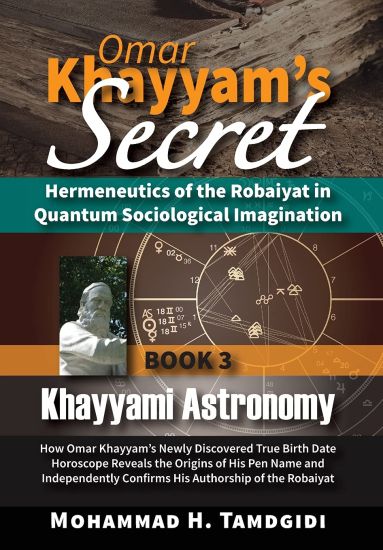
Omar Khayyam's Secret: Hermeneutics of the Robaiyat in Quantum Sociological Imagination is a twelve-book series of which this book is the third volume, subtitled Khayyami Astronomy: How Omar Khayyam's Newly Discovered True Birth Date Horoscope Reveals the Origins of His Pen Name and Independently Confirms His Authorship of the Robaiyat. Each book is independently readable, although it will be best understood as a part of the whole series. In the overall series, the transdisciplinary sociologist Mohammad H. Tamdgidi shares the results of his decades-long research on Omar Khayyam, the enigmatic 11th/12th centuries Persian Muslim sage, philosopher, astronomer, mathematician, physician, writer, and poet from Neyshabour, Iran, whose life and works still remain behind a veil of deep mystery. Tamdgidi's purpose has been to find definitive answers to the many puzzles still surrounding Khayyam, especially regarding the existence, nature, and purpose of the Robaiyat in his life and works. To explore the questions posed, he advances a new hermeneutic method of textual analysis, informed by what he calls the quantum sociological imagination, to gather and study all the attributed philosophical, religious, scientific, and literary writings of Khayyam. Omar Khayyam's true birth date horoscope, as newly discovered in this series, is comprised of a dazzling number of Air Triplicities sharing a vertex on a Sun-Mercury Cazimi point on the same Ascendant degree 18 of Gemini. Among other features, his Venus, Sextile with Moon, also plays a lifelong, secretively creative role to intentionally balance his chart. These features would not have escaped the attention of Omar Khayyam, a master astronomer and expert in matters astrological, no matter how much he embraced, doubted, or rejected astrological interpretations. In this third book of the series, conducting an in-depth hermeneutic analysis of Khayyam's horoscope, Tamdgidi reports having discovered the origins of Khayyam's pen name in his horoscope. The long-held myth that "Khayyam" was a parental name, even if true, in no way takes away from the new finding; it only adds to its intrigue. Tamdgidi's hermeneutic analysis of Khayyam's horoscope in intersection with extant Khayyami Robaiyat also leads him to discover an entirely neglected signature quatrain that he proves could not be from anyone but Khayyam, one that provides a reliably independent confirmation of his authorship of the Robaiyat. He also shows how another neglected quatrain reporting its poet to have aged to a hundred is from Khayyam. This means all the extant Khayyami quatrains are now in need of hermeneutic reevaluation. Tamdgidi's further study of a sample of fifty Khayyami Robaiyat leads him to conclude that their poet definitively intended the poems to remain in veil, that they were considered to be a collection of interrelated quatrains and not sporadic separate quatrains written marginally in pastime, that they were meant to offer a life's intellectual journey as in a "book of life," that the poems' critically nuanced engagement with astrology was not incidental but essential throughout the collection, and that, judging from the signature quatrain discovered, 1000 quatrains were intended to comprise the collection. Oddly it appears that, after all, "The Khayyam who stitched his tents of wisdom" was a trope that had its origins in Omar Khayyam's horoscope heavens.
Omar Khayyam's Secret

Omar Khayyam's Secret

Mohammad H Tamdgidi

Okcir Press (Imprint of Ahead Publishing House)
2021
pokkari
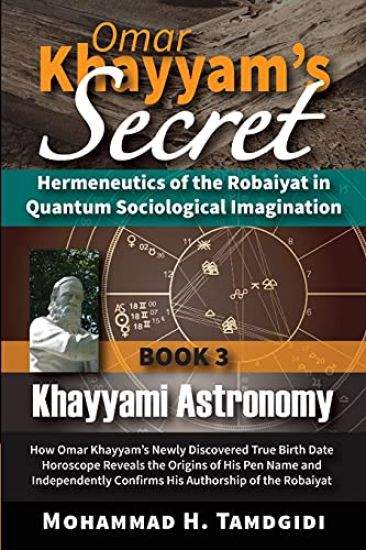
Omar Khayyam's Secret: Hermeneutics of the Robaiyat in Quantum Sociological Imagination is a twelve-book series of which this book is the third volume, subtitled Khayyami Astronomy: How Omar Khayyam's Newly Discovered True Birth Date Horoscope Reveals the Origins of His Pen Name and Independently Confirms His Authorship of the Robaiyat. Each book is independently readable, although it will be best understood as a part of the whole series. In the overall series, the transdisciplinary sociologist Mohammad H. Tamdgidi shares the results of his decades-long research on Omar Khayyam, the enigmatic 11th/12th centuries Persian Muslim sage, philosopher, astronomer, mathematician, physician, writer, and poet from Neyshabour, Iran, whose life and works still remain behind a veil of deep mystery. Tamdgidi's purpose has been to find definitive answers to the many puzzles still surrounding Khayyam, especially regarding the existence, nature, and purpose of the Robaiyat in his life and works. To explore the questions posed, he advances a new hermeneutic method of textual analysis, informed by what he calls the quantum sociological imagination, to gather and study all the attributed philosophical, religious, scientific, and literary writings of Khayyam. Omar Khayyam's true birth date horoscope, as newly discovered in this series, is comprised of a dazzling number of Air Triplicities sharing a vertex on a Sun-Mercury Cazimi point on the same Ascendant degree 18 of Gemini. Among other features, his Venus, Sextile with Moon, also plays a lifelong, secretively creative role to intentionally balance his chart. These features would not have escaped the attention of Omar Khayyam, a master astronomer and expert in matters astrological, no matter how much he embraced, doubted, or rejected astrological interpretations. In this third book of the series, conducting an in-depth hermeneutic analysis of Khayyam's horoscope, Tamdgidi reports having discovered the origins of Khayyam's pen name in his horoscope. The long-held myth that "Khayyam" was a parental name, even if true, in no way takes away from the new finding; it only adds to its intrigue. Tamdgidi's hermeneutic analysis of Khayyam's horoscope in intersection with extant Khayyami Robaiyat also leads him to discover an entirely neglected signature quatrain that he proves could not be from anyone but Khayyam, one that provides a reliably independent confirmation of his authorship of the Robaiyat. He also shows how another neglected quatrain reporting its poet to have aged to a hundred is from Khayyam. This means all the extant Khayyami quatrains are now in need of hermeneutic reevaluation. Tamdgidi's further study of a sample of fifty Khayyami Robaiyat leads him to conclude that their poet definitively intended the poems to remain in veil, that they were considered to be a collection of interrelated quatrains and not sporadic separate quatrains written marginally in pastime, that they were meant to offer a life's intellectual journey as in a "book of life," that the poems' critically nuanced engagement with astrology was not incidental but essential throughout the collection, and that, judging from the signature quatrain discovered, 1000 quatrains were intended to comprise the collection. Oddly it appears that, after all, "The Khayyam who stitched his tents of wisdom" was a trope that had its origins in Omar Khayyam's horoscope heavens.
Omar Khayyam's Secret

Omar Khayyam's Secret

Mohammad H Tamdgidi

Okcir Press (Imprint of Ahead Publishing House)
2021
sidottu
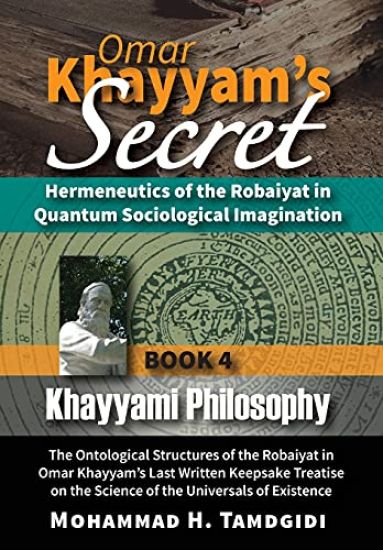
Omar Khayyam's Secret: Hermeneutics of the Robaiyat in Quantum Sociological Imagination, authored by Mohammad H. Tamdgidi, is a 12-book series of which this is the 4th volume, subtitled Khayyami Philosophy: The Ontological Structures of the Robaiyat in Omar Khayyam's Last Written Keepsake Treatise on the Science of the Universals of Existence. Each book, independently readable, can be best understood as a part of the whole series.Having confirmed in the prior three books of the series the true dates of birth and passing of Omar Khayyam, his pen name origins, and his authorship of a robaiyat collection, Tamdgidi explores in this fourth book the origins, nature, and purpose of such a collection by applying the series' quantum sociological imagination method to hermeneutically explore the ontological structures of the Robaiyat in Khayyam's last written treatise.Khayyam's treatise, found in the early 20th century and still largely ignored or misread, radically challenges the mythical narratives built over the centuries about him as one who thought existence is unknowable, having died not solving its riddles. Strangely, his treatise instead offers a logically coherent and brilliant worldview of someone who has found his answers as far as human existence is concerned. Khayyam even goes so far as confidently saying he hopes his peers would agree that his brief treatise is more useful than volumes.Offering the Persian text and his new English translation of the treatise, Tamdgidi undertakes in this book a detailed clause-based hermeneutic study of the treatise. He also explores its broader intellectual and historical contexts by examining its relation to the book "Savior from Error" by Khayyam's junior (by more than three decades) contemporary foe, Muhammad Ghazali, while questioning the long-held belief that the treatise was requested by and addressed to Fakhr ol-Molk, a son of the famous vizier Nezam ol-Molk.Tamdgidi finds instead that the treatise was written in AD 1095-96, a few years earlier than thought, for another son of Nezam ol-Molk, Moayyed ol-Molk, who served at the time Soltan Muhammad, Malekshah's son. The treatise was intended as a philosophical foundation to move the post-Malekshah Iran in a more independent direction by way of influencing his son, Muhammad. Ghazali in his book, likely written to please Ahmad Sanjar (Malekshah's younger son who disliked Khayyam) and his vizier at the time, Fakhr ol-Molk, anonymously chastised Khayyam as a philosopher, duplicitously feeding the cynical metaphors that some theologians and Sufis hurled at Khayyam down the centuries.Khayyam's treatise unveils his vision of existence as a participatory universe where the subject has objective status, shedding a new light on the ontological structures of the Robaiyat. His "succession order" thesis of existence is an alternative Islamic creationist-evolutionary worldview that offers a prescient quantum conceptualist vision of the universe as a unitary, relatively self-reliant, self-knowing, and self-creative, substance lovingly created by an absolutely good God in His own image. Existence is essentially good but, due to its good volitionally self-creative nature, can be potentially subject to incidental defects that are nevertheless knowable and curable to build both a spiritually fulfilling and a joyful life in this world. Other than God's Necessary Existence there is no "another world"; judgment days, heavens, and hells are definitely real this-worldly, not after-worldly, existents. In Khayyam's view, human existence can be what good we artfully make of it, starting here-and-now from our own personal selves in our this-worldly lifetimes. It is to creatively realize such an existence that the Robaiyat must have been intended.
Omar Khayyam's Secret

Omar Khayyam's Secret

Mohammad H Tamdgidi

Okcir Press (Imprint of Ahead Publishing House)
2021
pokkari
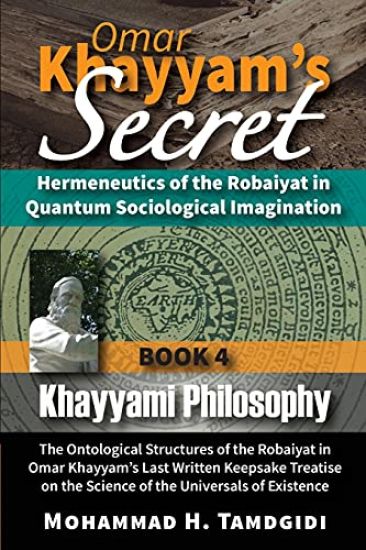
Omar Khayyam's Secret: Hermeneutics of the Robaiyat in Quantum Sociological Imagination, authored by Mohammad H. Tamdgidi, is a 12-book series of which this is the 4th volume, subtitled Khayyami Philosophy: The Ontological Structures of the Robaiyat in Omar Khayyam's Last Written Keepsake Treatise on the Science of the Universals of Existence. Each book, independently readable, can be best understood as a part of the whole series.Having confirmed in the prior three books of the series the true dates of birth and passing of Omar Khayyam, his pen name origins, and his authorship of a robaiyat collection, Tamdgidi explores in this fourth book the origins, nature, and purpose of such a collection by applying the series' quantum sociological imagination method to hermeneutically explore the ontological structures of the Robaiyat in Khayyam's last written treatise.Khayyam's treatise, found in the early 20th century and still largely ignored or misread, radically challenges the mythical narratives built over the centuries about him as one who thought existence is unknowable, having died not solving its riddles. Strangely, his treatise instead offers a logically coherent and brilliant worldview of someone who has found his answers as far as human existence is concerned. Khayyam even goes so far as confidently saying he hopes his peers would agree that his brief treatise is more useful than volumes.Offering the Persian text and his new English translation of the treatise, Tamdgidi undertakes in this book a detailed clause-based hermeneutic study of the treatise. He also explores its broader intellectual and historical contexts by examining its relation to the book "Savior from Error" by Khayyam's junior (by more than three decades) contemporary foe, Muhammad Ghazali, while questioning the long-held belief that the treatise was requested by and addressed to Fakhr ol-Molk, a son of the famous vizier Nezam ol-Molk.Tamdgidi finds instead that the treatise was written in AD 1095-96, a few years earlier than thought, for another son of Nezam ol-Molk, Moayyed ol-Molk, who served at the time Soltan Muhammad, Malekshah's son. The treatise was intended as a philosophical foundation to move the post-Malekshah Iran in a more independent direction by way of influencing his son, Muhammad. Ghazali in his book, likely written to please Ahmad Sanjar (Malekshah's younger son who disliked Khayyam) and his vizier at the time, Fakhr ol-Molk, anonymously chastised Khayyam as a philosopher, duplicitously feeding the cynical metaphors that some theologians and Sufis hurled at Khayyam down the centuries.Khayyam's treatise unveils his vision of existence as a participatory universe where the subject has objective status, shedding a new light on the ontological structures of the Robaiyat. His "succession order" thesis of existence is an alternative Islamic creationist-evolutionary worldview that offers a prescient quantum conceptualist vision of the universe as a unitary, relatively self-reliant, self-knowing, and self-creative, substance lovingly created by an absolutely good God in His own image. Existence is essentially good but, due to its good volitionally self-creative nature, can be potentially subject to incidental defects that are nevertheless knowable and curable to build both a spiritually fulfilling and a joyful life in this world. Other than God's Necessary Existence there is no "another world"; judgment days, heavens, and hells are definitely real this-worldly, not after-worldly, existents. In Khayyam's view, human existence can be what good we artfully make of it, starting here-and-now from our own personal selves in our this-worldly lifetimes. It is to creatively realize such an existence that the Robaiyat must have been intended.