Kirjojen hintavertailu. Mukana 11 699 587 kirjaa ja 12 kauppaa.

Kirjahaku

Etsi kirjoja tekijän nimen, kirjan nimen tai ISBN:n perusteella.

1000 tulosta hakusanalla Moses Garba

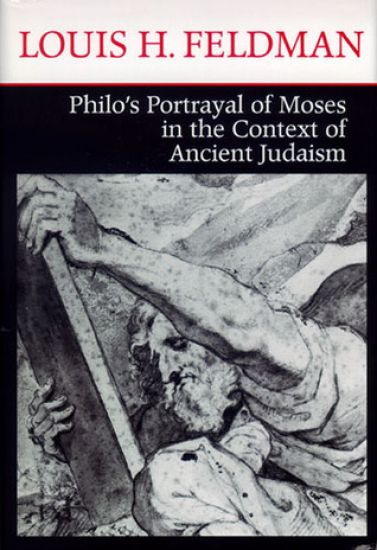
Philo's Portrayal of Moses in the Context of Ancient Judaism

Philo's Portrayal of Moses in the Context of Ancient Judaism

Louis H. Feldman

University of Notre Dame Press
2007
sidottu
Philo's Portrayal of Moses in the Context of Ancient Judaism presents the most comprehensive study of Philo's De Vita Mosis that exists in any language. Feldman, well known for his work on Josephus and ancient Judaism, here paves new ground using rabbinic material with philological precision to illuminate important parallels and differences between Philo's writing on Moses and rabbinic literature. One way in which Hellenistic culture marginalized Judaism was by exposing the apparent defects in Moses' life and character. Philo's De Vita Mosis is a counterattack to these charges and is a vital piece of his attempt to reconcile Judaism and Hellenism. Feldman rigorously examines the text and shows how Philo presents a narrative of Moses's life similar to that of a mythical divine and heroic figure, glorifying his birth, education, and virtues. Feldman demonstrates that Philo is careful to explain in a scientific way those portions of the Bible, particularly miracles, that appear incredible to his skeptical Hellenistic readers. Through Feldman's careful analysis, Moses emerges as unique among ancient lawgivers. Philo's Portrayal of Moses in the Context of Ancient Judaism mirrors the organization of Philo's biography of Moses, which is in two books, the first, in the style of Plutarch, proceeding chronologically, and the second, in the style of Suetonius, arranged topically. Following an introductory chapter, Feldman's study discusses the life of Moses chronologically in the second chapter and examines his virtues topically in the third. Feldman compares the particular features of Philo's portrait of Moses with the way in which Moses is viewed both by Jewish sources in antiquity (including Pseudo-Philo; Josephus; Graeco-Jewish historians, poets, and philosophers; and in the Apocrypha, Pseudepigrapha, Samaritan tradition, Dead Sea Scrolls, and rabbinic tradition) and by non-Jewish sources, notably the Greek and Roman writers who mention him.
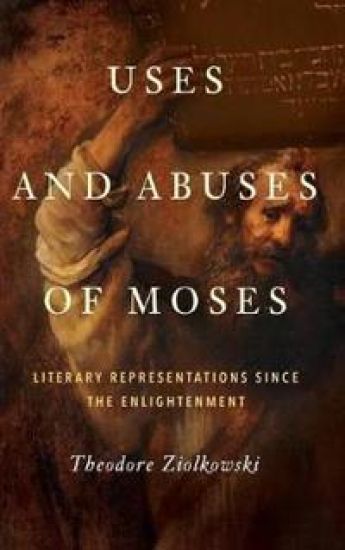
Uses and Abuses of Moses

Uses and Abuses of Moses

Theodore Ziolkowski

University of Notre Dame Press
2016
sidottu
In Uses and Abuses of Moses, Theodore Ziolkowski surveys the major literary treatments of the biblical figure of Moses since the Enlightenment. Beginning with the influential treatments by Schiller and Goethe, for whom Moses was, respectively, a member of a mystery cult and a violent murderer, Ziolkowski examines an impressive array of dramas, poems, operas, novels, and films to show the many ways in which the charismatic figure of Moses has been exploited—the "uses and abuses" of the title—to serve a variety of ideological and cultural purposes. Ziolkowski's wide-ranging and in-depth study compares and analyzes the attempts by nearly one hundred writers to fill in the gaps in the biblical account of Moses' life and to explain his motivation as a leader, lawgiver, and prophet. As Ziolkowski richly demonstrates, Moses' image has been affected by historical factors such as the Egyptomania of the 1820s, the revolutionary movements of the mid-nineteenth century, the early move toward black liberation in the United States, and critical biblical scholarship of the late nineteenth century before, in the twentieth century, being appropriated by Marxists, Socialists, Nazis, and Freudians. The majority of the works studied are by Austro-German and Anglo-American writers, but Ziolkowski also includes significant examples of works from Hungary, Sweden, Norway, the Ukraine, Denmark, the Netherlands, Italy, and France. The figure of Moses becomes an animate seismograph, in Ziolkowski's words, through whose literary reception we can trace many of the shifts in the cultural landscape of the past two centuries.
Philo's Portrayal of Moses in the Context of Ancient Judaism

Philo's Portrayal of Moses in the Context of Ancient Judaism

Louis H. Feldman

University of Notre Dame Press
2016
nidottu
Philo's Portrayal of Moses in the Context of Ancient Judaism presents the most comprehensive study of Philo's De Vita Mosis that exists in any language. Feldman, well known for his work on Josephus and ancient Judaism, here paves new ground using rabbinic material with philological precision to illuminate important parallels and differences between Philo's writing on Moses and rabbinic literature. One way in which Hellenistic culture marginalized Judaism was by exposing the apparent defects in Moses' life and character. Philo's De Vita Mosis is a counterattack to these charges and is a vital piece of his attempt to reconcile Judaism and Hellenism. Feldman rigorously examines the text and shows how Philo presents a narrative of Moses's life similar to that of a mythical divine and heroic figure, glorifying his birth, education, and virtues. Feldman demonstrates that Philo is careful to explain in a scientific way those portions of the Bible, particularly miracles, that appear incredible to his skeptical Hellenistic readers. Through Feldman's careful analysis, Moses emerges as unique among ancient lawgivers. Philo's Portrayal of Moses in the Context of Ancient Judaism mirrors the organization of Philo's biography of Moses, which is in two books, the first, in the style of Plutarch, proceeding chronologically, and the second, in the style of Suetonius, arranged topically. Following an introductory chapter, Feldman's study discusses the life of Moses chronologically in the second chapter and examines his virtues topically in the third. Feldman compares the particular features of Philo's portrait of Moses with the way in which Moses is viewed both by Jewish sources in antiquity (including Pseudo-Philo; Josephus; Graeco-Jewish historians, poets, and philosophers; and in the Apocrypha, Pseudepigrapha, Samaritan tradition, Dead Sea Scrolls, and rabbinic tradition) and by non-Jewish sources, notably the Greek and Roman writers who mention him.
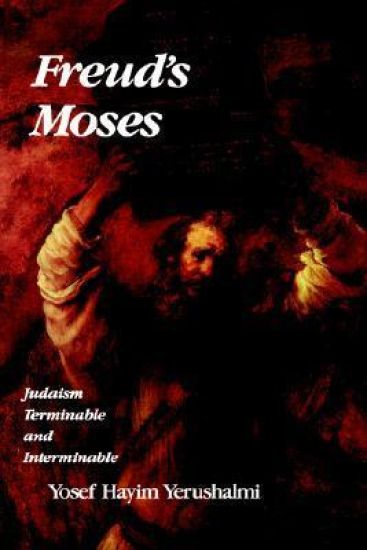
Freud's Moses

Freud's Moses

Yosef Hayim Yerushalmi

Yale University Press
1993
pokkari
Moses and Monotheism, Freud’s last major book and the only one specifically devoted to a Jewish theme, has proved to be one of the most controversial and enigmatic works in the Freudian canon. Among other things, Freud claims in the book that Moses was an Egyptian, that he derived the notion of monotheism from Egyptian concepts, and that after he introduced monotheism to the Jews he was killed by them. Since these historical and ethnographic assumptions have been generally rejected by biblical scholars, anthropologists, and historians of religion, the book has increasingly been approached psychoanalytically, as a psychological document of Freud’s inner life—of his allegedly unresolved Oedipal complex and ambivalence over his Jewish identity. In Freud’s Moses a distinguished historian of the Jews brings a new perspective to this puzzling work. Yosef Hayim Yerushalmi argues that while attempts to psychoanalyze Freud’s text may be potentially fruitful, they must be preceded by a genuine effort to understand what Freud consciously wanted to convey to his readers. Using both historical and philological analysis, Yerushalmi offers new insights into Freud’s intentions in writing Moses and Monotheism. He presents the work as Freud’s psychoanalytic history of the Jews, Judaism, and the Jewish psyche—his attempt, under the shadow of Nazism, to discover what has made the Jews what they are. In the process Yerushalmi’s eloquent and sensitive exploration of Freud’s last work provides a reappraisal of Freud’s feelings toward anti-Semitism and the gentile world, his ambivalence about psychoanalysis as a “Jewish” science, his relationship to his father, and above all a new appreciation of the depth and intensity of Freud’s identity as a “godless Jew.”
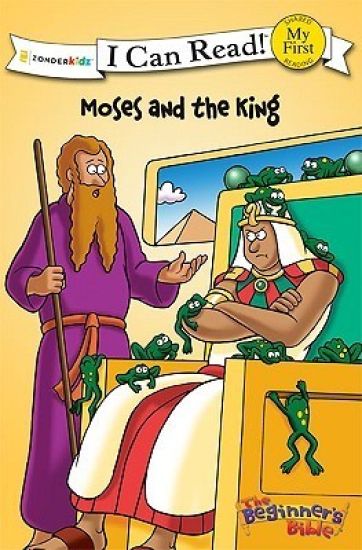
The Beginner's Bible Moses and the King

The Beginner's Bible Moses and the King

The Beginner's Bible

ZonderKidz
2009
nidottu
God wants Moses to save his people from slavery. But Moses is afraid. How can he convince the king to let the slaves go?This My First I Can Read! book, with basic language, word repetition, and great illustrations, is perfect for shared reading with a child. It aligns with guided reading level J and will be of interest to children Pre-K to 3rd grade.
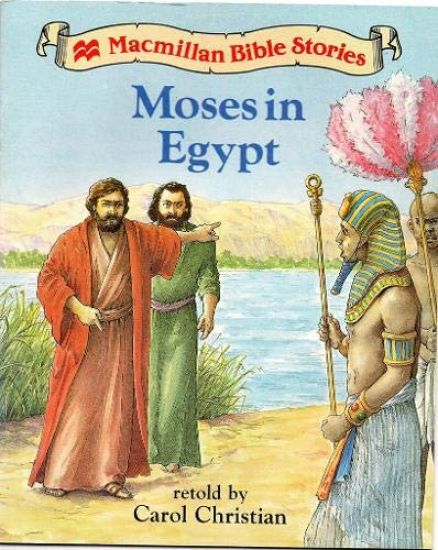
Level 1: Moses in Egypt

Level 1: Moses in Egypt

Carol Christian

Macmillan Education
1996
nidottu
Macmillan Bible Stories are beautifully illustrated story books at two language levels that bring freshness and colour to familiar Bible stories. With their simple and readable English, they encourage children to imagine themselves in the places and times the stories portray. What was it like to be Jonah or Ruth? Both children and adults wil
The Five Books of Moses

The Five Books of Moses

Jeanne Gossett Halsey

Lulu.com
2019
pokkari
After completing the "Through the New Testament In A Year" challenge in 2018, and successfully publishing all 12 books that encompass the "New Testament as a multi-volume devotional" ("The Bible According to Jeanne"), I looked at the Old Testament. I realized a thorough examination of these 39 books would take way longer than 12 months to accomplish; so I found a plan that permits chapter-by-chapter reading, plus a few chapters into Matthew to round off the year ? over two years.
The Five Books of Moses:  EXODUS

The Five Books of Moses: EXODUS

Jeanne Gossett Halsey

Lulu.com
2019
nidottu
From Exodus 7: My imagination takes me to Pharaoh's throne-room where his courtiers are pacing around and muttering, "That Moses needs to go down! Those Hebrews need to be punished again!" Only a small percentage of the Egyptian population grumbled against Moses; most of them were friendly with their Hebrew counterparts, and willingly shared their silver and gold with them as parting gifts. (My goodness, prosperity in a time when the world is falling apart - imagine that!) Shows how out-of-touch with the grassroots that politicians can be. Then there's this "Tweet" that Moses sends to Pharaoh as a parting shot: "All these your servants will come down to me and bow themselves before me, saying 'Go out, you and all the people who follow you,' and after that, I will go out." And he went out from Pharaoh in hot anger" (Exodus 11:8). Sounds familiar? I guess people haven't changed that much in 5,000 years.
The Five Books of Moses:  LEVITICUS

The Five Books of Moses: LEVITICUS

Jeanne Gossett Halsey

Lulu.com
2019
nidottu
Its possible we psych ourselves out of reading ALL of God's Word when we look at the Old Testament and think, "Oh dear, that's all about laws and rules and things that cannot possibly apply to my life today." But think again -- and read it again! In every chapter, Jeanne Gossett Halsey finds a way to apply the Bible to life in the 21st century. If she can find it, so can you!
The Five Books of Moses:  NUMBERS

The Five Books of Moses: NUMBERS

Jeanne Gossett Halsey

Lulu.com
2019
nidottu
Moses the great Law-Giver wrote five golden books for the whole world to know what Jehovah God - the God of Abraham, Isaac and Jacob - had done, from the (literal) Beginning (when the Earth was created), until the day His people entered their Promised Land. From these books - even those that seem to be all about rules and regulations, long lists of names and places - we have the foundation for civilization. Humanity is supposed to live by the Word of God, by the Laws of God, under the guidance and teaching of God Himself. Every chapter of the book of Numbers has relevance to the 21st century.
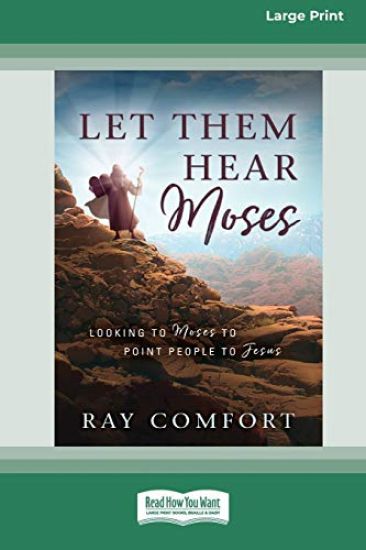
Let Them Hear Moses

Let Them Hear Moses

Ray Comfort

ReadHowYouWant
2020
pokkari
Join best-selling author Ray Comfort on an exploration of the book of Exodus as we discover how the achievements and principles of Moses can be applied into our daily lives today. What does the life of Moses have to teach us today? How does this great deliverer, through whom God gave the Law, help us to be evangelistically effective and live faithfully in our day and age? Just as Moses was used by God to lead the Israelites out of slavery into the promised land, God calls us to do the same in our generation. The same powerful resources He gave to Moses are available for our use today.
The Five Books of Moses

The Five Books of Moses

Robert Alter

WW Norton Co
2008
nidottu
Through a distinguished career of critical scholarship and translation, Robert Alter has equipped us to read the Hebrew Bible as a powerful, cohesive work of literature. In this landmark work, Alter's masterly translation and probing commentary combine to give contemporary readers the definitive edition of The Five Books. Winner of the PEN Center USA Literary Award for Translation and the Koret Jewish Book Award for Translation, a Newsweek Top 15 Book, Los Angeles Times Favorite Book, and San Francisco Chronicle Best Book.
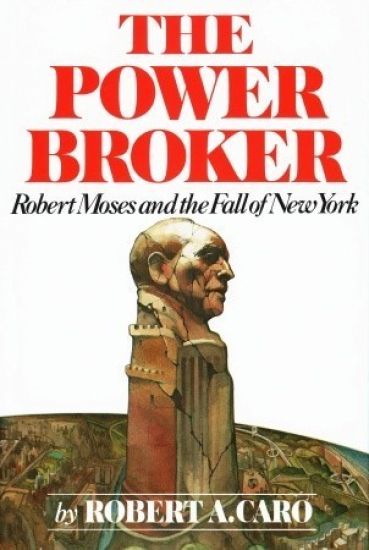
The Power Broker: Robert Moses and the Fall of New York

The Power Broker: Robert Moses and the Fall of New York

Robert A. Caro

Knopf Publishing Group
1974
sidottu
PULITZER PRIZE WINNER - A modern American classic, this huge and galvanizing biography of Robert Moses reveals not only the saga of one man's incredible accumulation of power but the story of his shaping (and mis-shaping) of twentieth-century New York. One of the Modern Library's hundred greatest books of the twentieth century, Robert Caro's monumental book makes public what few outsiders knew: that Robert Moses was the single most powerful man of his time in the City and in the State of New York. And in telling the Moses story, Caro both opens up to an unprecedented degree the way in which politics really happens--the way things really get done in America's City Halls and Statehouses--and brings to light a bonanza of vital information about such national figures as Alfred E. Smith and Franklin D. Roosevelt (and the genesis of their blood feud), about Fiorello La Guardia, John V. Lindsay and Nelson Rockefeller. But The Power Broker is first and foremost a brilliant multidimensional portrait of a man--an extraordinary man who, denied power within the normal framework of the democratic process, stepped outside that framework to grasp power sufficient to shape a great city and to hold sway over the very texture of millions of lives. We see how Moses began: the handsome, intellectual young heir to the world of Our Crowd, an idealist. How, rebuffed by the entrenched political establishment, he fought for the power to accomplish his ideals. How he first created a miraculous flowering of parks and parkways, playlands and beaches--and then ultimately brought down on the city the smog-choked aridity of our urban landscape, the endless miles of (never sufficient) highway, the hopeless sprawl of Long Island, the massive failures of public housing, and countless other barriers to humane living. How, inevitably, the accumulation of power became an end in itself. Moses built an empire and lived like an emperor. He was held in fear--his dossiers could disgorge the dark secret of anyone who opposed him. He was, he claimed, above politics, above deals; and through decade after decade, the newspapers and the public believed. Meanwhile, he was developing his public authorities into a fourth branch of government known as "Triborough"--a government whose records were closed to the public, whose policies and plans were decided not by voters or elected officials but solely by Moses--an immense economic force directing pressure on labor unions, on banks, on all the city's political and economic institutions, and on the press, and on the Church. He doled out millions of dollars' worth of legal fees, insurance commissions, lucrative contracts on the basis of who could best pay him back in the only coin he coveted: power. He dominated the politics and politicians of his time--without ever having been elected to any office. He was, in essence, above our democratic system. Robert Moses held power in the state for 44 years, through the governorships of Smith, Roosevelt, Lehman, Dewey, Harriman and Rockefeller, and in the city for 34 years, through the mayoralties of La Guardia, O'Dwyer, Impellitteri, Wagner and Lindsay, He personally conceived and carried through public works costing 27 billion dollars--he was undoubtedly America's greatest builder. This is how he built and dominated New York--before, finally, he was stripped of his reputation (by the press) and his power (by Nelson Rockefeller). But his work, and his will, had been done.
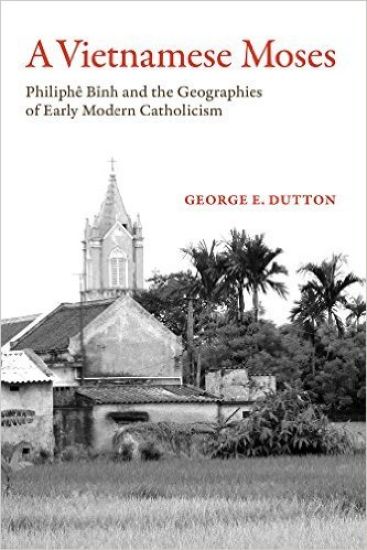
A Vietnamese Moses

A Vietnamese Moses

George E. Dutton

University of California Press
2016
pokkari
A free ebook version of this title is available through Luminos, University of California Press's Open Access publishing program. Visit www.luminosoa.org to learn more. A Vietnamese Moses is the story of Philiphe Binh, a Vietnamese Catholic priest who in 1796 traveled from Tonkin to the Portuguese court in Lisbon to persuade its ruler to appoint a bishop for his community of ex-Jesuits. Based on Binh's surviving writings from his thirty-seven-year exile in Portugal, this book examines how the intersections of global and local Roman Catholic geographies shaped the lives of Vietnamese Christians in the early modern era. The book also argues that Binh's mission to Portugal and his intense lobbying on behalf of his community reflected the agency of Vietnamese Catholics, who vigorously engaged with church politics in defense of their distinctive Portuguese-Catholic heritage. George E. Dutton demonstrates the ways in which Catholic beliefs, histories, and genealogies transformed how Vietnamese thought about themselves and their place in the world. This sophisticated exploration of Vietnamese engagement with both the Catholic Church and Napoleonic Europe provides a unique perspective on the complex history of early Vietnamese Christianity.