Kirjojen hintavertailu. Mukana 12 094 775 kirjaa ja 12 kauppaa.

Kirjahaku

Etsi kirjoja tekijän nimen, kirjan nimen tai ISBN:n perusteella.

1000 tulosta hakusanalla Napolean Hill

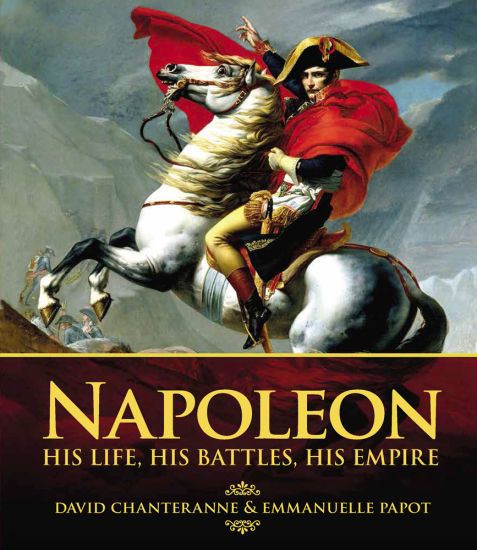
Napoleon

Napoleon

Chanteranne David; Emmanuelle Papot

Andre Deutsch Ltd
2019
sidottu
Napoleon: His Life, His Battles, His Empire offers an unprecedented insight into the mind of this extraordinary man who, from modest beginnings on the small island of Corsica, became Emperor of France and its vast empire. It examines the battles that made him a legend – Marengo, Austerlitz, Jena and Wagram – and looks at his social and political reforms which revolutionized the western world. Illustrated with stunning artworks, sketches and photographs, the authors draw on painstakingly researched documents, including the Treaty of Campo Formio, signed by Napoleon, love letters from Napoleon to Josephine, Napoleon's proclamation to his troops before the Battle of Austerlitz and the codicil to the great man's will, to give a glorious account of a fascinating man.
Napoleon Sarony’s Living Pictures

Napoleon Sarony’s Living Pictures

Erin Pauwels

Pennsylvania State University Press
2023
sidottu
Napoleon Sarony was once one of the most famous names in American photography. During the Gilded Age, his grand portrait studio with its one-story-high marquee reproducing the photographer’s signature in golden letters was a New York City landmark visited by celebrities such as Oscar Wilde, Sarah Bernhardt, and Mark Twain. Sarony’s story represents a central chapter in the history of photography. Napoleon Sarony’s Living Pictures documents Sarony’s career as New York City’s premier portrait photographer and details a moment when the birth of celebrity culture and growth of mass media helped promote popular acceptance of photography as fine art.Sarony’s larger-than-life public image was crucial to demonstrating photography’s creative potential. At a time when photographers were commonly regarded as straitlaced entrepreneurs or technicians, Sarony circulated self-portraits in outlandish costumes to assert himself as a flamboyantly eccentric artist. These photographic performances forged an authoritative link between the so-called father of artistic photography in America and the stylish celebrity portraits that emerged from his studio by the tens of thousands. Reconstructing Sarony’s biography and bringing to light never-before-published portraits, Erin Pauwels provides an illuminating view of how one artist’s quest for creative recognition fueled the rise of celebrity culture and artistic photography in the United States. This book will appeal to historians of photography and nineteenth-century American visual culture, as well as anyone interested in this master of the medium of photography and his celebrity subjects.
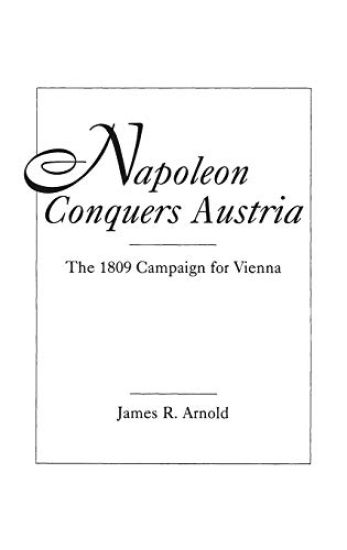
Napoleon Conquers Austria

Napoleon Conquers Austria

James R. Arnold

Praeger Publishers Inc
1995
sidottu
This is the first English language account of the 1809 campaign for Vienna to weave stories of individual persons into the larger motif of the struggle to dominate Europe. The book explores three themes: the decline of Napoleon's powers, the rise of German nationalism, the end of the era of cavalry dominance of the battlefield and the ascendance of artillery. The campaign for Vienna led to Napoleon's first defeat on the battlefield. In May, Napoleon sat with his defeated army at the end of a long and imperiled line of communications. At the moment of crisis, he displayed his formidable talents and prepared a masterful counterstroke. The Battle of Wagram—a battle of unprecedented lethality—was a triumph for Napoleon and led to a peace which he dictated. In 1809 the world's undisputed military genius—Napoleon Bonaparte—confronted his implacable continental foe, the Hapsburg Empire. During the Vienna campaign of that year, Napoleon suffered his first defeat since becoming Emperor, but rebounded to win Wagram, a battle of unprecedented lethality. Referring to the strategic importance of the battles he fought, Napoleon reflected: My power is dependent on my glory, and my glory on my victories. My power would fall if I did not base it on still more glory and still more victories. Conquest made me what I am; conquest alone can keep me there. Even in the midst of a life and death campaign struggle against Austria, Napoleon continued to make nearly every decision of state on a daily basis. During his bath, while being shaved, when eating his meals, aides presented petitions and requests for his tireless attention: a second lieutenant asks to retain his French citizenship while serving in the Dutch army? Granted. Emperor Alexander I of Russia asks that an English prisoner of war who is a relative of his personal surgeon be released? Granted. If genius lies in the attention to detail, here was genius at work. The sun rose on April 24, 1809, to illuminate a continent at war. From Poland to Spain, some 600,000 soldiers awakened to duty. Nowhere was the concentration of forces greater than in the Danube Valley where Napoleon had determined to launch his blow against the Austrian Generalissimus, Erzherzog (Archduke) Karl. If Karl triumphed, most of Europe stood poised to pounce. Napoleon and the French Empire would be attacked from all quarters. If Karl failed, all Europe—except England and perhaps Portugal and Spain—would make whatever accommodations were necessary to survive under Napoleonic hegemony. The ensuing campaign led to Napoleon's first defeat at Aspern-Essling. So, at the end of May, Napoleon sat with his battered army at the end of a long and imperiled line of communications while Europe erupted around him. Yet, at the moment of supreme crisis, Napoleon displayed his formidable talents and prepared a masterful counterstroke. French and Austrian alike suffered horrific losses at Wagram, but at battle's end, Napoleon's commanding presence produced a French triumph. It was a victory so complete that the Emperor forced Austria into unwilling alliance and even took the daughter of the Austrian Kaiser to be his new wife. For one last time, the French conqueror redrew Europe's map.
Napoleon's Italian Campaigns

Napoleon's Italian Campaigns

Frederick C. Schneid

Praeger Publishers Inc
2002
sidottu
The French Revolutionary and Napoleonic wars raged in Italy for 23 years. In that time, no fewer than eight campaigns involving hundred of thousands of troops were mounted in the Italian peninsula, as France and Austria struggled over this secondary, but still vitally important theater of war. As Frederick Schneid demonstrates in this groundbreaking work, control of Italy was rightly seen by Napoleon as an important means of applying strategic pressure on the Austrians, while simultaneously providing security for France's vulnerable southern flank. As the first in-depth consideration of the struggle for strategically key region, this book places the Italian campaigns into their proper historical context. Beginning with a geo-strategic overview of the Italian peninsula and its place in French and Austrian calculations, Schneid moves on to a careful consideration of the major campaigns that began in 1805, 1809, and 1813. These include studies of the battles at Caldiero, Wagram, and Mincio. The book also provides appendices with complete orders of battle for each campaign.
Napoleon's Conquest of Europe

Napoleon's Conquest of Europe

Frederick C. Schneid

Praeger Publishers Inc
2005
sidottu
Poised to strike at England in the summer of 1805, Napoleon found himself facing a coalition of European powers determined to limit his territorial ambitions. Still, in less than one hundred days, Napoleon's armies marched from the English Channel to Central Europe, crushing the armies of Austria and Russia—the first step in his conquest of Europe. In this telling new account, Schneid demonstrates how this was possible. Schneid details how Napoleon's victory over the Third Coalition was the product of years of diplomatic preparation and the formation of French alliances. He played upon the prevailing conditions of the European state system and the internal politics of the Holy Roman Empire to improve France's strategic position. This war must be understood in the context of the French Revolution and its influence on major and minor European states. In some cases, Napoleonic diplomacy returned to France's traditional and historic relationships; in others, he capitalized upon longstanding competition and animosities to gather allies and create wedges. Schneid approaches the campaign from a broad diplomatic, economic, and military perspective, including not only the French perspective, but the points of view of the other powers involved as well. This telling account reveals that the road to Vienna was paved long before Napoleon's armies marched upon the enemies arrayed against them.
Napoleon and the British

Napoleon and the British

Semmel Stuart

Yale University Press
2004
sidottu
What did Napoleon Bonaparte mean to the British people? This engaging book reconstructs the role that the French leader played in the British political, cultural, and religious imagination in the early nineteenth century. Denounced by many as a tyrant or monster, Napoleon nevertheless had sympathizers in Britain. Stuart Semmel explores the ways in which the British used Napoleon to think about their own history, identity, and destiny.Many attacked Napoleon but worried that the British national character might not be adequate to the task of defeating him. Others, radicals and reformers, used Napoleon’s example to criticize the British constitution. Semmel mines a wide array of sources—ranging from political pamphlets and astrological almanacs to sonnets by canonical Romantic poets—to reveal surprising corners of late Hanoverian politics and culture.
Napoleon

Napoleon

Sylvain Cordier

Yale University Press
2018
sidottu
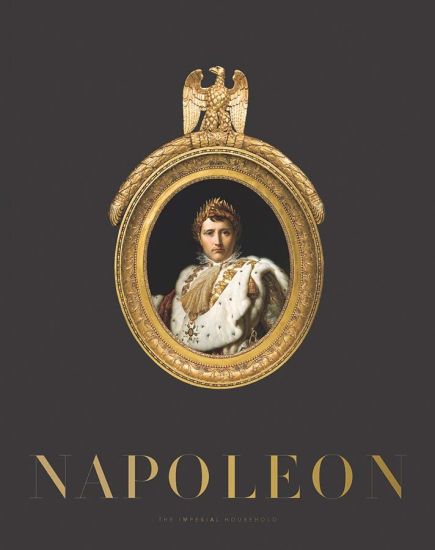
The dazzling splendors of the court of Napoleon I (1769–1821) reflected the grandeur and ambitions of the greatest empire of the day. This luxurious volume re-creates the ambiance and captures the spirit that prevailed in the French court during the Empire through the material manifestations of the Imperial Household. The Imperial Household, a key institution during Napoleon’s reign, was responsible for the daily lives of the Imperial family; it consisted of six departments, each headed by a high-ranking dignitary of the Empire: the grand chaplain, grand master of ceremonies, grand marshal of the Palace, grand master of the hunt, grand chamberlain, and grand equerry – each intimately involved with every moment of pageantry in the court. Featured here are more than 250 works of fine and decorative art, the visual magnificence of which was part of a calculated and deliberate effort to fashion a monarchic identity for the new emperor. Distributed for Editions Hazan, ParisExhibition Schedule:The Montreal Museum of Fine Arts (01/23/18–05/13/18)Virginia Museum of Fine Arts (06/06/18–09/03/18)The Nelson-Atkins Museum of Art (10/04/18–01/13/19)Musée national du Château de Fontainebleau (04/13/19–07/15/19)
Napoleon Against Great Odds

Napoleon Against Great Odds

Ralph Ashby

Praeger Publishers Inc
2010
sidottu
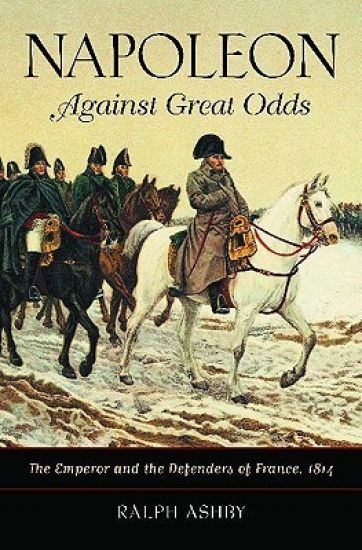
This revisionist history offers a fresh analysis of Napoleon and the French army as they defended their empire against the massive Coalition invasion of 1814. French defeat in 1814 is too often shrugged off as the result of obvious and understandable factors. Napoleon Against Great Odds: The Emperor and the Defenders of France, 1814 challenges the widely accepted notion that war-weariness and internal political opposition to Napoleon were the decisive and direct causes of French defeat. At least as important, it argues, were material shortages, diplomatic missteps, and even faulty strategic planning on Napoleon's part. The book not only traces the narrative of Napoleon's 1814 Campaign in France, but explores the formation of the French army tasked with defending France against the Coalition invasion. Diplomatic, political, and social factors are taken into account and the issue of war-weariness is analyzed carefully and critically. Each branch and arm of the French forces is examined, as are military mobilization under difficult circumstances and partisan and guerilla warfare. Designed to encourage fresh debate about the 1814 campaign, the book offers thought-provoking reading for scholars and general readers alike.
Napoleon Bonaparte and the Legacy of the French Revolution
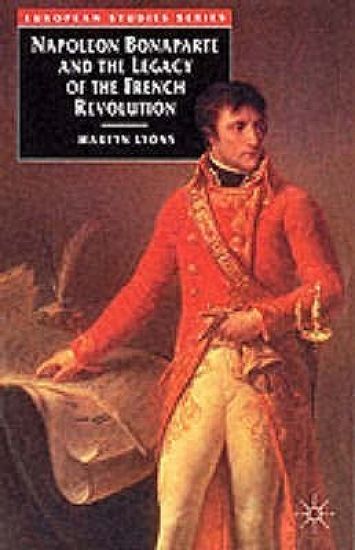
The Napoleonic period cannot be interpreted as a single historical 'block'. Bonaparte had many different persona: the Jacobin, the Republican, the reformer of the Consulate, the consolidator of the Empire and the 'liberal' of the Hundred Days. The emphasis here will be on Napoleon as the heir and executor of the French Revolution, rather than on his role as the liquidator of revolutionary ideals. Napoleon will be seen as part of the Revolution, preserving its social gains, and consecrating the triumph of the bourgeoisie. The book will steer away from the personal and heroic interpretation of the period. Instead of seeing the era in terms of a single man, the study will explore developments in French society and the economy, giving due weight to recent research on the demographic and social history of the period 1800-1815.
Napoleon and the Transformation of Europe

Napoleon and the Transformation of Europe

Alexander Grab

Red Globe Press
2003
sidottu
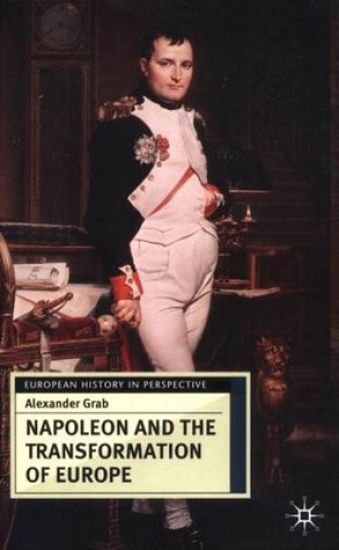
Creating a French Empire and establishing French dominance over Europe constituted Napoleon's most important and consistent aims. In this fascinating book, Alexander Grab explores Napoleon's European policies, as well as the response of the European people to his rule, and demonstrates that Napoleon was as much a part of European history as he was a part of French history.Napoleon and the Transformation of Europe:- examines the formation of Napoleon's Empire, the Emporer's impact throughout Europe, and how the Continent responded to his policies- focuses on the principal developments and events in the ten states that comprised Napoleon's Grand Empire: France itself, Belgium, Germany, the Illyrian Provinces, Italy, the Netherlands, Poland, Portugal, Spain, and Switzerland- analyses Napoleon's exploitation of occupied Europe- discusses the broad reform policies Napoleon launched in Europe, assesses their success, and argues that the French leader was a major reformer and a catalyst of modernity on a European scale
Napoleon and the Transformation of Europe

Napoleon and the Transformation of Europe

Alexander Grab

Red Globe Press
2003
nidottu
Creating a French Empire and establishing French dominance over Europe constituted Napoleon's most important and consistent aims. In this fascinating book, Alexander Grab explores Napoleon's European policies, as well as the response of the European people to his rule, and demonstrates that Napoleon was as much a part of European history as he was a part of French history.Napoleon and the Transformation of Europe:- examines the formation of Napoleon's Empire, the Emporer's impact throughout Europe, and how the Continent responded to his policies- focuses on the principal developments and events in the ten states that comprised Napoleon's Grand Empire: France itself, Belgium, Germany, the Illyrian Provinces, Italy, the Netherlands, Poland, Portugal, Spain, and Switzerland- analyses Napoleon's exploitation of occupied Europe- discusses the broad reform policies Napoleon launched in Europe, assesses their success, and argues that the French leader was a major reformer and a catalyst of modernity on a European scale
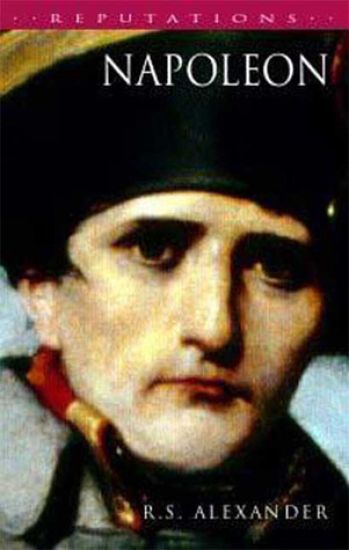
Napoleon

Napoleon

R. S. Alexander

Hodder Arnold
2001
nidottu
There is no shortage of characterizations of Napoleon, but not since Peter Geyl's classic "Napoleon: For and Against in the 1940s" has a writer tried to assess his many reputations and how they have evolved, and continue to evolve. Drawing on the latest scholarship, this is an addition to the "Reputations" series. Alexander treats Napoleon as a universal figure, rather than a specifically French one, and draws from an array of evidence in many media. He focuses particularly on how Napoleon's reputation has been altered by such events as the World Wars and the Cold War, and by association with such figures as Hitler, Santa Anna, Mehemet Ali, and Mussolini.
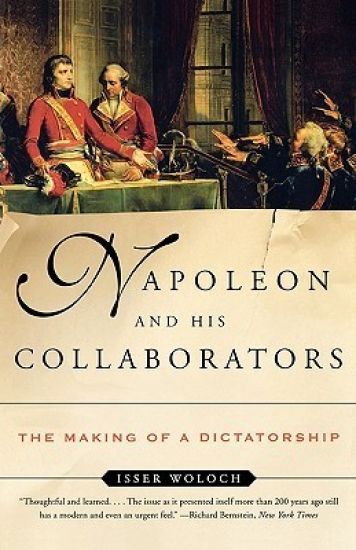
Napoleon and His Collaborators

Napoleon and His Collaborators

Isser Woloch

WW Norton Co
2002
nidottu
The Eighteenth Brumaire, November 9, 1799: with France in political and economic turmoil, a group of disaffected politicians enlisted the talented general Napoleon Bonaparte to lead a coup d'etat and establish "confidence from below, authority from above." This is the story of how Napoleon managed his ascent from general of the Republic and first consul to dictator and conqueror of Europe. Napoleon did not vault into the imperial throne but moved toward dictatorship gradually; each assertion of new power came gilded with a veneer of legality and a rhetoric of commitment to the ideals of 1789. In this fashion Napoleon not only gained the upper hand over his partners of Brumaire but also retained their loyalty and services going forward. Far from shunting aside those collaborators, he put them to use in ways that satisfied their most emphatic needs: political security, material self-interest, social status, and the opportunity for high-level public service.
Napoleon's Women

Napoleon's Women

Christopher Hibbert

WW Norton Co
2004
pokkari
Hailed by Amanda Foreman, author of Georgiana, as "one of England's greatest living historical writers," Christopher Hibbert introduces us to the many intriguing women behind the legendary soldier-from his strong-willed mother and three sisters to his varied wives and mistresses. This lively historical account reveals Napoleon's often neglected private life and passionate relationships, in which he wildly worshiped certain women as often as he disdained others. Vividly evoking the political and social upheavals of post-Revolutionary France, Hibbert captures the vibrant characters who made history, not only on the battlefield but also in the bedroom, including Josephine, the charming Creole from Martinique; the plain and pliant Marie-Louise of Austria; and Marie Walewska, the sumptuous young Polish countess who, despite initial reluctance, was persuaded by her elderly husband to fall in love with Napoleon. Praised by A. N. Wilson as an "outstanding popular historian," Hibbert dramatically brings to life the most intimate influences on Napoleon's turbulent career and character. Originally published in cloth under the title Napoleon: His Wives and Women.